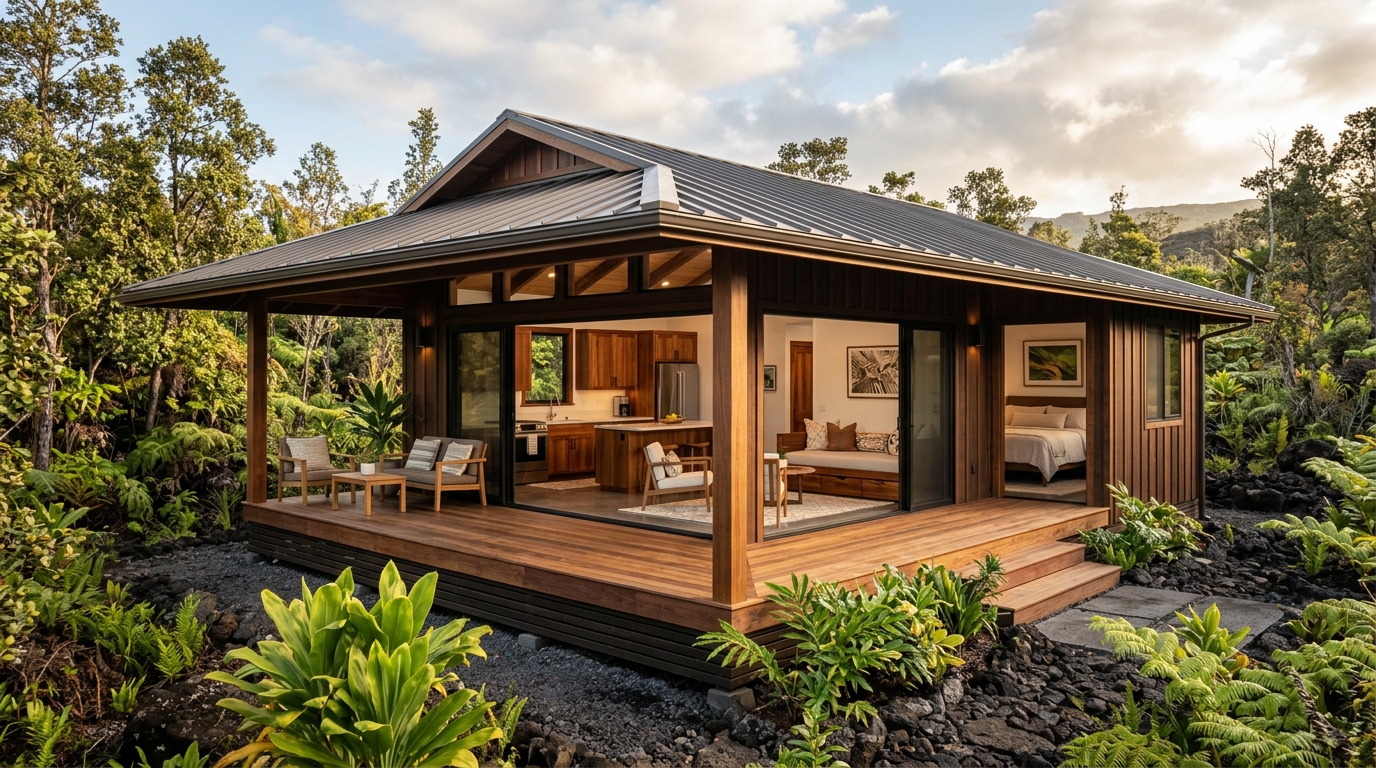
Building an Accessory Dwelling Unit (ADU) in Volcano, Hawai’i in 2026 demands a specialized adu builder volcano who intimately understands the unique terrain and climate. This isn’t like building in Honolulu; here, we contend with volcanic soil, some of the highest rainfall in the state, and unique Hawaii County regulations. At Warrior Construction, a typical 800-square-foot, two-bedroom ADU project in the Volcano area costs between $380,000 and $550,000 from start to finish. The final price tag depends heavily on site conditions, finishes, and whether you need a full septic system and water catchment setup.
For Big Island homeowners, an ADU, or ohana unit, is more than just an extra building. It’s a way to keep family close, generate rental income to combat the high cost of living, or create a private workspace surrounded by the incredible natural beauty of the area. But the path from idea to finished home is filled with potential pitfalls specific to this part of the island. Unlike a dry, flat lot in Kapolei, a Volcano property might sit on an old lava flow, requiring significant site work and a specialized foundation. The constant moisture means every material choice, from framing lumber to window flashing, has to be carefully considered to prevent mold and rot down the line. Our team has seen firsthand how a contractor unfamiliar with the Puna and Kaʻū districts can make costly mistakes that homeowners pay for years later.
This guide cuts through the noise. We’re pulling back the curtain on the real costs, timelines, and challenges of building an ohana unit in Volcano. You’ll learn what to expect from the permitting process with Hawaii County, why material selection is critical in this high-altitude rainforest environment, and how to spot a qualified ADU contractor who can handle the job. We’ll cover everything from the realities of the Big Island’s version of Bill 7 to the practicalities of designing for a water catchment system.
Why Volcano Homeowners Trust Warrior Construction for ADU Builder
Choosing an ADU builder in a place as unique as Volcano means finding a team that doesn’t just know construction, but knows this construction. It’s one thing to build on Oahu where supply chains are established and the ground is predictable. It’s another beast entirely up here. Homeowners trust our team at Warrior Construction (License BC-34373) because our experience isn’t just theoretical; it’s earned on job sites across the Big Island, navigating the exact challenges you’re facing. We understand the nuances that can make or break a project in this high-elevation, rain-soaked environment.
For example, we were recently working on a project just outside Volcano Village. The lot was covered in dense ʻōhiʻa and hāpuʻu, sitting on a bed of `aʻā lava rock that was incredibly uneven. A mainland-trained contractor might have recommended blasting and leveling the whole pad—a costly, destructive process that would have ruined the natural landscape the homeowner loved. Instead, our team opted for a raised post-and-pier foundation. This approach minimized ground disturbance, saved the homeowner nearly $40,000 in site work, and preserved the beautiful native forest. It’s this kind of practical, island-specific problem-solving that sets a true Hawaii builder apart.
Here’s what our deep local experience means for your project:
- Logistical Mastery: We have established relationships with suppliers and shipping companies in both Hilo and Kona. We know how to schedule material deliveries—from lumber packages to custom windows—to minimize delays and avoid having sensitive materials sit out in the rain. This logistical chain is something an off-island or inexperienced contractor will struggle with, leading to costly project stalls.
- Climate-Specific Design: We don’t use a one-size-fits-all approach. We guide our clients toward designs that work with Volcano’s climate, not against it. This includes incorporating large covered lanais, specifying standing-seam metal roofs designed to handle heavy downpours, and designing natural ventilation to combat humidity and prevent moisture buildup.
- Regulatory Navigation: The Hawaii County Department of Public Works has its own set of rules and personalities. We know the plan reviewers in Hilo, understand their specific requirements for septic and water catchment, and can anticipate their questions before they are even asked. This familiarity helps streamline the notoriously slow permitting process.
Ultimately, a successful project comes down to trust and expertise. As your ohana unit builder volcano, we’re not just putting up walls. We are building a durable, comfortable home designed to thrive in one of Hawaii’s most challenging and beautiful environments. Our commitment is to do it right, ensuring your investment is sound for generations to come.
What Does ADU Builder Cost in Volcano?
In 2026, the straightforward answer is that an 800-square-foot, two-bedroom ADU in Volcano will typically cost between $450 and $600 per square foot, putting the all-in project cost between $360,000 and $480,000. This figure shocks many homeowners who see lower mainland numbers online. But building in Hawaii, and especially in a remote, high-altitude location like Volcano, involves costs that don’t exist elsewhere. Our team believes in transparency, so let’s break down exactly where that money goes.
The total cost isn’t just about the structure itself. A significant portion is dedicated to preparing the site and installing essential infrastructure that might already be present in a more urban area. Unlike building an ADU in a Kailua subdivision with existing sewer and water hookups, a Volcano project often starts from raw land.
Here’s a typical cost breakdown for a standard 800 sq. ft. ADU in the Volcano area:
- Soft Costs (Design, Engineering & Permitting): $30,000 – $45,000. This includes architectural plans, structural engineering (critical for our seismic zone), and navigating the Hawaii County permit process. Don’t skimp here; good plans save money during construction.
- Site Work & Excavation: $35,000 – $60,000. This is a major variable. If your lot is pahoehoe (smooth lava), it’s easier. If it’s `aʻā (sharp, clunky lava), it requires heavy machinery and more labor to level a pad. This cost also includes clearing, grubbing, and trenching for utilities.
- Foundation: $40,000 – $65,000. A concrete slab-on-grade is common, but as mentioned, a post-and-pier foundation might be more cost-effective on sloped or rocky lots. The cost includes rebar, concrete (which is trucked up the mountain), and labor.
- Septic System: $20,000 – $35,000. Most lots in Volcano are not on a sewer line. A new, county-approved septic system is required for any new dwelling. The cost depends on the soil percolation rate and system size.
- Water Catchment System: $15,000 – $25,000. Again, municipal water is rare. A full catchment system includes gutters, a tank (typically 10,000 gallons), a pump, and a multi-stage filtration system to make the water potable.
- Framing & Structure: $80,000 – $110,000. This includes all lumber, hurricane ties and straps required by code, sheathing, and the labor to erect the shell of the home. We use pressure-treated wood for all sill plates and often recommend it for exterior walls due to the constant moisture.
- Exterior Finishes (Roofing, Siding, Windows): $60,000 – $85,000. We strongly recommend a standing-seam metal roof for durability in heavy rain. Siding options like HardiePlank resist moisture and insects. Double-pane vinyl windows are standard.
- Interior Systems (Plumbing, Electrical, HVAC): $45,000 – $70,000. This covers running all pipes and wires, installing the electrical panel, plumbing fixtures, and potentially a small ductless A/C system or a wood stove for those cool Volcano nights.
- Interior Finishes (Drywall, Flooring, Paint, Cabinets): $70,000 – $100,000. This is where your personal taste comes in and where costs can fluctuate the most. It covers insulation, drywall, flooring (luxury vinyl plank is a great waterproof option), paint, kitchen cabinets, countertops, and appliances.
The key takeaway is that the ‘per square foot’ cost includes a huge amount of fixed infrastructure costs. A smaller 500 sq. ft. unit won’t be proportionally cheaper, as it still needs its own septic, water, and site work. That’s why we always encourage clients to think about the total project budget rather than getting fixated on a single square footage number.
How Long Does a ADU Builder Take in Volcano?
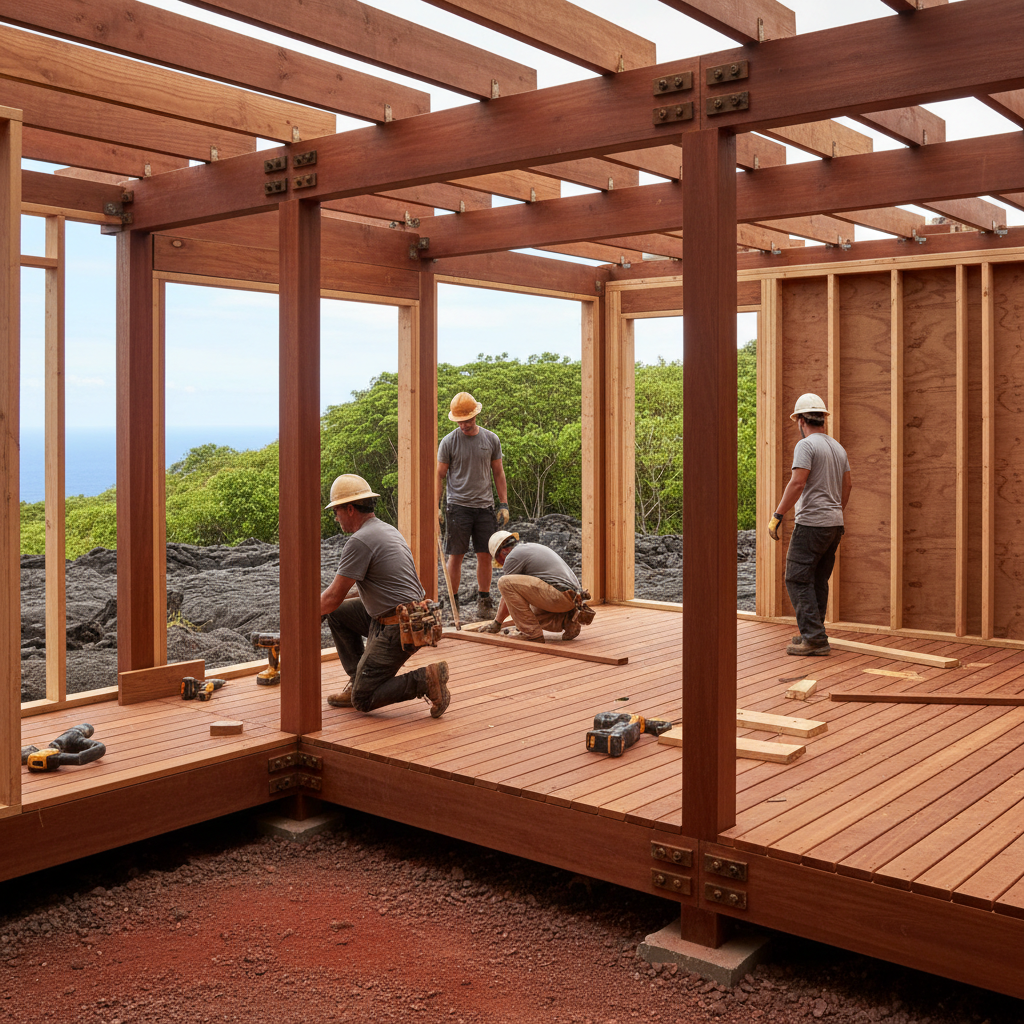
From our first conversation to you holding the keys, a realistic timeline for building an ADU in Volcano is between 14 and 20 months in 2026. This timeline often surprises homeowners, who might expect a 6-month process based on mainland TV shows. The reality in Hawaii, particularly on the Big Island, is that pre-construction activities like design and permitting consume more than half of the total project duration. An experienced adu builder volcano knows how to manage this timeline, but cannot magically bypass the required steps.
Let’s walk through the phases. Understanding this process is crucial for managing your expectations and finances.
Phase 1: Design & Planning (3-4 Months)
- Initial Consultation & Feasibility (Weeks 1-2): We meet with you, assess your property, discuss your goals, and establish a preliminary budget.
- Architectural Design (Weeks 3-10): You’ll work with an architect or designer to create the floor plans, elevations, and site plan for your ohana unit. This involves several rounds of revisions to get it just right. Our team can connect you with designers who specialize in creating homes for Volcano’s climate.
- Engineering & Plan Finalization (Weeks 11-16): Once the design is set, a structural engineer calculates loads and specifies the foundation and framing to meet Hawaii’s stringent hurricane and seismic codes. The final construction drawings are prepared.
Phase 2: Permitting with Hawaii County (6-9 Months)
This is the longest and most unpredictable phase. The Hawaii County Department of Public Works in Hilo reviews all plans for compliance with building codes and zoning regulations. The plans go through multiple departments: planning, building, electrical, and plumbing. Each department has its own queue and review process. On a recent project, we waited seven weeks just for the initial plan review comments to come back. Any request for more information or a required plan change resets the clock for that department. We manage this process closely, but there’s no way to speed up the county’s workflow. This is where having a contractor who knows the local system is invaluable, as we can submit a complete and accurate package from the start to minimize back-and-forth.
Phase 3: Site Prep & Construction (6-8 Months)
- Site Work & Foundation (Month 1-2): Once the permit is in hand, we break ground. This involves clearing the build site, excavating for the foundation and utilities, and pouring the concrete. The rainy season in Volcano can add delays here; you can’t pour a slab in a downpour.
- Framing & Dry-In (Month 2-3): The walls go up, the roof structure is built, and sheathing, windows, and roofing are installed. This ‘dries in’ the structure, protecting it from the elements so interior work can begin.
- Rough-in & Insulation (Month 4-5): Plumbers, electricians, and HVAC technicians run all the pipes, wires, and ducts through the walls. After their inspections, we install insulation.
- Interior & Exterior Finishes (Month 5-7): This is when the house starts to look like a home. Drywall is hung and finished, siding is installed, painting is done, flooring goes down, and cabinets and countertops are installed.
- Finals & Fixtures (Month 7-8): The final push involves installing light fixtures, plumbing fixtures, appliances, and completing all the detail work.
Phase 4: Final Inspections & Handover (2-4 Weeks)
After construction is complete, we schedule final inspections with the county building inspector. Once we pass all inspections, we receive the Certificate of Occupancy. We then do a final walkthrough with you, hand over the keys, and your new Volcano ADU is officially ready.
What Permits Do You Need for ADU Builder in Volcano?
Navigating the permitting process for an ADU in Volcano requires a clear understanding of Hawaii County’s specific requirements, which are distinct from those in Honolulu or other counties. As your ADU contractor volcano, a huge part of our job is managing this complex bureaucratic process. You will need a comprehensive Building Permit from the Hawaii County Department of Public Works (DPW), which is actually a package of several different permits and plan reviews rolled into one application.
It’s a common misconception that since the state passed laws like Bill 7 to encourage ADUs, you can just submit simple plans and get a quick approval. The reality is that a **Bill 7 ADU volcano** project must still meet all county-level building codes, zoning setbacks, and health regulations. The state law primarily addresses zoning allowances (like allowing ADUs on more properties), but the county DPW handles the ‘how-to’ of construction safety and standards.
Here’s what a complete permit application package, which we prepare and submit on your behalf, typically includes:
- Building Permit Application Form: The official county form that details the project scope, owner, and contractor information.
- Construction Plans: This is the core of the submission. It’s a full set of drawings (usually 10-15 pages) that must include:
- Site Plan: Shows the entire property, the location of the main house, the proposed ADU, property lines, setbacks, driveway, septic system, and water tank.
- Floor Plans: Detailed layouts of each room with dimensions.
- Elevations: Drawings of what the ADU will look like from all four sides.
- Foundation Plan: Details the concrete slab or post-and-pier system.
- Framing Plan: Shows all structural members, including hurricane tie-down details.
- Electrical Plan: Layout of outlets, switches, lights, and the electrical panel.
- Plumbing Plan: Shows all pipes, drains, vents, and fixtures, including the connection to the septic and water systems.
- Structural Calculations: Prepared and stamped by a Hawaii-licensed structural engineer, proving the design can withstand our specific wind and seismic loads.
- Septic System Design: Prepared by a licensed civil engineer, this shows the design and location of the tank and leach field, based on soil percolation tests.
- Drainage Plan: Hawaii County is very particular about managing stormwater runoff, especially in high-rainfall areas like Volcano. You need to show how you’ll handle the rain coming off your new roof.
- Contractor Information: Proof that you have hired a licensed general contractor, like Warrior Construction (BC-34373). The county wants to see that a qualified professional is responsible for the build. You can and should verify any contractor’s license through the state’s Professional & Vocational Licensing (PVL) database.[1]
While Honolulu’s Department of Planning and Permitting (DPP) has its own online portal and specific submission quirks[2], the process in Hilo for a Volcano project is still very paper-oriented and involves multiple reviewers who may have different priorities. For instance, the Health Department reviewer will focus solely on the septic and water systems, while the Building section reviewer is checking for code-compliant hurricane straps and window sizes. Our job is to create a submission package so complete and clear that it answers every potential question from every department, minimizing the chances of it getting kicked back for revisions.
Volcano-Specific Considerations: Climate, Materials, Regulations
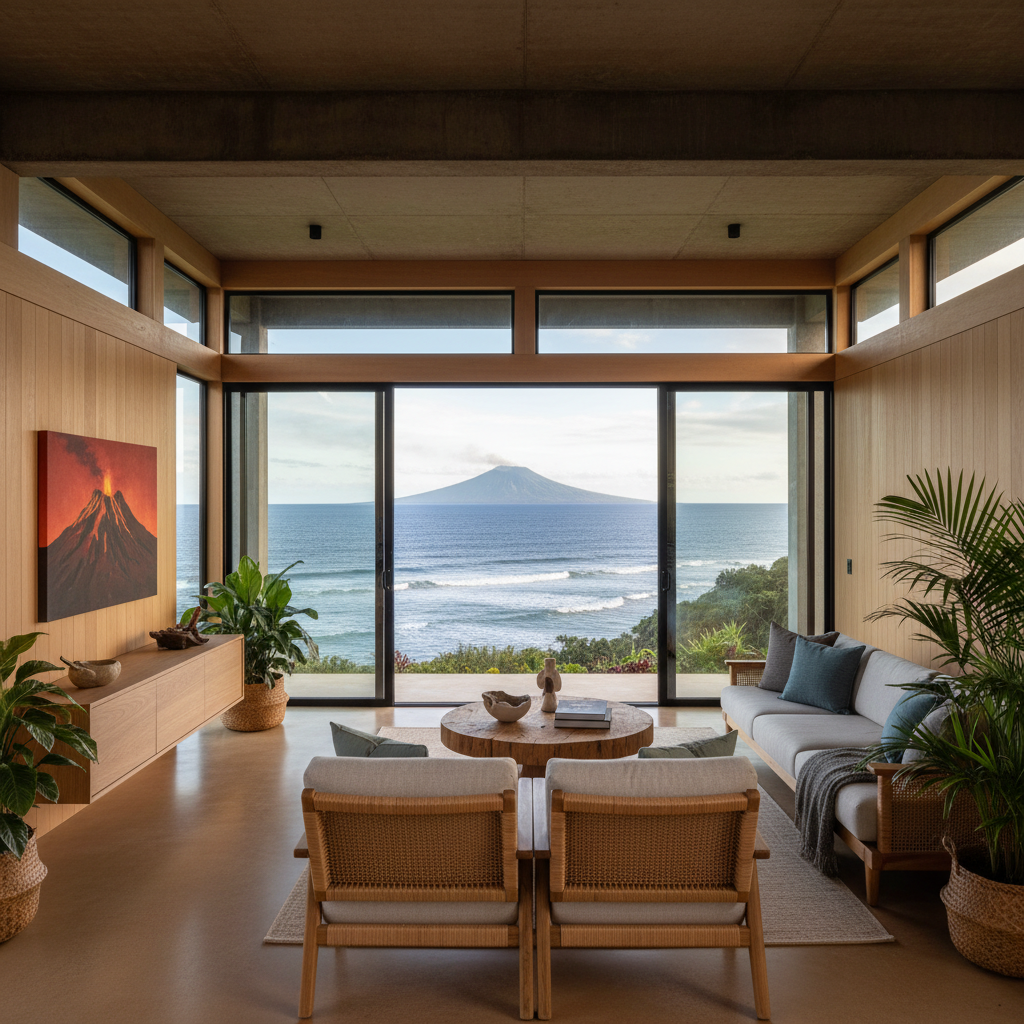
Building an ADU in Volcano is fundamentally different from any other place in Hawaii. At 4,000 feet of elevation and situated in a lush rainforest, the challenges are unique. A builder who applies the same techniques they use in dry, coastal Ewa Beach will see their work fail within a few years. As a dedicated ohana unit builder volcano, our entire approach is tailored to this specific micro-environment. Success hinges on mastering three key areas: climate, materials, and local regulations.
Climate: Managing Moisture is Everything
Volcano receives an average of 150-200 inches of rain per year. That constant moisture is your number one enemy. If not managed properly, it leads to mold, mildew, wood rot, and premature failure of building materials. Our designs always incorporate these critical features:
- Robust Waterproofing: We go beyond code minimums. This means using high-quality house wrap, meticulous flashing around all windows and doors, and foundation damp-proofing.
- Ventilation and Airflow: Good design that encourages cross-ventilation is essential. We often recommend installing high-quality bathroom fans with timers and considering a whole-house dehumidifier system to actively manage interior humidity levels.
- Covered Lanais: A large roof overhang or a covered lanai isn’t just for outdoor living; it’s a critical design element that keeps driving rain off your siding and away from your foundation.
- Vog Considerations: Volcanic smog (vog) can be an issue. We recommend air purifiers and ensuring the home is well-sealed to improve indoor air quality on days when the vog is heavy.
Materials: Durability Over Cost
Material choices made for a dry climate like Kailua-Kona are a recipe for disaster in Volcano. Every component must be selected for its ability to withstand constant dampness and temperature swings.
- Framing Lumber: We use pressure-treated lumber for all base plates that contact the concrete foundation. For clients who want maximum protection, we recommend using pressure-treated or borate-treated lumber for all exterior wall framing.
- Fasteners: Stainless steel or hot-dip galvanized fasteners are non-negotiable for all exterior applications, including siding, decking, and trim. Standard electro-galvanized nails will rust and fail in a matter of years.
- Roofing: A 24-gauge standing-seam metal roof is the gold standard. It sheds water efficiently, holds up to strong winds, and has a 40-50 year lifespan, far outlasting standard asphalt shingles in this environment.
- Siding: Fiber cement siding (like James Hardie) is an excellent choice. It’s impervious to rot and insects and holds paint well. We avoid T1-11 wood siding unless it’s properly sealed and maintained diligently.
- Insulation: Closed-cell spray foam insulation is a fantastic option for Volcano. It provides a high R-value and, crucially, acts as an air and moisture barrier, preventing damp air from infiltrating the wall cavities.
Regulations: Lava Zones, Water, and Waste
Beyond the standard building code, Volcano has another layer of regulations and practical realities tied to its geology and infrastructure.
- Lava Flow Hazard Zones: Most of Volcano Village is in Lava Zone 3, which is generally insurable and buildable. However, nearby areas fall into Zone 2 or even Zone 1. It’s critical to verify the lava zone of your property, as it impacts insurance availability, mortgage lending, and sometimes building requirements.
- Water Catchment: Since there’s no municipal water, every new ADU must have a self-sufficient water catchment system. This isn’t just a tank; it’s a complete system designed for potable water, including leaf guards, first-flush diverters, and a multi-stage filtration and UV sterilization system to meet Health Department standards.
- Wastewater Management: No sewers means every ADU needs its own septic system. Hawaii has banned the construction of new cesspools, so you’ll need a modern, engineered septic system. The design is dictated by a soil percolation test, and the size and complexity will impact your budget.
An experienced builder navigates these considerations from day one, incorporating them into the design and budget so there are no surprises down the road.
How to Choose the Right ADU Builder Contractor in Volcano
Selecting the right ADU contractor volcano is the single most important decision you’ll make for your project. A great contractor will guide you through the process, deliver a high-quality home, and stay on budget. A bad one can turn your dream into a nightmare of delays, cost overruns, and shoddy workmanship. Here’s a practical, no-nonsense checklist our team at Warrior Construction recommends every homeowner use.
1. Verify Their License and Insurance. No Exceptions.
This is the absolute baseline. Any contractor you consider must have a valid Hawaii General Contractor license (a B-License). You can and should verify this yourself on the Hawaii Department of Commerce and Consumer Affairs (DCCA) Professional & Vocational Licensing (PVL) website.[1] Our license, for example, is BC-34373. Also, ask for certificates of insurance for both General Liability and Worker’s Compensation. If they can’t provide these documents immediately, walk away. Hiring an unlicensed or uninsured contractor puts all the risk directly on you.
2. Demand Big Island, Volcano-Specific Experience.
A contractor with a great portfolio of projects in Honolulu is not automatically qualified to build in Volcano. The logistics, climate, and soil conditions are completely different. Ask potential builders these specific questions:
- “Can you show me three ADU or custom home projects you’ve completed in the Puna or Kaʻū districts in the last five years?”
- “How do you handle material procurement and delivery to a Volcano job site?”
- “What are the specific challenges you’ve faced with the Hawaii County permitting office, and how did you resolve them?”
- “What type of foundation do you typically recommend for `aʻā lava rock, and why?”
Their answers will quickly reveal their level of local, hands-on experience.
3. Get a Detailed, Itemized Bid.
A bid on a single page with a single number at the bottom is a massive red flag. A professional bid should be a multi-page document that breaks down the costs by category: site work, foundation, framing, plumbing, electrical, finishes, etc. This shows they’ve done their homework and thought through your specific project. It also gives you a clear basis for comparing bids from different contractors. At Warrior Construction, our proposals are typically 10-15 pages long, providing a transparent view of every projected cost.
4. Communicate with Their Past Clients.
A list of references is good, but actually talking to them is better. Don’t just ask if they were happy. Ask detailed questions:
- “How was the communication throughout the project?”
- “Did the project stay on budget? If not, were the changes clearly explained and approved by you in writing?”
- “How did the contractor handle unexpected problems or weather delays?”
- “Was the job site kept clean and safe?”
- “Have there been any issues with the home since it was completed? If so, how did the contractor respond to your warranty call?”
Speaking to a few past clients will give you a much clearer picture of what it’s like to work with that builder.
5. Trust Your Gut.
Finally, this is a long-term relationship. You’ll be communicating with your contractor for over a year. Make sure you feel comfortable with them. Do they listen to your concerns? Do they explain things clearly and patiently? Do you feel like they are a partner in the project, or just a vendor? Choose a builder you trust and with whom you have good rapport. That professional relationship is the foundation of a successful build.
Real Volcano ADU Builder Project Example
To make all this information concrete, let’s walk through a typical project we recently completed. This provides a real-world look at the process, challenges, and outcomes of building an ohana unit in the unique environment of Volcano.
The Client: A couple in their early 60s living in Volcano Golf & Country Club. Their goal was twofold: create a high-quality rental unit to generate retirement income and have a comfortable, separate space for their adult children when they visit from the mainland.
The Property: A half-acre lot with a gentle slope, covered in native ʻōhiʻa trees and ferns. The ground was predominantly uneven `aʻā lava rock, making a standard slab foundation difficult and destructive. The property was in Lava Zone 3.
The Vision: A 750 sq. ft. ADU with two bedrooms, one bathroom, and a large covered lanai to enjoy the cool, misty weather. They wanted a design that felt connected to the forest, with large windows and durable, low-maintenance materials.
The Challenges & Our Solutions:
- Challenge 1: Difficult Terrain. Excavating for a traditional slab foundation would have required removing several mature ʻōhiʻa trees and extensive, costly rock-breaking.
- Our Solution: We designed a post-and-pier foundation. This elevated the structure slightly off the ground, requiring only isolated footings to be dug. This approach saved over a dozen trees, dramatically reduced site preparation costs by about $25,000, and minimized the impact on the natural landscape.
- Challenge 2: Infrastructure Needs. The property had no access to municipal water or sewer.
- Our Solution: Our team designed and installed a complete, integrated system. This included a 12,000-gallon water catchment tank fed by the ADU’s metal roof, complete with a multi-stage filtration and UV purification system. We also engineered and installed a new, state-of-the-art septic system sized to handle the new unit, ensuring full compliance with Hawaii County health codes.
- Challenge 3: Material Durability. The clients were concerned about long-term maintenance in Volcano’s damp climate.
- Our Solution: We specified a material palette built to last. This featured a 24-gauge standing seam metal roof, fiber cement siding, stainless steel exterior fasteners, and vinyl-clad double-pane windows. Inside, we used luxury vinyl plank flooring throughout for its waterproof qualities and installed a high-efficiency dehumidifier connected to the home’s ventilation.
The Final Numbers:
- Total Project Cost: $415,000
- Timeline from Design to Move-in: 17 months (Design: 3 months, Permitting: 8 months, Construction: 6 months)
- Outcome: The clients now have a beautiful, durable ADU that blends seamlessly with its forest surroundings. It generates consistent rental income that supplements their retirement, and they have a perfect guest cottage for visiting family. The thoughtful design and material choices mean their long-term maintenance costs will be minimal. This is the kind of successful outcome that proper planning and experienced local building practices can achieve.
What this means for Hawaii homeowners
Building an ADU in Volcano is a significant investment, but it’s also one of the most effective ways to increase your property’s value and utility on the Big Island. Understanding the specific costs, timelines, and environmental challenges is the key to a successful project. Rushing into a build with an off-island contractor or an unrealistic budget is a recipe for disaster. The most important takeaway is that preparation and choosing the right partner are everything.
Here is your actionable advice for 2026:
- Budget Realistically: Start with the understanding that an all-in cost will likely be over $400,000. This includes not just the building, but the essential infrastructure like septic and water catchment that can add $50,000 or more to the total.
- Plan for the Timeline: Internalize that this is a 1.5 to 2-year process. The biggest chunk of that time is spent in design and permitting, long before any dirt is moved. Patience and a long-term view are essential.
- Hire a True Local Expert: Prioritize hiring an ADU builder who has a proven track record specifically in the Volcano, Puna, or Kaʻū areas. Their knowledge of the local climate, suppliers, and the Hilo permitting office is worth its weight in gold.
- Design for the Climate, Not Just for Looks: Work with your builder and architect to make smart design choices that combat moisture. This includes wide roof overhangs, excellent ventilation, and selecting materials that won’t rot or corrode. These decisions will save you thousands in maintenance down the road.
- Start the Process Early: If you want to break ground in 2027, you should be starting conversations with builders and designers right now in 2026. The long lead time for planning and permitting means you can’t wait until the last minute.
By taking a measured, informed approach, you can successfully navigate the complexities of building in Volcano and create a valuable, lasting addition to your property.
Frequently Asked Questions About ADU Builder in Volcano
How much does a basic 500 sq ft ohana unit builder volcano cost?
For a smaller 500 sq. ft. ADU in Volcano, you should budget between $275,000 and $350,000 in 2026. While the structure itself is smaller, it still requires the same expensive, fixed-cost infrastructure as a larger unit, including its own septic system, water catchment, and site preparation. This is why the cost per square foot is often higher for smaller units.
Can I build an ADU in any lava zone in Volcano?
Generally, you can build in Lava Zone 3, where most of Volcano Village is located. Building in Lava Zone 2 is more difficult and expensive to insure, and some lenders won’t finance projects there. Building in Lava Zone 1 is nearly impossible from a financing and insurance standpoint. Always verify your property’s specific lava zone with Hawaii County before you begin planning.
Are water catchment systems required for new ADUs in Volcano?
Yes, almost universally. Since most of the Volcano area lacks municipal water service, any new dwelling, including an ADU, must have its own potable water source. In this region, that means a professionally designed and installed water catchment system, complete with filtration and purification, that meets Department of Health standards.
How do Bill 7 ADU volcano rules apply on the Big Island?
State-level legislation like Bill 7 provides a framework that encourages ADU construction, primarily by easing certain zoning restrictions. However, Hawaii County has its own specific ordinances that govern implementation. For a Bill 7 ADU volcano project, you must still adhere to all Hawaii County building codes, setbacks, and infrastructure requirements for water and wastewater. The county’s rules are the ones you ultimately have to follow to get a permit.
Do I need an architect and a general contractor?
Yes, you need both. A licensed architect or designer creates the plans that detail your vision and comply with zoning laws. A licensed general contractor, like Warrior Construction, takes those plans and manages the entire construction process, from permitting and site work to hiring subcontractors and passing inspections. They are two separate but essential roles for a successful project.
How long does it really take to get a building permit in Hilo for a Volcano project?
In our 2026 experience, a building permit for a new ADU in Volcano takes between 6 to 9 months to get through the Hawaii County DPW office in Hilo. This assumes a complete and accurate submission. If the plans are incomplete or require significant revisions, the process can easily extend past 12 months. This is often the longest single phase of the entire project timeline.
What’s the biggest mistake homeowners make when building an ADU in Volcano?
The biggest mistake is underestimating the impact of the climate and hiring a contractor without specific local experience. Homeowners often focus on aesthetics and floor plans, but in Volcano, the most critical decisions involve moisture management, material durability, and foundation design. Choosing a builder who doesn’t understand these nuances can lead to a home with chronic mold, rot, and structural issues.
Is it cheaper to build a prefab ADU in Volcano?
Not usually. While the factory cost of a prefab or modular unit may seem lower, the total project cost is often comparable to or even higher than a custom-built ADU once you factor everything in. You still have to pay for shipping the modules to Hilo, trucking them up the mountain, crane rental for placement, and all the same expensive site work, foundation, septic, and water systems. A site-built home is often more cost-effective and can be better customized for your specific lot.
Building an Ohana unit in Volcano is a journey, and having the right guide is essential. Our team at Warrior Construction has the local knowledge and hands-on experience to navigate the challenges and deliver a beautiful, durable home that will serve your family for generations. We treat every project as if it were our own, with a commitment to quality and transparent communication from start to finish.
If you’re ready to explore the possibility of adding an ADU to your Big Island property, the next step is a simple conversation. Learn more about our ADU & Ohana Unit building services or contact us directly to schedule a free, no-obligation estimate for your project.