“
When you need a concrete contractor in Kahului, you’re not just pouring a simple slab; you’re building on the unique foundation of Maui. Here in 2026, a standard 4-inch concrete driveway pour costs between $28 and $45 per square foot, while a structural foundation can run from $45 to $65 per square foot, factoring in Maui’s specific material and labor costs. These numbers are the starting point, but the real work lies in understanding our island’s red dirt, corrosive salt air, and strict hurricane codes. It’s a different world than building on the mainland, or even on Oahu.
\n\n
My team at Warrior Construction has been working on Maui and across the islands for over two decades. We’ve seen it all, from dealing with expansive volcanic soil in Upcountry to ensuring rebar has enough cover to resist the salty spray along the North Shore. The biggest mistake we see homeowners make is hiring a team that doesn’t grasp these local nuances. A mainland approach just doesn’t work here. The result can be premature cracking, spalling, and foundation issues that cost a fortune to fix down the road.
\n\n
This guide cuts through the noise. We’ll give you the real numbers, timelines, and insider knowledge you need to get your concrete project done right in Kahului. We’ll cover true 2026 costs, Maui County permitting timelines, specific material considerations for our climate, and how to spot a qualified professional from a handyman with a mixer. This is the same advice I’d give a friend over coffee before they break ground.
\n\n
Why Kahului Homeowners Trust Warrior Construction for Concrete Contractor
\n
Choosing a concrete contractor Kahului homeowners can rely on goes beyond just getting a good price. It’s about finding a partner who understands the unique challenges of building on Maui. At Warrior Construction, our license (BC-34373) is just the beginning. Our real credentials are built from years of on-the-ground experience right here in the central valley and across the island.
\n\n
For example, we recently worked on a project near Kanaha Beach. The specs called for a standard concrete mix, but we knew better. The constant salt spray in that area demanded a specialized mix with a lower water-to-cement ratio and corrosion-inhibiting admixtures to protect the rebar. Furthermore, we increased the concrete cover over the steel reinforcement to 3 inches, well beyond the minimum code requirement. It’s this kind of proactive, location-specific planning that prevents spalling and rust jacking a decade from now. A less experienced contractor might follow the plans blindly, but our team knows that what works in Pukalani won’t last by the ocean.
\n\n
Our approach is built on a few key principles:
\n
- \n
- Neighbor Island Expertise: We aren’t an Oahu company that occasionally flies over. Warrior Construction has a dedicated presence and deep understanding of Maui’s logistics. We know the local suppliers like Hawaiian Cement, understand the barging schedules for specialty materials, and have established relationships with Maui County inspectors. This prevents the kind of delays and cost overruns that plague off-island contractors.
- Comprehensive General Contracting: We are a full-service general contractor, not just a concrete crew. This means when we pour a foundation, we’re already thinking about the plumbing rough-in, the framing layout, and the overall drainage plan. For a homeowner, this integrated approach is invaluable. You have one point of contact, and we ensure the concrete work seamlessly supports every other phase of construction. There’s no finger-pointing between subcontractors.
- Transparent Communication: You’ll never be in the dark about your project. We provide clear, detailed estimates that break down costs for materials, labor, equipment like pump trucks, and permitting fees. We believe an informed client is a happy client, so we take the time to explain the ‘why’ behind our methods, whether it’s the type of rebar we’re using or the specific curing compound needed for a hot Kahului afternoon.
\n
\n
\n
\n\n
Ultimately, homeowners trust us because we build for Hawaii. We live here, we raise our families here, and we understand that a home on Maui needs to be built to last for generations. Our reputation is poured into every foundation, driveway, and retaining wall we build.
\n\n
What Does Concrete Contractor Cost in Kahului?
\n
Let’s get straight to the numbers for 2026. The cost of concrete work in Kahului is driven by a combination of on-island material sourcing, labor rates, and the complexity of the job. It’s almost always higher than what you’d see quoted on mainland websites, and typically runs about 10-15% more than on Oahu due to inter-island shipping for cement and other components.
\n\n
Here’s a realistic breakdown of what you can expect to pay for professional concrete services on Maui:
\n
- \n
- Standard 4-Inch Slab (Broom Finish): $28 – $45 per square foot. This is typical for a basic driveway concrete kahului project, a simple patio, or a walkway. The price includes site prep on relatively flat ground, formwork, a standard 3000 PSI concrete mix, wire mesh reinforcement, and a non-slip broom finish. For a typical 20×20 foot (400 sq ft) driveway, you’re looking at a budget of $11,200 to $18,000.
- Structural Foundation Slab (6-8 Inches): $45 – $65 per square foot. This is for a new home foundation or a major addition. This cost for a concrete foundation kahului includes much more extensive excavation and grading, thicker vapor barriers, perimeter and interior footings, and significantly more steel rebar reinforcement to meet hurricane and seismic codes. For a 1,500 sq ft house foundation, the cost would be approximately $67,500 to $97,500.
- CMU Retaining Walls: $120 – $180 per square foot of wall face. For a retaining wall kahului project, we price by the visible face area. A wall that is 5 feet high and 50 feet long has a face of 250 sq ft. This would cost between $30,000 and $45,000. This price includes the deep concrete footing, vertical rebar, CMU blocks, and filling the blocks solid with concrete grout. Taller walls or those on difficult slopes will be at the higher end of this range.
\n
\n
\n
\n\n
Key Cost Factors on Maui:
\n
Several variables can push your project costs up or down. As a result, it’s crucial to understand them:
\n
- \n
- Site Access: Getting a full-size concrete truck into a tight lot in an older Kahului neighborhood can be a challenge. If we need to use a pump truck because the pour site is far from the street, that can add $1,500 to $2,500 to the day’s cost.
- Demolition & Removal: Tearing out an old, cracked driveway or patio isn’t free. This can add $4 – $8 per square foot, which includes breaking up the old concrete and hauling it away for disposal.
- Soil Conditions: Much of central Maui has expansive soil. If your soil report comes back poor, we may need to over-excavate and bring in engineered fill, which adds significant material and labor costs. Hitting unexpected lava rock during excavation also adds time and equipment costs.
- Finishes and Complexity: A simple broom finish is standard. If you want stamped concrete that looks like stone, or an exposed aggregate finish, expect to add $5 – $15 per square foot. Curves, steps, and integrated drainage also increase the labor required for formwork.
\n
\n
\n
\n
\n\n
When you get a quote, make sure it clearly itemizes these factors. A vague, one-line price is a red flag. Our team provides detailed proposals so you know exactly where your money is going.
\n\n
How Long Does a Concrete Contractor Take in Kahului?
\n
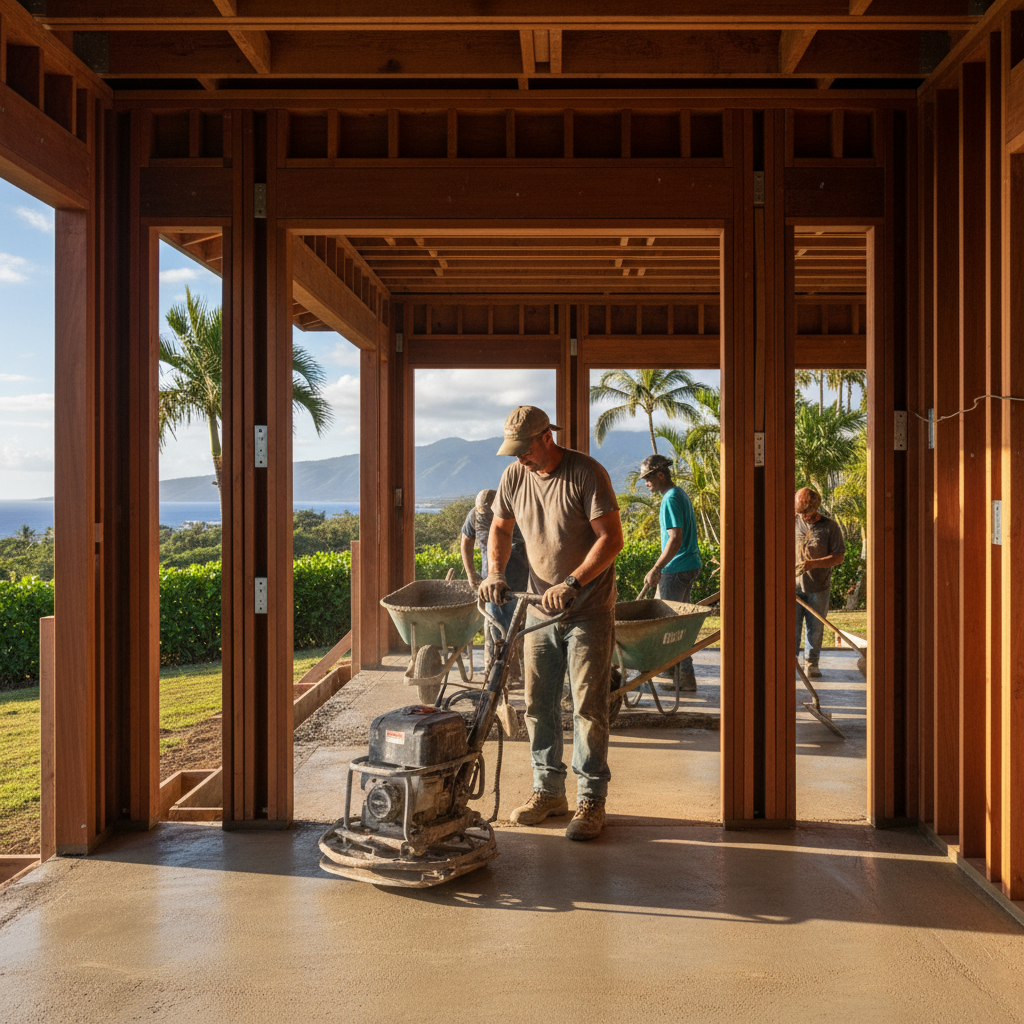
The most common question after cost is about the timeline. For concrete work on Maui, the biggest wildcard is almost always the permitting process. The physical work of pouring a driveway might only take a few days, but getting the green light from the county can take months. As your general contractor, we manage this entire process, but it’s important for homeowners to have realistic expectations.
\n\n
Here’s a typical 2026 project timeline for a new 800 sq ft driveway and a small retaining wall in Kahului:
\n\n
Phase 1: Planning, Engineering & Permitting (4 – 6 Months)
\n
- \n
- Week 1-2: Initial consultation, site measurements, and proposal generation.
- Week 3-6: If needed, we engage a structural engineer to draw plans for the retaining wall and any complex drainage. For a simple driveway, engineering may not be required.
- Month 2-6: Submitting the permit application to the Maui County Department of Public Works. This is the longest and most unpredictable phase. The plans go through multiple reviews (planning, building, drainage). We follow up consistently, but the backlog can be substantial. Just last year, we had a straightforward foundation permit in Wailuku take nearly seven months to get approved.
\n
\n
\n
\n\n
Phase 2: Site Work & Construction (2 – 3 Weeks)
\n
- \n
- Day 1-3: Demolition of any existing concrete. Our crew is careful to minimize disruption to your landscaping and property.
- Day 4-7: Excavation and grading. This is where we set the proper slope for drainage – a critical step to prevent water from pooling near your home’s foundation. We also dig the footings for the retaining wall.
- Day 8-10: Formwork and rebar installation. We build the wooden forms that will hold the wet concrete and meticulously place and tie the steel rebar according to the engineered plans. This is when the first inspection (footing and rebar) happens.
- Day 11: The Pour. The concrete truck arrives. We pour, spread, and finish the concrete. For an 800 sq ft driveway, this is an all-day job for a skilled crew.
- Day 12-14: Stripping forms and site cleanup. We remove the form boards and clean the entire job site.
\n
\n
\n
\n
\n
\n\n
Phase 3: Curing (28 Days for Full Strength)
\n
- \n
- First 48 Hours: Critical cure time. The concrete is protected and kept moist. No walking on the surface.
- First 7-10 Days: The concrete is hard enough for light foot traffic, but not for vehicles.
- After 28 Days: The concrete has reached approximately 99% of its specified compressive strength. You can now park your truck on it without any issues.
\n
\n
\n
\n\n
The total time from signing a contract to parking on your new driveway can easily be 6-8 months. The actual “disruption” in your yard is only a few weeks. Our job at Warrior Construction is to manage that entire timeline efficiently and keep you informed every step of the way.
\n\n
What Permits Do You Need for Concrete Contractor in Kahului?
\n
Navigating the permitting process with Maui County can be a major headache for homeowners. It’s one of the most critical reasons to hire an experienced, licensed general contractor like Warrior Construction. We handle the paperwork, plans, and follow-ups so you don’t have to. The rules can seem confusing, but they boil down to a simple principle: if the work is structural or affects drainage and property lines, you need a permit.
\n\n
While Honolulu’s Department of Planning and Permitting (DPP)[2] has its own system, Maui County’s process is similar in its rigor. Here’s a general guide for 2026:
\n\n
When a Permit is Almost Always Required in Kahului:
\n
- \n
- New Building Foundations: This is non-negotiable. Any new home, ADU (Ohana unit), or significant addition requires a building permit, and the foundation is a core part of that approval. The plans must be stamped by a Hawaii-licensed structural engineer.
- Retaining Walls: Any wall over four feet in height (measured from the bottom of the footing to the top of the wall) requires a permit. Walls supporting a surcharge (like a driveway or structure) often need a permit regardless of height.
- Driveways with New Curb Cuts: If you are creating a new opening in the public sidewalk or curb for your driveway, you need a permit from the Department of Public Works.
- Large Patios or Slabs Affecting Drainage: If you’re pouring a large non-porous surface (over 500 sq ft, for example), the county will want to see a drainage plan to ensure you’re not flooding your neighbors.
- Structural Concrete Repairs: If we are repairing spalling on structural beams, columns, or lanais in a condo, a permit is typically required to ensure the repair meets code.
\n
\n
\n
\n
\n
\n\n
When You Might Not Need a Permit:
\n
- \n
- Simple Slab Replacement: If you’re demolishing a cracked, on-grade patio slab and pouring a new one in the exact same footprint and size, you often don’t need a permit. This is considered maintenance.
- Small, Non-Structural Pads: Pouring a small 8×8 foot slab for a shed or an AC condenser unit generally does not require a permit.
\n
\n
\n\n
The Golden Rule: Always Ask.
\n
The cost of getting caught without a required permit is steep. It can involve stop-work orders, fines, and having to tear out the work you just paid for. A few years ago on a project in Kihei, a homeowner had a previous contractor build a large, unpermitted retaining wall. When it started to fail, they called us. To fix it correctly, we had to tear down the entire wall, get after-the-fact permits with engineering, and completely rebuild it. The cost was nearly double what it would have been to do it right the first time.
\n\n
Our process at Warrior Construction begins with a permit check. We will give you a clear answer on what your specific project requires and build the cost and time for permitting directly into our proposal. It’s the only professional way to do business in Hawaii.
\n\n

Kahului-Specific Considerations: Climate, Materials, Regulations
\n
Pouring concrete in Kahului isn’t the same as in Phoenix or even Honolulu. Our unique island environment on Maui presents specific challenges that a professional contractor must know how to handle. Ignoring these factors leads to concrete that fails years before it should.
\n\n
Climate and Environment
\n
The central valley of Maui is known for its persistent trade winds and intense sun. This directly impacts how concrete cures.
\n
- \n
- Rapid Evaporation: The wind and sun can pull water from the surface of fresh concrete too quickly. This causes plastic shrinkage cracking—a web of fine cracks that can compromise the surface integrity. To combat this, we often use evaporation retardants and start curing procedures (like wet curing with burlap) almost immediately after finishing.
- Salt-Air Corrosion: For any project within a mile or two of the coast, like those near Kahului Harbor or Kanaha Beach, salt-laden air is the enemy of steel rebar. When salt and moisture penetrate the concrete, they corrode the rebar, which expands and cracks the concrete from the inside out (this is called spalling). Our standard practice in these zones includes using a denser concrete mix, ensuring adequate concrete cover over the steel (at least 2.5-3 inches), and sometimes specifying epoxy-coated or galvanized rebar for critical structural elements.
\n
\n
\n\n
Materials and Logistics
\n
Everything gets to Maui on a barge. This simple fact affects cost and scheduling.
\n
- \n
- Material Sourcing: While aggregate (rock) is sourced locally on Maui, cement powder and specialty admixtures are shipped in. Any disruption at the harbor on Oahu or in Kahului can delay material delivery. A good contractor is always in communication with their suppliers (like Hawaiian Cement or Ameron) to anticipate these issues. We always plan for potential delays and never schedule a pour until we have confirmation the materials are on-island.
- Concrete Mix Design: We don’t use a one-size-fits-all mix. For a residential driveway, a 3000 PSI mix is standard. For a structural foundation, we’ll use a 3500 or 4000 PSI mix. For areas with high sulfate content in the soil (common in agricultural lands around Kahului), we’ll specify a Type II or Type V cement to prevent chemical breakdown of the concrete over time. This level of detail is crucial.
\n
\n
\n\n
Regulations and Codes
\n
Hawaii’s building codes are some of the strictest in the nation, designed to withstand hurricanes and seismic activity.
\n
- \n
- Hurricane Code: Since Hurricane Iniki in 1992, foundation requirements have been significantly strengthened. This means specific rebar sizing and spacing, and mandatory tie-downs (like hurricane straps) that must be embedded in the concrete foundation to connect it to the wall framing. These are not optional; they are life-safety requirements that are rigorously inspected by Maui County officials.
- Maui County Specifics: While the state sets the building code, each county has its own amendments and interpretations. For instance, Maui County has specific requirements for drainage and grading, especially in areas prone to flooding. A project plan must show how water will be directed away from structures and not impact neighboring properties. We’ve seen projects get held up for months in permitting because of a poorly designed drainage plan.
\n
\n
\n\n
Successfully completing a concrete project in Kahului requires a deep understanding of these interconnected factors. It’s the synthesis of knowing the science of concrete, the art of finishing, and the practical realities of building on our island.
\n\n
How to Choose the Right Concrete Contractor Contractor in Kahului
\n
Finding a qualified and reliable concrete contractor on Maui can feel daunting. There are plenty of people with a truck and a mixer, but your home’s foundation or driveway is too important to trust to just anyone. A systematic vetting process can save you from a world of trouble.
\n\n
Here is the checklist we recommend to every homeowner:
\n\n
1. Verify Their License and Insurance. Period.
\n
- \n
- License: The first step is to verify their contractor’s license with the Hawaii Department of Commerce and Consumer Affairs (DCCA) Professional & Vocational Licensing (PVL) division[1]. A legitimate contractor will have a license number (ours is BC-34373) and will be listed as active and in good standing. Be wary of anyone with a suspended or expired license.
- Insurance: Ask for proof of both General Liability and Workers’ Compensation insurance. General Liability protects your property from damage, while Workers’ Comp protects you from being sued if one of their workers gets injured on your job site. A contractor who can’t provide a current certificate of insurance is a massive red flag.
\n
\n
\n\n
2. Insist on Local, Relevant Experience.
\n
- \n
- Ask for Maui References: Don’t just ask for references; ask for references for projects *similar to yours* and *in your area*. If you’re building a retaining wall in Wailuku, a reference for a condo renovation in Wailea isn’t as helpful. Call the references and ask about communication, timeliness, and how the contractor handled unexpected problems.
- Look at Their Work: A reputable contractor should be proud to show you their portfolio of completed projects on Maui. Ask for addresses of driveways or foundations they’ve poured so you can do a drive-by. Look for clean lines, even color, and an absence of surface cracks.
\n
\n
\n\n
3. Get a Detailed, Written Contract.
\n
A handshake deal is not enough. A professional contract is your best protection. It should include:
\n
- \n
- Full Scope of Work: Exactly what is being done, from demolition and excavation to the final finish and cleanup.
- Material Specifications: The contract should specify the concrete strength (e.g., 3000 PSI), type of reinforcement (e.g., #4 rebar at 18\” on center), and finish (e.g., broom finish).
- Total Cost and Payment Schedule: A clear breakdown of the total price and a schedule of payments tied to project milestones (e.g., deposit, upon passing inspection, upon completion). Be very cautious of any contractor demanding a large upfront payment.
- Project Timeline: An estimated start and completion date, acknowledging that weather and permitting can cause delays.
\n
\n
\n
\n
\n\n
4. Evaluate Their Professionalism and Communication.
\n
From the first phone call, are they responsive? Do they answer your questions clearly and patiently? Construction projects always have hiccups; you want a partner who communicates proactively and works with you to find solutions, not one who disappears when a problem arises. On a recent project, we discovered an old, unmarked cesspool during excavation. We immediately stopped work, called the homeowner and an engineer, and developed a plan to properly decommission it before proceeding. That’s the kind of problem-solving communication you should expect.
\n\n
Real Kahului Concrete Contractor Project Example
\n
To see how these principles work in the real world, let’s look at a recent project our team completed for a family in an older, established neighborhood in Kahului.
\n\n
The Client: A family with a 1970s home on a corner lot. They had owned the home for over 20 years.
\n\n
The Problem: Their original driveway was a mess. It was heavily cracked, with several sections pushed up by invasive tree roots from a neighboring property. It was a tripping hazard and created drainage problems during heavy rains, sending water toward their garage. Additionally, their backyard had a significant slope that made it unusable for their kids to play on.
\n\n
The Project Scope: Our team at Warrior Construction was hired as the general contractor to design and build a solution. The scope included:
\n
- \n
- Complete demolition and removal of the existing 900-square-foot concrete driveway.
- Excavation and removal of the problematic tree roots, and installation of a root barrier along the property line.
- Formation and pouring of a new, properly graded driveway concrete kahului residents need, reinforced with #4 rebar to prevent future cracking.
- Construction of a 70-foot-long, 5-foot-high engineered CMU retaining wall kahului style to create a level, usable upper yard space. This also required a significant concrete footing as its foundation.
\n
\n
\n
\n
\n\n
Challenges and Our Solutions:
\n
- \n
- Tight Site Access: The corner lot had limited street access for a concrete truck and our mini-excavator. We had to coordinate carefully with neighbors and schedule the concrete pour for an off-peak traffic time to minimize disruption. We used a smaller pump truck to get the concrete to the retaining wall footing in the backyard.
- Unexpected Utilities: During excavation for the retaining wall footing, we uncovered an old, abandoned water line that wasn’t on any county maps. We immediately paused work, contacted the Maui Department of Water Supply to verify it was inactive, and then properly removed and capped it before proceeding. This prevented a potential future leak under the new wall.
\n
\n
\n\n
The Outcome:
\n
- \n
- Timeline: From permit submission to final cleanup, the project took just under 7 months. The on-site construction phase was completed in 5 weeks.
- Budget: The total project cost was approximately $58,000. This broke down to roughly $23,000 for the driveway portion (demo, root removal, new pour) and $35,000 for the engineered retaining wall.
- Result: The family now has a safe, beautiful driveway that properly channels water away from their home. More importantly, they have a new, level backyard space where their kids can safely play. The project not only solved their immediate problems but significantly increased their property’s value and functionality.
\n
\n
\n
\n\n
What this means for Hawaii homeowners
\n
Pouring concrete on Maui is a significant investment in your property. Getting it right the first time is everything. Based on our 20+ years of experience, here is the most important actionable advice we can give to any Kahului homeowner planning a concrete project in 2026.
\n
- \n
- Budget for Reality, Not Hope: Use the real-world cost guides we provided ($28-$45/sf for driveways, $45-$65/sf for foundations). Always add a 10-15% contingency fund to your budget for unforeseen issues like hitting hard rock during excavation or needing extra drainage work. Surprises happen, and being financially prepared for them turns a crisis into a manageable problem.
- Patience with Permitting is Key: Understand that in Maui County, permitting is a marathon, not a sprint. A 4-6 month wait for permit approval is normal. Do not plan your project on a tight deadline. Hire your contractor well in advance and let them manage the county process. Any contractor promising to get you a permit in a few weeks is not being honest with you.
- Hire a Licensed General Contractor, Not Just a Concrete Guy: For anything beyond a simple patio slab, hiring a GC like Warrior Construction is critical. We manage the entire ecosystem of your project—the engineer, the surveyors, the county inspectors, and any other trades like plumbers or electricians. This single point of responsibility is invaluable and prevents costly coordination errors.
- Demand a Detailed Contract: Do not proceed with any work without a signed contract that specifies the concrete PSI, rebar schedule, payment terms, and scope of work. This document is your primary protection and ensures that you and your contractor are in complete agreement about the project deliverables before the first shovel hits the ground.
\n
\n
\n
\n
\n
By following this advice, you shift from being a spectator to an informed and empowered participant in your construction project. Your investment will be protected, and the final product will be a durable, professional installation built to withstand everything our Maui environment can throw at it.
\n
\n\n
Frequently Asked Questions About Concrete Contractor in Kahului
\n
How much does a new concrete driveway cost in Kahului in 2026?
\n
For a standard 4-inch thick, broom-finished driveway in Kahului, you should budget between $28 and $45 per square foot. A typical 400 sq ft driveway would therefore cost between $11,200 and $18,000. This price includes site prep, formwork, reinforcement, concrete, and finishing. Costs can increase for difficult site access, major demolition, or decorative finishes.
\n
\n
Do I need a permit for a concrete patio on Maui?
\n
Generally, if you are replacing an existing ground-level patio with one of the same size and in the same location, a permit is not required as it’s considered maintenance. However, if you are pouring a new, large patio (over 500 sq ft) or if the patio is part of a structure with a roof, you will absolutely need a building permit from Maui County. Always consult with a licensed contractor to be sure.
\n
\n
What is the best concrete mix to use for Maui’s salt air?
\n
For coastal areas like Kahului, we recommend a concrete mix with a minimum compressive strength of 3500 PSI and a low water-to-cement ratio (below 0.45). We also often specify corrosion-inhibiting admixtures. These measures create a denser, less permeable concrete that better protects the internal steel rebar from salt and moisture intrusion, which prevents spalling and extends the life of the structure.
\n
\n
How long does a concrete foundation take from start to finish?
\n
While the physical work on-site for a standard 1,500 sq ft home foundation might take 2-4 weeks (excavation, forming, pouring, curing), the entire process is much longer. Factoring in engineering design (1-2 months) and Maui County permit review (4-6 months), the total timeline from hiring a contractor to having a completed foundation is realistically 6-9 months in 2026.
\n
\n
Can you pour concrete in the rain in Kahului?
\n
It’s highly inadvisable to pour concrete during heavy rain. Rain can increase the water content on the surface, weakening the final product and causing scaling or dusting. A light, passing shower might be manageable with protective coverings, but any reputable contractor will postpone a pour if significant rain is in the forecast to protect the integrity of your investment.
\n
\n
What is the difference between a general contractor and a concrete subcontractor?
\n
A concrete subcontractor specializes only in concrete work. A general contractor (GC), like Warrior Construction, manages the entire project. For a new foundation, a GC hires the engineer, gets the permits, schedules the concrete sub, and coordinates with the plumbers and framers. Hiring a GC provides a single point of responsibility and ensures the concrete work integrates perfectly with the rest of your project.
\n
\n
Why is rebar so important in a concrete foundation in Kahului?
\n
Rebar (steel reinforcement) is critical because concrete is very strong in compression but weak in tension. Rebar provides the tensile strength needed to resist forces from soil movement, seismic activity, and the upward lift from hurricane-force winds. Hawaii’s strict building codes mandate specific rebar sizes and spacing to ensure foundations can withstand these forces and keep your home safe.
\n
\n
\n\n
Your home’s concrete elements are its foundation—literally and figuratively. Whether it’s a driveway, a retaining wall, or the slab your house rests on, the quality of that work determines the safety, longevity, and value of your entire property. On Maui, that means hiring a team that understands our unique island challenges and has the experience to build it right.
\n
At Warrior Construction, we bring over two decades of Hawaii-specific expertise to every project. We’re a licensed, insured general contractor (BC-34373) committed to quality and transparency. If you’re ready to discuss your concrete project in Kahului, we’re here to provide a clear, detailed plan and a professional estimate.
\n
Ready to build on a solid foundation? Explore our Concrete & Foundations services and let’s start the conversation about your Kahului project.
\n\n
References
\n