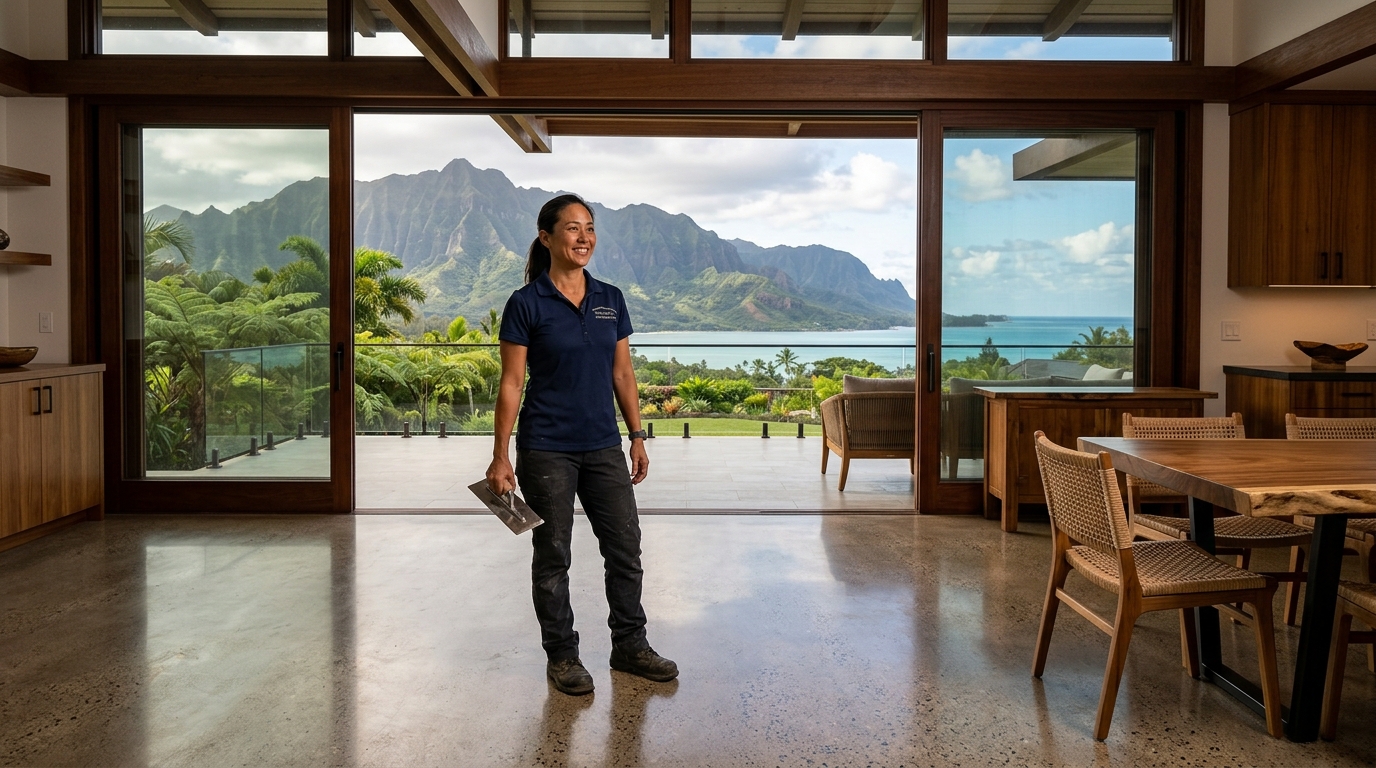
Hiring the right concrete contractor Kaneohe means finding a licensed, insured team that genuinely understands Windward O’ahu’s unique challenges, from the near-daily rainfall to the corrosive salt air that sweeps in over the Koʻolau Range. It’s not just about mixing mud and pouring a slab; it’s about building a foundation that will stand up to our specific island environment for decades. At Warrior Construction (License BC-34373), we’ve spent over 20 years pouring concrete across the island, and we’ve seen firsthand what happens when shortcuts are taken. A poorly poured foundation or driveway doesn’t just look bad—it can lead to major structural problems, water damage, and thousands in repairs down the line. That’s why we’ve put together this guide for our Kaneohe neighbors.
This isn’t generic advice you could find anywhere online. This is hard-won knowledge from countless jobsites, from hillside lots in Haʻikū Valley to waterfront properties along the bay. We’ll break down the real costs you can expect in 2026, realistic timelines that account for weather and permitting, and the specific material choices that are non-negotiable for the Windward side. We’ll also cover how to vet a contractor properly and provide a real-world example of a recent Kaneohe project. Think of this as the conversation we’d have over coffee before starting your project—straight talk, no fluff.
Why Kaneohe Homeowners Trust Warrior Construction for Concrete Contractor
Homeowners trust our team because we are not just another general contractor; we are specialists in Hawaii’s challenging construction environments. With over two decades of experience specifically on O’ahu, we have poured concrete for everything from luxury custom homes in Kailua to complex commercial foundations in town. Our license, BC-34373, is more than just a number; it represents a long-standing commitment to quality, safety, and adherence to Hawaii’s strict building codes. When you hire us as your concrete contractor in Kaneohe, you’re getting a team that understands the local landscape inside and out.
Kaneohe presents a unique set of geological and atmospheric challenges. We are intimately familiar with the area’s volcanic rock and expansive clay soils. On a recent project near Hoʻomaluhia Botanical Garden, we had to conduct soil testing that revealed a high shrink-swell potential. An inexperienced contractor might have just poured a standard slab, but we knew to recommend an engineered foundation with a post-tensioned slab to prevent cracking as the soil moved with the seasons. That’s the kind of proactive problem-solving that experience brings. We understand that proper site preparation and compaction are paramount here to avoid costly foundation issues later on.
Furthermore, our team is deeply versed in the latest hurricane code requirements. Since Hurricane Iniki, the codes have evolved significantly. We know precisely how to form and pour foundations that incorporate the necessary hurricane straps and tie-downs, ensuring they are perfectly embedded in the concrete to create a continuous load path from the foundation to the roof. We’ve seen shoddy work where straps were bent or placed incorrectly, completely compromising their effectiveness. Our quality control process ensures every piece of reinforcement, from the rebar grid to the hold-downs, is installed exactly per the engineering plans before a single yard of concrete is poured.
An anecdote from a job last year illustrates our commitment. We were scheduled for a large driveway pour for a home overlooking Kaneohe Bay. The forecast was clear, but as anyone on the Windward side knows, the weather can turn in an instant. Our foreman saw the clouds building over the mountains and made the call to tent the entire 1,200-square-foot area before the trucks arrived. It was an extra expense and a lot of extra work, but it saved the project. A surprise downpour hit mid-pour, but under the tents, we were able to finish the concrete perfectly. The homeowner was thrilled, and the driveway cured without a single pockmark. That’s the difference between a mainland mindset and a seasoned Hawaii contractor.
What Does Concrete Contractor Cost in Kaneohe?
Let’s get straight to the numbers. In 2026, the cost for a standard 4-inch thick concrete slab in Kaneohe typically ranges from **$25 to $35 per square foot**. This price generally includes labor, materials like 3000 PSI concrete and wire mesh, and basic site preparation on a relatively flat lot. For a more robust structural slab or a full **concrete foundation Kaneohe**, you should budget for **$45 to $60 per square foot** due to the increased thickness, extensive rebar requirements, and engineering oversight.
Here’s a detailed breakdown of what goes into that final price tag:
* **Materials:** This is the biggest variable. The cost of concrete from local suppliers like Hawaiian Cement, along with the rebar, formwork, and vapor barriers, is higher here than on the mainland due to shipping. For a project near the water, we insist on using epoxy-coated or galvanized rebar to fight salt-air corrosion, which can add 15-20% to the material cost but is essential for longevity.
* **Labor:** Skilled concrete finishers are in high demand on O’ahu. The labor portion of the bid covers the crew for excavation, forming, pouring, and finishing. This is not an area to cut corners; a flawless finish requires years of experience.
* **Site Preparation:** This can vary dramatically. A flat, clear lot is straightforward. But many Kaneohe properties are on slopes or have dense vegetation. Costs will increase for significant excavation, grading, hauling away excess soil, or dealing with large tree roots and volcanic rock.
* **Concrete Pumping:** If the project area is inaccessible to a large concrete truck (common for backyard patios or hillside foundations), a concrete pump truck is required. This can add $1,500 to $3,000 to the project cost for a single day’s pour.
* **Finishing:** A standard broom finish is included in the base price. If you want decorative finishes like stamped concrete (to mimic stone or brick) or an exposed aggregate finish, expect to pay an additional $5 to $15 per square foot.
To give you a clearer picture, here are some typical 2026 project costs in Kaneohe:
* **Standard 2-Car Driveway (600 sq. ft.):** For a basic **driveway concrete Kaneohe** project, you’re looking at a cost between **$18,000 and $22,000**. This assumes moderate site prep and a broom finish.
* **Backyard Patio (400 sq. ft.):** A simple patio slab would cost around **$11,000 to $14,000**. If access is difficult and a pump is needed, the cost would be on the higher end.
* **New Home Foundation (1,800 sq. ft.):** A complete slab-on-grade foundation for a new home would average **$81,000 to $108,000**, including footings, rebar, and embedded hurricane hardware.
* **Engineered Retaining Wall (50 ft. long x 4 ft. high):** A properly engineered **retaining wall Kaneohe** is a complex structural project. Expect costs to be in the **$20,000 to $28,000** range, which includes the footing, CMU block, rebar, waterproofing, and backfill.
Always get a detailed, line-item quote that clearly separates these costs so you know exactly what you’re paying for.
How Long Does a Concrete Contractor Take in Kaneohe?
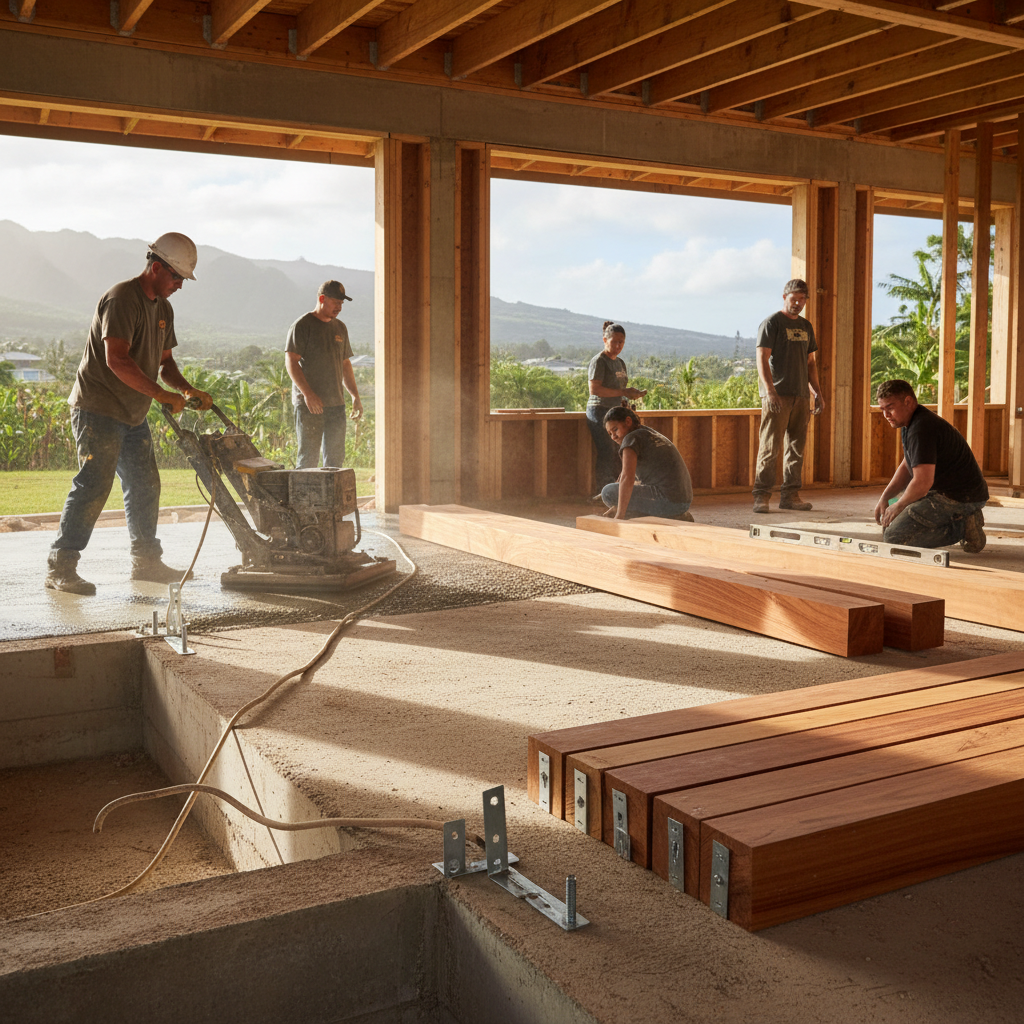
For a typical residential concrete project in Kaneohe, the on-site work from groundbreaking to final cleanup usually takes about **2 to 4 weeks**. However, the single biggest factor affecting the *total* project duration is permitting. From the day you sign a contract to the day you can park your car on a new driveway, the entire process, including permitting, can take **4 to 8 months**.
Here is a realistic step-by-step timeline for a project that requires a permit, like a new foundation or a large retaining wall:
1. **Planning & Permitting (3-6 Months… or more):** This is the phase that surprises most homeowners. After we finalize the plans, they are submitted to the Honolulu Department of Planning and Permitting (DPP). In 2026, the review process is lengthy. We manage this process, responding to any comments from the plan reviewers, but the timeline is largely out of our hands.
2. **Mobilization & Site Prep (3-5 Days):** Once we have the approved permit in hand, our team gets to work. This involves clearing the area, performing any necessary excavation and grading, and compacting the sub-base soil. This is a critical step for preventing future settling and cracks.
3. **Forming & Rebar Installation (2-4 Days):** We build the wooden or metal forms that will contain the wet concrete and create the final shape. Then, our crew meticulously places and ties the steel rebar grid according to the engineering plans. This steel skeleton is what gives the concrete its tensile strength.
4. **Pre-Pour Inspection (1-2 Days):** Before any concrete is ordered, a city inspector must visit the site to approve the formwork, rebar placement, and any embedded hardware. We have to schedule this, which can take a day or two depending on the inspector’s availability.
5. **Pour Day (1 Day):** This is the main event. The concrete trucks arrive, and we pour, spread, and level the concrete. For a large pour, this is an all-hands-on-deck, highly coordinated effort that has to move quickly and efficiently.
6. **Finishing & Curing (1 Day for finishing, 28 days for curing):** Immediately after pouring, the surface is finished (e.g., with a broom for texture). Then, the most important and often misunderstood phase begins: curing. Concrete doesn’t just “dry”; it undergoes a chemical reaction called hydration. We keep the surface moist for the first 7 days to ensure it gains maximum strength. You can typically walk on it after 2-3 days, but it needs a full 28 days to reach its specified design strength. We can’t stress this enough, especially in Kaneohe’s humid climate. Rushing the curing process is a recipe for a weak, cracked slab.
Of course, Kaneohe weather is the ultimate wildcard. A week of heavy rain can halt all site work. We build contingency days into our schedule, but it’s important for homeowners to understand that we work at the mercy of the weather. We will never pour concrete if there’s a significant chance of rain, as it can ruin the surface and compromise the structural integrity of the slab.
What Permits Do You Need for Concrete Contractor in Kaneohe?
Navigating the permitting process with the Honolulu Department of Planning and Permitting (DPP) is one of the most critical services a qualified general contractor provides. For concrete work in Kaneohe, the rule of thumb is this: any structural work or significant change to your property will require a building permit[1]. Simple repairs of existing flatwork often don’t, but it’s always best to check.
Here are the most common concrete projects in Kaneohe that absolutely require a permit:
* **New Foundations:** Any new slab-on-grade or post-and-pier foundation for a house, ADU, or garage requires a full building permit with engineered plans.
* **Retaining Walls:** Any retaining wall over four feet in height (measured from the bottom of the footing to the top of the wall) requires a permit and stamped engineering drawings. Walls under four feet that are supporting a surcharge (like a driveway or structure) also require a permit.
* **Large Driveways or Slabs:** While a simple replacement of an existing driveway may not need a permit, a new, expanded driveway or a large new slab (typically over 500 square feet) that alters the property’s drainage patterns will trigger the need for a permit.
* **Structural Slabs:** Any concrete slab designed to support a structure, such as a second-story deck or a heavy-duty workshop floor, requires a permit.
Obtaining a permit from the DPP in 2026 is a multi-step process that demands patience and expertise. First, we work with an architect or engineer to create detailed plans that comply with all current building codes. These plans are then submitted to the DPP for review. The plans go through multiple departments—planning, building, civil engineering—and each may have comments or require revisions. This back-and-forth can take months. A contractor who has a good working relationship with DPP staff and understands what they’re looking for can help streamline this process, but delays are still common.
For homeowners, trying to navigate this process alone can be incredibly frustrating. The requirements are complex, and the online system can be difficult to use. As your general contractor, we handle every aspect of the permitting process. We submit the application, manage communications with the plan reviewers, make any necessary revisions, and see it through to approval. This service is built into our project management, saving you the headache and ensuring that your project is fully compliant and legal. An unpermitted structure can create huge problems when you eventually try to sell your home, so doing it right from the start is the only way to go.
Kaneohe-Specific Considerations: Climate, Materials, Regulations
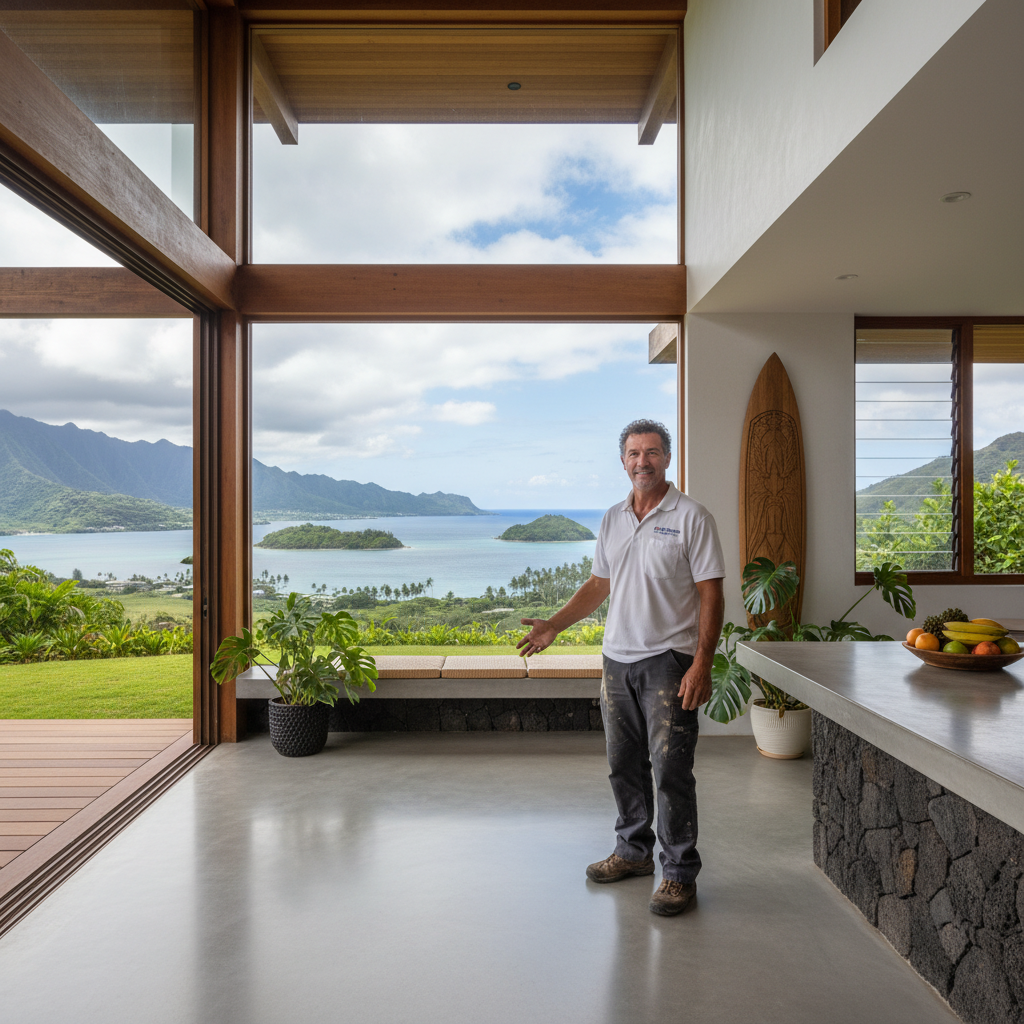
The biggest mistake a homeowner or contractor can make is treating a Kaneohe construction project like one on the mainland or even on the leeward side of O’ahu. The Windward side has its own set of rules dictated by the environment. Overlooking them leads to premature failure of materials and structures.
**Relentless Moisture and Salt Air:**
Kaneohe’s beauty comes from its lushness, which is a direct result of consistent rainfall and humidity. For concrete, this is a double-edged sword. While the humidity can actually help with proper curing (slowing down evaporation), the constant moisture can wreak havoc if not managed. We design all our slabs and foundations with robust waterproofing and drainage systems. This includes a thick vapor barrier beneath the slab, proper grading to direct water away from the foundation, and often French drains for hillside properties.
More importantly, the **salt-air corrosion** is aggressive. The salty mist blows in and penetrates porous materials. For concrete, this means attacking the steel rebar inside. When rebar rusts, it expands, cracking the concrete from within—a condition known as spalling. To combat this, we have strict standards:
* **Increased Concrete Cover:** We ensure there are at least 3 inches of concrete covering all steel reinforcement, which is more than the standard code for less corrosive environments.
* **Corrosion-Resistant Rebar:** For any home within a mile of the coast, we specify either epoxy-coated green rebar or galvanized rebar. It’s a significant material cost increase, but it’s the only way to ensure the foundation’s longevity.
* **Low-Permeability Concrete Mix:** We often use a concrete mix with a lower water-to-cement ratio and sometimes add silica fume. This creates a denser, less porous concrete that is much harder for salt and moisture to penetrate.
**Challenging Volcanic Soils:**
The reddish soil common in Kaneohe is a type of volcanic clay soil called laterite. These soils can be tricky because they can be expansive—they swell up when they absorb water from heavy rains and shrink when they dry out. This constant movement puts immense stress on a rigid concrete foundation, leading to cracks and heaving. Before any major foundation work, a geotechnical report is often necessary. Based on its findings, we might need to over-excavate the expansive soil and replace it with engineered fill to create a stable base for the foundation.
**Strict Hurricane Code Regulations:**
Hawaii’s building code is one of the most stringent in the nation, specifically regarding resistance to hurricane-force winds. The entire structural system, starting with the foundation, is designed as a continuous load path to keep the house anchored to the ground. For our concrete work, this means meticulously placing and embedding specific hardware:
* **Hurricane Straps and Hold-Downs:** These metal connectors are cast directly into the concrete foundation at precise, engineered locations. The wall framing is then directly fastened to these anchors. There is zero room for error in their placement.
* **Anchor Bolts:** For sill plates, we use larger and more closely spaced anchor bolts than in many mainland regions, ensuring a solid connection between the concrete and the wood framing.
Our team is trained on these specific requirements, and our work is planned around them from day one. It’s not an add-on; it’s fundamental to how we build on this island.
How to Choose the Right Concrete Contractor Contractor in Kaneohe
Choosing the right contractor is the single most important decision you’ll make for your project. A great contractor will result in a smooth process and a lasting final product, while a bad one can become a financial and legal nightmare. The most crucial first step is to verify their license and insurance. A legitimate **concrete contractor Kaneohe** must have a current Hawaii contractor license and carry both general liability and worker’s compensation insurance.
Here is our go-to checklist for vetting any contractor you consider hiring:
1. **Verify Their License:** Go to the Hawaii Department of Commerce and Consumer Affairs (DCCA) Professional & Vocational Licensing (PVL) website[2]. You can search by company name or license number (ours is BC-34373). Check that the license is current and active, and that there are no unresolved complaints against them. Never, ever hire an unlicensed individual for structural work.
2. **Demand a Certificate of Insurance (COI):** Ask for proof of general liability and worker’s compensation insurance. The certificate should be sent to you directly from their insurance agent. If a worker gets hurt on your property and the contractor isn’t insured, you could be held liable for their medical bills. It’s a massive risk that isn’t worth taking.
3. **Inspect Their Local Work:** Don’t just look at glossy photos in a portfolio. Ask for the addresses of 3-4 recent projects they completed in Kaneohe, Kailua, or nearby areas. Drive by and look at the work yourself. How do the edges of the driveway look? Are there any visible cracks? Is the finish even? Concrete work is a craft, and the quality is visible.
4. **Evaluate Their Communication and Process:** During the bidding process, do they listen to your concerns? Do they explain their process clearly? A good contractor should be able to tell you about the concrete mix (PSI), the rebar schedule they plan to use, their water management plan, and how they will ensure proper curing. If they can’t answer these questions confidently, it’s a red flag.
5. **Insist on a Detailed Written Contract:** A handshake deal is not a contract. The written agreement should be comprehensive and include:
* The full scope of work, in detail.
* A breakdown of costs for materials, labor, and permits.
* The specific materials to be used (e.g., “4000 PSI concrete,” “#4 rebar at 18 inches on center”).
* A clear payment schedule tied to project milestones.
* An estimated start and completion date.
We once had to repair a retaining wall for a family in Kaneohe that was built by a low-bidding, unlicensed crew. The wall started leaning after the first big storm because it had no proper footing and no drainage. The original contractor was gone, and the homeowners had no legal recourse because their “contract” was a one-page, vague estimate. They ended up paying more than double to have us tear it down and rebuild it correctly. It’s a tough lesson that we hope to help others avoid.
Real Kaneohe Concrete Contractor Project Example
To bring all these points together, let’s walk through a typical project we recently completed for a family in the Puʻu ʻĀlani neighborhood of Kaneohe.
* **The Client:** The Kamaka family, who wanted to build a new ADU for their kupuna and replace their crumbling, old driveway.
* **The Problem:** Their property was on a slight slope, and their existing asphalt driveway was a mess of cracks and potholes, creating a tripping hazard. They needed a solid, level foundation for their planned 800-square-foot ADU and a new driveway that was safe and durable.
* **Warrior Construction’s Solution:** We proposed a multi-phase concrete solution managed under a single general contracting agreement. This streamlined the process and ensured all the components worked together seamlessly.
* **Phase 1: Driveway Replacement:** We began by demolishing and hauling away the old asphalt. We then re-graded the entire area to ensure proper drainage away from the main house and the future ADU site. We formed and poured a new 900 sq. ft. **driveway concrete Kaneohe** using 4000 PSI concrete, reinforced with a #4 rebar grid. We applied a broom finish for excellent traction in wet weather. **Final Cost: $29,700**.
* **Phase 2: ADU Foundation:** The ADU required a permit from the DPP, a process we managed that took about five months. Once approved, we excavated for a new slab-on-grade **concrete foundation Kaneohe**. The engineered plans called for a thickened-edge monolithic slab. We installed a vapor barrier, the full rebar schedule, and all the required Simpson Strong-Tie hurricane hold-downs, which were embedded directly into the wet concrete during the pour. **Final Cost: $40,000**.
* **Phase 3: Connecting Walkways:** To connect the new driveway to the main house and the ADU, we poured 250 sq. ft. of walkways, ensuring they were ADA-compliant for the grandparents who would be living in the ohana unit. **Final Cost: $7,500**.
* **Project Timeline:** The on-site work for all concrete phases was completed in six weeks. The entire project, from signing the contract to the foundation being ready for framing, took just under seven months due to the permitting lead time.
* **The Outcome:** The Kamaka family now has a safe, beautiful driveway and a perfectly executed, code-compliant foundation ready for the next stage of their ADU build. They have peace of mind knowing the work was done right, with materials suited for Kaneohe’s environment, and that it will last for generations.
What this means for Hawaii homeowners
For any homeowner in Kaneohe planning a project involving concrete, understanding these local nuances is the key to a successful outcome. The stakes are high; your home’s foundation is its most critical structural element. A poorly executed driveway is an expensive eyesore, and a failing retaining wall is a dangerous liability. Taking the time to plan properly and hire a qualified, experienced local contractor is the best investment you can make in your property.
Here are the most important, actionable takeaways:
- Budget for Reality, Not Wishful Thinking: Concrete work on O’ahu is more expensive than on the mainland. Use the figures in this guide ($25-$35/sq ft for flatwork, $45-$60/sq ft for foundations) as a realistic starting point for your budget in 2026. Get multiple detailed bids, but be wary of any that are significantly lower than the others—it’s often a sign that corners are being cut.
- Embrace “Island Time” for Permitting: The Honolulu DPP process is slow. Do not plan your construction schedule assuming a quick permit approval. Start the planning and permit application process 6-9 months before you hope to break ground. A good contractor can help you navigate this, but they can’t make the government move faster.
- Hire a Licensed, Windward-Savvy Contractor: Don’t hire someone from town who doesn’t regularly work in Kaneohe. You need a team that instinctively understands the challenges of the rain, salt air, and soil. Verify their license on the PVL website and check their local references. Your contractor should be your expert guide through these specific challenges.
- Prioritize Material Quality Over Cost: When your contractor recommends upgrades like epoxy-coated rebar or a higher PSI concrete mix, it’s not an upsell—it’s a necessity for durability in our corrosive environment. Spending an extra 10-15% on materials now can prevent catastrophic, five-figure repairs in 10-15 years.
Ultimately, your goal is to do the job once and do it right. By following this advice, you can protect your investment and ensure the safety and longevity of your home.
Frequently Asked Questions About Concrete Contractor in Kaneohe
What PSI concrete is best for a Kaneohe driveway?
For a residential driveway in Kaneohe, the absolute minimum should be 3000 PSI (Pounds per Square Inch). However, given the frequent heavy rainfall which can lead to erosion under the slab, our team at Warrior Construction strongly recommends using a 4000 PSI mix. This provides superior durability and strength to better withstand the weight of modern SUVs and trucks and resist surface wear over the long term.
Do I need a permit just to replace my existing driveway in Kaneohe?
Typically, no. If you are doing a like-for-like replacement—meaning the same size, shape, and location with no change to the curb cut—a permit is usually not required by the Honolulu DPP. However, the moment you expand the driveway, change its slope significantly (which can alter drainage), or need to create a new curb cut, a permit will be required. It is always safest to consult with a licensed contractor to verify before starting work.
How long until I can park my car on my new concrete driveway?
Patience is key here. You can usually allow light foot traffic after 48 to 72 hours. For parking a standard passenger car, we advise waiting a minimum of 7 full days. For heavier vehicles like a large truck or an RV, you should wait the full 28-day curing period to ensure the concrete has reached its maximum design strength and avoid causing ruts or cracks.
What’s the difference between a concrete contractor and a general contractor?
A specialty concrete contractor focuses exclusively on concrete work. A general contractor (GC), like Warrior Construction, manages the entire construction project, which may include concrete work as one component. For a project that only involves a driveway, you could hire a concrete sub. But for anything more complex, like a foundation for a new home or ADU, you need a GC to coordinate the permits, excavation, concrete, framing, and all other trades.
Why is concrete work so much more expensive in Hawaii?
The higher cost comes down to two main factors: materials and labor. Nearly all the raw materials—cement, aggregate, rebar, and forming supplies—must be shipped across the Pacific, which adds significant transportation costs. Furthermore, Hawaii has a high cost of living, which translates to higher wages for skilled labor. The demand for experienced construction professionals on O’ahu keeps labor rates at a premium compared to most mainland markets.
How do you handle the constant threat of rain during a concrete pour in Kaneohe?
We are obsessive about monitoring the weather forecast. If a significant storm is predicted, we will always reschedule the pour. For the pop-up showers common on the Windward side, we come prepared. We have large plastic rolls on-site, ready to be deployed to cover the fresh slab instantly if rain starts. This protects the surface finish from being pockmarked and prevents the water-cement ratio from being compromised.
Is a stamped concrete patio a good idea in Kaneohe?
Stamped concrete can be a beautiful and lower-cost alternative to natural stone. However, in Kaneohe’s wet climate, it requires diligent maintenance. The sealer that protects the color and gives it a sheen needs to be reapplied every 2-3 years, more frequently than in drier climates. If not sloped perfectly, the indentations in some patterns can hold water, potentially creating slick spots. It’s a great option, but homeowners need to be aware of the upkeep involved.
Ready to build on a solid foundation? Don’t let Kaneohe’s unique challenges compromise your project’s integrity. Our team at Warrior Construction has been pouring code-compliant, long-lasting concrete across O’ahu for over two decades. We understand the soil, the salt air, and the permitting process better than anyone. We’re not just contractors; we’re your neighbors, dedicated to building structures that last in the place we all call home. Get in touch with our team today for a straightforward, no-obligation estimate for your project.