“
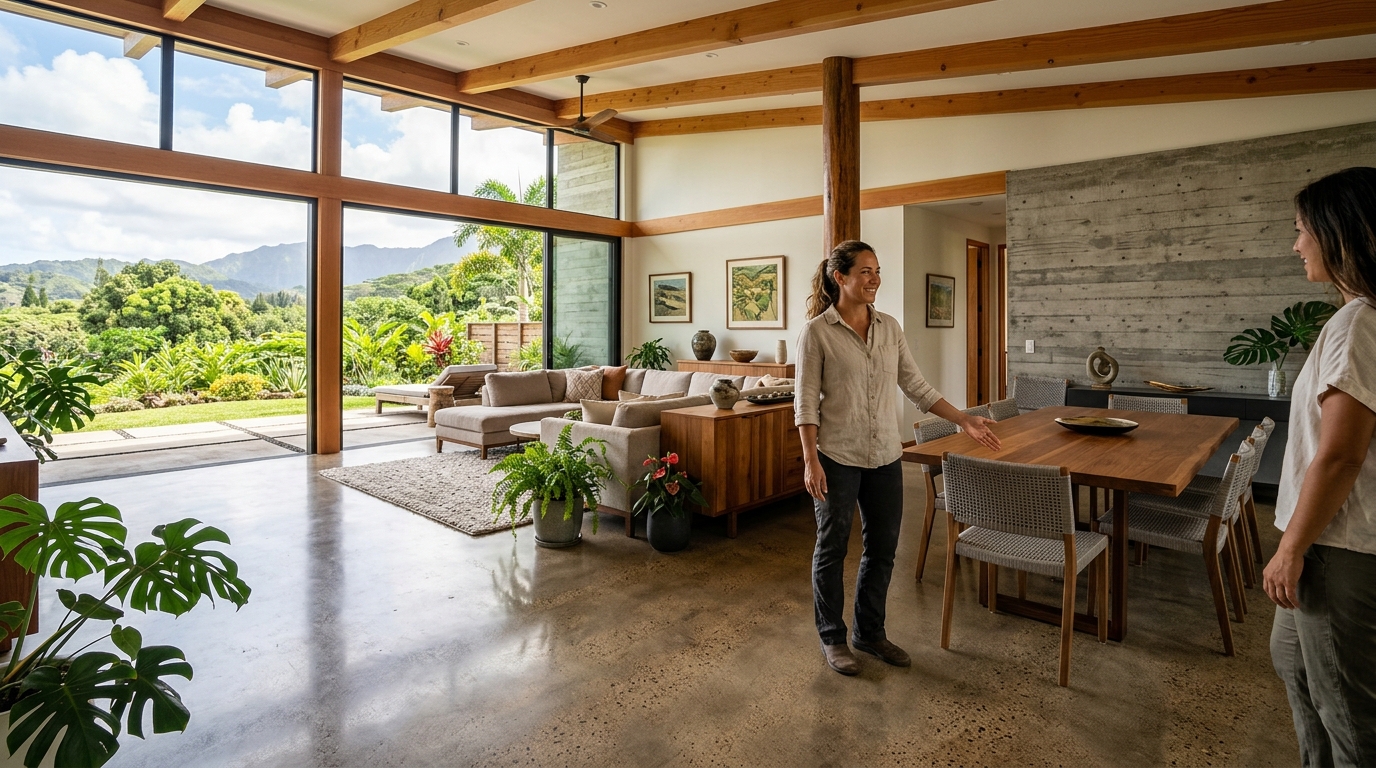
If you’re planning a concrete project in Manoa for 2026, you can expect to pay between $28 and $45 per square foot for flatwork like a new driveway, and from $90 to $125 per square foot for a structural concrete foundation. These numbers are specific to O’ahu and account for our island’s unique material and labor costs. The biggest money-saving tactic isn’t about finding the cheapest materials; it’s about meticulous pre-planning with an experienced concrete contractor Manoa homeowners know and trust. At Warrior Construction, we’ve poured hundreds of projects in Manoa Valley, and we know that understanding the soil, managing water runoff, and navigating Honolulu’s permitting process are the keys to keeping your budget from spiraling out of control. This isn’t mainland construction; here, the rain, the red dirt, and the regulations are part of every job.
\n\n
This article breaks down the real costs, timelines, and challenges you’ll face. We’re not going to give you vague ranges. Instead, we’ll provide hard numbers based on our 20+ years of experience as a licensed general contractor (BC-34373) right here on O’ahu. You’ll learn the five most effective ways to save money without cutting corners, from optimizing your design for material efficiency to scheduling your pour to avoid Manoa’s notorious afternoon showers. We’ll also cover the specific permits required by the Honolulu Department of Planning and Permitting (DPP) and explain how Manoa’s unique environment impacts your project’s longevity.
\n\n
Why Manoa Homeowners Trust Warrior Construction for Concrete Contractor
\n
Choosing a concrete contractor in Manoa is about more than just a license and a truck. It’s about finding a team that truly understands the valley. We’re not just a company with a local address; our team has lived and worked here for decades. We know the challenges of getting a fully loaded concrete truck up a steep, narrow street off East Manoa Road without upsetting the neighbors. We’ve dealt with the sudden downpours that can ruin a pour if you’re not prepared. At Warrior Construction, this deep local knowledge is built into every project we do, from a simple driveway to a complex hillside foundation.
\n\n
Our reputation is built on transparency and communication. Before we even mix the first bag of cement, you’ll have a detailed plan that outlines costs, timelines, and potential challenges. We believe an informed homeowner is a happy homeowner. For example, on a recent project near the Lyon Arboretum, we identified a potential drainage issue from the hillside during our initial site visit. Instead of waiting for it to become a problem, we engineered a French drain system into the retaining wall design, saving the homeowner thousands in potential water damage repairs down the line. It’s this proactive approach that sets us apart. We’re not just pouring concrete; we’re building lasting solutions that respect the unique character and challenges of Manoa.
\n\n
Furthermore, our comprehensive general contracting license (BC-34373) means we can handle the entire scope of your project. If your new concrete slab is for a home addition or an ADU, you don’t need to juggle multiple contractors. We manage everything from the initial design and permitting to the final finishing touches. This integrated approach not only simplifies the process for you but also ensures that every phase of the project is perfectly coordinated, which prevents costly delays and communication breakdowns. Our clients in Manoa trust us because they know we treat their home with the same care and attention to detail as if it were our own.
\n\n
What Does Concrete Contractor Cost in Manoa?
\n
In 2026, the cost for a professional concrete contractor in Manoa breaks down into a few key categories, and it’s crucial to understand these numbers to budget effectively. For standard flatwork, like a new driveway concrete Manoa project, you’re looking at a cost of approximately $28 to $45 per square foot. For a typical 500-square-foot driveway, this translates to a total cost of $14,000 to $22,500. This price includes site preparation, forming, a 4-inch slab with wire mesh reinforcement, and a standard broom finish.
\n\n
However, when we talk about structural work like a concrete foundation Manoa homes require, the complexity and cost increase significantly. For a new slab-on-grade foundation, the price jumps to $90 to $125 per square foot. This higher cost accounts for thicker concrete (typically 6 inches), extensive rebar reinforcement to meet hurricane codes, integrated plumbing and electrical conduits, and the mandatory soil testing and engineering reports required for new structures in Honolulu. A 1,500-square-foot foundation could therefore cost between $135,000 and $187,500.
\n\n
Here’s a more detailed breakdown of what influences these costs:
\n
- \n
- Materials: Concrete itself costs about $250-$280 per cubic yard delivered to a Manoa job site in 2026. Rebar, vapor barriers, and formwork materials add to this. Shipping to Hawaii adds a significant baseline cost to all materials before they even get to the job site.
- Labor: Skilled labor is a major component. This includes excavation, grading, form setting, rebar tying, the pour itself, and the critical finishing process. A poorly finished slab can have low spots that puddle water, a big problem in rainy Manoa.
- Site Access: Manoa is known for its older neighborhoods with narrow, winding roads. If a concrete pump truck is needed because the main truck can’t get close enough, that can add $1,500 to $2,500 to the daily cost.
- Demolition and Removal: Tearing out an old, cracked driveway? Expect to pay an additional $5 to $8 per square foot for demolition, plus trucking and disposal fees at the landfill.
- Special Finishes: A simple broom finish is standard. If you want stamped concrete, exposed aggregate, or staining, your cost per square foot can easily double.
\n
\n
\n
\n
\n
\n\n
Money-Saving Tactic #1: Plan for Water. Manoa gets over 150 inches of rain a year. Before you pour, have a solid plan for drainage. Integrating French drains, proper grading, and permeable pavers in surrounding areas can prevent your new concrete from becoming a swimming pool. It’s far cheaper to plan for this than to fix erosion and water damage later.
\n\n
How Long Does a Concrete Contractor Take in Manoa?
\n
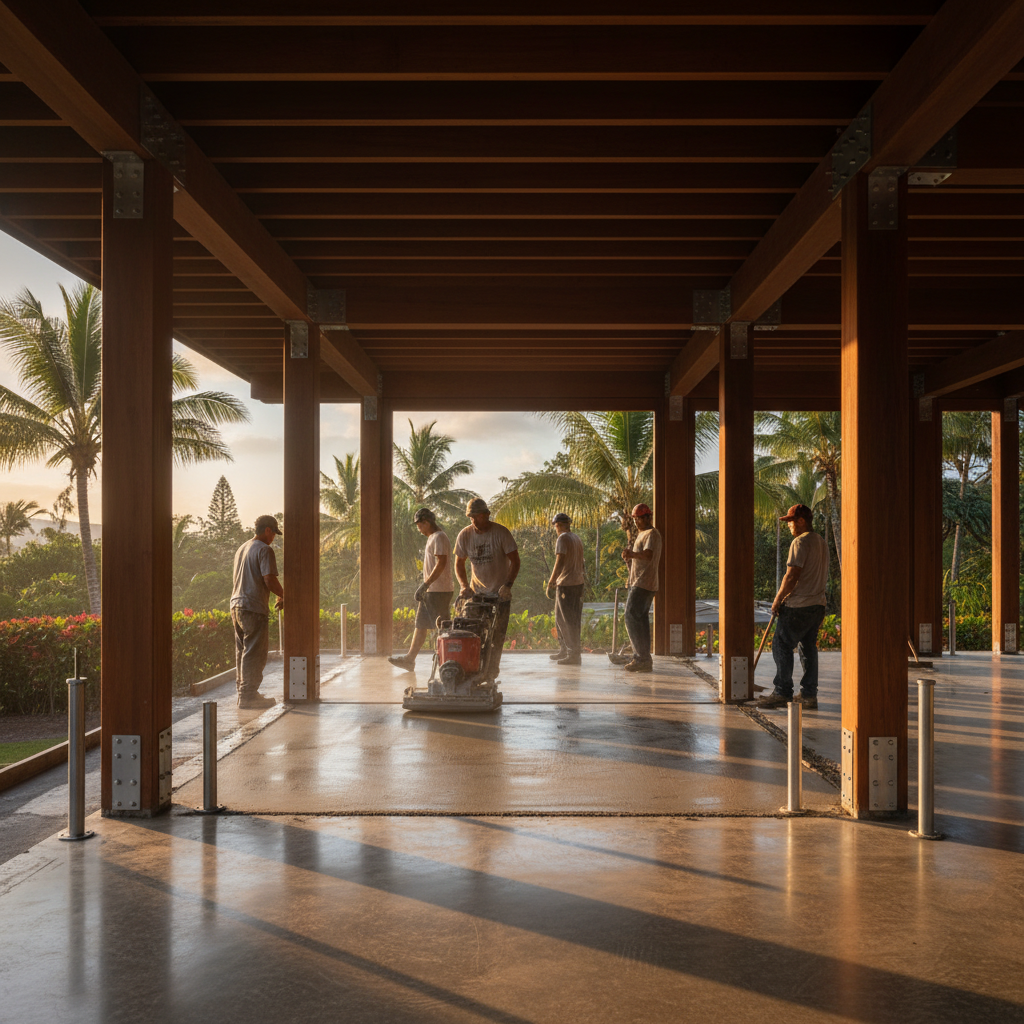
The timeline for a concrete project in Manoa is dictated less by the work itself and more by the two things you can’t control: permitting and weather. While the physical process of pouring a driveway might only take a few days, the total project timeline from signing a contract to driving your car on the new surface can take anywhere from 6 to 12 weeks in 2026.
\n\n
Let’s break down a typical timeline for a 600-square-foot driveway replacement project in Manoa:
\n
- \n
- Weeks 1-4: Permitting. This is the biggest variable. Even for a simple driveway replacement that impacts the public right-of-way (the sidewalk apron), you’ll need a permit from the Honolulu DPP.[1] We’ve seen these take as little as two weeks, but a four-week average is a safe bet. For a new foundation, this phase can stretch to 4-6 months.
- Week 5: Demolition and Site Prep. Once the permit is in hand, our team can get to work. Tearing out the old concrete and hauling it away usually takes 1-2 days. Grading the soil and setting up the formwork takes another 2-3 days. This is the most critical phase for ensuring proper drainage.
- Week 6: The Pour. The actual pour is a one-day event. However, it’s entirely weather-dependent. In Manoa, we watch the forecast like hawks. A sudden downpour during a pour can compromise the surface integrity. We often schedule pours for early morning to beat the typical afternoon showers.
- Week 6-7: Curing. This is where patience is key. Concrete doesn’t \”dry\”; it cures through a chemical reaction called hydration. You should not walk on a new slab for at least 48-72 hours. You absolutely should not drive a vehicle on it for at least 7 days, and ideally, you wait the full 28 days for it to reach its maximum design strength. We often apply a curing compound to help the slab retain moisture for a stronger cure.
- Week 8-12: Contingency. We always build in a buffer for weather delays. If we hit a week of solid rain, everything gets pushed back. This is just a reality of working in one of O’ahu’s wettest valleys.
\n
\n
\n
\n
\n
\n\n
For a project like a retaining wall Manoa homeowners often need for hillside properties, the timeline can be longer. These require more extensive excavation, engineering, and inspections, potentially adding another 4-6 weeks to the total project duration.
\n\n
Money-Saving Tactic #2: Schedule in the Drier Season. While Manoa is always wet, try to schedule your concrete work during the summer months (June-September). You’ll have a much lower chance of weather delays, which can save you money on labor costs associated with rescheduling and protecting the site from rain.
\n\n
What Permits Do You Need for Concrete Contractor in Manoa?
\n
Navigating the Honolulu Department of Planning and Permitting (DPP) is one of the most important jobs for a qualified concrete contractor in Manoa. You can’t just start breaking ground. In 2026, nearly any concrete work beyond a simple, small patio slab in your backyard requires a permit. Failure to secure the right permits can result in hefty fines, stop-work orders, and even being forced to tear out the completed work.
\n\n
Here’s a rundown of common concrete projects and the permits they typically require:
\n
- \n
- Driveway Replacement/Widening: If your project touches the sidewalk or the “apron” where your driveway meets the street, you will need a Street Usage Permit from the DPP. This ensures your new driveway meets city standards for slope and safety. If you’re simply resurfacing the existing footprint far from the sidewalk, you might not need one, but it’s always best to check.
- New Concrete Foundation: This requires a full Building Permit. This is the most complex permit, involving architectural plans, structural engineering calculations, and multiple reviews by the DPP. For a concrete foundation Manoa requires, you’ll also likely need a soil engineering report to address the valley’s specific geological conditions. The permit process for a new foundation can easily take 4-8 months.
- Retaining Walls: A retaining wall Manoa project has specific triggers for permits. Any wall over 4 feet in height (measured from the bottom of the footing to the top of the wall) requires a building permit and engineered drawings. Even smaller walls may need a grading permit if you are moving a significant amount of soil. Given the slopes in Manoa, this is a common requirement.
- Patios and Walkways: Generally, a simple on-grade patio or walkway under 30 inches in height and not part of a required exit path doesn’t need a permit. However, if it’s part of a larger project or includes a roof/cover, it will get bundled into the main building permit.
\n
\n
\n
\n
\n\n
The DPP’s online permitting system has improved, but it’s still a complex process that’s best handled by a contractor who deals with it daily. We have dedicated staff who manage our permit applications, follow up with plan reviewers, and schedule the necessary inspections (footing, rebar, final). This is a service that is built into our project management, and it saves our clients countless hours and headaches.
\n\n
Money-Saving Tactic #3: Hire a Contractor Who Handles Permitting In-House. Don’t try to be your own permit runner to save a few bucks. A professional who knows the DPP plan reviewers and understands the nuances of the building code will get your permit approved faster and with fewer revisions. Delays in permitting are delays for the entire project, and that costs money.
\n\n
Manoa-Specific Considerations: Climate, Materials, Regulations
\n
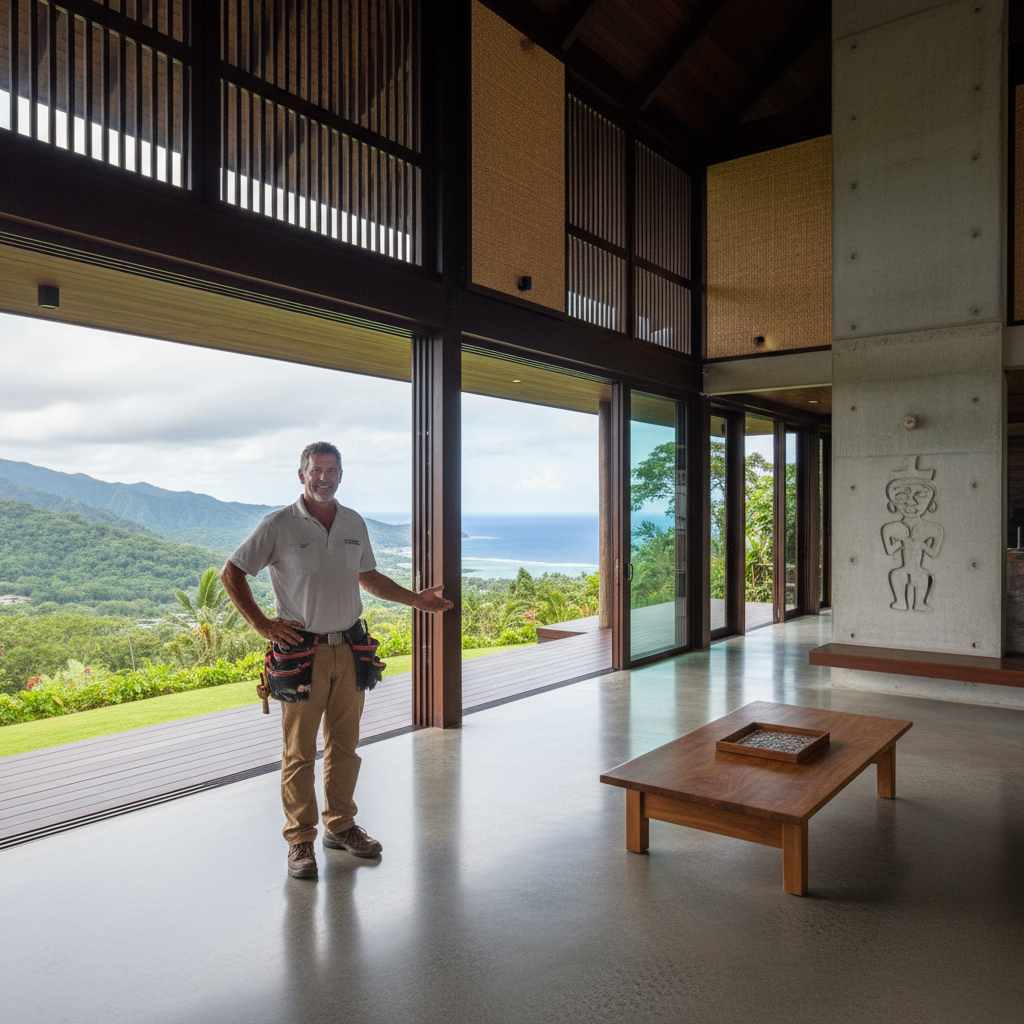
Manoa isn’t like the rest of O’ahu, and your concrete project needs to account for its unique environment. A concrete mix that works perfectly in dry, sunny Kapolei might fail prematurely in the cool, damp, and shaded conditions of Manoa Valley. As your local concrete contractor Manoa expert, we engineer our projects specifically for these conditions.
\n\n
Climate: The Rain is Relentless
\n
Manoa is a temperate rainforest. The high humidity and frequent rainfall have a direct impact on concrete work.
\n
- \n
- Curing Time: The cooler, wetter air can slow down the concrete’s curing process. While it gets plenty of moisture for hydration, it gains strength more slowly than in hotter, drier areas. We have to be careful about when we strip forms and when we allow loads on the slab.
- Water-Cement Ratio: We are meticulous about controlling the water-cement ratio. Too much water weakens the final product. On a humid Manoa day, the mix needs less added water than on a dry Ewa Beach day. An inexperienced contractor might just add water to make the mix easier to work with, unknowingly compromising the long-term strength.
- Surface Finishing: The window for finishing the concrete surface is much trickier. If it starts to rain lightly, the surface can be ruined. We always have plastic sheeting ready to cover a fresh pour at a moment’s notice.
\n
\n
\n
\n\n
Materials: Fighting Moisture and Pests
\n
Our material choices are dictated by the local environment. We don’t just order the standard mix.
\n
- \n
- Concrete Mix Design: We often specify a concrete mix with a lower water-cement ratio and sometimes include additives like fly ash or silica fume. These create a denser, less permeable concrete that is more resistant to moisture intrusion and the mildew and algae that love to grow in Manoa.
- Vapor Barriers: Under any interior slab-on-grade foundation, a high-quality vapor barrier is non-negotiable. In Manoa, we recommend using a thicker, more durable barrier (15-mil) to prevent ground moisture from wicking up through the slab, which can lead to moldy carpets and damaged flooring.
- Termite Treatment: The damp soil in Manoa is a paradise for ground termites. All foundations require proper soil treatment before the pour, like Sentricon or a similar system, in compliance with Hawaii’s pest control regulations. This is a critical step to protect the entire home.
\n
\n
\n
\n\n
Regulations and Soil Conditions
\n
The ground beneath your feet in Manoa presents its own set of challenges.
\n
- \n
- Expansive Clay Soil: Much of the valley floor consists of expansive clay soil, which swells when it gets wet and shrinks when it dries. This movement can crack foundations and slabs that aren’t properly engineered. A geotechnical (soil) report is often required by the DPP for new foundations to determine the soil’s properties.
- Hillside Construction: Many Manoa homes are built on slopes. This requires specialized foundations, like post-and-pier or stepped foundations, and extensive retaining walls. These are complex structural projects that require detailed engineering to ensure stability and proper drainage to prevent landslides.
\n
\n
\n\n
Money-Saving Tactic #4: Invest in a Geotechnical Report. For any new foundation or large retaining wall, spending $3,000-$5,000 on a soil report might seem expensive upfront. But this report gives the structural engineer the exact data they need to design a foundation that is safe and efficient. Over-engineering a foundation “just in case” is far more expensive than designing one precisely for the known soil conditions.
\n\n
How to Choose the Right Concrete Contractor Contractor in Manoa
\n
Choosing the right contractor can make or break your project’s budget, timeline, and final quality. In Hawaii, it’s especially important to do your homework. Here’s a checklist we recommend to every homeowner:
\n\n
- \n
- Verify Their License and Insurance. This is the absolute first step. Don’t just take their word for it. You can and should verify any contractor’s license status online through the Hawaii Department of Commerce and Consumer Affairs (DCCA) Professional & Vocational Licensing (PVL) division.[2] Our license, for example, is BC-34373. Also, ask for a certificate of insurance showing they have both general liability and workers’ compensation coverage. Without it, you could be liable for accidents on your property.
- Look for Specific Manoa Experience. Ask them directly: \”How many projects have you completed in Manoa Valley in the last few years?\” A contractor from Kapolei might do great work, but do they know about the drainage challenges on Poelua Street or the access issues on Oahu Avenue? Ask for addresses of past projects so you can do a drive-by and see the quality of their flatwork years later. Does it have major cracks? Is it stained with mildew?
- Get a Detailed, Itemized Bid. A one-page quote with a single bottom-line number is a red flag. A professional bid from a reputable contractor will be several pages long and break down the costs for materials, labor, equipment rental, permitting, and disposal. This transparency prevents misunderstandings and protects you from surprise charges later. For example, our bids will specify the exact PSI (pounds per square inch) of the concrete mix, the thickness of the slab, and the type of reinforcement used.
- Check Their References. Don’t just look at glossy photos on a portfolio. Ask for the phone numbers of their last three clients. Call them and ask about their experience. Was the project on time and on budget? How was the communication? Was the job site kept clean and safe? How did they handle problems when they came up?
- Communication is Key. During the initial meetings, pay attention to how they communicate. Do they listen to your concerns? Do they explain technical details in a way you can understand? A good contractor should feel like a partner in the project, not just a vendor. You will be working with this person for weeks or months, so make sure it’s someone you can have a productive conversation with.
\n
\n
\n
\n
\n
\n\n
Money-Saving Tactic #5: Don’t Choose on Price Alone. It’s tempting to jump on the lowest bid, but this is often the costliest mistake a homeowner can make. An unusually low bid can be a sign of an unlicensed contractor, someone who uses substandard materials, or someone who will hit you with a series of expensive “unforeseen” change orders once the job has started. A professional bid that seems 10-15% higher might actually save you money in the long run by delivering a durable, high-quality product that won’t need to be redone in five years.
\n\n
Real Manoa Concrete Contractor Project Example
\n
Let’s walk through a typical project to make these numbers and concepts concrete. A family on Lowrey Avenue in Manoa wanted to replace their old, cracked 800-square-foot driveway and add a new 400-square-foot concrete pad for a future outdoor seating area. The total project was 1,200 square feet.
\n\n
The Challenge: The existing driveway had severe cracking due to poor subgrade preparation and tree root intrusion from a large monkeypod tree. Additionally, water from the frequent rains would sheet down the driveway and pool near the garage entrance, a common problem in the valley.
\n\n
Our Solution & Process:
\n
- \n
- Initial Assessment: We identified the need for significant subgrade work and a drainage solution. We also consulted with an arborist to see how we could remove the problematic roots without harming the beautiful old tree.
- Design & Permitting: Our plan included removing the old driveway, excavating an additional 6 inches of soil, bringing in 4 inches of compacted gravel base for stability, and installing a 6-inch channel drain across the front of the garage. Because the driveway apron connected to the city sidewalk, we filed for a Street Usage Permit with the DPP.
- The Budget: We presented a detailed, itemized budget in 2026 dollars:\n
- \n
- Demolition & Hauling (1,200 sq ft @ $6/sq ft): $7,200
- Excavation & Gravel Base (1,200 sq ft @ $5/sq ft): $6,000
- Forming, Rebar, and 4\” Pour (1,200 sq ft @ $18/sq ft): $21,600
- Channel Drain Installation (40 ft): $2,800
- Permitting & Administration Fees: $950
- Total Project Cost: $38,550
\n
\n
\n
\n
\n
\n
\n This works out to approximately $32.13 per square foot, which is right in the expected range for a quality job with proper site prep.
- The Timeline: The DPP permit took 3 weeks. Once approved, the on-site work (demo, prep, pour, cure) took another 3 weeks, including one 2-day delay due to a heavy rain system. The total project duration from contract signing to completion was just under 7 weeks.
\n
\n
\n
\n
\n\n
The Outcome: The homeowners received a beautiful new driveway and patio with a light broom finish for excellent traction in wet weather. Most importantly, the new channel drain and proper grading completely solved their water pooling problem. By investing in proper site preparation and drainage, they now have a concrete installation that will last for decades, not just a few years.
\n\n
Frequently Asked Questions About Concrete Contractor in Manoa
\n
What is the best time of year to pour concrete in Manoa?
\n
The best time is during Hawaii’s drier summer season, typically from June through September. While Manoa is rainy year-round, these months offer more consecutive dry days, reducing the risk of a sudden downpour ruining a fresh pour. Scheduling during this period minimizes costly weather delays and helps the concrete cure more predictably.
\n
\n
Do I need a permit to just replace my existing driveway in Manoa?
\n
Yes, most likely. If your driveway connects to the public sidewalk or street, you will need a permit from the Honolulu DPP. This is to ensure the slope and transition (the \”apron\”) are safe for pedestrians and meet city standards. A qualified contractor will handle this process for you.
\n
\n
How much does a concrete retaining wall cost in Manoa?
\n
In 2026, a professionally engineered concrete retaining wall in Manoa typically costs between $75 and $150 per square face foot. The price varies widely based on the wall’s height, soil conditions, drainage requirements, and ease of access to the site. Walls over 4 feet tall require engineering and permits, which adds to the overall cost.
\n
\n
How can I prevent my new concrete from cracking?
\n
The key to preventing cracks is proper preparation and installation. This includes a well-compacted subgrade (usually a 4-inch gravel base), correct placement of steel reinforcement (rebar or wire mesh), and cutting control joints within 24 hours of the pour. These joints create planned weak spots for the concrete to crack in a straight, clean line as it shrinks and cures.
\n
\n
What is the difference between 3000 PSI and 4000 PSI concrete?
\n
PSI stands for Pounds per Square Inch and measures the concrete’s compressive strength. For a residential driveway in Manoa, 3000 PSI is generally sufficient. For a house foundation, garage slab that will hold heavy toolboxes, or areas with heavy vehicle traffic, we recommend using 4000 PSI concrete for its superior strength and durability.
\n
\n
Can you pour concrete over an existing slab?
\n
While it’s sometimes possible, we generally advise against it. Pouring a new layer on top of an old, cracked slab means the new slab will inherit the old one’s problems. The cracks will almost always reflect through to the new surface. For a long-lasting result, it’s always better to demolish the old concrete and start with a properly prepared subgrade.
\n
\n
Why is concrete work more expensive in Hawaii?
\n
Concrete is more expensive here due to several island-specific factors. The primary ingredients, like cement and aggregate, are either shipped in or have high production costs locally. Furthermore, our higher cost of living translates to higher labor rates. Finally, projects often require more robust engineering and materials to meet our strict hurricane codes and deal with unique soil conditions.
\n
\n
\n\n
Start Your Manoa Concrete Project the Right Way
\n
Pouring concrete in Manoa is a science. It demands a deep understanding of our unique climate, soil, and building codes. Getting it right the first time saves you thousands in repairs and adds lasting value to your home. If you’re ready to discuss your project, our team at Warrior Construction is here to provide a clear, detailed plan and a professional estimate.
\n
We are a fully licensed and insured Hawaii general contractor (BC-34373), and we stake our reputation on every foundation, driveway, and retaining wall we build. Let our experience in Manoa Valley work for you. Get in touch today to schedule your free, on-site consultation.
\n
\n\n
References
\n