“
When you’re planning a concrete project in Waimea, you need to know it’s not like pouring a slab in Arizona or California. Here on the Big Island, especially at Waimea’s elevation, we deal with a unique blend of conditions—from the cool, misty rains on the Hamakua side to the dry, windy conditions toward Kawaihae. As a licensed concrete contractor Waimea homeowners have trusted for years, we at Warrior Construction (License BC-34373) understand that getting the foundation, driveway, or retaining wall right means mastering these hyper-local variables. It’s about more than just mixing cement and water; it’s about engineering a solution that stands up to our volcanic soil, seismic activity, and the specific microclimate of your property.
Over my 20+ years in Hawaii construction, I’ve seen firsthand what happens when mainland techniques are applied without local knowledge. I’ve seen slabs crack due to improper soil compaction over Waimea’s volcanic ash soil and retaining walls fail because they weren’t designed for the water pressure that builds up during a heavy Kona storm. This guide isn’t just a list of generic tips. It’s a collection of hard-won lessons from job sites across the Big Island. We’ll walk you through the real costs you can expect in 2026, the specific permitting process with Hawai’i County, why your concrete mix needs to be different at 2,700 feet elevation, and how to choose a contractor who truly gets it. These are the nine smartest things every Waimea homeowner should know before breaking ground.
\n\n
Why Waimea Homeowners Trust Warrior Construction for Concrete Contractor
\n
Choosing a concrete contractor on the Big Island isn’t just about finding someone who can pour a slab. It’s about finding a team with the logistical expertise, local knowledge, and proven track record to handle the unique challenges of building in Waimea. At Warrior Construction, we’ve built our reputation on being that team. Our license, BC-34373, is more than just a number; it represents two decades of commitment to quality construction across the Hawaiian islands, with a special focus on the neighbor islands where things are just plain different.
First and foremost, we understand Big Island logistics. Unlike Oahu, where materials are readily available, a Waimea project requires careful planning. We have established relationships with local quarries for high-quality aggregate and manage the complex process of barging in specialized cement and additives from Honolulu. Just last year, on a project for a custom home foundation in Waimea, our client’s previous contractor had miscalculated the amount of rebar needed. Getting an emergency shipment from Oahu would have caused a three-week delay. Because we have local supplier relationships and inventory management systems, we were able to source the required steel from a partner in Kona and keep the project on schedule. That’s the kind of practical, on-the-ground problem-solving that sets us apart.
Furthermore, our team’s expertise is specifically tuned to Waimea’s environment. We don’t use a one-size-fits-all concrete mix. We design our mixes based on your exact location. For a driveway on the wet, Hamakua side of town, we’ll use a mix with a lower water-to-cement ratio and specific admixtures to combat moisture and ensure a proper cure in the cool, damp air. For a concrete foundation waimea project on the dry, windy side near the Kohala ranchlands, we focus on preventing surface cracking during the cure by using evaporation retardants and carefully timed wet curing. This level of detail is what ensures your concrete lasts for decades, not just years. Our experience spans from complex foundations for multi-million dollar homes to essential structural elements like a sturdy retaining wall waimea residents need to manage our sloped terrain. We bring the same level of precision and local understanding to every job, big or small.
\n\n
What Does Concrete Contractor Cost in Waimea?
\n
Let’s get straight to the numbers, because that’s what every homeowner wants to know. In 2026, concrete work in Waimea has very specific costs driven by Big Island logistics, labor rates, and material sourcing. It’s not the same as Honolulu, and it’s certainly not the same as the mainland. You need to budget realistically based on local figures, not mainland estimates from a website.
Here’s a breakdown of what our team at Warrior Construction is seeing for typical projects in the Waimea area:
\n
- \n
- Standard 4-inch Concrete Slab (e.g., for a patio or shed base): You should budget between $28 to $35 per square foot. This includes basic site prep on level ground, formwork, a standard rebar grid, 3500 PSI concrete, and a broom finish. For a 400 sq. ft. patio, you’re looking at $11,200 to $14,000.
- Driveway Concrete (5-6 inches thick): For a proper driveway concrete waimea project that can handle vehicle weight, the cost is higher, typically $30 to $42 per square foot. This includes a thicker slab, heavier gauge rebar or wire mesh, proper sub-grade compaction, and often requires more extensive excavation. A 1,000 sq. ft. driveway would be in the $30,000 to $42,000 range.
- Concrete Foundation with Footings: This is the most complex flatwork. For a standard residential concrete foundation waimea home, costs range from $45 to $65 per square foot of the foundation footprint. This covers engineered plans, excavation, extensive formwork for footings and the slab, a robust rebar schedule to meet seismic codes, anchor bolts, and any necessary underslab plumbing rough-ins. A 2,000 sq. ft. foundation can easily cost $90,000 to $130,000.
- CMU Retaining Walls: A structural retaining wall waimea homes often require on sloped lots is priced differently. We typically price these per square foot of wall face. Expect costs of $150 to $250 per square foot of face. This includes the footing, CMU block, rebar fill, waterproofing, and backfill. A wall that is 4 feet high and 50 feet long (200 sq. ft. of face) would cost between $30,000 and $50,000.
\n
\n
\n
\n
\n
What drives these costs? Several factors are specific to the Big Island:
\n
- \n
- Material Transport: All cement powder, rebar, and special admixtures are barged over from Oahu. Those shipping costs are baked into the final price. While we source aggregate (crushed lava rock) locally, the quality and location of the quarry can affect the price.
- Site Prep: Waimea’s soil is often a mix of rich topsoil over volcanic rock. Excavating and properly compacting this can be more labor-intensive and require heavier equipment than on other islands. If we hit hard blue rock, excavation costs can climb quickly.
- Labor: Skilled construction labor on the Big Island is in high demand. Our crews are experts, and we compensate them fairly, which is reflected in the project cost. A cheap bid often means an inexperienced crew, and you don’t want that for your home’s foundation.
\n
\n
\n
\n
When you get a quote, make sure it clearly itemizes these elements. A vague, one-line estimate is a red flag. We believe in transparency, so our proposals break down costs for materials, labor, equipment, and permits, so you know exactly where your money is going.
\n\n
How Long Does a Concrete Contractor Take in Waimea?
\n
Time is a critical factor in any construction project, and on the Big Island, the timelines are governed by a unique set of variables. A concrete project in Waimea isn’t just about the time it takes to pour and cure; it’s about the entire process from planning and permitting to material staging and execution. Rushing any of these steps is a recipe for disaster.
Here are some realistic timelines for 2026 based on our experience with Hawai’i County processes:
\n
- \n
- Permitting Phase: This is often the biggest variable. For a simple project like a driveway replacement that doesn’t alter drainage, a permit might not be needed. However, for a new foundation, addition, or significant retaining wall, you will need a building permit from the Hawai’i County Planning Department. As of 2026, you should allow 4 to 8 weeks for plan review and permit issuance for a straightforward project. Complex projects can take several months. This happens *before* any physical work begins.
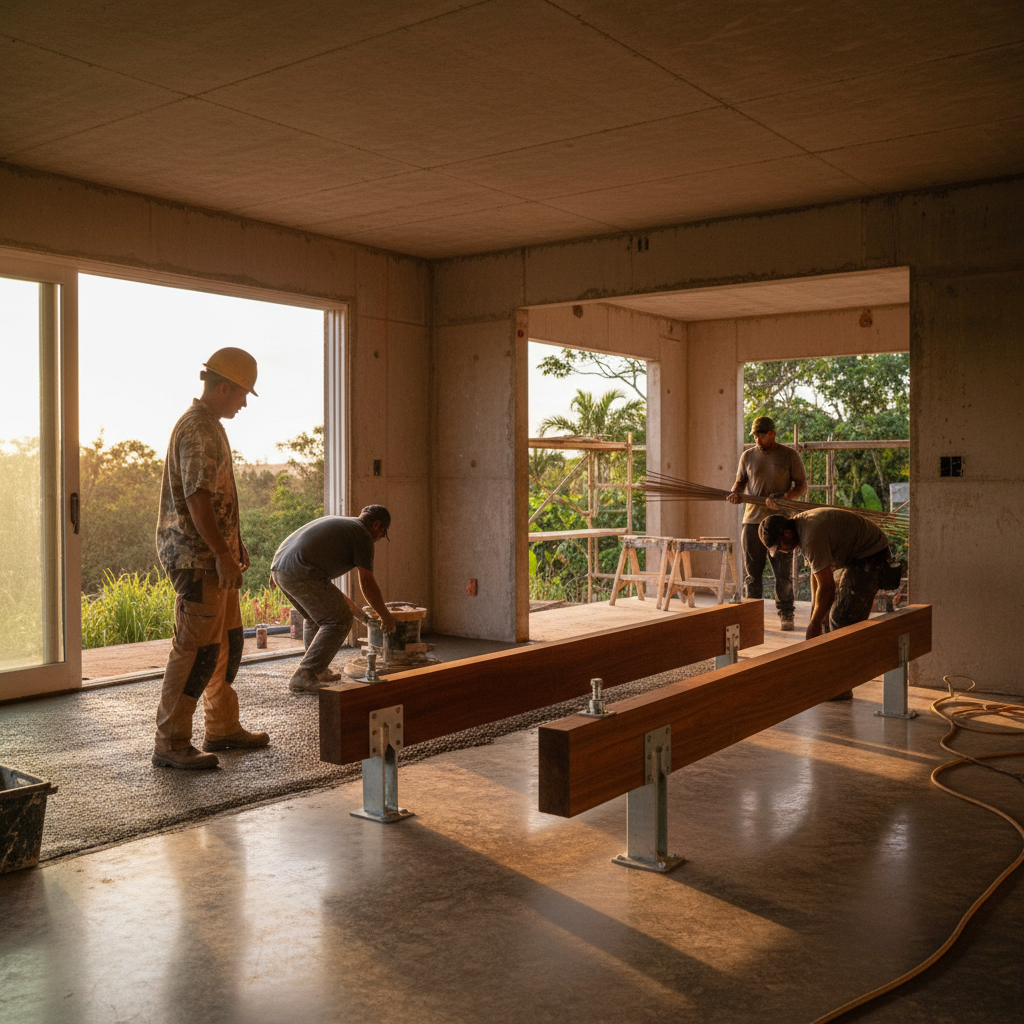
- Small Driveway or Patio (under 800 sq. ft.): Once permits are in hand (if required), the physical work is relatively quick. Site prep, forming, and pouring can typically be completed in 1 to 2 weeks. This includes a few days for excavation and grading, a day or two for formwork and rebar, the day of the pour, and a few days for initial curing and cleanup.
- Full Home Foundation (1,500 – 2,500 sq. ft.): A proper foundation is a multi-stage process involving multiple inspections. From the day we break ground, a typical timeline is 4 to 6 weeks. This breaks down into: \n
- \n
- Week 1: Excavation, grading, and compacting the building pad.
- Week 2: Digging footings and laying underslab plumbing and electrical conduits. This is followed by the footing inspection.
- Week 3: Setting forms, placing all the rebar for footings and the slab, and getting the pre-pour inspection from the county inspector.
- Week 4: The concrete pour itself, which is a single, long day. Then, the initial curing process begins.
- Weeks 5-6: Curing, stripping forms, and site cleanup.
\n
\n
\n
\n
\n
\n
- Engineered Retaining Wall (over 4 feet high): These projects also require significant prep work. A 50-foot long, 6-foot high wall would likely take 3 to 5 weeks. The bulk of the time is in excavating for the large footing, setting the complex rebar schedule, and building the wall in sections (lifts) to ensure structural integrity.
\n
\n
\n
\n
\n
The biggest potential delays in Waimea are weather and inspections. A week of heavy rain can halt all excavation and site work. An inspector’s schedule can also impact the timeline. If you fail an inspection for footing depth or rebar placement, you have to correct the issue and wait for them to come back, which can add days or even a week to the schedule. This is why working with an experienced concrete contractor waimea team is so important. We know the inspectors, we know what they look for, and we build it right the first time to pass inspection and keep your project moving forward.
\n\n
What Permits Do You Need for Concrete Contractor in Waimea?
\n
Navigating the permitting process with the Hawai’i County Planning Department is one of the most crucial steps for any significant concrete project in Waimea. Attempting to bypass this can lead to stop-work orders, hefty fines, and the nightmarish possibility of having to tear out the work you just paid for. As your general contractor, we handle this entire process, but it’s important for homeowners to understand what’s involved.
The general rule of thumb is this: if the concrete work is structural or alters the grade or drainage of your property, you need a permit. Here’s a breakdown:
\n
- \n
- Building Permit: This is the most common permit. You will absolutely need a building permit for:\n
- \n
- Any new home foundation or the foundation for an addition.
- A detached structure with a foundation larger than 200 square feet (like a large workshop or garage).
- A retaining wall over 4 feet in height (measured from the bottom of the footing to the top of the wall). Anything shorter is often considered landscaping, but it’s always best to check.
- Covered lanais or carports that require new concrete footings and a slab.
\n
\n
\n
\n
\n
- Grading Permit: If your project involves significant earthmoving, you may need a separate grading permit *before* you can get your building permit. In Hawai’i County, this is typically triggered if you are moving more than 100 cubic yards of soil or working on a steep slope. For a new home on a sloped Waimea lot, this is a common requirement.
- No Permit Required (Usually): For some minor work, you may not need a permit. This typically includes:\n
- \n
- Replacing an existing driveway or walkway with the same footprint and location (a “repair-in-kind”).
- Pouring a small, on-grade patio slab that isn’t attached to the house foundation.
- Building a small retaining wall under 4 feet high.
\n
\n
\n
\n
\n
\n
\n
\n
The permitting process itself involves submitting detailed plans, often stamped by a licensed Hawaii engineer or architect, to the county. These plans must show the foundation design, rebar schedule, concrete strength specifications, and how the project complies with all local building codes, including seismic and hurricane requirements. The county plan reviewer, like those at the Honolulu Department of Planning and Permitting (DPP)[1], will scrutinize these plans to ensure safety and compliance. This is not a process you want to navigate alone. Our team has architects and engineers we work with regularly who understand the specific requirements of Hawai’i County, ensuring a smoother review process.
\n
A recent client in Waimea wanted to build a large workshop with a heavy-duty slab for vehicle lifts. They initially thought they could just pour a slab. We had to explain that because the structure was over 200 sq. ft. and would have a structural foundation, a full building permit was required, including engineered drawings. By handling the permitting correctly from the start, we avoided any potential legal issues and ensured the final building was safe, insurable, and fully compliant with county codes.
\n\n

Waimea-Specific Considerations: Climate, Materials, Regulations
\n
Building with concrete in Waimea is a science shaped by the unique character of this place. You cannot simply apply mainland or even Honolulu standards and expect long-term success. At elevations ranging from 2,500 to 3,000 feet, with distinct wet and dry sides, the environmental factors are profoundly different. Here are the key considerations our team at Warrior Construction engineers into every Waimea concrete project.
\n
Climate’s Impact on Curing
\n
Waimea is famous for its ‘piko’ location, the center, where climates collide. This has a massive impact on how concrete cures, which is the chemical process that gives it strength.
\n
- \n
- The Wet Side (towards Honoka’a): Characterized by frequent rain, mist, and cooler temperatures. Here, the challenge is preventing the concrete mix from having too much water, which weakens the final product. We use a lower water-to-cement ratio and may incorporate accelerating admixtures to ensure the concrete sets up properly before the afternoon showers arrive. The constant moisture is actually great for a long, slow cure, which produces very strong concrete if managed correctly.
- The Dry Side (towards Kawaihae/Kohala): This side is known for sun, wind, and low humidity. Here, the risk is the exact opposite: premature drying. If the surface of the slab dries out faster than the interior, you get shrinkage cracks. To combat this, we use evaporation retardants sprayed on the surface immediately after finishing and insist on a rigorous wet curing process—keeping the slab continuously damp with burlap and sprinklers for at least 7 days. This is non-negotiable for a quality finish.
\n
\n
\n
Volcanic Soil and Aggregate
\n
The ‘aina (land) itself dictates our approach. Big Island soil is young and largely composed of volcanic ash and rock. It has unique properties.
\n
- \n
- Soil Compaction: Volcanic soil can be tricky. It can seem stable but might contain voids or be prone to significant settlement if not compacted properly. We always perform thorough sub-grade preparation, often bringing in and compacting layers of engineered fill (like clean crushed lava rock) to create a stable base for the foundation. Skipping this step is the number one cause of cracked slabs we see on repair jobs.
- Local Aggregate: The rock used in our concrete is sourced from local Big Island quarries. While this is a sustainable practice, the quality can vary. We only work with reputable suppliers who provide clean, properly graded basalt aggregate. Using poor quality aggregate with organic material or too much fine dust can compromise the strength of the entire mix.
\n
\n
\n
Regulatory and Code Requirements
\n
Building on the Big Island means adhering to codes designed for our specific geological and meteorological risks.
\n
- \n
- Seismic Zone 4: The entire Big Island is in the highest seismic risk category in the United States. For concrete foundations, this translates into strict requirements for rebar size, spacing, and placement. We follow engineered plans to the letter, ensuring the foundation is a monolithic structure capable of handling significant ground movement.
- Hurricane Codes: Since Hurricane Iniki, Hawaii’s building codes have mandated robust connections throughout a home’s structure. This starts at the foundation. We are meticulous about the placement and embedding of hurricane straps and anchor bolts (like Simpson Strong-Tie hardware) in the concrete. These anchors are what connect the wood framing of the walls securely to the foundation, creating a continuous load path to resist uplift from high winds.
\n
\n
\n
Successfully executing a concrete project in Waimea means being a master of these local variables. It’s an understanding that our team has cultivated over decades of building here, ensuring your investment is built not just on concrete, but on deep local expertise.
\n\n
How to Choose the Right Concrete Contractor Contractor in Waimea
\n
Choosing your concrete contractor is the single most important decision you’ll make for your project’s success. A great contractor ensures a durable, safe, and beautiful result, while a poor one can leave you with a costly, cracked, and potentially dangerous mess. In a specialized market like Waimea, your diligence is even more critical. Here’s a practical checklist from a contractor’s perspective.
\n
1. Verify Their License and Insurance—No Exceptions.
\n
This is the absolute first step. Any legitimate contractor in Hawaii must have a valid license from the Department of Commerce and Consumer Affairs (DCCA). You can and should verify their license number online.[2] Our license is Warrior Construction, BC-34373. A valid license means they’ve met state requirements for experience, competency, and financial stability. Equally important, ask for proof of current general liability insurance and workers’ compensation insurance. If an uninsured worker gets hurt on your property, you could be held liable. We provide our insurance certificates with every proposal.
\n
2. Demand Big Island-Specific Experience and References.
\n
A contractor from Honolulu might do great work on Oahu, but they may not understand the logistics and soil conditions in Waimea. Ask them directly: \”How many projects have you completed in Waimea in the last two years?\” Ask for the addresses and phone numbers of at least three recent Big Island clients. Call those references and ask specific questions:
\n
- \n
- Did they stay on schedule and on budget?
- How did they handle unexpected issues (like hitting hard rock during excavation)?
- Was the job site kept clean and safe?
- Would you hire them again without hesitation?
\n
\n
\n
\n
\n
3. Analyze the Bid—Details Matter.
\n
Never accept a one-page, lump-sum bid. A professional proposal will be several pages long and break down the costs. It should clearly state:
\n
- \n
- Scope of Work: A detailed description of every step, from demolition and excavation to finishing and cleanup.
- Material Specifications: The specified compressive strength of the concrete (e.g., 4000 PSI), the size and grade of rebar, and the type of vapor barrier.
- Exclusions: What is *not* included in the price? Common exclusions are landscaping repair, permit fees, or unforeseen geological conditions.
- Payment Schedule: A clear schedule tied to project milestones (e.g., deposit, upon passing footing inspection, upon slab pour, final payment).
\n
\n
\n
\n
\n
Beware of bids that are significantly lower than others. This often means they’ve missed something, are using substandard materials, or are cutting corners on labor or insurance.
\n
4. Ask About Their Team and Subcontractors.
\n
Who will actually be on your property doing the work? Does the contractor use their own employees or do they sub everything out? At Warrior Construction, we use our own highly skilled crews for all critical structural work, including concrete. This gives us direct control over quality and scheduling. If they use subcontractors for things like excavation or concrete pumping, ask if they have long-standing relationships with them. A contractor with a stable, professional team is always a better bet.
\n
Making the right choice comes down to finding a professional partner, not just a low bidder. Your home’s foundation is the last place you want to cut corners. Take your time, do your research, and choose a qualified, experienced, and transparent concrete contractor waimea residents can depend on.
\n\n
Real Waimea Concrete Contractor Project Example
\n
To make all this information concrete—pun intended—let’s walk through a typical project we recently completed in 2026. This example showcases the process, costs, and unique challenges of building in Waimea.
\n
The Project: A new 2,400 square foot custom home foundation for a family relocating from California to a 1-acre lot in the Lualai neighborhood of Waimea.
\n
The Client’s Goal: A robust, seismically-sound slab-on-grade foundation that would serve as the base for their single-story home, including an attached 2-car garage and a 400 sq. ft. lanai.
\n
Initial Challenges: The lot had a gentle slope and the geotechnical report revealed a top layer of rich soil about 2 feet deep, followed by compacted volcanic ash and scattered lava rock. Proper site preparation was critical to avoid future settling and cracking.
\n
Our Process and Timeline (6 weeks total):
\n
- \n
- Weeks 1-2: Permitting and Site Prep. We started by submitting the engineered foundation plans to Hawai’i County. While waiting for the permit (which took about 5 weeks), we began the site work under a grading permit. Our crew excavated the building pad, removing the topsoil and over-excavating an additional foot to get to stable, compacted subsoil. We then brought in 18 truckloads of crushed basalt as engineered fill, compacting it in 6-inch lifts to 95% compaction, verified by a third-party inspector.
- Weeks 3-4: Formwork, Plumbing, and Rebar. Once the building permit was issued, our team moved fast. We dug the perimeter and interior footings, and our plumbing subcontractor laid all the underslab sewer and water lines. This passed the county’s \”groundwork\” inspection. Then, our crew set all the form boards and meticulously placed the steel rebar grid—#4 bars at 16 inches on-center, with heavier #5 bars in the footings, all per the engineer’s seismic design. This phase concluded with the critical pre-pour inspection, which we passed on the first try.
- Week 5: The Pour. This was the main event. We scheduled two concrete trucks and a boom pump from the Kona plant. The pour started at 7 AM. We placed 95 cubic yards of 4,000 PSI concrete, carefully vibrating it to eliminate air pockets. Our finishing crew then went to work, screeding, floating, and finally applying a light broom finish to the garage and lanai slabs and a smooth steel-trowel finish for the interior floors that would be polished later.
- Week 6: Curing and Cleanup. Because this was on the drier side of Waimea, we immediately began a 7-day wet cure, covering the slab with burlap and keeping it consistently moist to prevent shrinkage cracks. After the cure, we stripped the forms, cleaned the site, and handed over a perfect foundation to the framing contractor.
\n
\n
\n
\n
\n
Final Project Cost Breakdown:
\n
- \n
- Engineered Plans & Permits: $8,500
- Excavation & Engineered Fill: $22,000
- Formwork & Rebar (Materials & Labor): $41,500
- Concrete (95 yards delivered & pumped): $38,000
- Placing & Finishing Labor: $19,000
- Total Project Cost: $129,000
\n
\n
\n
\n
\n
\n
\n
This works out to approximately $53.75 per square foot, falling right within the expected range for a quality, engineered foundation in Waimea. The client received a foundation built to withstand Big Island conditions, completed on schedule and on budget, setting their new life in Hawaii on solid ground.
\n\n
What this means for Hawaii homeowners
\n
For any homeowner in Waimea, understanding these details about concrete work is fundamental to protecting your investment. The foundation, driveway, and retaining walls are the bones of your property; getting them right is not a place to compromise. The unique high-elevation climate, volcanic soil, and seismic requirements of the Big Island mean that you can’t rely on generic advice or mainland cost estimators. You need a partner who builds to a higher, locally-attuned standard.
\n
Here are the key actionable takeaways:
\n
- \n
- Budget for Reality: Use the 2026 cost figures provided—$28-$35/sq ft for simple slabs, $45-$65/sq ft for foundations—as a realistic starting point. Be wary of any contractor whose bid is dramatically lower, as it likely signals they are cutting corners on materials, prep work, or insurance.
- Factor in the Timeline: Remember that the Hawai’i County permitting process can take 1-2 months *before* work even begins. Build this administrative time into your overall project schedule to avoid frustration.
- Hire Hyper-Local Expertise: Your contractor must demonstrate a deep understanding of Waimea’s specific conditions. Ask them how they adjust their concrete mix and curing process for the wet side versus the dry side. If they don’t have a specific answer, they are not the right choice.
- Insist on a Detailed Contract: Your contract is your protection. Ensure it explicitly states the concrete PSI, rebar schedule, site prep details, and a clear payment schedule tied to inspections. Never proceed with a handshake deal or a vague estimate.
\n
\n
\n
\n
\n
Ultimately, a successful concrete project in Waimea is about proactive planning and hiring a true professional. By doing your homework and choosing a licensed, experienced contractor like Warrior Construction who understands the nuances of building here, you ensure the structural integrity of your home for generations to come. Your property’s resilience starts from the ground up.
\n
\n\n
Frequently Asked Questions About Concrete Contractor in Waimea
\n
How thick should my driveway be in Waimea?
\n
For a standard residential driveway in Waimea designed for passenger cars and SUVs, we recommend a minimum thickness of 5 inches. Some contractors may suggest 4 inches to save costs, but the extra inch provides significantly more strength to prevent cracking under vehicle loads and changing soil conditions. For any areas where heavier vehicles like delivery trucks might drive, we insist on 6 inches of concrete with a heavier rebar grid.
\n
\n
What is the best concrete mix for Big Island’s volcanic soil?
\n
There isn’t one single \”best\” mix, as it depends on the application. However, for most structural work in Waimea like foundations and footings, we specify a minimum of 4,000 PSI (pounds per square inch) compressive strength after 28 days. We also use specific admixtures, such as water-reducers to increase strength and air-entrainment for durability, especially in areas subject to frequent rain. The key is working with a contractor who designs the mix for the job, not just ordering a standard truck.
\n
\n
Do I need a vapor barrier under my concrete slab in Waimea?
\n
Absolutely, yes. For any interior slab-on-grade (like a house foundation or garage), a high-quality vapor barrier (at least 15-mil thickness) is required by code and is critical in Hawaii’s humid environment. It prevents ground moisture from wicking up through the concrete, which can cause flooring failures, mold, and mildew issues inside your home. We consider this a non-negotiable part of a quality foundation.
\n
\n
Can you pour concrete in the rain in Waimea?
\n
This is a common question given Waimea’s weather. Light, passing mist or drizzle is manageable, but we will not pour concrete during a steady or heavy rain. Excess rainwater falling on fresh concrete increases the water-to-cement ratio on the surface, which severely weakens it and can ruin the finish. If the forecast is uncertain, we will always reschedule the pour; it’s a short delay that prevents a permanent, costly problem.
\n
\n
How much does a permit for a concrete foundation cost in Hawai’i County?
\n
Permit fees are calculated based on the valuation of the project. For a typical 2,000 sq. ft. foundation in Waimea with a project cost around $100,000, you can expect the building permit fee from Hawai’i County to be in the range of $1,500 to $2,500 in 2026. This doesn’t include the cost of the engineered plans, which are required for the permit application.
\n
\n
What causes concrete to crack and how can it be prevented in Waimea?
\n
The most common causes of cracking are improper sub-grade compaction, premature drying during the cure, and an inadequate steel reinforcement schedule. In Waimea, we prevent this with a three-pronged approach: 1) Meticulous soil preparation and compaction. 2) A carefully planned curing process tailored to the specific microclimate (wet curing on the dry side, protection from rain on the wet side). 3) Engineering the correct rebar size and spacing to handle tensile forces and control shrinkage.
\n
\n
Is a polished concrete floor a good idea for a home in Waimea?
\n
Polished concrete floors are an excellent choice for Waimea homes. They are incredibly durable, easy to clean, and provide a cool surface which is pleasant in Hawaii’s climate. The key is planning for it from the beginning. The concrete slab must be poured with a very smooth, hard steel-trowel finish, and the concrete mix itself may be designed differently. It’s much more difficult and expensive to try and polish a standard slab after the fact.
\n
\n
\n\n
Your Waimea home deserves a foundation as strong and resilient as the Big Island itself. Getting it right requires local knowledge, technical expertise, and an unwavering commitment to quality. At Warrior Construction, we bring all three to every project, ensuring your concrete work is built to last.
\n
If you’re ready to discuss your project, whether it’s a new custom home foundation, a driveway, or a critical retaining wall, our team is here to provide the expert guidance you need. We can help you navigate the entire process, from initial design and permitting to a flawless final pour.
\n
Ready to build on a solid foundation? Learn more about our Concrete & Foundation services or contact us today for a detailed estimate for your Waimea project.
\n\n
References
\n