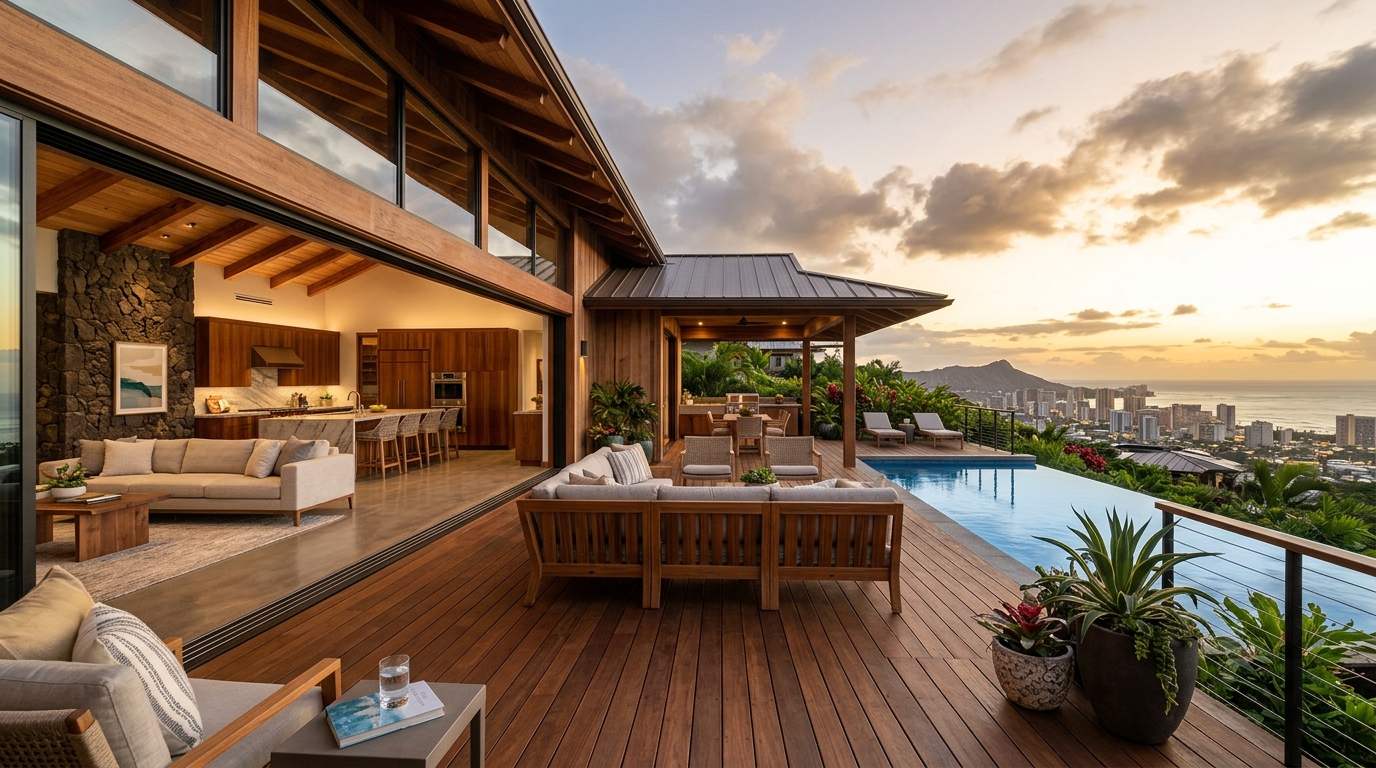
“Building a custom home in Honolulu in 2026 is one of the most significant investments you can make, requiring a deep understanding of local costs, timelines, and regulations. As a custom home builder Honolulu residents have trusted for over two decades, we can tell you plainly: expect a ground-up build to cost between $450 and $700+ per square foot and take anywhere from 18 to 30 months from initial design to moving day. This isn’t mainland construction; building in paradise comes with a unique set of challenges, from navigating the Department of Planning and Permitting (DPP) to selecting materials that can withstand our salt air and intense sun. The process demands patience, a realistic budget, and most importantly, the right team on your side.\n\nHere at Warrior Construction, our team has managed new home construction in Honolulu on every type of lot imaginable, from steep hillsides in St. Louis Heights to tight coastal parcels in Kailua. We’ve seen it all, and we believe an informed homeowner is the best partner. This isn’t just about pouring concrete and framing walls. It’s about orchestrating a complex project involving dozens of suppliers, specialized trades, and government agencies, all on an island with finite resources and a lengthy supply chain. For example, a simple decision on window selection can have a six-month lead time, a fact that can derail an entire project schedule if not anticipated by an experienced local builder. Our goal is to demystify this process for you. We’ll walk you through the real costs, the frustrating but unavoidable timelines, the critical permit requirements, and the specific material choices that make a home truly last in Hawaii. These are the key insights you need to successfully build your dream home on O’ahu.\n\n
Why Honolulu Homeowners Trust Warrior Construction for Custom Home Builder
\n\nWhen you decide to build a custom home, you’re not just hiring a contractor; you’re choosing a partner for a multi-year journey. Homeowners across O’ahu trust Warrior Construction because we’ve built our reputation on transparency, local expertise, and an unwavering commitment to quality. Our Hawaii General Contractor license, BC-34373, isn’t just a number—it represents over 20 years of navigating the specific challenges of building on this island. We live here, we work here, and we understand the nuances that mainland firms simply can’t grasp.\n\nOur approach is rooted in a design-build philosophy. This means we prefer to be involved from the very beginning, working alongside the architect and engineers during the planning phase. This integration is crucial in Honolulu. For instance, on a recent project in Manoa, the initial architectural plans didn’t fully account for the area’s notorious drainage issues and expansive soil. Because our construction team was involved early, we identified the potential for foundation problems and worked with the structural engineer to specify a more robust post-tension slab system before the plans were even submitted to the DPP. This saved the client an estimated $75,000 and months of potential delays and change orders down the line. A traditional bid-build process, where a contractor only sees the finished plans, would have likely led to a costly surprise after the project was already underway.\n\nFurthermore, our longevity in the islands has allowed us to build rock-solid relationships with the best subcontractors and suppliers. In a tight labor market like Honolulu’s, having a loyal crew of trusted electricians, plumbers, and finishers is invaluable. We know who does quality work, who shows up on time, and who stands by their craftsmanship. This network also gives us insight into material availability and lead times. We know which local suppliers have inventory and which materials need to be ordered from the mainland six to nine months in advance. This deep logistical knowledge is essential for keeping a complex new home construction Honolulu project on track. We’re not just builders; we’re expert project managers specifically skilled in the art of building in the middle of the Pacific Ocean.\n\n
What Does Custom Home Builder Cost in Honolulu?
\n\nLet’s get straight to the point: as of 2026, the all-in cost for a custom home in Honolulu will typically range from $450 to over $700 per square foot. For a 3,000-square-foot home, this means a realistic budget is between $1.35 million and $2.1 million, and that’s before landscaping, pools, or high-end luxury finishes. Anyone quoting significantly less is likely omitting key expenses or doesn’t fully understand the local market. The cost is driven by a combination of factors unique to Hawaii: high land value, expensive materials due to shipping, a limited skilled labor pool, and rigorous building codes.\n\nTo understand the budget, we break it down into two main categories: soft costs and hard costs.\n\n
Soft Costs (15-25% of Total Budget)
\nThese are the expenses for everything other than the physical construction itself. They happen before we ever break ground.\n
- \n
- Architectural & Engineering Fees: Expect to pay 8-15% of your total construction cost to your architect and engineers (structural, civil, mechanical). For a $1.5M build, that’s $120,000 to $225,000.
- Permitting Fees: The Honolulu DPP charges fees based on the project’s valuation. For a new single-family home, it’s not uncommon for the building, plumbing, and electrical permit fees to total $25,000 to $50,000.
- Surveys & Reports: You’ll need a topographical survey, and depending on your lot, you might also need a geotechnical report for soil analysis, which can cost $5,000 to $15,000.
- Insurance & Financing Costs: Construction loans, builder’s risk insurance, and other administrative costs add up.
\n
\n
\n
\n
\n\n
Hard Costs (75-85% of Total Budget)
\nThese are the tangible costs for labor and materials to build the house. Here’s a rough breakdown per square foot for a mid-range quality build:\n
- \n
- Site Work & Foundation: $40 – $65 per sq. ft. This can vary dramatically. A flat lot in Kapolei is much cheaper to prep than a sloped lot in Hawaii Loa Ridge requiring extensive grading and retaining walls. Volcanic soil often requires more robust engineering.
- Framing (Structure): $55 – $80 per sq. ft. This includes walls, floors, and the roof structure, built to withstand hurricane-force winds. Steel framing is becoming more popular for termite resistance but costs about 15-20% more than traditional wood.
- Exterior Finishes: $70 – $110 per sq. ft. This covers roofing, siding (stucco or Hardie Plank are common), windows, and doors. We strongly recommend investing in high-quality, impact-rated windows and 316-grade stainless steel hardware to combat salt-air corrosion.
- Major Systems (MEP): $60 – $90 per sq. ft. This is for your Mechanical (HVAC), Electrical, and Plumbing systems. Solar panels and battery backup systems like a Tesla Powerwall are popular additions that can add $30,000-$50,000 to a project.
- Interior Finishes: $150 – $300+ per sq. ft. This is the most variable category. It includes everything from drywall and paint to flooring, cabinets, countertops, appliances, and light fixtures. A homeowner’s choice between laminate flooring and custom-milled koa, or between builder-grade appliances and a Sub-Zero/Wolf package, can swing the budget by hundreds of thousands of dollars.
\n
\n
\n
\n
\n
\nFinally, we always advise clients to include a 10-15% contingency fund. On a multi-year project, unforeseen issues will arise—whether it’s hitting unexpected blue rock during excavation or a spike in copper prices affecting your wiring costs. A healthy contingency turns a potential crisis into a manageable problem.\n\n
How Long Does a Custom Home Builder Take in Honolulu?
\n\nThe most common misconception we encounter is about the timeline. Building a custom home in Honolulu is a marathon, not a sprint. In 2026, a realistic timeline from the day you hire an architect to the day you move in is 18 to 30 months. Some complex luxury home builder Honolulu projects can even stretch to three years. The construction itself is often the shortest part of the process; it’s the planning and permitting that consume the majority of the time.\n\nHere’s a phase-by-phase breakdown of a typical project schedule:\n\n
Phase 1: Design and Pre-Construction (6 to 12 Months)
\nThis is where your vision takes shape. It involves selecting your team (architect, builder, designer) and developing the plans. This phase is heavily dependent on your decisiveness.\n
- \n
- Schematic Design (1-2 months): Your architect develops initial floor plans and exterior concepts based on your needs and the constraints of your lot.
- Design Development (2-4 months): The initial concepts are refined. You’ll make key decisions about materials, window styles, and major systems. Our team often gets involved here to provide preliminary cost estimates (a process called preconstruction) to ensure the design is aligned with your budget.
- Construction Documents (3-6 months): This is the most intensive part of the design phase. The architect and engineers create the detailed blueprints and technical specifications that will be used for permitting and construction. Every light switch, plumbing fixture, and structural connection is detailed.
\n
\n
\n
\n\n
Phase 2: Permitting with Honolulu DPP (6 to 14 Months)
\nThis is the infamous Honolulu bottleneck, and it requires immense patience. Once the construction documents are complete, they are submitted to the Department of Planning and Permitting (DPP) for review.[1] The plans are routed to multiple departments—zoning, building, electrical, plumbing, fire, and sometimes public works—each with its own backlog of projects to review. We’ve seen simple single-family home permits sail through in six months, but more commonly, they take closer to a year. For example, we had a project in Kailua where the permit was held up for three extra months because a DPP plan reviewer misinterpreted a flood zone requirement. It took several meetings and a formal clarification from our civil engineer to resolve the issue. This is where having a general contractor with established relationships and experience with the DPP system is critical. We can’t speed up their review, but we can ensure the plans are submitted correctly and respond to their comments promptly and accurately.\n\n
Phase 3: Construction (9 to 18 Months)
\nOnce you have that precious building permit in hand, the physical work can finally begin. The timeline for this phase depends on the size and complexity of your home.\n
- \n
- Site Prep & Foundation (1-2 months): Clearing the lot, excavation, grading, and pouring the concrete foundation.
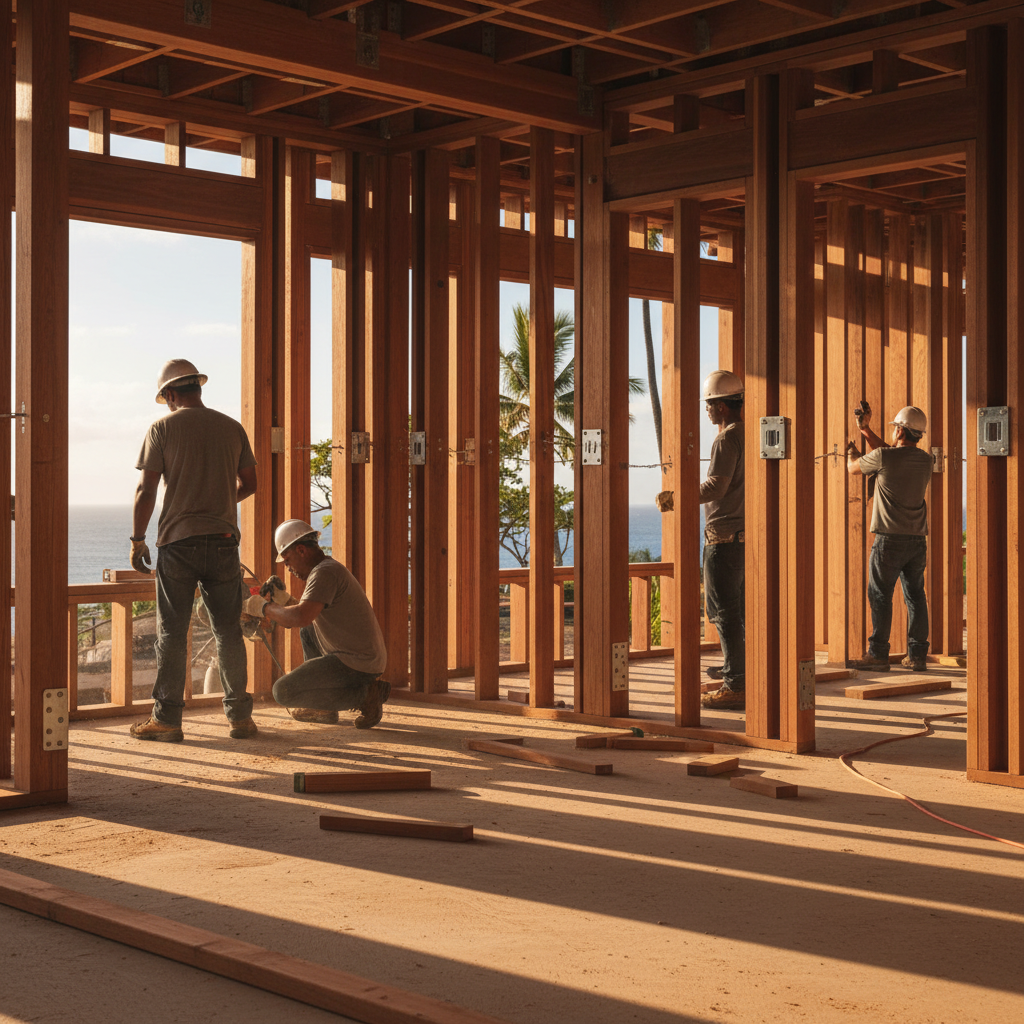
- Framing & Dry-In (2-4 months): The skeleton of the house goes up, including walls, roof structure, and sheathing. The house is then “dried-in” with roofing and windows to protect it from the elements.
- Rough-Ins (2-3 months): Plumbers, electricians, and HVAC technicians run all the pipes, wires, and ducts through the walls.
- Interior & Exterior Finishes (4-8 months): This is the longest part of the build. It includes everything from drywall, painting, and flooring to installing cabinets, countertops, tile, fixtures, and appliances.
- Finals & Landscaping (1-2 months): The final inspections, punch list items, and exterior work like driveways and landscaping are completed.
\n
\n
\n
\n
\n
\nIt’s crucial to understand that even during construction, delays can happen. A week of heavy rain can halt foundation work, or a container of custom tiles can get stuck at the port in Long Beach. A good home builder in Honolulu will build buffer time into the schedule and communicate proactively when these issues arise.\n\n
What Permits Do You Need for Custom Home Builder in Honolulu?
\nNavigating the permitting process with the City and County of Honolulu’s Department of Planning and Permitting (DPP) is arguably the most challenging part of any construction project on O’ahu. It’s a bureaucratic maze that can frustrate even seasoned professionals. As your general contractor, a huge part of our job is to manage this process, ensuring your application package is complete and correct to minimize delays.\n\nFor a new custom home, you don’t just need one permit; you need a series of them, all reviewed and approved by different departments. The primary submission is for the main Building Permit, but this single application triggers reviews for multiple disciplines. The core submission package, now handled electronically through the DPP’s ePlans portal, typically includes:\n\n
- \n
- Architectural Plans: Complete floor plans, elevations, sections, and detail drawings.
- Structural Plans & Calculations: Stamped by a Hawaii-licensed structural engineer, these detail the foundation, framing, and hurricane-resistant tie-downs.
- Site Plan: Shows the location of the house on the property, setbacks from property lines, drainage, and utility connections.
- Electrical & Plumbing Plans: Schematics for all wiring, outlets, fixtures, pipes, and drains.
- Energy Compliance Forms: Calculations showing the home meets Hawaii’s strict energy code for insulation, windows, and lighting.
- Wastewater System Approval: Confirmation from the Department of Health for septic systems or a sewer connection application for city lines.
\n
\n
\n
\n
\n
\n
\n\nOnce submitted, the plans go into a queue. A pre-screener first checks for basic completeness. Then, the plans are routed to various plan examiners. A zoning examiner checks setbacks and height limits. A building examiner reviews the structural and life-safety aspects. An electrical examiner reviews the wiring diagrams. This sequential (and sometimes parallel) review process is where the long delays occur. If any single examiner has a question or requires a correction, they issue a “comment.” The entire project is put on hold until your architect or engineer addresses the comment and resubmits the corrected sheets. This back-and-forth can happen multiple times, adding weeks or months to the timeline with each cycle.\n\nFurthermore, certain locations have additional layers of review. If your property is near the coastline, you may need a Special Management Area (SMA) permit, which involves a much higher level of scrutiny regarding environmental and visual impacts. If you’re in a historic district like parts of Manoa or College Hills, the State Historic Preservation Division will also have to review and approve your plans. And with the recent focus on housing density, understanding how regulations like Bill 7 might affect your plans for a future ADU or ohana unit is crucial from the very beginning. An experienced Honolulu contractor understands these jurisdictional overlaps and can help you plan accordingly, preventing costly redesigns late in the game.\n\n
Honolulu-Specific Considerations: Climate, Materials, Regulations
\nBuilding a home that will stand the test of time in Hawaii requires more than just following the building code. It demands a deep understanding of our unique environment. A home designed for Arizona or California would fall apart here in a matter of years. At Warrior Construction, we design and build specifically for the challenges and advantages of our island climate.\n\n
Fighting Salt-Air Corrosion
\nIf you’re building anywhere on the Windward side (like Kailua or Kaneohe) or in coastal communities like Hawaii Kai or Ewa Beach, salt-air corrosion is your number one enemy. The salty, moist air relentlessly attacks metal. We’ve seen standard galvanized metal connectors on lanais rust through in less than five years. For this reason, we have strict standards for our projects:\n
- \n
- Fasteners: All exterior nails, screws, and bolts must be 316-grade stainless steel. It’s more expensive, but it’s the only material that truly resists the salt.
- Hardware: Door hinges, handles, and window cranks should be stainless steel or high-quality brass.
- Windows: We often recommend fiberglass or vinyl window frames over aluminum. While thermally broken aluminum is an option, any scratch in the powder coating can become a starting point for corrosion.
- Flashing: All metal flashing around windows, doors, and the roof must be copper or stainless steel.
\n
\n
\n
\n
\n\n
Harnessing the Trade Winds
\nBefore air conditioning, homes in Hawaii were masterfully designed for passive cooling. We still incorporate these principles into our modern designs to create comfortable, energy-efficient homes. This means orienting the house to capture the prevailing trade winds, designing for cross-ventilation with strategically placed operable windows (jalousies are a classic for a reason), and including wide roof overhangs to shade the walls and windows from the high tropical sun. A well-designed home on O’ahu should only require A/C on the hottest, most humid Kona-wind days of the year.\n\n
Material Logistics and the \”Island Tax\”
\nEverything you build a house with, from the lumber to the light fixtures, likely arrived on a Matson or Pasha ship. This reality has huge implications. First, it adds a significant cost—the infamous \”island tax\” or \”paradise tax\” means materials are 20-40% more expensive here than on the mainland. Second, it creates long lead times. You can’t just run down to Home Depot for a box of special-order tile. We have to plan our material procurement months in advance. For example, custom windows and cabinetry packages often need to be ordered 4-6 months before they are needed on site. A delay in one shipment can have a domino effect on the entire construction schedule. Part of our job as your general contractor is to manage this complex supply chain, ordering materials at the right time to ensure they arrive when needed without sitting on-site for too long.\n\n
Hurricane Code and Structural Integrity
\nSince Hurricane Iniki devastated Kaua’i in 1992, Hawaii has had one of the strictest hurricane building codes in the nation. Every new home we build is engineered to withstand severe wind loads. This isn’t just a suggestion; it’s a legal requirement that adds to the cost and complexity of the build. Key features of our hurricane-resistant construction include:\n
- \n
- Continuous Load Path: We use a system of metal connectors, straps, and bolts (like Simpson Strong-Tie hardware) to securely fasten the roof to the walls, the walls to the floor, and the floor to the foundation. This ensures the house acts as a single, solid unit against uplift forces.
- Impact-Rated Glazing: All windows and glass doors must be impact-rated, meaning they can withstand being hit by flying debris in a storm.
- Reinforced Openings: Garage doors, which are often a major point of failure in a hurricane, must be specially reinforced.
\n
\n
\n
\nThese structural enhancements are non-negotiable and are a core part of what makes a new home construction Honolulu project safe and durable.\n\n
How to Choose the Right Custom Home Builder Contractor in Honolulu
\nChoosing your custom home builder is the single most important decision you’ll make in the entire process. The right contractor can make the journey exciting and rewarding, while the wrong one can turn it into a financial and emotional nightmare. After decades in this business, we’ve seen what separates the professionals from the pretenders. Here’s what you should look for:\n\n
- \n
- Verify Their License and Insurance. This is the absolute bare minimum. Before you even start a serious conversation, verify their contractor’s license with the Hawaii Department of Commerce and Consumer Affairs (DCCA) Professional and Vocational Licensing (PVL) division.[2] Make sure the license is active, in good standing, and is the correct classification (a \”BC\” license covers a General Building Contractor). Ask for a certificate of insurance showing they carry both general liability and worker’s compensation. At Warrior Construction, our license is BC-34373, and we are fully insured and bonded.
- Demand Local, Relevant Experience. A portfolio of beautiful homes in California or a decade of experience building on the mainland means very little here. Ask to see projects they have completed on O’ahu. Better yet, ask for addresses so you can drive by. An experienced local builder will have a deep portfolio of homes that have stood up to our climate for years. They’ll also have the crucial relationships with local suppliers, subcontractors, and even the DPP plan reviewers.
- Interview Their References Thoroughly. Don’t just ask for a list of references; actually call them. And don’t just ask if they were happy. Ask specific, tough questions: \”How did the builder handle unforeseen problems or change orders?\” \”How accurate was their initial budget estimate?\” \”Was the project supervisor responsive and easy to communicate with?\” \”Would you hire them again for another project?\” The answers to these questions will tell you everything you need to know about their process and professionalism.
- Understand Their Communication and Project Management Style. Building a custom home involves thousands of decisions and constant communication. How will the builder keep you updated? Do they use project management software? How often will you have site meetings? You need a builder who is organized, transparent, and proactive in their communication. You should feel like a respected partner in the process, not an outsider.
- Get a Detailed, Transparent Contract. A professional contract won’t be a one-page handshake deal. It should be a detailed document that clearly outlines the full scope of work, a payment schedule tied to construction milestones, a procedure for handling change orders, warranty information, and a projected timeline. A fixed-price contract provides cost certainty, while a cost-plus contract offers more flexibility but less predictability. Make sure you understand the type of contract you’re signing and that you’re comfortable with the terms. If a builder is hesitant to provide a detailed contract, that’s a major red flag.
\n\n
\n\n
\n\n
\n\n
\n
\n\nChoosing a builder is about more than just the lowest bid. It’s about finding a team with the experience, integrity, and process to guide you through one of life’s biggest projects. Take your time, do your homework, and trust your gut.\n\n
Real Honolulu Custom Home Builder Project Example
\nTo make these concepts concrete, let’s walk through a typical custom home project we recently completed. This provides a real-world look at the numbers, timeline, and challenges involved.\n\n
- \n
- The Client: A local family who had outgrown their townhouse in Kaka’ako and purchased a teardown property in the Aina Haina neighborhood.
- The Vision: A 3,800 sq. ft. contemporary home with an open-concept living area, four bedrooms, a dedicated home office, and a large, covered lanai for indoor-outdoor living. They wanted a design that was modern but still felt appropriate for Hawaii, with durable, low-maintenance finishes.
- The Team: The clients hired a local Honolulu architect and brought our team at Warrior Construction in early as the general contractor under a preconstruction agreement.
- The Timeline:\n
- \n
- Design & Pre-Con (8 months): From initial meetings in January 2024 to final construction documents in August 2024. During this phase, we provided three rounds of detailed cost estimates, helping the architect and client make design decisions (like changing from an expensive standing-seam metal roof to a high-quality asphalt shingle) to keep the project on budget.
- Permitting (13 months): Plans were submitted to the DPP in September 2024. We received the first round of comments back in March 2025. After two rounds of revisions and resubmittals, the final building permit was issued in October 2025. This was a fairly typical wait time.
- Construction (14 months): We broke ground in November 2025. The project is currently on track for a move-in date around January 2027.
\n
\n
\n
\n
- The Budget:\n
- \n
- Soft Costs: ~$275,000 (Architect, Engineering, Permits, Surveys)
- Hard Costs (Construction): ~$1,976,000
- Total Project Cost: ~$2,251,000
- Cost per Square Foot: ~$592
\n
\n
\n
\n
\n
- An Unforeseen Challenge: During excavation for the foundation, our crew hit a large patch of extremely hard blue rock that was not identified in the initial geotechnical report. This required bringing in heavy-duty hydraulic hammers to break up the rock, a slow and expensive process. Because we had insisted on a 10% construction contingency in the budget ($197,600), we were able to cover the additional $65,000 cost for the rock removal without derailing the project’s finances. This is a perfect example of why that contingency fund is absolutely essential.
\n
\n
\n
\n
\n
\n
\nThis Aina Haina project showcases the reality of building in Honolulu: it takes time, it costs what it costs, and you have to be prepared for the unexpected. But with a solid plan and an experienced team, the result is a beautiful, durable home built to last for generations.\n\n
What this means for Hawaii homeowners
\n\nBuilding your dream home on O’ahu is a journey unlike any other. It’s more complex and often more expensive than building on the mainland, but the reward is a home perfectly tailored to your family and our unique island lifestyle. To succeed in 2026, you need to approach the process with open eyes, a realistic mindset, and the right professional guidance. Forget what you see on mainland reality TV shows; our process is dictated by island logistics and the meticulous pace of the Honolulu DPP.\n\nHere are the most critical takeaways for anyone considering a custom build:\n\n* **Budget Realistically:** Embrace the $450-$700+ per square foot reality. This figure should include everything—design, permits, and construction. Furthermore, you must protect your project with a 10-15% contingency fund. This isn’t optional; it’s essential for handling the inevitable surprises that come with any major construction project, especially in Hawaii.\n\n* **Embrace the Timeline:** Patience is a virtue, especially when dealing with the permitting process. Understand that from your first meeting with an architect to moving in, you are looking at a two-to-three-year commitment. Rushing the design phase or getting frustrated with the DPP will only lead to mistakes and stress. Acknowledge the timeline from the start and plan your life accordingly.\n\n* **Hire a True Local Expert:** Your builder’s experience on O’ahu is paramount. A team that has been navigating our supply chain, building codes, and permitting system for decades is your greatest asset. They will foresee problems you can’t, offer solutions based on past projects, and have the local relationships needed to keep your project moving forward. Check their license, call their references, and ensure they are a good fit for you.\n\n* **Design for Hawaii, Not the Mainland:** Make choices that respond to our environment. Invest in corrosion-resistant materials, design for natural ventilation, and respect the power of the sun and rain. A home that works with our climate will be more comfortable, more durable, and less expensive to operate over the long run.\n\nUltimately, building a home here is a significant undertaking. But by working with a transparent and experienced luxury home builder in Honolulu, you can navigate the challenges and create a space that is truly your own piece of paradise. The key is to start with a solid foundation of knowledge and a team you can trust.\n\n
Frequently Asked Questions About Custom Home Builder in Honolulu
\n
How much does an architect cost in Honolulu for a custom home?
\n
In Honolulu, you can expect architect fees to be between 8% and 15% of the total construction cost. For a $1.5 million home build, this would amount to $120,000 to $225,000 for full architectural services, including design, construction documents, and construction administration.
\n
\n
Is it cheaper to build or buy a home on O’ahu in 2026?
\n
The costs are often comparable, but the value proposition is different. In 2026, the median single-family home price on O’ahu is well over $1 million, often for an older home needing renovations. Building a new custom home may have a similar or slightly higher final cost, but you get a brand-new house, built to current codes, exactly to your specifications, with no deferred maintenance.
\n
\n
Can I be my own general contractor in Hawaii to save money?
\n
While Hawaii law allows for an owner-builder exemption, it is highly discouraged unless you have extensive construction experience. You would be responsible for all scheduling, hiring subcontractors, ordering materials, managing inspections, and assuming all liability. The complexity of Honolulu’s building process and the potential for costly mistakes usually negates any potential savings.
\n
\n
What is the single biggest mistake people make when building a custom home in Honolulu?
\n
The most common and costly mistake is underestimating the permitting timeline. Homeowners often get excited and plan their finances and living situations around a 6-month permit approval, only to be frustrated when it takes 12-14 months. We always advise clients to assume a year for permitting and be pleasantly surprised if it’s faster.
\n
\n
How do you handle building on a sloped lot in areas like Manoa or St. Louis Heights?
\n
Building on a slope requires significant additional site work and engineering. This typically involves extensive grading, building retaining walls, and designing a specialized foundation like a post-and-pier or a stepped slab. These requirements can easily add $100,000 to $300,000 or more to the project cost compared to a flat lot.
\n
\n
What is a design-build contractor and why should I hire one for a custom home?
\n
A design-build contractor, like Warrior Construction, provides a single point of contact and responsibility for both the design and construction phases. By having the construction team involved during the design process, we can provide real-time cost feedback, ensuring the architectural plans stay within your budget from the start. This integrated approach streamlines communication and helps prevent costly redesigns and change orders later on.
\n
\n
How does Honolulu’s Bill 7 affect my new custom home build?
\n
Bill 7 (now Ordinance 23-8) updated the rules for Accessory Dwelling Units (ADUs). If you plan to build a custom home and add an ADU now or in the future, your site plan, utility connections (especially wastewater), and parking calculations must comply with these new regulations. An experienced home builder in Honolulu will be well-versed in these rules and can help you design your property to maximize its potential while remaining fully compliant.
\n
\n
\n\n
Ready to Build Your Custom Home in Honolulu?
\nBuilding a home from the ground up on O’ahu is a complex undertaking, but you don’t have to navigate it alone. With over 20 years of experience as a trusted Honolulu general contractor, the team at Warrior Construction (BC-34373) has the local knowledge and expertise to bring your vision to life, on time and on budget. We treat every project as if it were our own home, with a commitment to quality craftsmanship and transparent communication. If you’re ready to start the conversation about your dream home, we’re here to help. Learn more about our custom home building services and contact us today for a no-obligation consultation.\n\n
References
\n