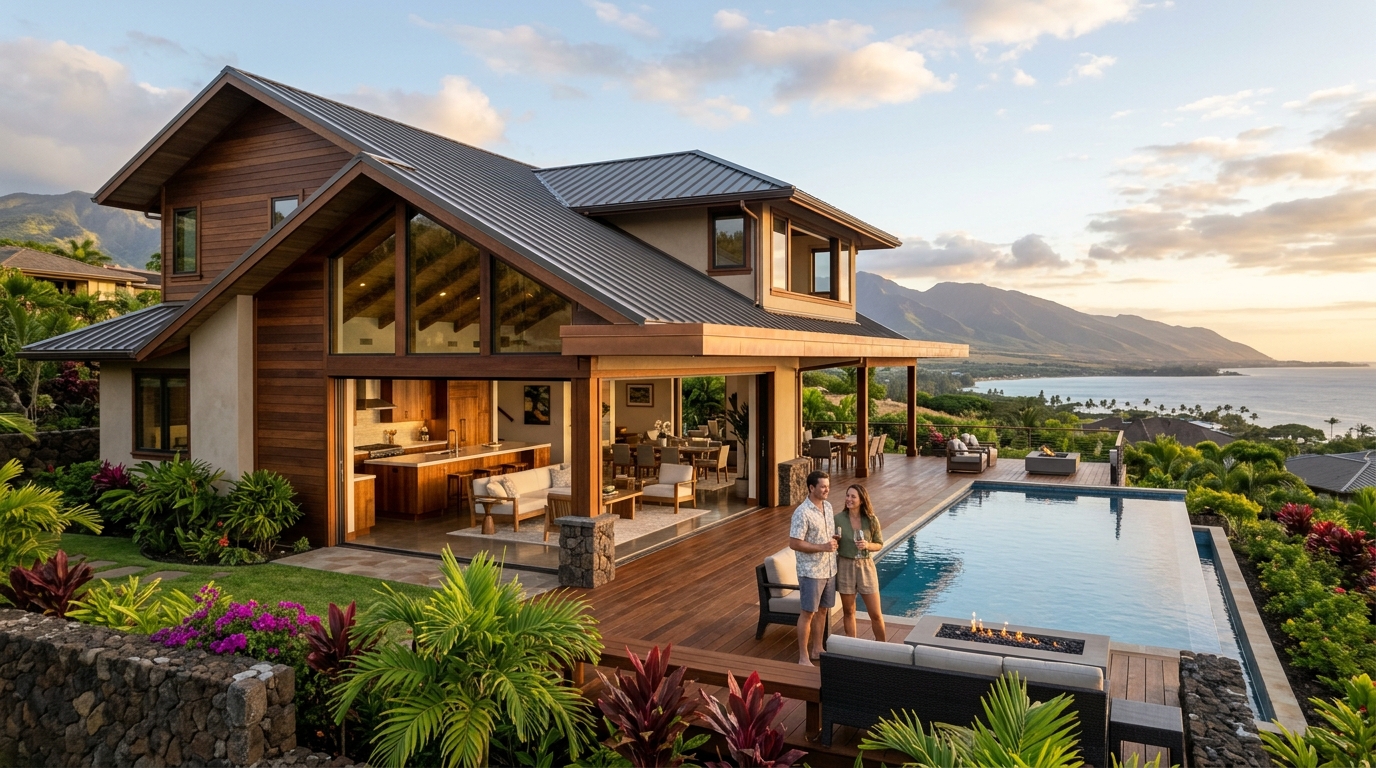
Building a custom home in Kahului means creating a space that’s perfectly tailored to your family and the unique Maui lifestyle. As a custom home builder in Kahului for over two decades, our team at Warrior Construction knows that the process can seem daunting, especially with Hawaii’s unique challenges. The biggest questions we get are always about cost and timeline. In 2026, you should plan for a budget of around $500 to $800 per square foot, and a timeline of 18 to 24 months from the first sketch to moving day. This might sound high compared to mainland figures, but it reflects the real cost of shipping, materials, and skilled labor on Maui.
Here’s the thing: building on an island is a different ballgame. It requires a contractor who not only knows construction but also understands the intricacies of Maui’s climate, its permitting process, and the logistics of getting every single 2×4 and window to the job site efficiently. We’ve seen too many projects get stalled or go over budget because a builder didn’t properly account for barge schedules or the corrosive effects of salt air. This guide breaks down the real numbers, timelines, and local knowledge you need to build your dream home in Kahului smartly. We’ll cover everything from navigating the Maui County permit office to choosing materials that will stand up to the trade winds and tropical sun for decades to come.
Why Kahului Homeowners Trust Warrior Construction for Custom Home Builder
Choosing a general contractor for new home construction in Kahului is the single most important decision you’ll make. It’s not just about finding someone who can swing a hammer; it’s about finding a partner who understands the unique environment of Maui, from the ground up. At Warrior Construction (License BC-34373), we’ve spent more than 20 years building specifically for these conditions. Our reputation is built on a deep understanding of what it takes to succeed here, which mainland-based or less experienced builders often learn the hard way.
First and foremost, our expertise is hyper-local. We know the difference between building in the windy plains of Kahului versus the humid valleys of Wailuku or the salt-spray zones of the North Shore. For example, a home we built recently in Spreckelsville required a specific grade of stainless steel (316L) for all exterior fasteners and hurricane straps to prevent premature corrosion from the constant salt mist. A builder without that deep local knowledge might use standard galvanized hardware, which would look fine for a year or two before rust streaks begin to appear, compromising the structural integrity. We don’t make those kinds of mistakes because we live and build here every day.
Furthermore, logistics are half the battle in Hawaii. Every piece of lumber, every window, every appliance has to cross the Pacific and then be barged to Maui. We have long-standing relationships with suppliers on Oahu and the mainland, and our logistics team has mastered the art of managing shipping schedules to minimize delays. We meticulously plan our material orders months in advance, consolidating shipments to reduce costs from providers like Young Brothers. This proactive management prevents the kind of weeks-long delays that can happen when a critical component, like a custom-ordered sliding door system, misses its barge and halts the entire project. Our team handles this complex supply chain so you don’t have to worry about it.
Finally, homeowners trust us because we are transparent and accountable. We provide detailed, line-item budgets and realistic schedules from the start. We use modern project management software to give you real-time updates, photos, and financial tracking. Building a home is a huge investment, and you deserve a builder who communicates clearly and respects your budget. Our long history on Maui and our verifiable track record of successful projects give our clients the peace of mind that they’re working with a stable, professional, and dedicated team. Your home is not just another job site to us; it’s a legacy we’re helping you build.
What Does Custom Home Builder Cost in Kahului?
Let’s get straight to the point: as of 2026, a realistic budget for a custom home builder in Kahului is between **$500 and $800 per square foot**. For a moderately appointed 2,500-square-foot home, this means you’re looking at a total project cost of approximately $1,250,000 to $2,000,000. For a luxury home builder in Kahului with high-end finishes, complex architecture, and extensive site work, that number can easily exceed $1,000 per square foot. These figures often surprise people who are used to mainland pricing, but they represent the true cost of building in the middle of the Pacific.
To understand where the money goes, we break costs into two main categories: soft costs and hard costs.
**1. Soft Costs (15-25% of Total Budget)**
These are the expenses for everything other than labor and materials on the job site. They happen before we even break ground.
- Architectural & Engineering Fees: Expect to pay 8-15% of your construction cost. For a $1.5M build, that’s $120,000 to $225,000 for design, structural engineering, civil engineering (for drainage), and soil reports.
- Permit Fees: Maui County permits are not cheap. For a new single-family home, plan for $30,000 to $60,000. This covers the building permit, plumbing, electrical, and potentially grading permits.
- Surveys & Geotechnical Reports: A property survey will run you $2,000-$5,000. A geotechnical (soil) report, which is critical on Maui’s volcanic terrain, can cost another $5,000-$10,000.
- Insurance: You’ll need a builder’s risk insurance policy during construction, which can add a few thousand dollars to the budget.
**2. Hard Costs (75-85% of Total Budget)**
These are the tangible costs of construction – the labor and materials to build your house.
- Site Work & Foundation: This can vary wildly. A flat, clear lot might cost $50,000. A sloping lot in the West Maui Mountains with a lot of blue rock to excavate could easily be $150,000 or more. The concrete slab foundation itself will be around $40-$60 per square foot.
- Framing & Structure: Lumber prices have stabilized some but are still high due to shipping. Figure $50-$80 per square foot for the structural shell of the home.
- Exterior Finishes: This is a critical area for durability. A standing seam metal roof ($20-$35/sqft) is essential. Hurricane-rated windows and doors are required by code and can be 1.5 to 2 times the cost of standard windows—a major line item. Siding like James Hardie fiber cement is a smart choice over wood.
- Interior Systems & Finishes: This is where the range is widest. Basic finishes might be $150/sqft, while high-end luxury finishes (custom cabinets, stone countertops, premium appliances) can be $400/sqft or more. This includes plumbing, electrical, HVAC, drywall, flooring, paint, cabinets, and fixtures.
On a recent project in Wailuku Heights, the homeowner was shocked that their window package came in at over $120,000. But the home was designed with large expanses of glass to capture the bi-coastal views, and every single one had to be impact-rated for hurricane protection. That’s a non-negotiable cost of building safely in Hawaii. Our job as your home builder in Kahului is to help you understand these costs upfront so you can make informed decisions that align with your budget and priorities.
How Long Does a Custom Home Builder Take in Kahului?
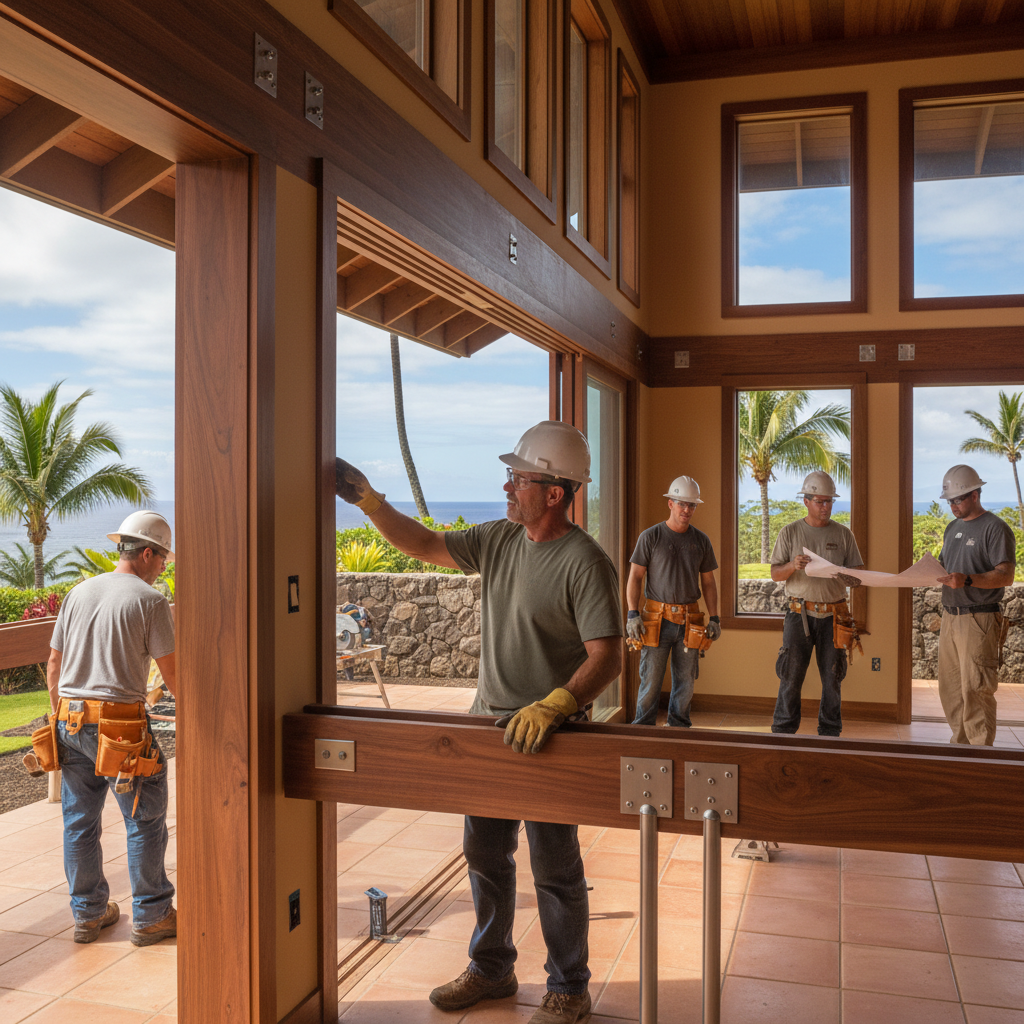
The timeline for building a custom home on Maui is another area where mainland expectations need adjustment. From the first conversation with an architect to getting the keys, a typical project takes **18 to 24 months**. Some complex, high-end homes can take 3 years or more. This extended timeline is driven by three main factors: design complexity, the permitting process, and island logistics.
We break the entire process into three distinct phases:
**Phase 1: Design and Pre-Construction (6-9 Months)**
This is where your vision takes shape. It’s arguably the most important phase because good planning here saves immense time and money later.
- Hiring Your Team (1-2 months): Selecting your architect, builder, and possibly an interior designer. We often work with clients from day one in a design-build capacity to ensure the design stays within budget.
- Schematic Design & Development (3-4 months): This involves creating the floor plans, elevations, and overall look of the home. It’s a collaborative process with lots of back-and-forth revisions to get it just right.
- Construction Documents (2-3 months): Once the design is locked, the architect and engineers create the detailed blueprints that we will use to build. This includes structural calculations, electrical plans, plumbing layouts, and all the technical specifications needed for permitting and construction.
**Phase 2: Permitting with Maui County (6-12 Months)**
This is often the most frustrating and unpredictable phase for homeowners. The County of Maui’s Department of Public Works reviews every set of plans for compliance with building codes, zoning laws, and other regulations. While our team has a great track record of submitting complete and accurate applications, the county’s backlog means review times are long.
We recently submitted plans for a new home in Pukalani. The initial submission took five months for the first review. The county came back with a list of clarifications, which our architect addressed in two weeks. The second review took another three months. All told, it was nearly nine months before we had the permit in hand to break ground. This is a typical experience in 2026, and any builder promising a 2-month permit process is not being realistic.
**Phase 3: Construction (12-18 Months)**
Once we have the permit, the physical work begins. This is the most visible phase of the project.
- Site Prep & Foundation (1-2 months): Clearing the land, excavation, grading, and pouring the concrete foundation.
- Framing & Roofing (2-3 months): The skeleton of the house goes up, and the roof is installed to make it watertight.
- Rough-Ins & Drywall (2-3 months): Plumbers, electricians, and HVAC technicians run all the wires, pipes, and ducts inside the walls. Insulation goes in, and then the drywall is hung and finished.
- Exterior & Interior Finishes (4-6 months): This is the longest part of the build. It includes installing windows, doors, siding, painting, flooring, tile, cabinets, countertops, light fixtures, and plumbing fixtures.
- Final Touches & Landscaping (1-2 months): Final inspections, punch list items, appliance installation, and landscaping complete the project.
It’s crucial to understand that even with the best planning, delays can happen. A rainy winter can slow down foundation work, a dockworkers’ strike on the West Coast can delay materials, or a key subcontractor might be booked solid. A good builder anticipates these risks and builds buffer time into the schedule, maintaining clear communication with you throughout the process.
What Permits Do You Need for Custom Home Builder in Kahului?
Navigating the permitting process with the County of Maui Department of Public Works is a critical part of any new home construction in Kahului. It’s a complex, document-heavy process that requires technical expertise and patience. As your general contractor, we manage this entire process on your behalf, coordinating with architects, engineers, and county plan reviewers. Attempting to do this yourself as a homeowner is nearly impossible and will lead to significant delays.
For a standard single-family custom home in Kahului, you’ll need a package of permits before any work can start. The primary permit is the Building Permit, but it can’t be issued until several other components are approved.
Here’s a breakdown of the essential permits and approvals:
1. **Building Permit Application:** This is the main application that encompasses the entire structure. It requires multiple sets of detailed architectural and structural plans stamped by a Hawaii-licensed architect and engineer. The plans are reviewed for compliance with the International Building Code (IBC) and all of Maui County’s specific amendments.
2. **Electrical Permit:** A separate permit, filed by a licensed electrical contractor, is required for all wiring, panels, and fixtures. The plans show load calculations and layouts to ensure the system is safe and up to code.
3. **Plumbing Permit:** Similar to the electrical permit, a licensed plumbing contractor must file for this permit. It covers all supply lines, drain-waste-vent (DWV) systems, and gas lines, if applicable.
4. **Grading and Grubbing Permit:** If your project involves moving more than 100 cubic yards of earth or clearing a large area, you’ll likely need a grading permit. This requires a civil engineer to create a site plan showing how you’ll manage drainage and erosion control, which is a big deal in Hawaii to protect our reefs from runoff.
5. **Driveway and Sidewalk Permit:** If you are creating a new access point from a public road, you will need a permit from the Public Works department to ensure the driveway apron is constructed to their standards.
6. **Wastewater System Approval:** You must show how you will handle wastewater. If you can connect to the county sewer system, you need approval for the connection. If you’re in an area without sewer access, you’ll need a Department of Health-approved plan for a septic system, which is a whole separate design and approval process.
7. **Special Management Area (SMA) Permit:** This is a big one. If your property is located near the shoreline (the specific distance varies), it falls within the SMA. Any construction in this zone requires an additional, rigorous environmental review process to assess the project’s impact on coastal resources. Getting an SMA permit can add 6 months to a year to your pre-construction timeline and involves public hearings. As an experienced luxury home builder in Kahului, we have guided many clients through this complex process.
The key takeaway is that permitting is not a simple over-the-counter transaction. It’s a series of detailed reviews by different county departments. Our pre-construction team works meticulously to prepare a complete and accurate submittal package, as any missing information can send you to the back of the line. We use our experience from hundreds of past projects on Maui to anticipate what plan reviewers are looking for, which helps streamline the process as much as possible.
Kahului-Specific Considerations: Climate, Materials, Regulations
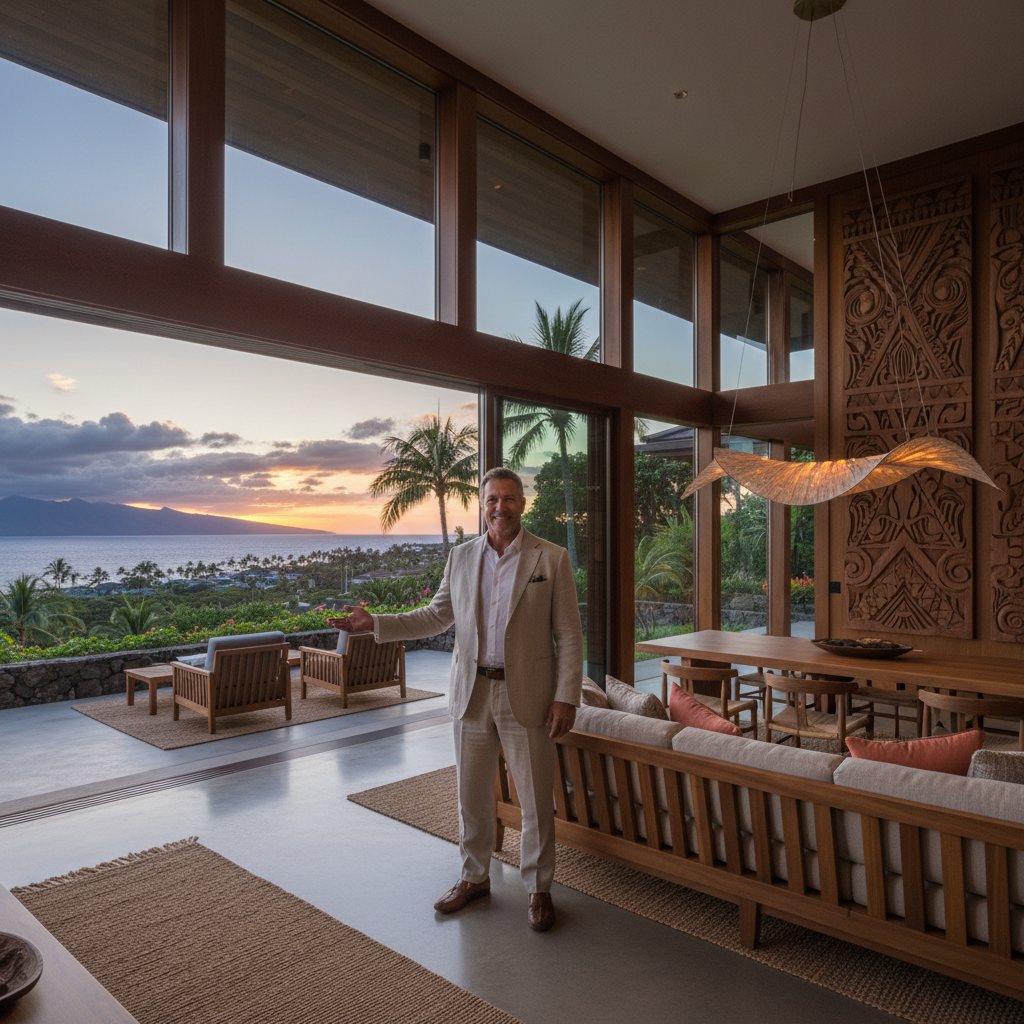
Building in Kahului isn’t like building anywhere else, not even like building in Honolulu or on the Big Island. Central Maui has its own unique microclimate and environmental factors that a successful custom home must address. A design that works in Kula’s cool upcountry climate would be a hotbox in Kahului’s sun and wind. As a dedicated home builder in Kahului, we design and build specifically for these local conditions.
**Climate and Orientation**
Kahului is known for its strong, consistent trade winds. While this is great for staying cool, it also drives rain sideways and puts a constant strain on a home’s structure. Here’s how we account for it:
- Ventilation by Design: We work with architects to orient the home and place windows to maximize natural cross-ventilation. This dramatically reduces the need for air conditioning, lowering your electric bills for the life of the home. Large overhangs are also key to keep the house cool and shed the frequent passing showers.
- Wind Load Engineering: The structure must be engineered to withstand sustained high winds and hurricane-force gusts. This means using specific hurricane straps, reinforced connections between the roof and walls, and sometimes even steel moment frames for homes with large window openings. It’s not just code; it’s common sense.
**Material Selection for Durability**
Material choice is everything on Maui. The combination of intense UV radiation, salt air, and humidity can destroy inferior products in just a few years. We guide our clients to invest in durable, low-maintenance materials that will last.
- Roofing: A standing seam metal roof with a Kynar 500 finish is the gold standard. It reflects heat, resists corrosion, and can withstand 130+ mph winds. Asphalt shingles are a terrible choice here; they cook in the sun, get torn off by wind, and grow mildew.
- Windows & Doors: We recommend fiberglass or high-quality vinyl window frames over wood or aluminum. Wood rots and attracts termites. Standard aluminum corrodes quickly in the salt air. All windows must be impact-rated to meet hurricane code.
- Fasteners & Hardware: This is a detail many builders miss. We specify 316-grade stainless steel for all exterior screws, nails, and hardware. It costs more upfront, but it prevents ugly rust stains and structural failure down the road. On a beachfront project, this is non-negotiable.
- Siding: Fiber cement siding (like James Hardie) is an excellent choice. It’s impervious to termites, doesn’t rot, and holds paint well. Traditional wood siding requires constant maintenance.
**Local Regulations and Building Codes**
Beyond the standard building code, Maui has its own set of rules. We stay on top of these regulations to ensure your project is compliant from day one.
- Hurricane Code: Ever since Hurricane Iniki devastated Kauai in 1992, Hawaii has had some of the strictest hurricane-resistant building codes in the nation. We are experts in these requirements, from the specific nailing patterns for shear walls to the type of impact-rated glass required.
- Water Conservation: Maui has a finite supply of fresh water. Building codes now mandate low-flow fixtures and other water-saving measures. Many new developments also require specific drainage plans to help recharge the aquifer.
- Cultural & Archaeological Sensitivity: Before any major excavation, an archaeological assessment may be required, especially in historically sensitive areas. If iwi kupuna (ancestral remains) or artifacts are found, all work must stop immediately, and a specific protocol is followed. We understand and respect these cultural protocols deeply.
Building a home that truly belongs in Kahului means respecting the ‘āina and engineering for the elements. It’s a philosophy we bring to every project we undertake.
How to Choose the Right Custom Home Builder Contractor in Kahului
Selecting the right contractor is more than just comparing bids; it’s about building a relationship of trust with the team that will bring your vision to life. A bad choice can lead to years of stress, budget overruns, and shoddy workmanship. After decades in the business, we’ve seen what separates the pros from the pretenders. Here’s a checklist to help you choose the best custom home builder in Kahului.
**1. Verify License and Insurance. No Exceptions.**
This is the absolute first step. Any contractor you consider must have a valid Hawaii General Contractor license. Our license is BC-34373. You can and should verify any contractor’s license status on the Hawaii Department of Commerce and Consumer Affairs (DCCA) Professional & Vocational Licensing website.[1] Also, ask for a certificate of insurance showing they carry both General Liability (at least $2 million) and Worker’s Compensation policies. If they can’t provide these immediately, walk away.
**2. Look for Deep Maui-Specific Experience.**
Building on Maui is not the same as building on Oahu or the mainland. Ask potential builders to show you a portfolio of homes they have completed *in Kahului or nearby on Maui*. Ask them specific questions:
- “How do you manage material logistics to avoid delays?”
- “What local subcontractors do you have long-term relationships with?”
- “Tell me about a time you solved a problem specific to Maui’s climate or regulations.”
Their answers will quickly reveal their level of local expertise. A builder who primarily works on Oahu may not have the relationships or knowledge to execute a project smoothly on a neighbor island.
**3. Understand Their Communication and Project Management Process.**
Clear, consistent communication is the bedrock of a successful project. Ask about their process.
- How often will we have meetings?
- Who is my main point of contact?
- What project management software do you use to track progress, share photos, and manage the budget? (If they don’t use any, that’s a red flag).
- How do you handle change orders? (There should be a formal, written process).
We believe in total transparency, providing our clients with a dedicated portal where they can see the schedule, daily logs, and financial status 24/7.
**4. Check References and Visit Job Sites.**
A good builder will be proud to connect you with past clients. Don’t just ask for a list; ask for references from projects completed in the last 2-3 years, as well as one from 5-10 years ago to see how the work has held up. Ask the references about the builder’s communication, problem-solving skills, and whether they stayed on budget and on schedule. If possible, ask to visit a current job site. You can tell a lot about a company by how clean, safe, and organized their site is.
**5. Analyze the Bid, Not Just the Bottom Line.**
It’s tempting to go with the lowest bid, but this is often a costly mistake. A low bid can signal that the contractor missed something in the scope of work, is using cheaper materials, or is planning to make up the difference with a flood of change orders later. When you get bids, make sure they are “apples to apples.” A professional bid from a company like ours will be a detailed, multi-page document that breaks down costs by construction phase, specifying allowances for items like appliances and fixtures. A one-page bid with a single number is a sign of an unsophisticated operation. Take the time to sit down with each builder and have them walk you through their numbers. The builder who can explain their costs most clearly is often the one you can trust the most.
Real Kahului Custom Home Builder Project Example
To make these concepts more concrete, let’s walk through a recent project our team completed. It showcases the challenges and solutions involved in new home construction in Kahului.
**The Client & The Vision:**
A professional couple from California bought a lot in the Maui Lani Traditions community. They wanted to build a 3-bedroom, 2.5-bath single-story home of about 2,600 square feet. Their primary goal was an open-concept living space that maximized indoor-outdoor living, with a large covered lanai for entertaining. They also wanted a home that was durable, low-maintenance, and energy-efficient to keep long-term costs down.
**The Challenges:**
- Strict Design Guidelines: The Maui Lani community has a strict design review committee (DRC) with specific rules about exterior materials, colors, and landscaping to maintain a cohesive neighborhood look.
- Grading and Drainage: Although the lot appeared flat, our initial survey revealed a subtle but significant cross-slope that would require a carefully engineered grading and drainage plan to prevent water from pooling against the foundation during heavy rains.
- Material Lead Times: The clients fell in love with a specific brand of large, multi-panel pocketing lanai doors. The manufacturer was on the mainland, and the lead time was 24 weeks. This required meticulous scheduling to avoid holding up the entire project.
**The Warrior Construction Solution:**
Our pre-construction team took the lead. We worked directly with the client’s architect and the Maui Lani DRC from the very beginning, ensuring the proposed design met all guidelines before we even submitted for county permits. This saved months of potential back-and-forth revisions.
For the site work, our civil engineer designed a system of subtle swales and a French drain along the high side of the property. This solution effectively managed water runoff without requiring expensive retaining walls, saving the client nearly $25,000 in site work costs.
Most importantly, we managed the schedule around the long-lead items. We placed the order for the pocketing doors the day we received the building permit. Then, we sequenced the construction so that the framing, roofing, and initial rough-ins could all proceed while we waited. The doors arrived on the barge from Oahu exactly when we needed them, allowing for a seamless installation without a single day of delay.
**The Outcome:**
The project was completed in 20 months, from initial design meetings to final walkthrough. The final construction cost was approximately $1.69 million (about $650/sqft), right in line with our initial budget. The home features a standing seam metal roof, fiber cement siding, solar hot water, and the stunning 20-foot pocketing doors that form the centerpiece of their living space. The clients were thrilled with the result, particularly with how our proactive management and transparent communication made a complex process feel smooth and predictable. This is the standard of service we aim for on every custom home we build.
What this means for Hawaii homeowners
Building a custom home in Kahului is a significant undertaking, but it’s also one of the most rewarding. It’s your chance to create a home that perfectly fits your lifestyle and the Maui environment. However, success hinges on understanding and embracing the local realities of construction in Hawaii. Trying to apply mainland assumptions about cost, timing, or materials will only lead to frustration and budget problems.
Here are the key takeaways you need to focus on for a successful project in 2026:
- Embrace the Budget Reality: Start with a realistic budget of $500-$800 per square foot. This isn’t an inflated number; it’s the real cost of quality construction on Maui. Planning for this from day one allows you to design a home you can actually afford to finish.
- Plan for a Marathon, Not a Sprint: The 18-24 month timeline is standard. The biggest factor outside of anyone’s control is the county permitting process. Hire your team early, be patient, and trust that a good contractor is doing everything possible to move things forward.
- Hire a True Local Expert: Your contractor’s experience on Maui is paramount. They must have a deep understanding of hurricane codes, salt-air mitigation, and, crucially, the logistics of getting materials to the island. A builder’s local relationships with subcontractors and suppliers can make or break your schedule.
- Prioritize Durability Over Trends: The materials you choose for your home’s exterior—your roof, windows, siding, and fasteners—are a long-term investment in protecting your home from the harsh tropical elements. Listen to your builder’s recommendations; we’ve seen what works and what fails in this environment.
Ultimately, your role as the homeowner is to have a clear vision and make timely decisions. Our role, as your builder, is to provide the expertise, management, and craftsmanship to turn that vision into a beautiful, durable home. By working together as a team and respecting the unique challenges of building in paradise, we can create a home that will serve your family for generations.
Frequently Asked Questions About Custom Home Builder in Kahului
What’s the #1 mistake people make when building a custom home on Maui?
The biggest mistake is underestimating the total project cost and timeline. Homeowners often see mainland construction prices on TV or online and assume it will be similar here. The “Hawaii premium” for shipping, labor, and durable materials is real. Starting with an unrealistic budget forces compromises on quality later on and creates immense stress. We always advise starting with a comprehensive budget that includes a 10-15% contingency fund for unforeseen issues.
Is it cheaper to build a custom home or buy an existing one in Kahului?
In 2026, the costs can be surprisingly close. The median price for an existing single-family home in Kahului is often high, and older homes may require significant renovations to meet modern hurricane codes and your personal taste. While building new has a higher upfront cost (around $650/sqft), you get a brand-new home, built to the latest safety standards, with a warranty, and exactly the layout and finishes you want. For many, the value of a new build outweighs the potential savings of buying used.
How much should I budget for landscaping a new custom home in Kahului?
Landscaping is often an afterthought, but it’s a critical part of finishing your home. For a new build in Kahului, a good rule of thumb is to budget 5-10% of your total construction cost for landscaping. For a $1.5 million home, that’s $75,000 to $150,000. This would cover design, grading, irrigation, soil, sod, plants, trees, and possibly some basic hardscaping like walkways.
Can I act as my own general contractor to save money?
While legally permissible for homeowners in some cases, we strongly advise against it. The savings are often illusory. You lose the builder’s volume discounts on materials, and you’ll struggle to find quality subcontractors willing to work for an inexperienced homeowner. Most importantly, you are solely responsible for scheduling, quality control, safety, and navigating the complex Maui County inspection process. The time commitment and potential for costly mistakes far outweigh any perceived savings.
What materials hold up best to Kahului’s wind and salt air?
For roofing, a standing seam metal roof with a Kynar finish is the undisputed champion. For windows, fiberglass frames offer the best combination of strength, efficiency, and salt resistance. Siding should be fiber cement, and all exterior fasteners, screws, and hardware must be 316-grade stainless steel to prevent corrosion. These materials have a higher upfront cost but save you a fortune in maintenance and replacement down the line.
How long does it really take to get a building permit from Maui County in 2026?
You should realistically plan for the building permit process to take between 6 and 12 months. This includes the time for initial plan submission, the county’s first review (which can take 4-6 months alone), responding to any comments from the reviewers, and waiting for the second review and final approval. Anyone promising a permit in under 6 months is likely not familiar with the current backlog and process at the Maui County offices.
What are the benefits of a design-build firm vs. hiring an architect and builder separately?
In the design-build model, the architect and builder work together as one team under a single contract. This creates a more collaborative process, as we can provide real-time cost feedback during the design phase to prevent plans from becoming too expensive to build. It streamlines communication, creates a single point of responsibility, and can often shorten the overall project timeline by overlapping the design and pre-construction phases.
Ready to Build Your Dream Home in Kahului?
Building a custom home on Maui is a journey. With the right partner, it can be an exciting and rewarding one. The team at Warrior Construction has the local knowledge, technical expertise, and commitment to transparency to guide you through every step, from the first sketch to the final walkthrough. We don’t just build houses; we build lasting homes and relationships.
If you’re ready to discuss your vision for a new home in Kahului, contact our team today. We can help you navigate the process with confidence and clarity. Learn more about our Custom Home Building services or request a consultation to get started.