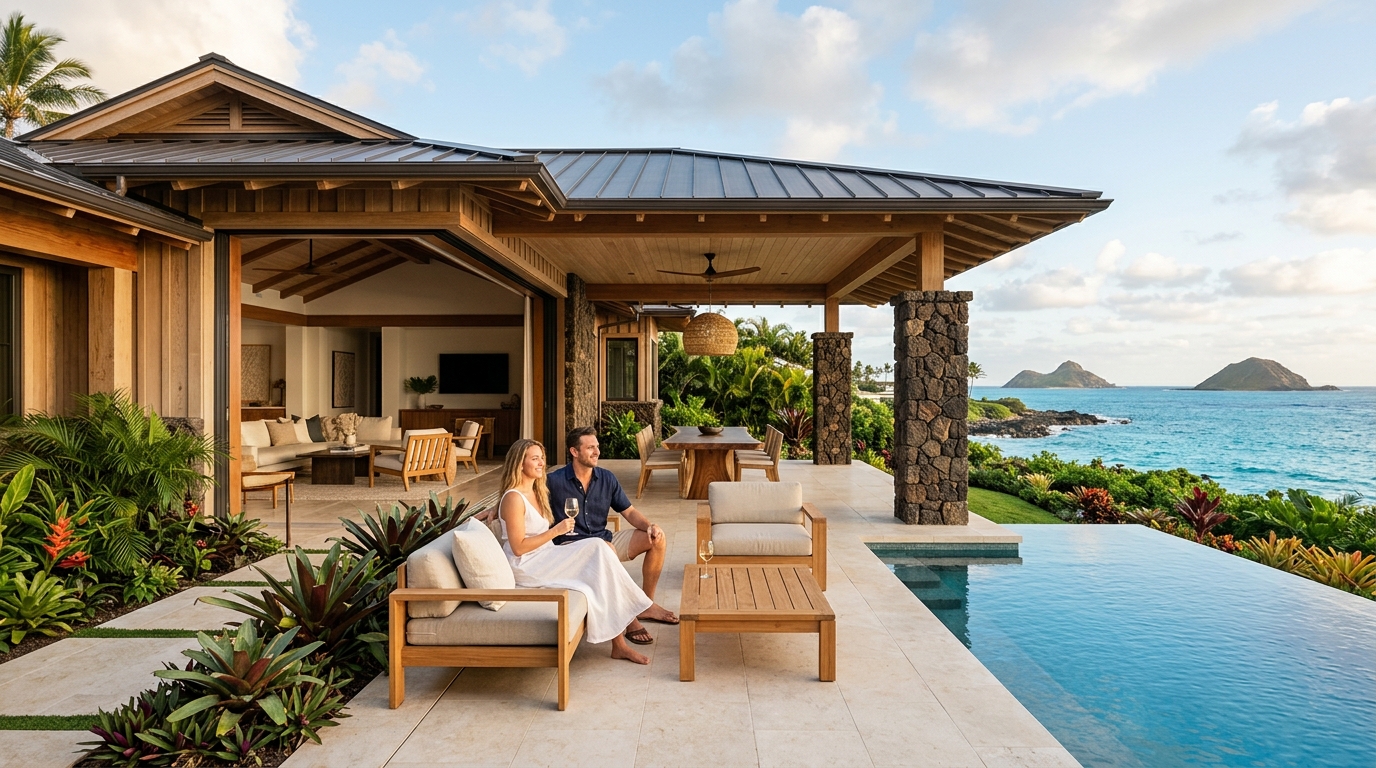
Building a custom home in Kailua in 2026 typically costs between $550 and $900 per square foot and can take 18 to 24 months from initial design sketches to move-in day. The most effective money-saving tactics involve strategic site selection, value engineering during the design phase, and partnering with a custom home builder Kailua team that deeply understands the unique challenges of Windward O’ahu’s climate and regulations. It’s not just about finding the cheapest materials; it’s about building smart to avoid costly mistakes and long-term maintenance headaches.
For over two decades, our team at Warrior Construction has been on the ground here, helping families turn their vision for a Kailua home into a reality. We’ve seen it all—from navigating the complex permitting process at the Honolulu DPP to engineering foundations on sandy soil near the beach. This guide isn’t theoretical; it’s built from years of hands-on experience on Kailua job sites. We’ll break down the real costs you can expect, the timelines you need to plan for, and the Kailua-specific hurdles you’ll face. Most importantly, we’ll share six proven tactics that can save you significant money without compromising the quality and beauty of your new home.
Whether you’re dreaming of a modern retreat in Lanikai or a family-friendly home in Enchanted Lake, understanding the process is the first step. This article will give you the insider knowledge you need to make informed decisions, choose the right partners, and build a home that’s not only beautiful but also built to last in our unique island environment.
Why Kailua Homeowners Trust Warrior Construction for Custom Home Builder
Kailua homeowners trust our team because we are more than just a general contractor; we are Kailua specialists. Building on the Windward side of O’ahu presents a set of challenges that you just don’t encounter in Kapolei or Hawai’i Kai. It takes a seasoned home builder in Kailua to anticipate these issues before they become expensive problems. Our reputation is built on successfully delivering complex projects in this specific community, from beachfront properties requiring SMA permits to hillside homes with intricate foundation needs.
One of the biggest reasons clients choose us is our deep understanding of the local environment. For example, salt-air corrosion is a relentless enemy here. On a recent project near Kailua Beach Park, we specified 316-grade stainless steel for all exterior fasteners and hardware. A less experienced builder might have used standard galvanized steel to save a few thousand dollars upfront. But within five years, those fasteners would be rusting, staining the siding, and potentially compromising the structural integrity of the decking. We build for the 30-year lifespan of a home, not just to pass the final inspection. That foresight is what separates a professional from a handyman.
Furthermore, our relationships with local architects, engineers, and suppliers are a huge asset. We know who to call for the best hurricane-rated windows that can still meet a modern aesthetic, and we know which concrete suppliers understand the right mix for foundations in Kailua’s sandy, high-moisture soil. These relationships also extend to the Honolulu Department of Planning and Permitting (DPP)[1]. Our permit runners know the examiners who typically review Kailua projects. This familiarity doesn’t guarantee faster approval, but it means when a question arises, we can often resolve it with a quick phone call rather than waiting weeks for a formal letter. For a homeowner, this streamlined process can save months of holding costs and frustration.
At Warrior Construction, we operate on a principle of total transparency. Our clients have access to our project management software, which includes daily logs, progress photos, and a running budget. You’ll never have to wonder what’s happening on your job site. We believe building a home is a partnership, and that requires constant, clear communication. It’s this combination of hyper-local expertise, long-term thinking, and transparent process that makes us a trusted custom home builder in Kailua.
What Does Custom Home Builder Cost in Kailua?
The straightforward answer is that a full custom home build in Kailua in 2026 will cost between $550 and $900 per square foot. For a 3,000-square-foot home, this puts the total construction cost in the range of $1.65 million to $2.7 million. This figure doesn’t include the cost of the land, landscaping, or high-end swimming pools. The final number within this range depends heavily on the complexity of the design, the difficulty of the site, and the level of interior finishes you choose.
Costs are generally divided into two categories: hard costs and soft costs. Hard costs are the tangible things: lumber, concrete, roofing, windows, and the labor to install it all. Soft costs are the services and fees: architect and engineer fees, permit fees, surveying, and financing costs. A common mistake is to focus only on hard costs, but soft costs can easily account for 15-25% of your total project budget.
Here’s a realistic breakdown of hard costs for a quality custom home in Kailua:
- Site Work & Foundation: $70 – $120 per sq. ft. of the home’s footprint. Kailua lots can be tricky. A flat, clear lot might be on the lower end, but a sloped lot requiring extensive retaining walls or a property with a high water table needing dewatering can push this cost up significantly.
- Framing & Structure: $80 – $130 per sq. ft. This includes all lumber, steel beams if needed, and the labor to erect the skeleton of your house. It also includes hurricane strapping and sheer wall requirements, which are non-negotiable in Hawaii.
- Exterior Finishes: $100 – $180 per sq. ft. This is your first line of defense against the elements. It includes roofing (a standing seam metal roof is a smart investment here), siding (Hardie board or smooth stucco are common), windows and doors (impact-rated is a must), and exterior paint.
- Interior Systems (MEP): $80 – $130 per sq. ft. This covers all your Mechanical (HVAC), Electrical, and Plumbing. A multi-zone split AC system, high-end lighting fixtures, and complex plumbing will drive this cost higher.
- Interior Finishes: $150 – $350+ per sq. ft. This is the category with the widest range and where your personal taste directly impacts the budget. It includes insulation, drywall, flooring, paint, cabinetry, countertops, tile, appliances, and fixtures. Choosing custom koa cabinets and imported Italian marble will put you at the very top of this range.
To manage these costs, here are the six proven tactics we use with our clients:
- Design for the Lot, Not Against It: Before you fall in love with a house plan online, analyze your specific piece of land. A home designed for a flat Texas suburb will require a massive, expensive foundation and retaining walls on a typical Kailua hillside lot. We work with architects to create designs that follow the natural topography, minimizing site work and saving tens of thousands of dollars.
- Value Engineer Before You Dig: Value engineering is the process of finding less expensive alternatives that don’t sacrifice quality or aesthetics. On a recent luxury home builder Kailua project, the initial spec called for a specific brand of large sliding glass doors costing over $200,000. We sourced an alternative from a different manufacturer with the same performance ratings and a nearly identical look for $145,000. That’s a $55,000 savings from one line item.
- Invest in the Envelope: Saving money on insulation, windows, and roofing is a classic example of being penny-wise and pound-foolish. A few extra thousand dollars for better insulation, a radiant barrier in the attic, and windows with a low Solar Heat Gain Coefficient (SHGC) will save you hundreds on your HECO bill every single month for the life of the home.
- Embrace Smart Standardization: While it’s a “custom” home, not every single element needs to be one-of-a-kind. Using standard window and door sizes can save a fortune compared to custom-fabricated units. Designing your kitchen layout to accommodate standard cabinet dimensions is much cheaper than full custom millwork.
- Lock In Material Prices Early: The cost of materials in Hawaii only goes in one direction: up. Shipping logistics and demand mean prices are volatile. As your builder, we lock in pricing with our suppliers and place orders for long-lead-time items like trusses, windows, and cabinets the moment your permit is issued. Waiting even a few months can lead to significant price increases.
- Choose a Design-Build Contractor: The traditional model of hiring an architect, then bidding the project out to builders, creates an adversarial relationship. The design-build model, where the architect and builder are part of the same team from day one, is far more efficient. We can provide real-time cost feedback during the design process, preventing plans from being drawn up that are over budget. This integration saves time, reduces costly change orders, and delivers a better final product.
Ultimately, controlling the cost of your new home construction in Kailua comes down to smart planning and working with an experienced team that knows the local market inside and out.
How Long Does a Custom Home Builder Take in Kailua?
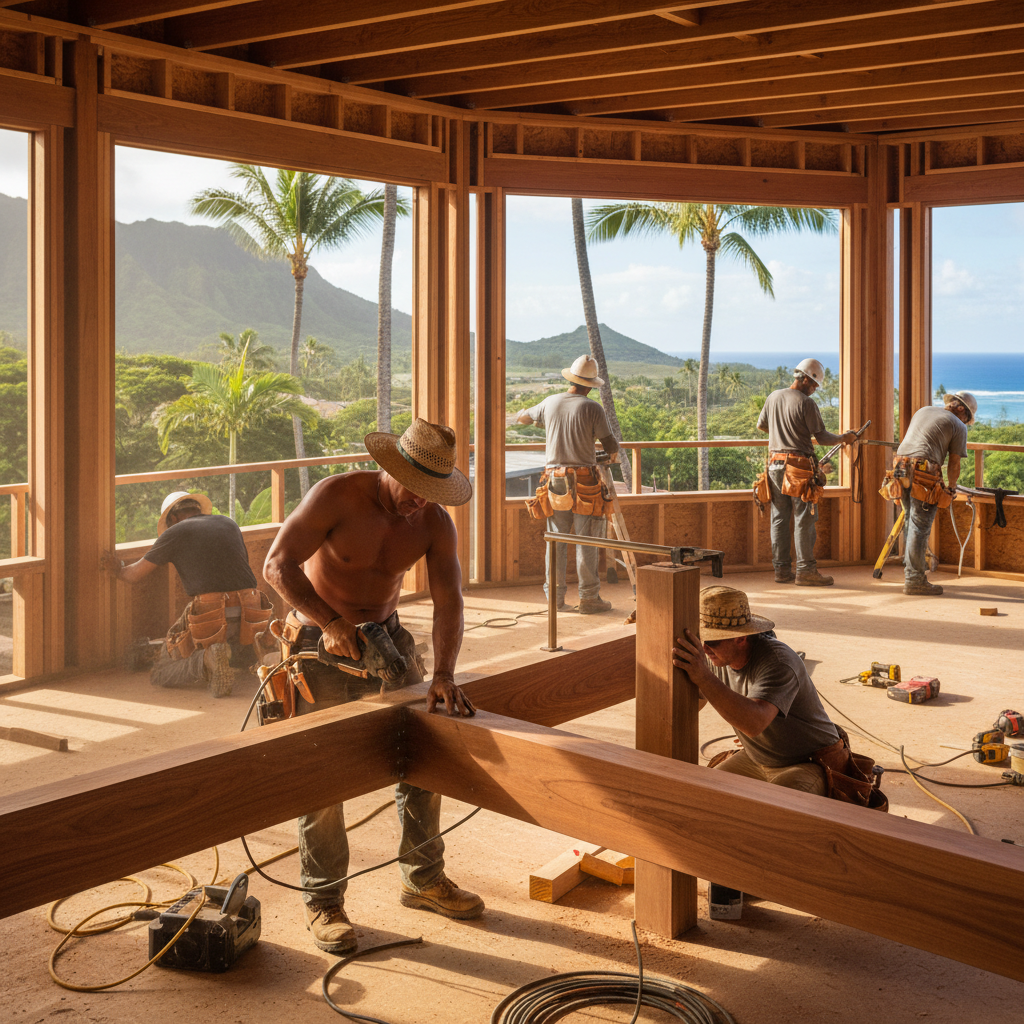
Building a custom home in Kailua is a marathon, not a sprint. A realistic timeline, from the first meeting with your architect to receiving the keys, is 18 to 24 months. Some highly complex luxury homes can take even longer, approaching 36 months. The single biggest variable and cause of delays is not construction itself, but the permitting process with the City and County of Honolulu’s Department of Planning and Permitting (DPP).
Here’s a phase-by-phase breakdown of a typical timeline for new home construction in Kailua:
- Phase 1: Design and Engineering (4-6 months)
This initial phase is where your vision takes shape. It involves selecting an architect and builder (ideally a design-build team), developing schematic designs, refining floor plans and elevations, and selecting materials. Once the design is finalized, structural, electrical, and plumbing engineers will create their detailed plans. Rushing this phase is a mistake; a well-thought-out plan will save you immense time and money during construction. - Phase 2: Permitting (8-12 months)
This is the most unpredictable and often frustrating phase for homeowners. As of 2026, the backlog at the Honolulu DPP is significant. Once we submit your complete set of plans, they go through multiple departmental reviews: zoning, building, structural, electrical, plumbing, fire, and sometimes public works. If any single department requests a correction, it can send the plans back into the queue. We’ve seen simple projects sail through in 6 months and complex ones get stuck for over a year. Having a flawless, complete, and accurate submission is the best way to minimize delays. - Phase 3: Site Preparation and Foundation (1-2 months)
Once the permit is in hand, physical work can begin. This involves clearing the lot, grading the site for proper drainage, and excavating for the foundation. We then form and pour the concrete slab and/or footings. This phase is heavily weather-dependent; a week of heavy Windward rain can bring everything to a halt. - Phase 4: Framing and Dry-In (2-3 months)
This is when your home starts to look like a house. Our crews will frame the walls, floors, and roof structure. Once the roof sheathing, house wrap, and windows are installed, the house is considered “dried-in,” meaning it’s protected from the elements. - Phase 5: Rough-In and Interior Work (4-6 months)
With the house dried-in, subcontractors for plumbing, electrical, and HVAC will run all their pipes, wires, and ducts through the walls. After these systems pass inspection, insulation is installed, and the drywall goes up. This is a long phase with many moving parts. - Phase 6: Finishes and Exterior Completion (2-4 months)
This is the exciting part where the personality of the home emerges. Flooring, tile, cabinetry, countertops, and light fixtures are installed. Simultaneously, our crews will be finishing the exterior with siding and paint. - Phase 7: Final Touches and Handover (1 month)
The final phase involves installing appliances, completing landscaping, and going through a meticulous punch-list process to identify and fix any small imperfections. After all final inspections are passed by the city, we do a final cleaning and officially hand the keys over to you.
It’s critical to understand that this timeline is sequential. We can’t start framing until the foundation is poured, and we can’t start drywall until the electrical inspection is passed. A delay in one phase inevitably pushes back everything that follows. That’s why having a contractor who is an expert at scheduling and managing subcontractors is essential to keeping a project on track.
What Permits Do You Need for Custom Home Builder in Kailua?
For any new home construction in Kailua, you will need a comprehensive Building Permit from the City and County of Honolulu’s Department of Planning and Permitting (DPP). This isn’t a single document but rather a master permit that encapsulates approvals from numerous city agencies. The process is rigorous, detailed, and requires a level of precision that absolutely necessitates a professional team of architects, engineers, and an experienced general contractor to navigate.
Getting a building permit is not as simple as filling out a form. It requires submitting a complete set of construction documents for review. A typical submittal package for a custom home is a thick roll of plans that includes:
- Architectural Plans: These are the main drawings showing floor plans, roof plans, exterior elevations, and building sections. They detail the home’s dimensions, materials, and overall design.
- Structural Plans: Prepared by a licensed structural engineer, these plans detail the foundation, framing, load-bearing walls, and crucial connections like hurricane straps and ties. In Hawaii, these are scrutinized to ensure the home meets our strict hurricane code.
- Civil Engineering Plans: These show how the lot will be graded for proper drainage, preventing water from flooding your property or your neighbors’. They may also include details on retaining walls and driveway slopes.
- Electrical, Plumbing, and Mechanical Plans: These detailed schematics show the layout of all wiring, outlets, fixtures, pipes, drains, vents, and HVAC systems.
- Landscape Plans: For some projects, especially those in planned communities or sensitive areas, a landscape plan showing proposed plantings and irrigation may be required.
- Supporting Documents: This includes structural calculations, energy conservation calculations (to show compliance with Hawaii’s energy code), and Special Inspection forms.
For many properties in Kailua, especially in Lanikai or along the coast, you may also need a **Shoreline Management Area (SMA) Assessment or Minor Permit**. This is a separate review to ensure the project doesn’t negatively impact the coastal ecosystem. This can add several months and additional consulting fees (for biologists or coastal engineers) to the pre-construction phase.
Our role as your general contractor is to manage this entire process. We coordinate with the architect and engineers to ensure the plan set is complete and accurate before submission. We use experienced permit runners who understand the DPP’s electronic submission system and can track the plan’s progress through the various review stages. When the inevitable request for clarification comes from a plan checker, we work with the design team to provide a swift and accurate response. Attempting to navigate this bureaucratic maze on your own is a recipe for extreme delays and frustration. A professional team is your best investment for a smooth pre-construction phase.
Kailua-Specific Considerations: Climate, Materials, Regulations
Building in Kailua is not like building anywhere else, not even like other parts of O’ahu. The specific combination of windward climate, coastal proximity, and community regulations creates a unique building environment that demands local knowledge. A builder who primarily works in the dry heat of Ewa Beach can make costly errors on a Kailua project.
**Climate and Corrosion:**
The number one factor is the moist, salt-laden air. It’s wonderful to live in, but it’s incredibly destructive to buildings. This affects material selection down to the smallest detail.
- Fasteners: All nails, screws, and connectors used on the exterior must be, at a minimum, hot-dip galvanized. For homes within a quarter-mile of the beach, we insist on 316-grade stainless steel. It’s more expensive, but it’s the only way to prevent rust streaks and premature failure.
- Metals: Any exposed metal, from window frames to railings and roof panels, must be marine-grade aluminum or stainless steel with a high-performance coating (like Kynar for roofing). Standard steel will begin to rust within a year.
- Waterproofing: With frequent windward showers, the building envelope must be perfect. We use advanced waterproofing membranes at all window and door openings, peel-and-stick barriers under roofing, and multi-layer stucco systems with integrated drainage planes. A small leak can lead to huge mold and rot problems in our humid climate.
**Materials and Logistics:**
Being on an island means everything comes here on a boat or a plane. This has huge implications for scheduling and cost.
- Lead Times: We have to plan for 8-12 week lead times for windows, custom cabinetry, and specialty flooring. For some high-end European appliances, it can be 6 months or more. We order these items the day the permit is issued to avoid holding up the entire project.
- Local vs. Mainland: We prioritize local suppliers whenever possible to support our community and reduce shipping costs. However, for many specialty items, sourcing from the mainland is unavoidable. The cost of shipping, including Young Brothers transport from Honolulu to neighbor islands if applicable, must be factored into the budget.
- Recommended Materials: For Kailua, we often recommend standing seam metal roofs for their durability against wind and rain, fiber cement siding (like James Hardie) for its resistance to moisture and termites, and composite decking (like Trex) over wood for its longevity in our climate.
**Regulations and Community:**
Kailua has its own set of written and unwritten rules.
- Hurricane Code: Since Hurricane Iniki, Hawaii’s building codes have been some of the strictest in the nation. Your home must be designed with a continuous load path, using metal straps and connectors to tie the roof to the walls and the walls to the foundation. All windows and doors must be impact-rated or have approved shutters.
- Height and Setbacks: Kailua, and especially the Lanikai neighborhood, has very strict regulations on building height to protect view planes. Zoning setbacks from property lines are also rigidly enforced. A good surveyor and an architect who knows the local zoning code are essential.
- Neighborly Conduct: This is an unwritten rule, but it’s critical. Construction is disruptive. We make it a point to introduce ourselves to the neighbors, keep them informed of the schedule, and maintain a clean and safe job site. Maintaining good relationships within the community is part of being a professional Kailua builder.
Building in Kailua requires a holistic approach that considers every one of these factors from the very first design sketch.
How to Choose the Right Custom Home Builder Contractor in Kailua
Choosing the right contractor is the single most important decision you will make in your home-building journey. The right partner will guide you through the process, protect your investment, and deliver a high-quality home. The wrong one can turn your dream into a nightmare of delays, budget overruns, and shoddy workmanship. To make the right choice, you need to look beyond the slick portfolio and ask the tough questions.
Your first step should always be to verify their credentials. Any contractor performing work valued over $1,000 in Hawaii must be licensed. You can and should verify any contractor’s license status on the Department of Commerce and Consumer Affairs (DCCA) Professional & Vocational Licensing (PVL) website[2]. For example, our general contractor license at Warrior Construction is BC-34373, and it’s always in good standing. An unlicensed contractor is a massive red flag—they likely have no insurance and leave you with zero recourse if something goes wrong.
Here is a checklist to use when vetting a potential **home builder in Kailua**:
- Verify License and Insurance: Ask for a copy of their contractor’s license and certificates of insurance for both General Liability and Worker’s Compensation. For a custom home, they should carry at least $2 million in General Liability coverage. Don’t just take their word for it; call the insurance provider to confirm the policy is active.
- Demand Kailua-Specific Experience: Ask to see a portfolio of homes they have built specifically in Kailua or on the Windward side. Building a home in a controlled subdivision in Ewa is fundamentally different from building on a challenging lot in Lanikai. Ask for addresses of past projects so you can drive by and see the quality of their exterior work years later.
- Interview Past Clients: A good builder will be happy to provide you with a list of recent client references. Call them and ask about their experience. Was the builder communicative? Did they stick to the budget? How did they handle problems when they arose? Were they happy with the final quality?
- Evaluate Their Communication and Process: How will they keep you updated on progress? Do they use project management software? How often will you have site meetings? A builder who can’t clearly explain their process is likely disorganized. At Warrior Construction, we provide clients with a login to our system, so they can see daily progress photos, schedules, and budget updates in real-time.
- Insist on a Detailed, Itemized Bid: Never accept a one-page bid with a single number. A professional bid will be many pages long, breaking down the costs by construction phase (e.g., foundation, framing, electrical) with specified quantities and material allowances. This transparency is crucial for comparing bids and for tracking costs throughout the project.
- Meet the Team: You’re not just hiring a company; you’re hiring the people who will be in your life for the next two years. Meet the project manager and site supervisor who will be assigned to your job. Do you feel comfortable with them? Do they listen to your concerns and answer your questions clearly? Trust your gut. This is a long-term relationship, and personal chemistry matters.
Choosing your builder is a business decision, but it’s also a personal one. Do your homework, trust your instincts, and select a partner who has the experience, professionalism, and integrity to bring your Kailua dream home to life.
Real Kailua Custom Home Builder Project Example
To make these concepts more concrete, let’s walk through a typical project profile for a custom home we recently completed in Kailua. This fictionalized example combines elements from several real projects to illustrate the process.
**The Client & The Vision:**
A couple from California was relocating to O’ahu for work and had purchased a 15,000-square-foot lot in the Kalama Tract neighborhood. Their vision was for a 4,000-square-foot, single-story modern plantation-style home. Key features included a large, open-concept living area, a gourmet kitchen, an expansive covered lanai for indoor-outdoor living, and a separate ohana unit for visiting family.
**The Challenge:**
The lot was relatively flat, but soil tests revealed a high water table and sandy soil, which required a specialized foundation design. The clients also had a firm budget of $3.2 million for construction and wanted a high level of finish, which created a tight margin. The biggest challenge, as is often the case, was navigating the DPP permit process, which was further complicated by the inclusion of the ohana unit.
**The Warrior Construction Solution & Process:**
We were brought on board as a design-build team, working with the architect from the very beginning. This allowed us to provide immediate cost feedback.
1. **Foundation Engineering:** Instead of a standard slab-on-grade, our structural engineer designed a post-and-pier foundation with grade beams. This elevated the structure slightly, dealing with the high water table and providing better protection against moisture and termites. It cost about 15% more than a simple slab but was the correct long-term solution for the site.
2. **Value Engineering Finishes:** The initial kitchen design included cabinets from a renowned Italian brand. The quote was nearly $150,000. We worked with a local, high-end cabinet maker to replicate the sleek, modern style using locally sourced materials where possible. The final cost for the custom cabinets was $95,000, a savings of $55,000 with no aesthetic compromise.
3. **Permit Navigation:** The plans for the main house and ohana unit were submitted together. The DPP’s initial review flagged a zoning question regarding the ohana unit’s kitchen configuration. Because our permit runner has a long-standing relationship with the zoning reviewers, he was able to schedule a meeting to clarify the code interpretation directly. This resolved the issue in one week, whereas a formal letter exchange could have taken two months.
**The Outcome:**
The permit was approved after 10 months. The construction phase took 14 months to complete. The final construction cost came in at $3.15 million, just under the clients’ budget. The total project time from the first design meeting to move-in was 24 months. The clients were thrilled with their home, which perfectly blended their modern aesthetic with a classic Hawaiian feel, and the engineered foundation has performed flawlessly. This project showcases how a proactive, experienced **custom home builder Kailua** can navigate local challenges to deliver a project on time and on budget.
What this means for Hawaii homeowners
Building a custom home in Kailua is one of the most rewarding experiences you can have, but it requires careful planning, realistic expectations, and the right team. The allure of creating a space perfectly tailored to your family’s lifestyle, on one of the most beautiful coastlines in the world, is powerful. However, the path is paved with unique local challenges that can derail a project if not properly managed.
Here are the key takeaways for anyone considering a new home construction in Kailua:
- Your Budget Must Be Realistic: The per-square-foot costs are real. On top of the construction budget, you must have a contingency fund of at least 15-20%. This isn’t for adding features; it’s for unforeseen issues like hitting hard rock during excavation or a sudden spike in material costs.
- Patience is a Virtue (Especially with Permitting): The 8-12 month wait for a building permit is not an exaggeration. You must factor this timeline into your plans for financing, temporary housing, and your overall life. There is no way to magically speed up the Honolulu DPP.
- Hire Your Team Early: Engaging a design-build firm like Warrior Construction early in the process is the most efficient path forward. It ensures that from day one, your design is aligned with your budget and with the practical realities of building on your specific lot.
- Build for the Environment, Not Just for Looks: The most important investments you’ll make are in things you may not see—stainless steel fasteners, robust waterproofing, hurricane-rated windows, and proper foundation engineering. These choices will determine your home’s longevity and save you a fortune in long-term maintenance costs in Kailua’s harsh salt-air climate.
Your dream home in Kailua is absolutely achievable. Success hinges on acknowledging the local realities and partnering with a builder who has a proven track record of navigating them successfully.
Frequently Asked Questions About Custom Home Builder in Kailua
What’s the biggest mistake people make when building a custom home in Kailua?
The most common mistake is underestimating soft costs and the permitting timeline. Homeowners get excited about design and finishes (the hard costs) but forget to budget 15-25% for architect fees, engineering, surveys, and permit fees. They also assume construction will start a few months after design, not realizing the 8-12 month wait at the DPP is now standard, which adds significant carrying costs for the land.
Can I build a new home for under $1.5 million in Kailua in 2026?
It is extremely challenging. At a conservative average of $600 per square foot, a $1.5 million construction budget would get you a 2,500 sq. ft. home. This assumes a simple design, standard finishes, and a flat, easy-to-build-on lot, which is rare in Kailua. For a truly custom home with quality finishes, a more realistic starting budget is closer to $1.8M – $2M for a modest-sized home.
Do I need an architect and a builder, or can I just use a design-build company?
You have three options: hire an architect who then helps you bid the plans to builders; hire a builder who has an in-house designer; or hire an integrated design-build firm. We strongly advocate for the design-build model. It puts the entire team under one contract, fostering collaboration, streamlining communication, and ensuring the design is aligned with the budget from the very start.
How does the salt air in Kailua really affect my home’s lifespan?
Dramatically. Salt air accelerates the corrosion of any ferrous metal—steel beams, nails, screws, window frames, and rebar in concrete. It can cause concrete spalling and will quickly destroy cheap paint and wood finishes. A home built with standard, non-marine-grade materials might look good for a few years, but can face serious structural and cosmetic issues in as little as 7-10 years. Proper material selection is not a luxury; it’s a necessity.
Is it cheaper per square foot to build a two-story home versus a single-story?
Generally, yes. A two-story home has a smaller foundation and roof footprint for the same amount of interior square footage, which are two of the most expensive components of a house. This often makes the per-square-foot cost about 10-15% lower than a sprawling single-story home. However, this advantage can be erased if the lot requires extensive grading to accommodate a smaller footprint.
What are some “hidden” costs of new home construction in Kailua?
Beyond the main construction contract, homeowners often forget to budget for landscaping (which can easily be $50k-$150k+ for a custom home), window treatments, utility connection fees from HECO and the Board of Water Supply, and Hawaii’s General Excise Tax (GET) of 4.5%, which is applied to every single invoice from your architect, builder, and suppliers.
How much should I budget for a contingency fund?
For new construction in Hawaii, we advise our clients to have a contingency fund of 15% of the total construction cost, with 20% being even safer. This fund is not for upgrades. It’s for true unforeseen conditions, like discovering an old cesspool during excavation that needs to be properly decommissioned, or a mid-project price surge on a critical material due to shipping issues. A healthy contingency provides peace of mind.
What is a “turnkey” custom home builder service?
A turnkey service, which is essentially what a design-build firm offers, means your contractor manages every single aspect of the project from start to finish. This includes collaborating on the design, hiring and managing the engineers, submitting and tracking all permits, managing all construction and subcontractors, and finally handing you the keys to a move-in ready home. It’s the most seamless, stress-free way to build a custom home.
Ready to Build Your Dream Home in Kailua?
Navigating the path to a new custom home on O’ahu can feel overwhelming, but you don’t have to do it alone. At Warrior Construction, we combine decades of on-the-ground experience with a transparent, client-focused process to make your vision a reality. From the first sketch to the final walkthrough, our team is dedicated to building homes of lasting quality and value.
If you’re ready to discuss your project, our experts can provide insights on lot feasibility, budgeting, and the design-build process. Let’s start the conversation about your future home.