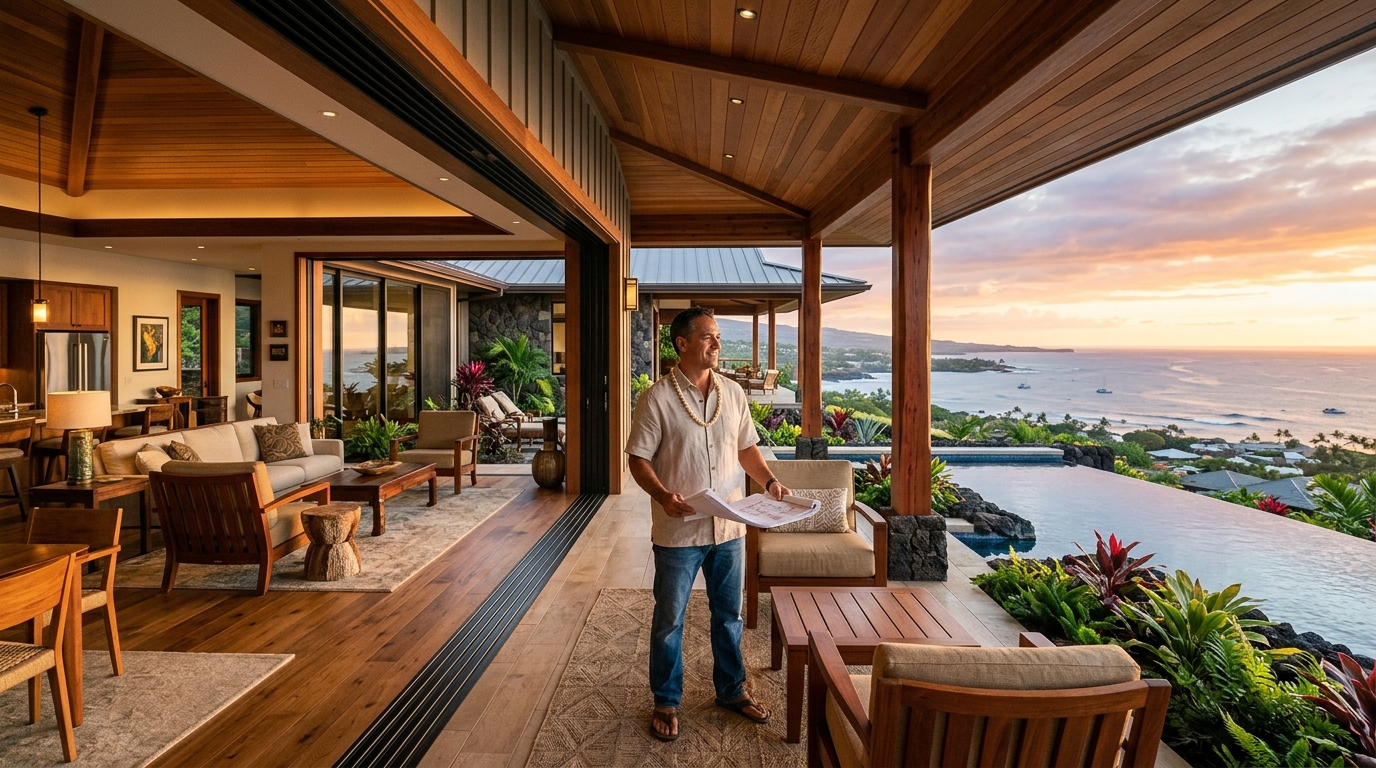
Building a custom home in Kailua-Kona is a dream for many, but it’s a project that demands deep local knowledge. As a custom home builder in Kailua-Kona for over two decades, the first questions we always get are about cost and timeline. In 2026, you should realistically budget between $700 and $1,500 per square foot for a quality build, and expect the entire process from design to move-in to take anywhere from 20 to 36 months. Those numbers can be surprising, but they reflect the unique realities of building on the Big Island—from excavating solid lava rock to managing inter-island logistics for every single piece of material.
This isn’t like building on the mainland. Here, the land itself dictates the first chapter of your home’s story. Whether your lot is on the sun-scorched coast near Alii Drive or up in the cooler coffee belt of Holualoa, the challenges are significant. You’re dealing with volcanic soil, corrosive salt air, and a permitting process at the Hawaiʻi County Department of Public Works that has its own unique rhythm. It requires a team that has navigated these specific hurdles hundreds of times.
At Warrior Construction, we’ve built our reputation on mastering these complexities. We’re not just a general contractor; we’re your partner in turning a piece of Big Island paradise into a home that will stand the test of time. In this guide, we’ll walk you through the real numbers, timelines, and critical decisions you’ll face. We’ll cover everything from breaking down the true cost of new home construction in Kailua-Kona to choosing materials that can withstand the harsh coastal environment and selecting the right home builder for your vision.
Why Kailua-Kona Homeowners Trust Warrior Construction for Custom Home Builder
Choosing a custom home builder is the single most important decision you’ll make in this journey. In Kailua-Kona, that choice is even more critical. You need a team that doesn’t just know construction, but knows construction here. With our license (BC-34373) and years of experience on the Big Island, we bring a level of expertise that simply can’t be imported. We’ve seen it all, from unexpected lava tubes discovered during excavation in Keauhou to navigating the specific material requirements for oceanfront properties in Kukio.
Our approach is built on a foundation of transparency and deep local insight. We operate as a design-build firm, which means we bring the architect, engineers, and construction team together under one roof from day one. This integration is crucial in Hawai’i. For example, on a recent project mauka of Kona, the initial architectural design didn’t fully account for the area’s heavy afternoon vog and rainfall. Because our construction team was involved early, we were able to work with the designer to reorient the main lanai and specify a more robust ventilation system, saving the client tens of thousands in potential change orders and ensuring their long-term comfort. This is the kind of proactive problem-solving that prevents budget overruns and delays.
Here’s what sets our team apart:
- Deep Big Island Experience: We understand the difference in soil conditions between North Kona and South Kona. We know which window manufacturers have the best track record against salt spray and which concrete mix is best suited for pouring on lava rock. This isn’t knowledge you can learn from a book; it’s earned on job sites from Hawi to Ocean View.
- Logistical Mastery: Every nail, window, and appliance for your home arrives on a barge. We have long-standing relationships with suppliers and shipping companies like Young Brothers. Our project managers build schedules that account for these logistical realities, ensuring materials are ordered well in advance to avoid costly delays waiting for the next shipment.
- Transparent Costing: We provide detailed, line-item budgets. You’ll see exactly what the costs are for site work, foundation, framing, and finishes. We explain where costs can fluctuate—like the per-day cost of rock hammering during excavation—so you can make informed decisions. We believe an educated client is the best partner.
- Regulatory Navigation: The permitting process with the Hawaiʻi County DPW can be challenging. We have dedicated staff who manage this process, from initial plan submission to final inspection. We know the examiners, understand the specific code interpretations for our island, and can anticipate potential roadblocks before they become major issues.
Ultimately, homeowners trust us because we build more than houses; we build lasting relationships. We live here, our kids go to school here, and our reputation in the community is everything. We take immense pride in being a premier luxury home builder in Kailua-Kona that homeowners can rely on for quality, integrity, and unparalleled local expertise.
What Does Custom Home Builder Cost in Kailua-Kona?
Let’s get straight to the numbers for 2026. The all-in cost for a custom home in Kailua-Kona typically ranges from $700 to over $1,500 per square foot. For a 3,000-square-foot home, this means a budget of $2.1 million to $4.5 million, not including the cost of the land. It’s a significant investment, and it’s important to understand where every dollar goes. The costs can be broken down into two main categories: soft costs and hard costs.
Soft Costs (15-25% of Total Budget)
These are the expenses for everything needed to get you to the point of breaking ground. They are often overlooked in initial budget estimates.
- Architectural & Engineering Fees: Expect to pay 8-15% of the construction cost for a good architect. For a $2.5M build, that’s $200,000 – $375,000. This includes structural engineering, which is critical on the Big Island due to seismic activity and unique soil conditions.
- Geotechnical & Surveying Reports: Before you can design a foundation, you need to know what’s underneath. A geotechnical report on a lava field lot can cost $7,000 – $15,000. A topographical survey will run another $3,000 – $8,000.
- Permitting Fees: With the Hawaiʻi County DPW, fees are calculated based on project valuation. For a high-end custom home, plan for $30,000 – $60,000 or more. This includes building, plumbing, electrical, and potentially septic/wastewater permits.
- Insurance & Financing Costs: Construction loans and builder’s risk insurance are essential. These costs can add another 1-2% to the budget.
Hard Costs (75-85% of Total Budget)
These are the tangible costs of labor and materials to build your home. This is where the per-square-foot metric really applies.
Here’s a sample cost breakdown for a mid-range 3,000 sq. ft. custom home in Kona at $850/sq. ft. (Total Hard Cost: $2,550,000):
- Site Work & Foundation (15-25%): $380,000 – $640,000. This is the biggest variable in Kona. If your lot is solid blue rock, excavation with hydraulic hammers can cost $3,000-$5,000 per day. This phase includes grading, trenching for utilities, and pouring the concrete slab and footings.
- Framing & Structure (15-20%): $380,000 – $510,000. This includes all lumber, steel beams if required, and the labor to erect the skeleton of the home. We almost exclusively use termite-treated lumber.
- Exterior & Roofing (10-15%): $255,000 – $380,000. This covers siding (stucco, hardie board), high-performance windows rated for coastal conditions, exterior doors, and a quality roof (standing seam metal is a popular and durable choice here).
- Major Systems (MEP) (15-20%): $380,000 – $510,000. This is your Mechanical (HVAC), Electrical, and Plumbing. Given the Kona heat, a high-efficiency multi-zone AC system is a significant part of this cost.
- Interior Finishes (20-30%): $510,000 – $765,000. This is the most client-driven category. It includes drywall, flooring, tile, cabinetry, countertops, plumbing fixtures, lighting, and appliances. A chef’s kitchen with high-end appliances alone can easily be $150,000.
- Landscaping & Flatwork (5-10%): $127,000 – $255,000. This covers your driveway, walkways, lanais, and basic landscaping. Creating a lush garden on a lava field requires importing tons of soil, which adds significant cost.
The biggest factors that drive costs up in Kona are difficult site work, luxury finishes, large expanses of glass, and complex rooflines. Our job during the pre-construction phase is to work with you and the architect to value-engineer the design, ensuring your vision aligns with your budget before we ever put a shovel in the ground.
How Long Does a Custom Home Builder Take in Kailua-Kona?
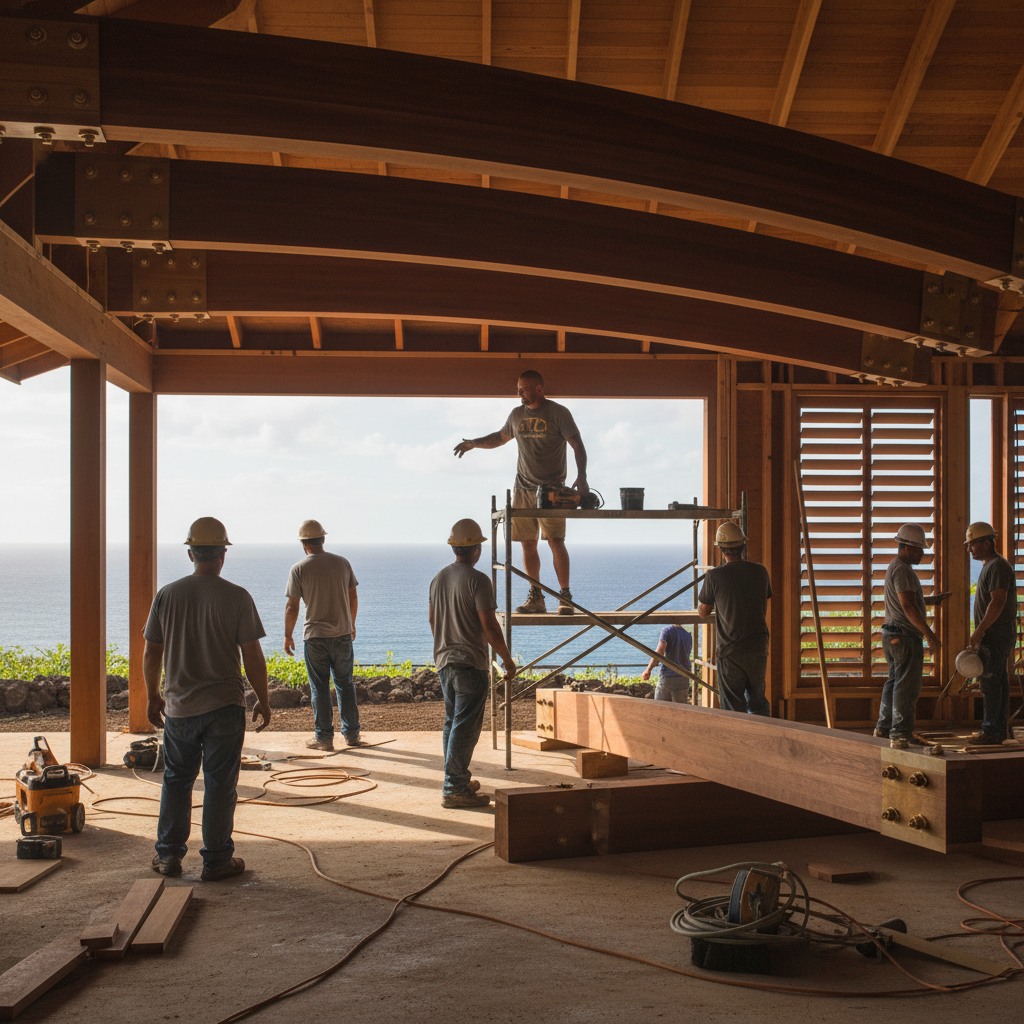
Patience is a virtue when building a custom home anywhere, but it’s a necessity in Hawaiʻi. A realistic timeline from the day you hire an architect to the day you move in is typically 20 to 36 months. Many homeowners are surprised by this, especially the length of the pre-construction phase. Let’s break down a typical 28-month schedule for a new home construction in Kailua-Kona.
Phase 1: Design & Pre-Construction (8-12 Months)
This is the most critical phase for setting your project up for success. Rushing here leads to expensive changes later.
- Architect Selection & Conceptual Design (2-3 months): Finding the right architect and developing the initial floor plans and style of the home.
- Design Development & Engineering (3-5 months): The architect fleshes out the design, and we bring in the structural engineer, civil engineer, and other consultants. This is where we perform value engineering, refining material selections to meet your budget.
- Construction Documents (2-3 months): Creating the final, detailed blueprints that will be submitted for permits and used for construction.
- Contractor Bidding & Selection (1 month): If you haven’t already selected a builder like us in a design-build capacity, this is when you would get bids.
Phase 2: Permitting (8-14 Months)
This phase runs concurrently with the end of the design phase but often becomes the longest pole in the tent. The Hawaiʻi County DPW is thorough, and the review process takes time. On a recent project near Holualoa, the initial plan review took nearly 10 months due to a backlog and a few specific questions the county had about our drainage plan. We were able to address them quickly, but the wait time was unavoidable.
- Initial Plan Submission & Review: Your complete set of plans is submitted. It enters a queue and can sit for several months before a plan reviewer is assigned.
- Comments & Revisions: The county will almost always come back with comments or requests for clarification. Your architect and engineer will address these and resubmit. This can go back and forth a couple of times.
- Permit Issuance: Once all departments (Building, Planning, Fire, etc.) have signed off, the permit is issued.
Phase 3: Construction (12-18 Months)
Once the permit is in hand, the physical work begins. The timeline here depends on the complexity of the home, site conditions, and, crucially, weather and material logistics.
- Site Work & Foundation (1-3 months): Excavation, grading, utilities, and pouring the concrete slab. This can be longer if extensive rock-hammering is needed.
- Framing & Dry-In (3-4 months): The structure goes up, sheathing is applied, the roof is installed, and windows are put in. The house is now “weathered-in.”
- Rough-in of MEP Systems (2-3 months): Plumbers, electricians, and HVAC technicians run all the wires, pipes, and ducts through the walls.
- Insulation & Drywall (1-2 months): The walls are closed up, taped, and textured.
- Interior & Exterior Finishes (4-6 months): This is the longest part of the build. It includes everything from flooring, tile, and painting to cabinet installation, countertops, and siding.
- Final Touches & Landscaping (1 month): Driveways are poured, lighting and plumbing fixtures are installed, and landscaping goes in.
- Punch List & Final Inspections (2-4 weeks): We walk through the home with you to create a “punch list” of final items to address, while simultaneously coordinating final inspections with the county.
Building in Kailua-Kona is a marathon, not a sprint. A builder who promises a 12-month total timeline is either inexperienced with the Big Island or not being upfront with you. We build realistic schedules from the start and communicate proactively when inevitable island-style delays occur.
What Permits Do You Need for Custom Home Builder in Kailua-Kona?
Navigating the permitting process is one of the most complex parts of building a custom home on the Big Island. Unlike Oahu, where you deal with the Honolulu DPP[1], here in Kailua-Kona, all roads lead to the Hawaiʻi County Department of Public Works (DPW) Building Division. Understanding their requirements is non-negotiable for a successful project.
For a typical new home construction, you aren’t just getting one permit; you’re getting a package of them. Our team manages this entire process, but it’s helpful for homeowners to know what’s involved.
The primary permits required include:
- Building Permit: This is the main permit that covers the structure of the house itself. It requires a full set of architectural and structural plans stamped by a Hawaiʻi-licensed architect and engineer. The DPW reviews these for compliance with the International Building Code (IBC) and local amendments.
- Electrical Permit: A separate permit, filed by a licensed electrical contractor, is required for all wiring, panels, and fixtures.
- Plumbing Permit: Similar to electrical, a licensed plumbing contractor must file for a permit covering all supply lines, drains, and fixtures.
- Wastewater System Permit: Many lots in Kona are not on the county sewer system. This means you’ll need to install either a septic system or an individual wastewater system (IWS). This requires a separate design and permit from the Department of Health, which can be a lengthy process on its own.
Beyond these standard permits, your specific lot location can trigger the need for additional reviews and approvals:
- Grading and Grubbing Permits: If you are moving a significant amount of earth or clearing a large area, you’ll need separate permits for that work before the building permit can be issued.
- Shoreline Management Area (SMA) Permit: If your property is near the coast, it likely falls within the SMA. Any construction in this zone requires a special assessment or permit to ensure it doesn’t negatively impact coastal resources. This adds a significant layer of review and time.
- Planning Department Review: The Planning Department will review your plans for compliance with zoning regulations, such as setbacks from property lines, building height restrictions, and lot coverage limits. For instance, in an agricultural-zoned area, there are specific rules about the size and placement of the “farm dwelling.”
The process generally involves submitting multiple copies of your final construction documents to the DPW. They are logged and then distributed to various departments for concurrent review. Each department can place a “hold” on the permit until their specific requirements are met. It’s a sequential process of clearing these holds. A small issue, like a miscalculation on a drainage plan, can send the plans back to your civil engineer and add weeks or months to the timeline.
This is why having a builder with an experienced in-house permit coordinator or a strong relationship with a local permit runner is invaluable. We know the common sticking points and can often design to avoid them from the start. We handle the paperwork, the follow-up calls, and the coordination, allowing you to focus on the exciting parts of the build, like choosing your finishes.
Kailua-Kona-Specific Considerations: Climate, Materials, Regulations
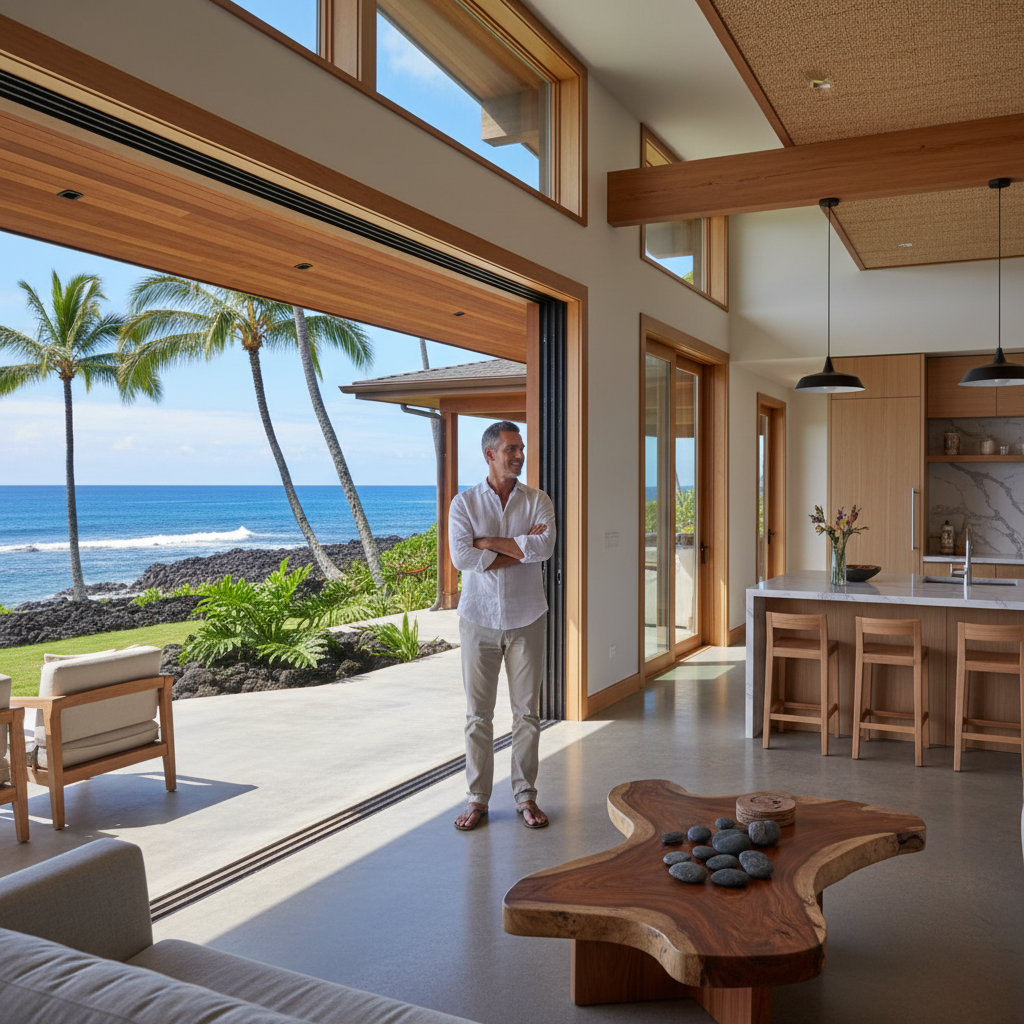
Building in Kailua-Kona is unlike anywhere else in the world. A house that works in California or even on Oahu might fail spectacularly here. The key is designing and building in harmony with the unique and powerful environment of the Big Island. At Warrior Construction, we call this “building for Kona,” and it influences every decision we make.
Mauka vs. Makai: A Tale of Two Climates
Kona’s climate changes dramatically with elevation. A home down at sea level (makai) has different needs than one a few miles up the slopes of Hualalai (mauka).
- Makai (Ocean Side): Here, the main enemies are intense sun, dry heat, and corrosive salt air. We prioritize materials that can handle this assault. This includes 316-grade stainless steel for all exterior fasteners and hardware, standing seam metal roofs with Kynar finishing, and high-quality stucco or fiber cement siding. Large roof overhangs are critical to shade the home and protect it from the sun. Cross-ventilation and multi-zone air conditioning are essential for comfort.
- Mauka (Mountain Side): As you go up in elevation, like in Holualoa, the climate becomes cooler and much wetter, especially in the afternoons. Vog can also be more prevalent. Here, the focus shifts to moisture management. We use advanced waterproofing membranes, design for excellent drainage, and install robust dehumidification and ventilation systems to prevent mold and mildew. Material choices might include more natural woods that are properly sealed and maintained.
Lava Rock and Lava Zones
The entire island is a volcano. This isn’t just a fun fact; it’s a fundamental construction reality.
- Excavation: Most lots in Kona are sitting on a foundation of solid lava rock. There’s no soft dirt to dig through. Site preparation involves heavy machinery with hydraulic hammers to break up the rock, which is slow and expensive. A builder’s estimate must account for this, as it’s one of the biggest budget variables.
- Lava Flow Hazard Zones: The USGS maps the island into Lava Flow Hazard Zones, from 1 (most hazardous) to 9 (least). Most of Kona is in Zone 4, which is considered a lower risk. However, this designation is critical for getting homeowner’s insurance and a mortgage. Building in a higher-risk zone can be challenging and sometimes impossible to insure. We always advise clients to confirm the lava zone of a potential lot before purchasing.
Hurricane Code and Seismic Activity
Hawaiʻi has some of the strictest building codes in the nation for a reason. We are in a hurricane zone and a seismically active area.
- Hurricane-Resistant Construction: Ever since Hurricane Iniki devastated Kauai in 1992, our building codes have been heavily focused on wind resistance. This means using hurricane straps and clips to tie the roof to the walls and the walls to the foundation, creating a continuous load path. Impact-rated windows and doors are often required, especially near the coast.
- Seismic Design: Our structural engineers design foundations and framing systems to withstand the ground-shaking from earthquakes, which are common on the Big Island. This involves specific rebar schedules in the concrete and shear walls within the framing.
Building a truly resilient and comfortable home in Kona requires a builder who not only follows the code but understands the ‘why’ behind it. Our experience as a top home builder Kailua-Kona allows us to select and install the right systems and materials to ensure your home is a safe, durable, and beautiful sanctuary for decades to come.
How to Choose the Right Custom Home Builder Contractor in Kailua-Kona
Finding the right contractor is more than just getting bids; it’s about finding a partner you can trust for a multi-year project. In a smaller community like Kona, a builder’s reputation is everything. A few key steps can help you separate the seasoned professionals from those who might not have the experience to handle the unique demands of building here.
Here is our recommended checklist for vetting a potential custom home builder:
-
Verify Their License and Insurance.
This is the absolute first step. A legitimate contractor will have a Hawaiʻi contractor’s license (like our BC-34373). You can and should verify this on the state’s Professional and Vocational Licensing (PVL) website[2]. Also, ask for certificates of insurance showing they carry both General Liability and Workers’ Compensation. A builder without adequate insurance puts you at enormous financial risk.
-
Insist on Big Island-Specific References.
A builder from Oahu or the mainland might have a great portfolio, but it doesn’t mean they know how to build in Kona. Ask for references from at least three recent custom home projects they completed on the Big Island. Call those homeowners and ask pointed questions: Did they stay on budget? How did they handle communication and problems? Was the quality what you expected?
-
Review Their Portfolio of Similar Projects.
Look for a builder whose work matches the style and quality you envision. If you want to build a modern, minimalist home, a builder who only specializes in traditional plantation-style homes may not be the right fit. Look at the details in their portfolio—the joinery, the tile work, the finish carpentry. This is where quality really shows.
-
Understand Their Communication and Project Management Process.
How will they keep you updated? Do they use project management software? Will you have a dedicated project manager? Ask them to walk you through their process for handling a change order. A professional builder will have clear, systematic processes. On our projects, we schedule regular site meetings and provide clients with weekly progress reports, including photos and budget updates.
-
Analyze the Bid—Don’t Just Look at the Bottom Line.
Never accept a one-page, lump-sum bid. A professional bid will be many pages long and broken down into categories (e.g., foundation, framing, electrical). This allows you to compare bids accurately and understand exactly what is—and is not—included. If one bid is significantly lower than the others, it’s a red flag. It likely means they have missed something or are using lower-quality materials or subcontractors.
Choosing your builder is a long-term commitment. Take your time, do your homework, and choose a team that feels like a true partner. It will make all the difference in your home-building experience.
Real Kailua-Kona Custom Home Builder Project Example
To make all this information concrete, let’s walk through a typical project we recently completed. This helps illustrate how the costs, timelines, and challenges come together in a real-world scenario.
The Project: A 3,200 sq. ft. modern Balinese-style home in Keauhou with a pool and ocean views.
The Client: A couple from California planning their retirement home. They wanted an open-concept living space that blurred the lines between indoors and outdoors, with high-end, durable finishes.
The Budget: The initial all-in budget was set at $3.1 million (approx. $970/sq. ft.), including landscaping and pool, but not the land cost.
The Timeline: The total projected timeline from signing with the architect to move-in was 26 months.
Pre-Construction Phase (11 months):
The clients chose our design-build service. We worked with one of our trusted architectural partners from the very beginning. The design phase went smoothly, but the geotechnical report revealed a challenge: the lot was almost entirely solid blue rock, one of the hardest types of lava rock. We knew immediately that the initial site work budget would need to be increased. We presented this to the client with a revised, detailed estimate for rock hammering, which they approved. This early discovery prevented a major budget crisis down the line.
Permitting Phase (10 months):
We submitted the plans to the Hawaiʻi County DPW. The review process was long, as expected. We received comments back after about eight months, mostly minor clarifications on the structural engineering for the large pocketing glass doors and a request for more detail on the drainage plan. Our team and the engineers turned around the revisions in two weeks, and the permit was issued about two months later.
Construction Phase (15 months):
The site work was the toughest part. Rock hammering took nearly six weeks, longer than a typical excavation. However, once we got the foundation poured, the project moved steadily. The framing went up, and we were able to get the home dried-in before the wetter season started. A mid-project challenge arose when the specific Ipe hardwood decking the clients selected was back-ordered for three months due to a shipping bottleneck on the West Coast. Because of our constant communication with our suppliers, we had early warning. We presented the clients with two alternative, high-quality composite decking options that were available on-island. They chose one they liked even better, and we avoided a costly delay.
The Result:
The final home was completed 27 months after the start, just one month behind the original schedule, which is a major win for a complex build. The final cost came in at $3.25 million, with the increase directly tied to the added excavation work and a few owner-selected finish upgrades. The clients were thrilled with the result—a stunning, durable home perfectly suited to the Kona lifestyle, built with transparency and proactive problem-solving every step of the way.
What this means for Hawaii homeowners
Building your dream home in Kailua-Kona is an ambitious and rewarding endeavor, but it demands a clear-eyed understanding of the local landscape. The sticker shock on cost and timelines is real, driven by logistics, geology, and a stringent regulatory environment. Throwing money at the problem won’t solve it; strategic planning and deep local expertise will. The single biggest mistake we see is homeowners underestimating the pre-construction phase. The months spent on design, engineering, and permitting aren’t a delay—they are the foundation of a smooth, on-budget build.
Here’s your action plan to get started on the right foot:
- Secure Your Financing First: Before you even talk to an architect, have a firm grasp on your total budget. Talk to lenders who are experienced with construction loans in Hawaiʻi. This number will dictate every subsequent decision.
- Vet Your Land Thoroughly: Don’t buy a lot without doing your due diligence. What is the lava zone? Is there access to utilities? What are the zoning setbacks? A small investment in a feasibility study from a qualified builder can save you from a million-dollar mistake.
- Hire Your Builder Early: Bring a builder like Warrior Construction into the process during the architectural design phase. This design-build approach allows us to provide real-time cost feedback and constructability analysis, ensuring the design doesn’t outpace your budget.
- Embrace the Process: Understand that building here takes time. Material delays will happen. A permit will get held up. Choose a builder who communicates proactively and transparently, so you always know where your project stands. Your peace of mind is worth just as much as the quality of the construction.
Your journey to a custom home in Kona starts with education and assembling the right team. With the right partner, the process can be as beautiful as the final result.
Frequently Asked Questions About Custom Home Builder in Kailua-Kona
What is a realistic cost per square foot for a luxury custom home in Kailua-Kona in 2026?
For a true luxury home builder in Kailua-Kona, especially in high-end communities, a realistic budget for 2026 starts around $1,000 per square foot and can easily exceed $1,800. This range accounts for premium finishes, complex architectural designs with large spans of glass, infinity pools, extensive site work on lava rock, and high-end smart home systems.
How long does it really take to get building permits on the Big Island?
As of 2026, you should plan for the building permit process with the Hawaiʻi County DPW to take anywhere from 8 to 14 months for a new custom home. While simpler projects might be faster, complex homes, especially those in the SMA (Shoreline Management Area) or with non-standard wastewater systems, often fall in the upper end of that range. The timeline depends on the county’s workload and the completeness of your submitted plans.
How does building in a specific lava zone affect my project?
Building in Lava Zone 1 or 2 is nearly impossible as you generally cannot get insurance or financing. Most of Kailua-Kona is in Zone 4, which is acceptable to lenders and insurers. The main impact is the requirement for specific insurance coverage. Construction-wise, the lava zone itself doesn’t change building codes, but the underlying reality of building on a volcano dictates foundation engineering and extensive site work costs.
What are the most important materials to get right for a coastal Kona home?
For coastal homes, fighting salt-air corrosion is key. We highly recommend using 316-grade stainless steel for all exterior metal components, including fasteners and railings. High-performance windows with quality vinyl or fiberglass frames are better than aluminum, which can pit. For roofing, a standing seam metal roof with a robust Kynar 500 paint finish offers the best longevity against the sun and salt.
Should I hire an architect first, or a builder?
For the most efficient and budget-conscious process in Hawaiʻi, we strongly recommend a design-build approach where you engage a builder like us early on. When we work alongside your architect from the start, we can provide real-time cost feedback and constructability advice. This prevents situations where you fall in love with a design that ends up being 50% over your budget, saving you months of redesign time and costs.
Do your construction costs include landscaping?
Typically, the base construction contract does not include the landscaping budget. This is treated as a separate allowance because the costs can vary so dramatically, from $50,000 for a simple package to well over $300,000 for extensive tropical gardens, irrigation, lighting, and hardscaping. Landscaping on a lava field is particularly expensive as it requires importing all of the soil.
How do you handle the logistics of getting materials to the Big Island?
We have a full-time logistics manager and project coordinators who handle all material procurement. We order long-lead items like windows, trusses, and custom cabinets months in advance. Everything is consolidated on the mainland or in Honolulu and then shipped via barge. We build these shipping times into our project schedule from day one to minimize delays and ensure a smooth workflow on site.
Ready to Build Your Custom Home in Kailua-Kona?
Building a custom home is a significant undertaking, but it doesn’t have to be overwhelming. With an experienced, transparent, and local team on your side, it can be one of the most rewarding experiences of your life. At Warrior Construction, we have the expertise and the passion to bring your vision to life, ensuring your Kona home is built to the highest standards of quality and durability.
If you’re ready to start the conversation about your dream home, our team is here to help. Learn more about our detailed process and see examples of our work with our custom home building services, or contact us today for a no-obligation consultation to discuss your project.