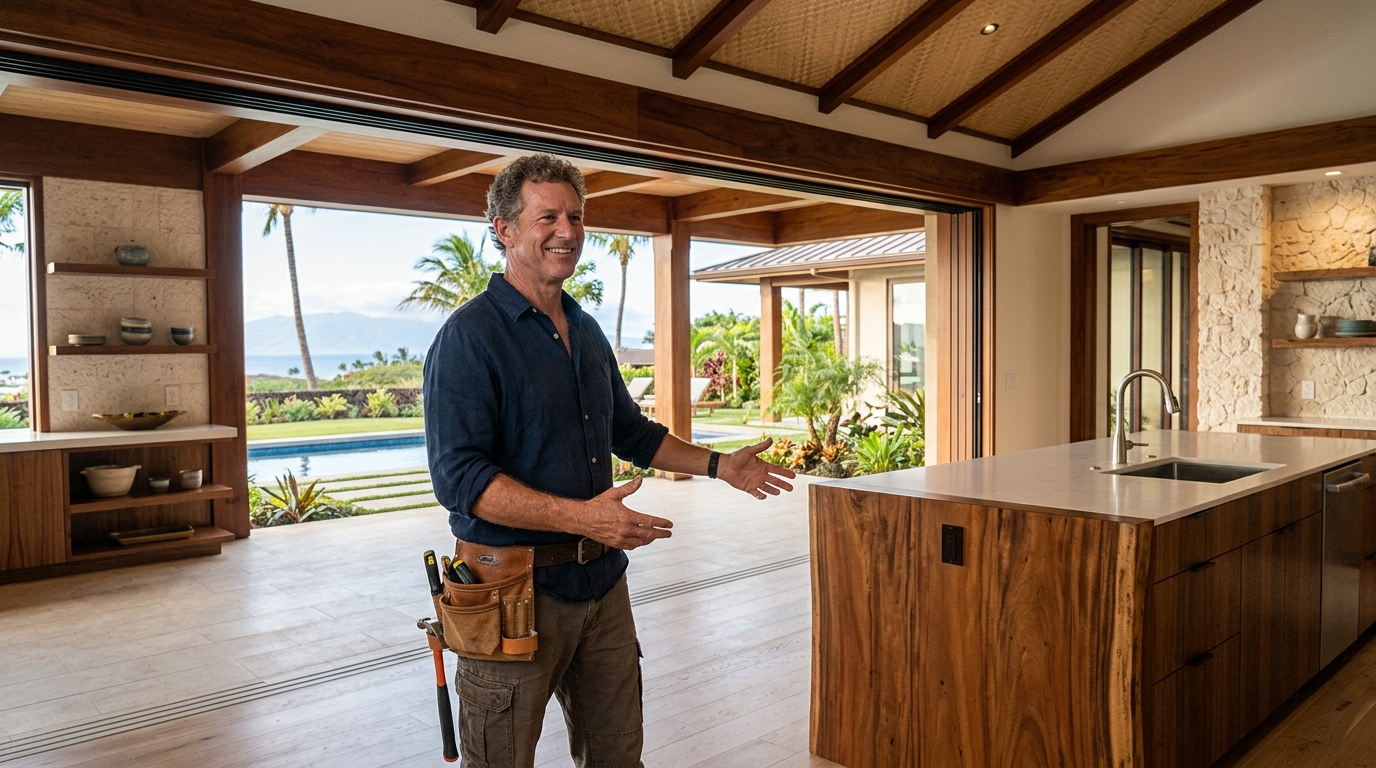
Building a custom home in Lahaina is a unique journey, different from anywhere else in the world. As a custom home builder Lahaina trusts, our team at Warrior Construction has seen it all since we started over 20 years ago. From navigating the complexities of post-fire rebuilding codes to sourcing hurricane-rated materials that can withstand the West Maui salt air, the process requires deep local knowledge. The most important thing for homeowners to understand in 2026 is that building here isn’t just about plans and lumber; it’s about respecting the land, understanding island logistics, and having a contractor who can manage the hundred small details that come with a Maui project.
This guide isn’t a generic checklist you could find on the mainland. It’s boots-on-the-ground advice from our decades of experience as a licensed general contractor (BC-34373) right here in Hawaii. We’re going to walk you through the real costs you can expect in Lahaina today, the actual timelines for permitting and construction on Maui, and the specific material choices that will protect your investment for generations. We’ll cover everything from the nuances of the Maui County permitting process to how to select a builder who won’t disappear when the barge with your windows is delayed. We’ll even share a real project example to show you how these pieces come together. Think of this as the conversation we’d have over coffee before breaking ground on your dream home.
Why Lahaina Homeowners Trust Warrior Construction for Custom Home Builder
Homeowners choose us as their custom home builder in Lahaina because we combine decades of statewide experience with a focused understanding of Maui’s unique building environment. Our license, BC-34373, isn’t just a number; it represents over 20 years of navigating Hawaii’s construction landscape, from Honolulu’s dense urban core to the sprawling agricultural lots of Upcountry Maui. But our work in Lahaina, especially in recent years, requires more than just a license. It requires a commitment to the community and a deep respect for the challenges and opportunities of rebuilding here.
Our team understands the specific hurdles you face on a neighbor island. Unlike building on Oahu where supply chains are more established, a Maui project lives and dies by logistics. We’ve built the relationships over the years with suppliers on both Oahu and the mainland, and we have the systems in place to manage the complexities of shipping, barging, and scheduling. We recently had a project in Kaanapali where the custom cabinetry was delayed at the port in Honolulu. A less experienced builder might have had their whole schedule thrown off for weeks. Because of our long-standing relationship with the shipping company, we were able to get our container prioritized on the next barge, saving the client significant time and money on crew downtime. This is the kind of practical problem-solving that defines our approach.
Furthermore, our familiarity with the Maui County Department of Planning and Department of Public Works is a critical asset. We know the key personnel, the submission requirements, and the common sticking points that can delay a project for months. We work proactively with local architects and engineers who specialize in West Maui design, ensuring the plans we submit are not only beautiful but also compliant with the very latest Wildland-Urban Interface (WUI) codes and hurricane-resistance standards. Choosing Warrior Construction means you’re not just hiring a builder; you’re partnering with a team that has the experience, relationships, and logistical expertise to bring your vision for a home in Lahaina to life, smoothly and professionally.
What Does Custom Home Builder Cost in Lahaina?
In 2026, the cost for a new home construction in Lahaina typically starts around $650 per square foot for hard construction costs and can go up to $1,200 per square foot or more for a true luxury home. A common mistake we see is homeowners using mainland or even Oahu cost figures, which simply don’t apply here. On Maui, and especially in West Maui, you have to account for the “neighbor island premium” on materials, shipping, and specialized labor. For a quality, 2,500-square-foot custom home, a realistic budget would be in the range of $1.6 million to $2.2 million before accounting for land, extensive site work, or high-end finishes.
Let’s break that down into more tangible numbers. Your total project cost is divided into several buckets:
- Hard Costs (65-70% of budget): This is the lumber, concrete, roofing, windows, and labor to put it all together. For that 2,500 sq. ft. home, this is where the $650-$880 per sq. ft. figure applies. This includes everything from the foundation pour to the final coat of paint.
- Soft Costs (10-15% of budget): This category covers everything needed before we can break ground. Think architect fees (8-12% of construction cost), structural engineering, surveys, and permitting fees. For a $1.8M build, you should budget $180,000 to $270,000 for these essential services. Maui County permitting fees alone can easily run $20,000-$40,000 for a new home.
- Site Work (5-10% of budget): This is highly variable depending on your lot. Is it a flat, clear lot in a subdivision or a sloped lot with volcanic rock? Costs here can range from $50,000 for a simple grade and utility trench to over $200,000 for extensive excavation, retaining walls, and long utility runs. On a recent project in Launiupoko, we encountered a massive blue rock shelf right where the foundation was planned, adding three weeks and nearly $45,000 in specialized excavation and drilling costs.
- Landscaping & Exterior (5-10% of budget): This includes your driveway, walkways, lanai, irrigation, and planting. A basic package might be $75,000, while a project with a pool, spa, and extensive tropical landscaping can easily exceed $250,000.
Here’s a sample budget for a 2,500 sq. ft. mid-to-high-end custom home in Lahaina in 2026:
| Cost Category | Estimated Cost | Notes |
|---|---|---|
| Hard Construction Costs (@ $750/sf) | $1,875,000 | Includes materials, labor, and builder’s fee. |
| Architect & Engineering Fees | $190,000 | Assumes ~10% of hard costs. |
| Permits & Fees (Maui County) | $35,000 | Building, plumbing, electrical, water meter, etc. |
| Site Work & Utilities | $125,000 | Assumes moderate grading and standard utility hookups. |
| Landscaping & Pool | $175,000 | Includes basic pool, irrigation, and landscape package. |
| Estimated Total Project Cost | $2,400,000 | Does not include cost of land. |
It’s essential to work with a home builder in Lahaina who provides a detailed, line-item budget from the start. A simple cost-per-square-foot number is not enough. We provide our clients with a comprehensive breakdown so they can see exactly where every dollar is going, from foundation rebar to the specific model of faucet in the master bath.
How Long Does a Custom Home Builder Take in Lahaina?
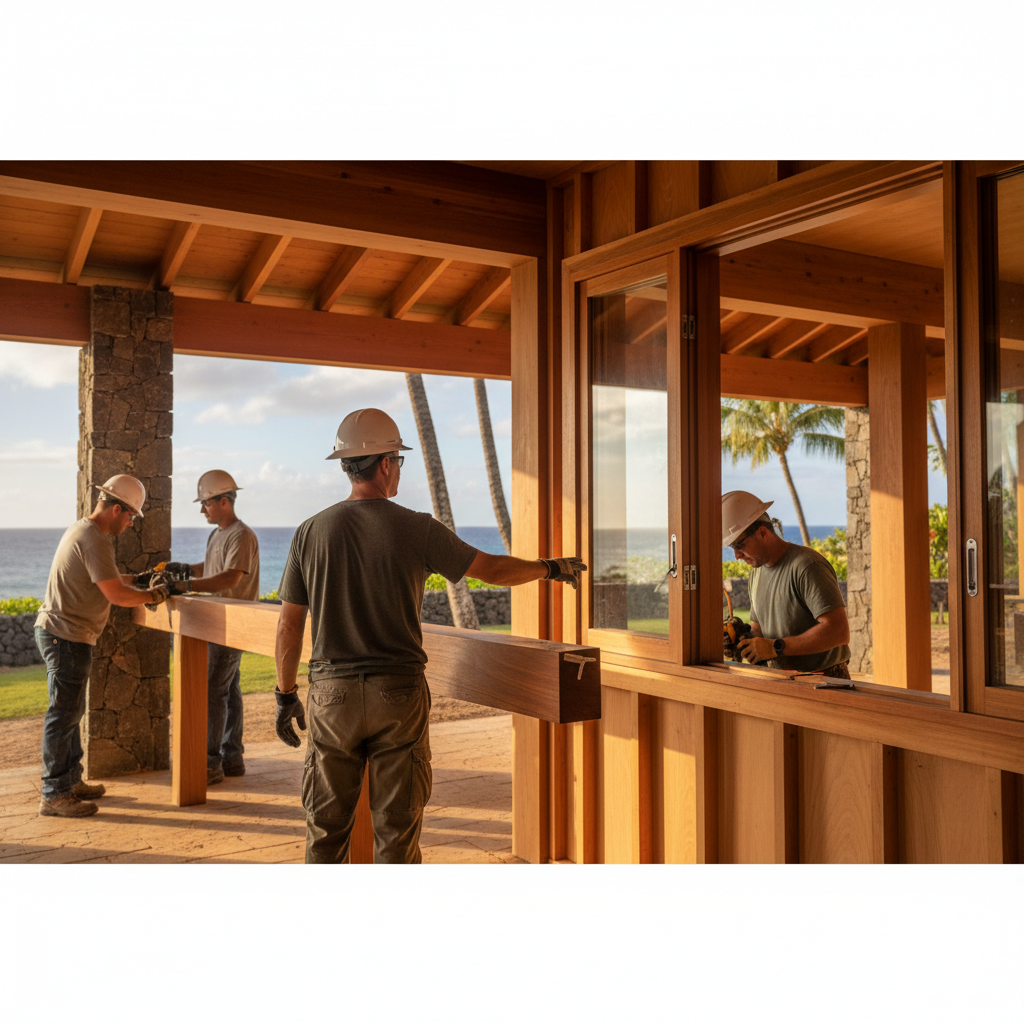
Building a custom home in Lahaina in 2026 will take approximately 18 to 24 months from the day you hire your architect to the day you move in. The biggest factor influencing this timeline, and the one most people underestimate, is the permitting process with Maui County. While the actual construction might only take 12-15 months, the pre-construction phase can easily eat up 6 to 9 months, or even longer.
Here’s a realistic, phase-by-phase timeline for a typical custom home project on Maui:
- Phase 1: Design & Planning (3-6 Months)
- This is where you work with your architect to translate your vision into construction documents. It involves initial concepts, revisions, material selections, and detailed blueprints.
- During this phase, we as the builder can provide critical pre-construction services, offering feedback on constructability and budgeting to ensure the design aligns with your financial goals. A common delay here is homeowner indecision on finishes. It’s much faster and cheaper to finalize choices here than during construction.
- Phase 2: Engineering & Permitting (6-12 Months)
- Once the architectural plans are complete, they go to a structural engineer. After that, the entire package is submitted to the Maui County Department of Planning and Department of Public Works.
- This is the most unpredictable phase. In our experience, a straightforward plan might get through in 6 months, but any complexities—like being in a Special Management Area (SMA), requiring variances, or triggering design review board oversight—can push this to a year or more. The county plan reviewers are thorough and currently handling a high volume of applications. Patience and a complete, professionally prepared submission package are key.
- Phase 3: Construction (12-15 Months)
- Site Work & Foundation (1-2 months): Clearing the land, grading, digging trenches for utilities, and pouring the concrete foundation.
- Framing & Dry-In (2-3 months): The skeleton of the house goes up, including walls, roof trusses, and sheathing. Windows and exterior doors are installed to make the house weather-tight.
- Rough-Ins (2 months): This is when plumbers, electricians, and HVAC technicians run all the pipes, wires, and ducts through the walls.
- Insulation & Drywall (1 month): After rough-in inspections, we insulate and hang drywall.
- Interior & Exterior Finishes (4-6 months): This is the longest part of the build, where the house starts to look like a home. It includes flooring, tile, cabinetry, countertops, painting, siding, roofing, and trim work.
- Finals (1 month): Landscaping, final utility connections, final inspections with the county, and addressing any small details on the punch list.
The total duration, from start to finish, averages around 21 months. A good general contractor will manage this schedule diligently, ordering long-lead-time items like custom windows or appliances months in advance to avoid delays. On a recent North Shore Oahu project, we ordered the Fleetwood sliding doors the same week we submitted for permits, knowing they had a 7-month lead time. They arrived on-site exactly when we were ready to install them, preventing a major bottleneck in the schedule.
What Permits Do You Need for Custom Home Builder in Lahaina?
Navigating the permitting process for a new home construction in Lahaina requires a deep understanding of Maui County’s specific requirements, which are distinct from those in Honolulu or other counties. You can’t just walk in with a set of plans; it’s a multi-step process involving several different departments. As your general contractor, we manage this entire complex process, but it’s crucial for homeowners to understand what’s involved.
The main permit you’ll need is the Building Permit, issued by the Maui County Department of Public Works, Development Services Administration. However, to get that single permit, you need a collection of approvals and sub-permits. The process is much like the one managed by the Honolulu Department of Planning and Permitting (DPP)[1], but with its own Maui-specific nuances.
Here’s a breakdown of the key permits and approvals required:
- Zoning and Planning Review: Before anything else, the Department of Planning reviews your plans to ensure they comply with zoning codes, setback requirements, height limits, and any community plan specifications for your area. If your property is near the shoreline, you may also need a Special Management Area (SMA) permit, which adds a significant layer of review and time.
- Building Permit Application: This is the core application. It includes your full set of architectural and structural engineering plans. The plans are routed to various agencies for review, including:
- Electrical Section: For all wiring and electrical systems.
- Plumbing Section: For all water supply and drainage systems.
- Structural Section: To ensure the home meets building codes for hurricane winds, seismic activity, and load-bearing requirements.
- Grading and Grubbing Permits: If you are moving a significant amount of soil (typically more than 50 cubic yards), you’ll need a separate grading permit. This requires a detailed site plan showing existing and proposed contours.
- Wastewater System Approval: You must show proof of an approved wastewater system. This means either a receipt for your sewer connection fee from the county or an approved septic system design from the Hawaii Department of Health.
- Water Meter Approval: You need to secure a water meter from the Maui County Department of Water Supply, which can sometimes have a long waitlist in certain areas. This must be done very early in the process.
- Driveway Permit: A permit from the Public Works department is required for the construction of your driveway entrance where it connects to the public road.
One critical aspect in Lahaina now is compliance with the latest fire safety and Wildland-Urban Interface (WUI) codes. Plans must clearly specify fire-resistant materials, non-combustible siding, tempered glass windows, and specific vent types. The plan reviewers are extremely diligent about these details. Having an experienced team that knows how to properly detail these requirements on the plans is essential to avoid months of back-and-forth corrections with the county. We work hand-in-hand with your architect to make sure the submission package is complete and correct the first time.
Lahaina-Specific Considerations: Climate, Materials, Regulations
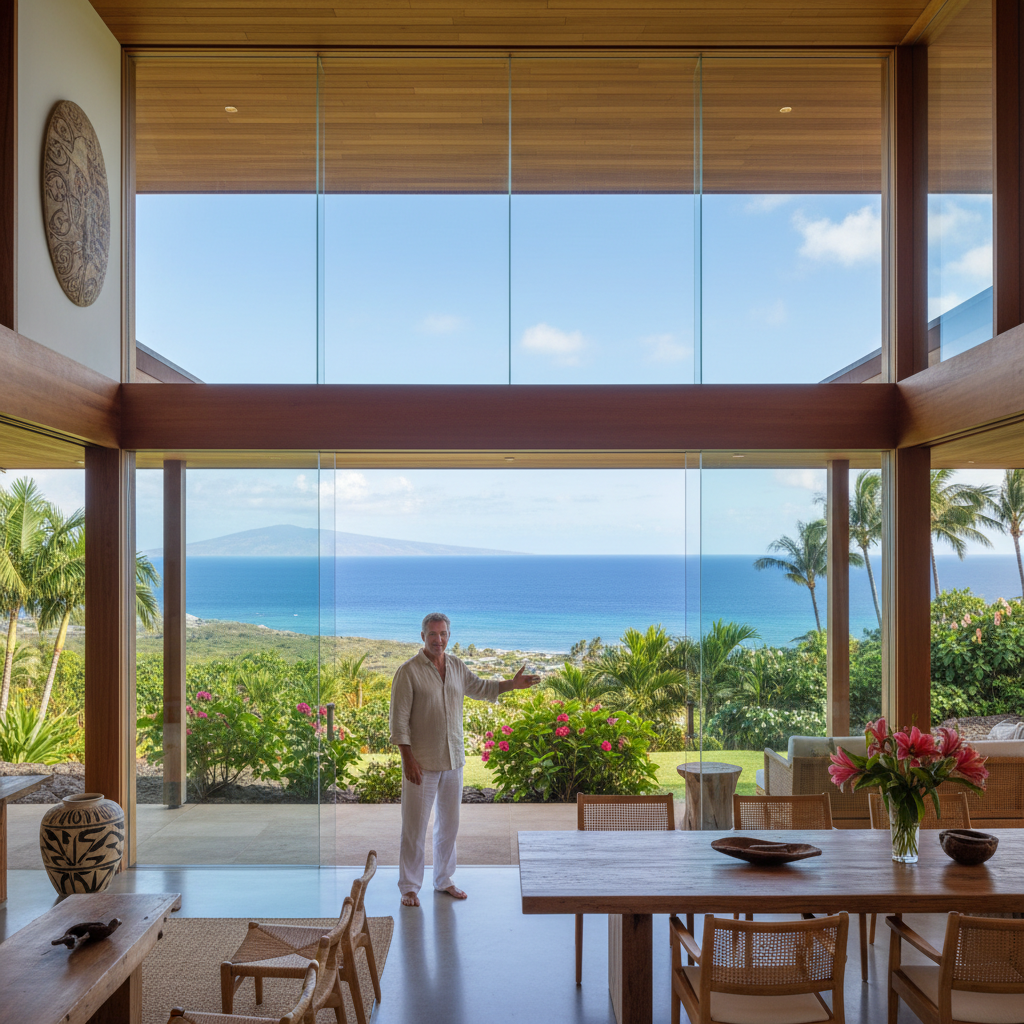
Building a home in Lahaina that will last for generations means going beyond the basic building code. It requires a nuanced understanding of the local microclimate, the realities of island supply chains, and an evolving set of regulations. A mainland builder might look at a set of plans and see a simple house, but we see a structure that needs to defend itself against intense sun, corrosive salt air, potential hurricane-force winds, and ground-boring termites.
Climate & Materials: Fighting the Salt Air
The number one enemy of any coastal home in Hawaii is salt-air corrosion. In Lahaina, the gentle tradewinds carry a fine, salty mist that relentlessly attacks metal. We’ve seen screen doors on a five-year-old house literally crumble to dust. To combat this, we make specific material recommendations:
- Fasteners and Hardware: All nails, screws, and structural connectors must be hot-dip galvanized steel at a minimum, but we strongly recommend 316-grade stainless steel for anything exposed. It costs more upfront, but it prevents rust stains and structural weakness down the line.
- Windows and Doors: We advise against standard aluminum-framed windows. While cheaper, they will pit and corrode within a decade. High-quality fiberglass or vinyl frames are far superior. For luxury home builder Lahaina projects, thermally-broken aluminum with a durable Kynar finish can work, but it comes at a premium.
- Exterior Finishes: Stucco with a high-quality elastomeric paint provides a durable, seamless barrier. For siding, fiber cement products like James Hardie are excellent, as they are impervious to both moisture and termites. We avoid most wood siding unless it’s a naturally resilient species like teak or ipe, and even then, it requires significant maintenance.
Island Logistics & Material Sourcing
Everything you build with, from the concrete mix to the light fixtures, has a longer and more expensive journey to a Lahaina job site. Unlike Oahu, Maui doesn’t have the same depth of local suppliers. This means careful planning is not just a good idea—it’s essential for keeping the project on track.
- Lead Times: We order critical, long-lead-time items like trusses, custom windows, and cabinetry the moment our permits are submitted. A 6-month lead time is standard for many high-performance window packages. If you wait until framing is complete to order, your project could sit idle for half a year.
- Shipping Costs: We factor in the cost of barging materials from Honolulu and shipping from the mainland into our initial budget. This can add 15-25% to the cost of materials compared to a mainland project. We consolidate shipments whenever possible to maximize container space and reduce costs.
Regulations: Beyond the Standard Code
Building in Lahaina in 2026 means adhering to some of the most stringent building codes in the nation, shaped by past disasters and a forward-looking approach to resilience.
- Hurricane Code: Since Hurricane Iniki in 1992, Hawaii has had robust hurricane codes. We build to a 155 mph wind-speed standard, which requires specific hurricane straps connecting the roof to the walls and the walls to the foundation, creating a continuous load path. All windows and large glass doors must be impact-rated.
- Wildland-Urban Interface (WUI) Code: This is now a major factor in Lahaina. The code mandates specific fire-resistant building practices, such as:
- Class A fire-rated roofing materials (metal, tile).
- Non-combustible or ignition-resistant siding for the entire exterior.
- Ember-resistant vents to prevent embers from entering the attic or crawlspace.
- A defensible space of cleared vegetation around the home.
As your builder, our job is to integrate these requirements seamlessly into your home’s design, ensuring it is not only safe and compliant but also beautiful and functional. It’s a balancing act that requires experience and a deep knowledge of the available products and building techniques.
How to Choose the Right Custom Home Builder Contractor in Lahaina
Choosing the right contractor is the single most important decision you will make for your new home construction in Lahaina. A great builder can make the process smooth and enjoyable, while the wrong one can lead to budget overruns, endless delays, and immense stress. In an environment with complex logistics and regulations like Maui, your builder’s experience and professionalism are paramount.
Here’s a practical checklist to guide your selection process:
- Verify Their License and Insurance. This is non-negotiable. Any legitimate contractor will have a Hawaii General Contractor license. You can and should verify their status online through the Hawaii Department of Commerce and Consumer Affairs (DCCA) Professional & Vocational Licensing (PVL) search[2]. Our license, for example, is BC-34373. Also, ask for certificates of insurance for both General Liability and Worker’s Compensation. A million-dollar policy is the absolute minimum; we carry significantly more.
- Look for Deep Local Experience. Ask them: “How many custom homes have you built on Maui specifically?” A contractor based primarily on Oahu may not have the relationships with Maui suppliers, subcontractors, or county inspectors. They need to understand the nuances of barging schedules and have a reliable crew on-island. Ask for addresses of past projects in the Lahaina area you can drive by.
- Review Their Portfolio and Talk to References. Don’t just look at glossy photos. Ask to speak with their last three clients. Ask those homeowners specific questions: How was the communication? How did they handle unexpected problems or changes? Did they stick to the budget and schedule? Was the final punch list completed promptly? A confident builder with happy clients will be eager for you to make these calls.
- Insist on a Detailed, Transparent Bid. A one-page bid with a single number is a huge red flag. A professional bid should be a multi-page document that breaks down costs by construction phase (e.g., foundation, framing, electrical, finishes). It should include specific allowances for items you haven’t selected yet, like appliances or light fixtures. This transparency is crucial for tracking costs and making informed decisions throughout the build.
- Assess Their Communication and Project Management Style. How do they plan to keep you updated? Do they use project management software? Will you have a dedicated project manager? Building a home is a long-term relationship. You need a partner you can communicate with effectively. We set up regular weekly meetings with our clients, whether in person or via video call, and provide consistent photo updates from the job site. You should always know what’s happening, what decisions are needed next, and where the project stands financially.
Ultimately, you’re looking for a partner, not just a hired hand. The right builder for your Lahaina home will have the technical skill, the local knowledge, and the professional integrity to guide you through this complex but rewarding process.
Real Lahaina Custom Home Builder Project Example
To make these concepts concrete, let’s walk through a recent (though fictionalized for privacy) project we completed. This helps illustrate how we navigate the real-world challenges of a custom build in West Maui.
The Project: A 2,800-square-foot, single-story home in the Kaanapali area for a family relocating from the mainland. The design was a modern plantation style with a large, covered lanai and an infinity-edge pool to capitalize on the ocean views.
The Challenge: The clients wanted a very open floor plan with a 24-foot-wide glass pocket door system connecting the great room to the lanai. This created two significant challenges. First, the structural engineering required a massive steel beam to span that opening, which had to be fabricated on Oahu and barged over. Second, the lot had a steeper grade than it appeared, requiring significant retaining walls and careful drainage planning to protect the home during heavy rains.
Our Process & Solution:
- Pre-construction Planning: During the design phase, we worked with the architect and structural engineer to coordinate the steel beam specifications. We immediately got a quote and lead time from our Oahu fabricator—8 months. We advised the client to approve the order before the building permit was even issued. This single decision saved them from having the entire project sit idle for months waiting for a critical structural component.
- Site Work Management: Once we began excavation, the extent of the necessary earthwork became clear. We brought the clients and landscape architect to the site to walk through the options for the retaining walls. Instead of a single, massive concrete wall, we designed a series of smaller, terraced moss rock walls. This approach was not only more aesthetically pleasing, blending into the hillside, but it also improved drainage and created beautiful pockets for landscaping. It was a collaborative solution that turned a problem into a feature.
- Logistics & Communication: The custom-made pocket doors were coming from a manufacturer in California. We coordinated the mainland shipping, the ocean freight to Honolulu, and the final barge to Maui. Our site superintendent personally inspected the crate at Kahului Harbor to ensure there was no damage before it was trucked to the site. Throughout the 14-month construction period, we held bi-weekly video calls with the clients, using drone footage to show progress and walk them through every phase.
The Result:
- Timeline: Total project duration was 22 months from initial architectural design to move-in. The construction phase itself took just under 15 months, hitting our target schedule despite the site challenges.
- Budget: The final construction cost was approximately $2.1 million ($750/sf). The retaining wall solution added about 5% to the initial site work budget, a change the client approved upfront after we presented them with clear options and costs.
- Outcome: The family now has a stunning, durable home perfectly suited to the Lahaina lifestyle. The seamless indoor-outdoor living they dreamed of was achieved, and the structural and site work solutions ensure the home is safe, stable, and built to last. This project is a perfect example of how proactive planning and deep local expertise can overcome the inherent challenges of building on Maui.
What this means for Hawaii homeowners
Building a custom home in Lahaina is a significant investment of time, money, and emotion. Success hinges on understanding the unique local landscape and partnering with a team that has navigated it successfully for years. The process is more complex than on the mainland, but with the right approach, it’s an incredibly rewarding journey.
Here are the key takeaways for anyone considering a new home construction in Lahaina:
- Budget Realistically: Plan for all-in costs starting around $800-$1,000 per square foot when you include hard costs, soft costs, site work, and landscaping. The neighbor island premium is real, so mainland cost models do not apply.
- Embrace the Timeline: Expect the entire process to take 18-24 months. Be patient with the Maui County permitting phase, as it is often the longest and most unpredictable part of the schedule. Build this time into your life plans.
- Design for Resilience, Not Just Beauty: Your material choices matter immensely. Prioritize hurricane-rated components, stainless steel hardware, and fire-resistant materials. A home in Lahaina must be built to withstand salt, sun, wind, and fire.
- Hire a True Local Expert: Your general contractor’s experience on Maui is their most valuable asset. They must have established relationships with local subcontractors, suppliers, and county officials to keep your project moving forward smoothly. Vet them thoroughly.
Ultimately, a successful build comes down to preparation and partnership. By understanding these Lahaina-specific factors and choosing a builder who treats your project with the care and expertise it deserves, you can create a home that is not just a structure, but a sanctuary for your family for decades to come.
Frequently Asked Questions About Custom Home Builder in Lahaina
What is the average cost per square foot to build a custom home in Lahaina in 2026?
The average hard construction cost for a custom home builder in Lahaina is between $650 and $950 per square foot. For a luxury home with high-end finishes, this can easily exceed $1,200 per square foot. These figures don’t include soft costs like design and permits, site work, or landscaping, which can add another 20-30% to the total project cost.
How long does it really take to get a building permit in Maui County?
As of 2026, you should plan for the building permit process in Maui County to take between 6 and 12 months for a new custom home. While simpler projects might get approved faster, any complexities such as zoning variances, SMA (Special Management Area) review, or extensive plan revisions can push the timeline toward the upper end of that range or even longer.
Do I need to hire an architect before I hire a builder?
While you can, we recommend a design-build approach where you bring the builder on board early in the design process. As the builder, we can provide real-time cost feedback and constructability analysis to the architect, ensuring the design stays within your budget. This collaborative approach prevents costly redesigns and saves significant time.
What are the most important material choices for a home in Lahaina?
For Lahaina’s climate, the three most critical material choices are: 1) 316-grade stainless steel for all exterior fasteners and hardware to prevent rust. 2) Fiberglass or high-quality vinyl window frames instead of standard aluminum to resist salt corrosion. 3) Class-A fire-rated roofing and ignition-resistant siding to comply with WUI codes and enhance safety.
How much should I budget for site work on a Maui lot?
Site work costs are highly variable but typically range from 5% to 15% of your total construction budget. For a $1.8M build, this means budgeting $90,000 to $270,000. A flat, clear lot might be on the lower end, while a sloped lot with volcanic rock, extensive drainage needs, or a long driveway can easily reach the higher end of that range.
Is it more expensive to build on Maui than on Oahu?
Yes, it is generally 10-20% more expensive to build a comparable home on Maui than on Oahu. This is due to the added costs of inter-island shipping for materials, equipment, and sometimes specialized labor. Maui has fewer local suppliers, which means more items must be barged from Honolulu or shipped directly from the mainland, increasing both cost and potential for delays.
What is the Wildland-Urban Interface (WUI) code and how does it affect my Lahaina home?
The WUI code is a set of building regulations designed to protect homes from wildfire. For a new home in Lahaina, this means you are required to use specific materials and techniques, such as non-combustible siding (like fiber cement or stucco), ember-resistant vents, tempered glass windows, and Class A fire-rated roofing. It’s a critical part of building a safe and resilient home in the area.
Building your home in Lahaina is a journey we’d be honored to take with you. With over two decades of experience as a trusted Hawaii general contractor, our team at Warrior Construction has the expertise to manage every detail, from navigating Maui County permits to sourcing the most durable materials for our island climate. We are committed to building not just beautiful homes, but lasting relationships based on transparency and quality craftsmanship.
If you’re ready to discuss your vision for a new home in Lahaina, we’re here to provide the guidance and skill your project deserves. Learn more about our custom home building process or contact our team today for a complimentary estimate.