“
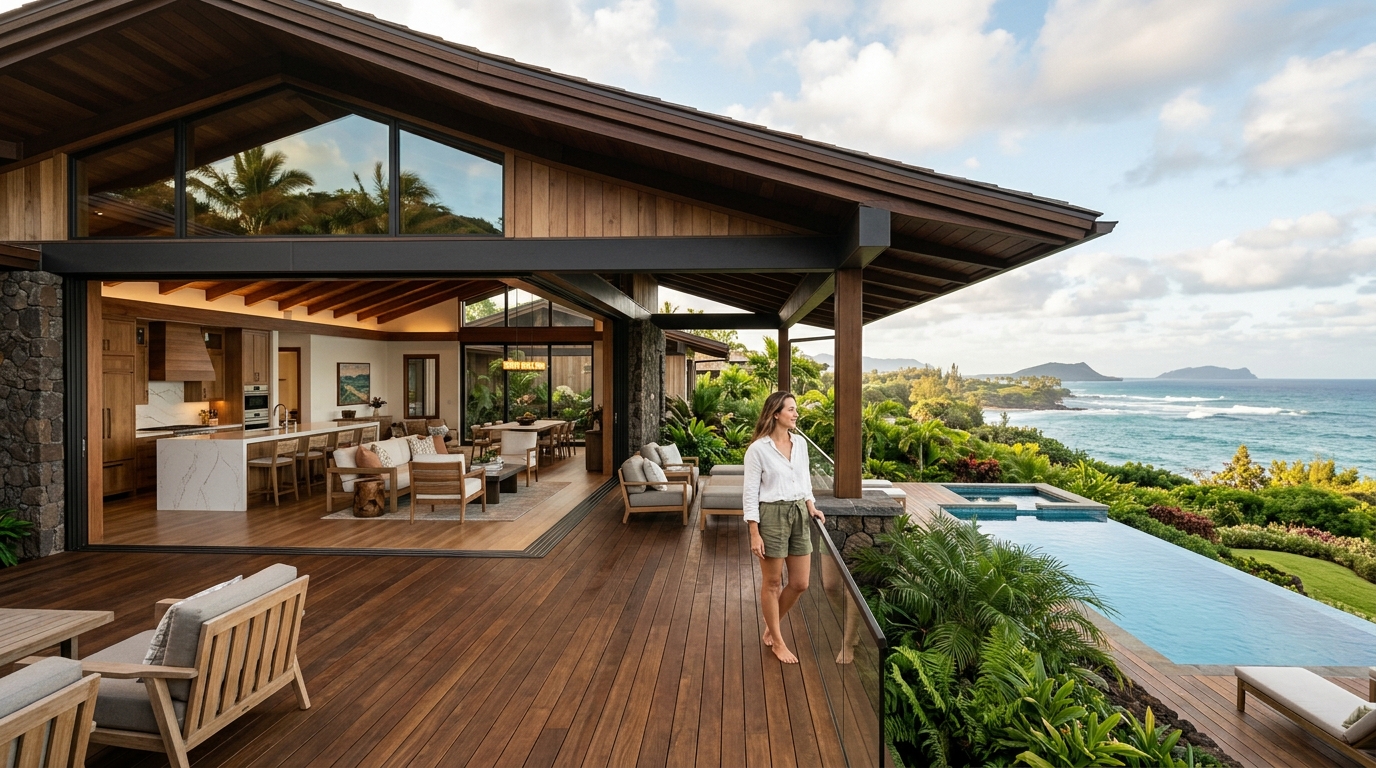
Building a custom home in Po’ipu isn’t just about plans and permits; it’s about creating a legacy on one of the most beautiful coastlines in the world. As a custom home builder Po’ipu residents have trusted for years, we at Warrior Construction see homeowners in 2026 moving beyond basic luxury. They’re asking for homes that are not only beautiful but resilient, self-sufficient, and deeply connected to the Kaua’i environment. The five most impactful upgrades we’re integrating into our new home construction in Po’ipu are next-generation battery storage for energy independence, advanced fenestration for seamless indoor-outdoor living, engineering for hurricane resistance that exceeds basic code, smart water management systems, and truly corrosion-proof exteriors designed for a lifetime in the salt air.
\n
For anyone considering this journey, understanding the real-world costs, timelines, and hyper-local challenges is the first step. Building on Kaua’i isn’t like building on the mainland, or even on O’ahu. Everything from the red volcanic soil under your foundation to the cost of shipping a container of windows from the west coast plays a role. In this guide, our team will walk you through the entire process from a contractor’s perspective. We’ll break down the 2026 costs per square foot for a luxury home builder in Po’ipu, outline a realistic 18-to-24-month timeline, navigate the Kaua’i County permitting maze, and detail the specific material choices that stand up to the south shore’s unique blend of intense sun and corrosive salt spray. This is the conversation we have with our clients over coffee before we ever break ground—the real numbers, the potential pitfalls, and the expert solutions that make a project successful.
\n\n
Why Po’ipu Homeowners Trust Warrior Construction for Custom Home Builder
\n
Choosing a custom home builder in Po’ipu is about more than just finding a company that can swing a hammer. It’s about finding a partner who understands the unique DNA of building on Kaua’i. At Warrior Construction, our reputation is built on a foundation of local knowledge earned over two decades of projects across the islands. We’re not just a company with a Hawaii license; we are a team that lives and breathes Hawaii construction every single day. Our General Contractor license, BC-34373, is a promise of professionalism and accountability, but our real value comes from the on-the-ground experience that you can’t learn from a textbook.
\n
For example, we recently managed a new build where the initial soil report didn’t fully capture the extent of expansive clay hidden beneath the topsoil. A mainland builder might have followed the report, leading to foundation issues within a few years. But our team, familiar with that specific area of the south shore, knew to dig deeper test pits. We identified the problem early, engineered a more robust foundation with proper drainage, and saved the homeowner a future six-figure repair bill. That’s the kind of foresight that defines our approach.
\n
Here’s what sets our team apart for a Po’ipu project:\n
- \n
- Kaua’i-Specific Logistical Mastery: Building on a neighbor island requires a completely different level of planning. We have the long-standing relationships with suppliers and shipping companies to ensure materials arrive on schedule and on budget. We know which barge to use for oversized items, how to consolidate shipments to minimize costs, and how to build a schedule that accounts for the inevitable “island time” delays without derailing the entire project.
- Deep Understanding of Po’ipu’s Microclimate: Po’ipu is the “sunny side,” but it’s still a coastal environment with persistent salt spray and intense UV exposure. We don’t use the same materials here that we might use in an upcountry Maui home. Our material selection process is rigorous, specifying 316 marine-grade stainless steel for all exterior fasteners, Kynar-finished aluminum for window frames, and specialized coatings for concrete to prevent spalling.
- Transparent, Fixed-Price Bidding: We’ve seen too many homeowners get burned by vague estimates that balloon over time. Our pre-construction process is exhaustive. We work with you, the architect, and the engineers to create a detailed, line-item budget. Once that budget is set, we stick to it. You get a clear, fixed price for the defined scope, giving you financial certainty before we break ground.
- Proactive Communication: We believe an informed client is a happy client. You’ll have a dedicated project manager who provides regular updates, photos, and financial tracking. Our team is always available to answer your questions and walk the site with you. We use modern project management software so you can track progress from anywhere in the world, which is crucial for our many clients who are building their dream home from afar.
\n
\n
\n
\n
\n
Ultimately, homeowners choose Warrior Construction because we build more than just houses; we build with a sense of kuleana (responsibility) to our clients and to the ‘aina. We understand the investment you’re making, and we’re committed to delivering a home that will stand as a beautiful, resilient testament to your vision for generations to come.
\n\n
What Does Custom Home Builder Cost in Po’ipu?
\n
For a high-quality custom home in Po’ipu in 2026, you should budget between $650 to $950 per square foot for construction costs. For a true luxury home builder in Po’ipu, with premium finishes, extensive site work, and high-end systems, that number can easily exceed $1,000 per square foot. This figure covers the vertical construction—from the foundation up to the roof—but does not include the cost of the land, architectural and engineering fees, landscaping, a pool, or furnishings.
\n
Let’s make that tangible. For a 3,000-square-foot custom home, the construction budget would likely fall between $1.95 million and $2.85 million. It’s a significant investment, and it’s critical to understand where that money goes. Building on Kaua’i, especially in a desirable area like Po’ipu, has several cost drivers that differ from mainland or even Honolulu construction.
\n
Here’s a typical cost breakdown for a Po’ipu custom home project:\n
- \n
- Pre-Construction (8-12%): This includes architectural design, structural engineering, soil reports, surveys, and permit application fees. For our $2.5M example home, this would be $200,000 – $300,000.
- Site Work & Foundation (10-15%): Preparing Kaua’i’s volcanic soil can be complex. This phase includes excavation, grading, utility trenching, and pouring the concrete foundation. If you hit hard blue rock, excavation costs can increase significantly.
- Structure & Framing (15-20%): This is the skeleton of the home. It includes lumber, steel beams if required, and the skilled labor to assemble it. We use termite-treated lumber and engineered wood products designed to withstand Hawaii’s climate.
- Exterior Finishes (15-20%): This is your home’s first line of defense. It includes roofing, windows, doors, siding, and paint. In Po’ipu, we budget more for this category to specify hurricane-rated impact windows, high-performance roofing with secondary water barriers, and corrosion-resistant finishes. A high-end Fleetwood or LaCantina pocketing door system alone can cost over $100,000.
- Interior Systems (10-15%): This covers the guts of the house: plumbing, electrical, HVAC (including multi-zone AC systems), and any smart home automation or security systems.
- Interior Finishes (25-35%): This is the largest and most variable part of the budget. It includes everything you see and touch: drywall, flooring, tile, cabinetry, countertops, plumbing fixtures, light fixtures, and appliances. The choice between a pre-fabricated cabinet line and custom-milled mango wood cabinetry can swing this part of the budget by tens of thousands of dollars.
\n
\n
\n
\n
\n
\n
\n
The “Kaua’i Tax” is a real factor. Nearly every nail, window, and appliance has to be shipped from the mainland to Honolulu, then barged over to Nawiliwili Harbor. We recently calculated that for a project in Koloa, the shipping and logistics added about 18% to the total material cost compared to an identical build in Kapolei on O’ahu. Our job as your builder is to manage these logistics efficiently, consolidating orders and planning months in advance to mitigate these costs and avoid delays. When you get a bid from us, these real-world logistics are already baked in, providing a realistic picture of the true project cost.
\n\n
How Long Does a Custom Home Builder Take in Po’ipu?
\n
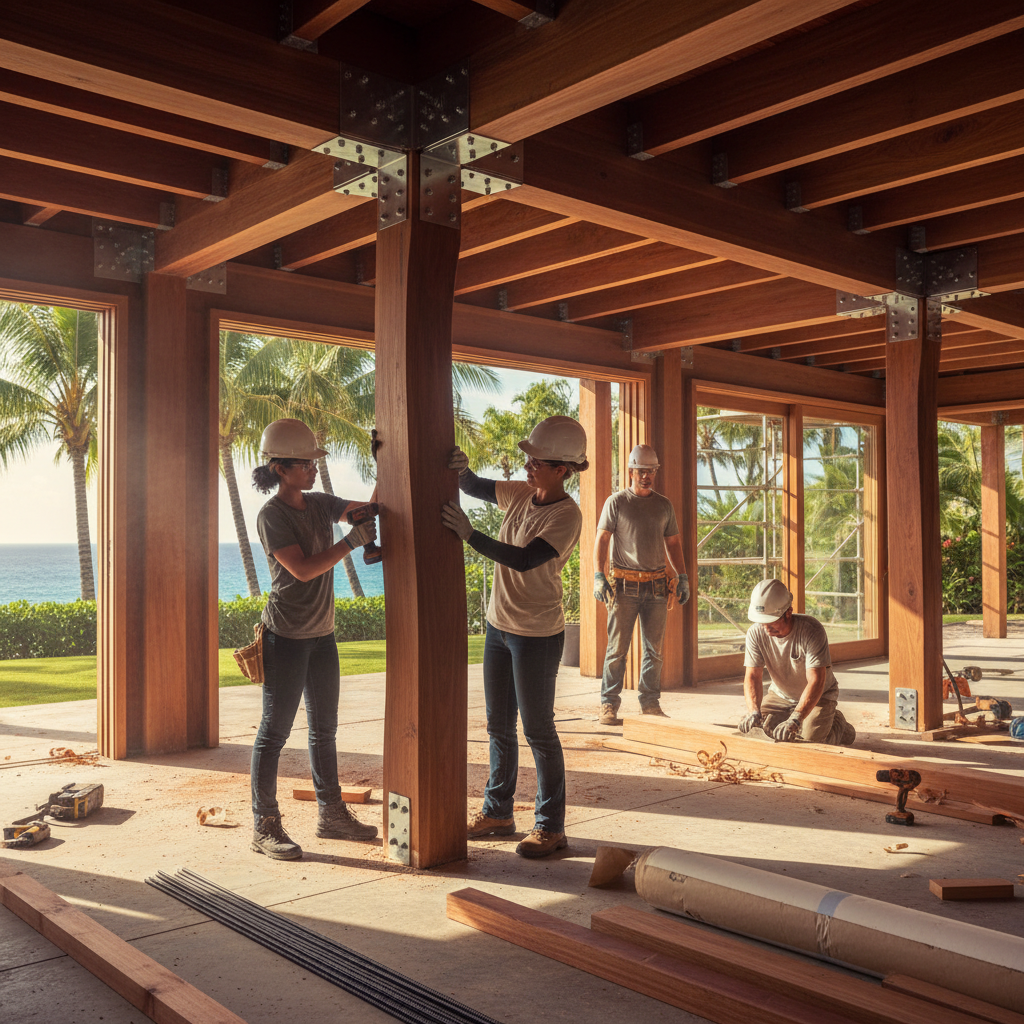
Building a custom home in Po’ipu is a marathon, not a sprint. A realistic timeline, from the first architectural sketches to receiving your keys, is typically 18 to 28 months. Homeowners are often surprised by this, especially if they’re used to mainland construction timelines. The biggest difference is the front-end design and permitting phase, which can take as long, or even longer, than the actual construction.
\n
Here’s a phase-by-phase breakdown of a typical Po’ipu custom home timeline for a project starting in 2026:
\n
Phase 1: Design, Engineering & Permitting (8-14 months)\nThis is the most critical and often underestimated phase. Rushing here leads to costly changes later. \n
- \n
- Architectural Design (3-5 months): You’ll work with an architect to translate your vision into schematic designs, develop the floor plans, and create the detailed construction documents.
- Engineering & Consultants (2-3 months): Once the design is set, structural, civil, and sometimes mechanical engineers will create their plans. This includes foundation design, structural calculations for hurricane-force winds, and drainage plans.
- Permit Submission & Review (3-6+ months): This is where patience is a virtue. We prepare and submit the full drawing set to the Kaua’i County Department of Public Works. The plans go through multiple reviews: planning, building, electrical, plumbing, and sometimes fire and wastewater. Each department can have comments or require revisions, and each revision cycle adds time. For a recent project near Shipwreck Beach, we had to go through three rounds of revisions with the planning department just to address shoreline setback regulations, adding nearly four months to the permit wait.
\n
\n
\n
\n
\n
Phase 2: Construction (10-14 months)\nOnce the permit is in hand, the physical work begins. This timeline assumes a home of around 3,000-4,000 square feet with a moderate level of complexity.\n
- \n
- Site Prep & Foundation (1-2 months): Clearing the land, performing any necessary grading, trenching for utilities, and pouring the concrete slab or post-and-pier foundation.
- Framing, Roofing & Dry-In (2-3 months): The structure of the home takes shape. This phase is complete once the roof, windows, and exterior doors are installed, making the structure weather-tight. This is a huge milestone.
- Exterior Finishes & Rough-Ins (2-3 months): While siding and exterior trim are being installed, electricians and plumbers are running wires and pipes through the interior walls. HVAC ducting is also installed at this stage.
- Insulation & Drywall (1 month): After rough-in inspections are passed, insulation is installed, and the drywall is hung, taped, and textured. The space starts to feel like actual rooms.
- Interior Finishes (3-4 months): This is the most detailed phase of construction. Flooring, tile, cabinetry, countertops, painting, and installation of all fixtures (lights, faucets, toilets) happens here. It’s a carefully orchestrated sequence of different trades working in concert.
- Final Touches & Punch List (1 month): This involves installing appliances, completing final electrical and plumbing hookups, addressing any paint touch-ups, and performing a deep clean. We then walk through the home with you to create a “punch list” of any final items that need adjustment.
\n
\n
\n
\n
\n
\n
\n
\n
The key to staying on schedule is a highly detailed pre-construction plan. At Warrior Construction, we order long-lead-time items like custom windows, trusses, and appliances months in advance, often while we are still in the permitting phase. This ensures that the materials are on-island and ready to go the moment we need them, preventing delays that can cascade through the entire construction schedule.
\n\n
What Permits Do You Need for Custom Home Builder in Po’ipu?
\n
Navigating the permitting process for new home construction in Po’ipu is one of the most complex parts of the journey, and it’s a key area where an experienced local general contractor adds immense value. You can’t just start building. A full set of approved plans and permits from the Kaua’i County Department of Public Works is required before any ground is broken. The process is thorough, designed to ensure safety, environmental protection, and compliance with all building codes and zoning laws.
\n
While every project is unique, a typical custom home in Po’ipu will require the following core permits:\n
- \n
- Building Permit: This is the master permit for the project. The application requires a complete set of architectural and structural engineering plans. The building department reviews these plans for compliance with the International Building Code (as amended by the county), ensuring everything from foundation depth to hurricane strap placement is up to standard.
- Electrical Permit: A separate permit is required for all electrical work. This requires detailed plans from a licensed electrical engineer showing all circuits, panel locations, and load calculations. The county inspector will check the work at the rough-in stage and again at the final stage.
- Plumbing Permit: Similar to electrical, all plumbing work requires its own permit and inspections. This covers the supply lines, drain-waste-vent (DWV) systems, and gas lines if applicable.
- Grading & Grubbing Permit: If you are moving a significant amount of earth (typically more than 50 cubic yards on Kaua’i), you will need a grading permit. This requires a civil engineering plan that shows how you will manage drainage and prevent erosion, which is especially important with Kaua’i’s red dirt.
\n
\n
\n
\n
\n
\n
Beyond these standard permits, a Po’ipu project can trigger the need for additional approvals depending on its location:\n
- \n
- Special Management Area (SMA) Permit: If your property is near the coastline, it will almost certainly fall within the SMA. This requires a more intensive review process focused on protecting coastal resources, public access, and scenic views. An SMA permit can add several months and significant consulting fees to the pre-construction timeline.
- Zoning Variances or Special Permits: Po’ipu has specific zoning designations, including Visitor Destination Areas (VDA). If your design doesn’t strictly conform to setback, height, or lot coverage rules, you may need to apply for a variance, which involves public hearings and is not guaranteed to be approved.
- Wastewater System Approval: If your property is not connected to the county sewer system, you will need approval from the Department of Health for your septic system or individual wastewater system (IWS) design.
\n
\n
\n
\n
\n
The level of detail required by county agencies can be staggering. While Kaua’i has its own system, the complexity is similar to what builders face on O’ahu with the Honolulu Department of Planning and Permitting (DPP)[1]. Every detail, down to the nailing pattern on your shear walls, must be specified on the plans. As your general contractor, our role is to act as your agent, coordinating with the architects and engineers to assemble a bulletproof permit package and shepherding it through the county’s review process. We track the application, respond to reviewer comments promptly, and keep the project moving forward. Attempting this process without a seasoned professional is a recipe for months, if not years, of frustrating delays.
\n\n
Po’ipu-Specific Considerations: Climate, Materials, Regulations
\n
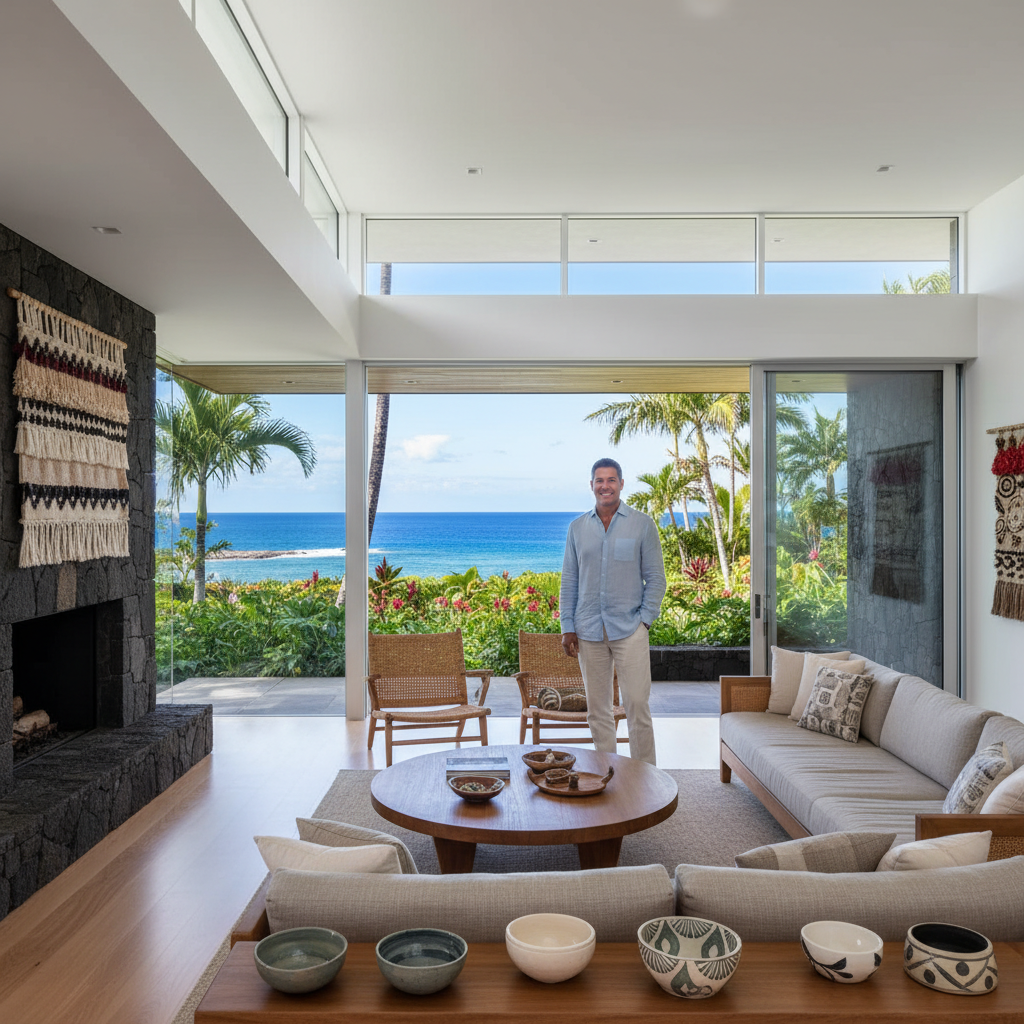
Building a home that will last for generations in Po’ipu requires a deep understanding of the local environment. It’s a place of contradictions: gentle trade winds and potential hurricane-force gusts; intense, dry sun and corrosive, salt-laden air. A successful luxury home builder in Po’ipu doesn’t fight these elements; they design and build in harmony with them. At Warrior Construction, our decades of experience in Hawaii have taught us to focus on three key areas: climate, materials, and regulations.
\n\n
Climate: Managing Intense Sun and Salt-Air Corrosion
\n
The south shore of Kaua’i is famous for its sunshine, but that same sun brings intense UV radiation that can destroy inferior building materials. Paired with the constant salt mist from the ocean, it creates one of the most corrosive environments imaginable. We address this with a systems-based approach.
\n
- \n
- Window & Door Selection: This is a critical decision. We steer clients away from standard vinyl or wood windows. For oceanfront or near-oceanfront homes in Po’ipu, we specify high-performance aluminum windows and doors (from brands like Fleetwood or LaCantina) with a durable Kynar (PVDF) finish. For glass, we use laminated, impact-rated panes with low-emissivity (Low-E) coatings to block UV rays and reduce heat gain, which keeps cooling costs down.
- Hardware and Fasteners: Every single screw, nail, hinge, and railing component on the exterior must be, at a minimum, 304 stainless steel. For homes right on the water, we upgrade to 316L marine-grade stainless steel. Using standard galvanized hardware is a guaranteed recipe for rust streaks and failure within just a few years. It’s a small detail that makes a massive difference.
- Paint and Coatings: We use high-quality elastomeric paints on exterior walls, which can bridge small cracks and provide a superior barrier against wind-driven rain. For any exposed concrete, like lanais or walkways, we recommend applying a penetrating sealer to prevent salt from infiltrating the concrete and corroding the rebar from within—a condition known as spalling.
\n
\n
\n
\n\n
Materials: Navigating Island Logistics and Termite Threats
\n
Getting materials to Po’ipu is half the battle. Everything arrives in a container at Nawiliwili Harbor, and the cost and time of that journey must be built into the project plan. \n
- \n
- Strategic Sourcing: We plan material orders months in advance. We combine shipments to fill containers, reducing per-item shipping costs. We also have accounts with local Kaua’i suppliers for commodity items, but for specialty finishes, windows, or appliances, planning for a 12-16 week lead time from the mainland is standard.
- Termite-Resistant Building: Hawaii is home to the voracious Formosan subterranean termite. We build with multiple layers of defense. All lumber that touches the foundation is borate-treated (Hi-bor or similar). The framing lumber is also typically treated. We use metal termite flashing and specify termite mesh around plumbing penetrations in the slab. For clients wanting the highest level of protection, we often recommend building with light-gauge steel framing instead of wood, creating a structure that is completely impervious to termites.
- Local Inspiration, Engineered Performance: While we love the look of local materials like lava rock and hardwoods, we use them strategically. For example, we might use a basalt rock veneer on a feature wall, but the structural wall behind it will be steel-reinforced concrete. For siding, we often recommend engineered products like Boral composite siding or fiber cement, which hold paint better and resist moisture and pests far better than traditional wood siding in this climate.
\n
\n
\n
\n\n
Regulations: Exceeding Hurricane Code and Navigating Zoning
\n
Kaua’i’s building codes are some of the strictest in the nation, largely due to the lessons learned from Hurricane Iniki in 1992. As a home builder in Po’ipu, we don’t just meet the code; we aim to exceed it. \n
- \n
- Hurricane-Resistant Construction: The code mandates specific connections from the foundation all the way to the roof. This includes hurricane straps (like Simpson Strong-Tie hardware) at every joint, robust shear walls to resist lateral forces, and roof sheathing with specific nailing patterns. We often go a step further by recommending a secondary water barrier (a self-adhering membrane) over the entire roof deck before the final roofing material is installed. This provides a critical layer of protection if the primary roofing is ever damaged in a storm.
- Po’ipu Zoning: The Po’ipu area, particularly within the VDA (Visitor Destination Area), has complex zoning that dictates building height, setbacks from property lines, and even aesthetic guidelines. We work closely with architects who specialize in this area to ensure our designs comply from day one, avoiding costly and time-consuming redesigns during the permit review process.
\n
\n
\n
By thoughtfully addressing these Po’ipu-specific factors, we create homes that are not just beautiful on day one, but that are also durable, efficient, and resilient for the long haul.
\n\n
How to Choose the Right Custom Home Builder Contractor in Po’ipu
\n
Selecting the right contractor is the single most important decision you will make for your new home construction in Po’ipu. The right partner will guide you through the process, protect your investment, and deliver a home that exceeds your expectations. The wrong one can lead to budget overruns, endless delays, and significant stress. Here’s a practical, no-nonsense checklist for vetting potential builders on Kaua’i.
\n
- \n
- Verify Their License and Insurance. No Exceptions.\nThis is non-negotiable. Any legitimate contractor in Hawaii will have a license number, like ours: BC-34373. You should verify this number on the Hawaii Department of Commerce and Consumer Affairs (DCCA) Professional & Vocational Licensing (PVL) website[2]. Check that the license is current and that there are no complaints against it. Additionally, ask for certificates of insurance for both General Liability and Worker’s Compensation. A contractor without adequate insurance puts you, the homeowner, at massive financial risk.
- Scrutinize Their Portfolio for Po’ipu-Specific Experience.\nKaua’i is not O’ahu. Building in Po’ipu is not the same as building in Kailua or Kapolei. Look for a builder with a portfolio of completed projects specifically on the south shore of Kaua’i. Ask them to show you examples of homes they’ve built that are similar in style, size, and complexity to what you envision. Ask them pointed questions about those projects: What was the biggest challenge? How did they handle material deliveries to the site? How did they waterproof the lanai decks? Their answers will reveal their true level of local, hands-on experience.
- Interview Them About Their Process and Communication.\nA good builder isn’t just building a house; they are managing a highly complex, multi-million dollar project. Your interview should feel less like hiring a carpenter and more like hiring a CEO. Ask about their process:\n
- \n
- How do you handle budgeting and cost tracking?
- What project management software do you use to keep me updated?
- How often will we have site meetings?
- Who is my primary point of contact, and how can I reach them?
- How do you handle change orders and unexpected site conditions?
\n
\n
\n
\n
\n
\nTheir answers should be clear, confident, and systemized. If they seem disorganized or vague, it’s a major red flag.
- Demand a Detailed, Transparent Bid.\nNever accept a one-page estimate or a simple cost-per-square-foot quote. A professional bid for a custom home should be dozens of pages long, with a detailed line-item breakdown for every phase of construction, from excavation to the final light fixtures. It should clearly state what is included and, just as importantly, what is excluded (allowances, landscaping, etc.). Comparing detailed bids is the only way to accurately compare builders and ensure you are not being set up for surprise costs down the road.
- Talk to Their Past Clients.\nThis is the most valuable due diligence you can do. A reputable builder will be happy to provide you with a list of recent clients—ideally homeowners of projects similar to yours. Don’t just ask if they were happy. Ask specific questions:\n
- \n
- Did the project stay on budget? If not, why?
- How was the communication throughout the project?
- How did the builder handle problems when they arose?
- How has the home held up since you moved in? Have they been responsive to any warranty items?
\n
\n
\n
\n
\nThe insights you gain from these conversations are priceless. Choosing a builder is a long-term relationship. Take the time to find a team you trust, respect, and can communicate with effectively. It will make all the difference in your home-building journey.
\n\n
\n\n
\n\n
\n\n
\n\n
Real Po’ipu Custom Home Builder Project Example
\n
To illustrate how all these pieces come together, let’s walk through a recent, albeit fictionalized, project our team completed. This provides a concrete example of the challenges and solutions inherent in a Po’ipu custom build.
\n
The Project: A 3,800 sq. ft. contemporary home in a planned community near Kiahuna Golf Club. The design featured large pocketing glass doors to connect the great room to an expansive lanai and pool, with an ocean view corridor.
\n
The Client: A family from California planning to make Kaua’i their permanent home. They wanted a modern, low-maintenance home that embraced indoor-outdoor living.
\n
The Budget: The initial construction budget was set at $3.2 million, translating to roughly $842 per square foot.
\n
The Timeline: The projected timeline was 24 months from the start of design to completion.
\n\n
The Challenge: Unforeseen Site Conditions\nDuring excavation for the foundation and pool, we hit a massive shelf of dense blue rock just a few feet below the surface. The geotechnical report had indicated rock, but its sheer volume and hardness were far beyond what was anticipated. Standard excavation equipment was making painfully slow progress, and the noise and vibration were a concern for the neighbors. This single issue threatened to delay the project by at least two months and add over $100,000 in unexpected costs for rock-breaking equipment rental and labor.
\n\n
The Warrior Construction Solution:\nInstead of just throwing more time and money at the problem, our project manager immediately paused the excavation and called an emergency meeting with the client, the architect, and the structural engineer. We proposed a multi-pronged solution:\n
- \n
- Leverage Our Network: We used our island-wide connections to source a specialized, larger hydraulic hammer attachment from a heavy equipment company on O’ahu. While it cost more to barge it over, its efficiency would cut the rock-breaking time by more than half, saving money in the long run.
- Value Engineering the Foundation: We worked with the structural engineer to revise a portion of the foundation plan. By slightly raising the finished floor elevation in one wing of the house by 18 inches, we were able to avoid the deepest sections of rock, significantly reducing the amount of excavation needed without compromising the home’s design or view planes.
- Proactive Communication: We presented the problem, our proposed solutions, and a clear change order to the client within 48 hours. The change order detailed the new costs but also showed how the engineering adjustment offset a large portion of it. We also personally walked the site with the immediate neighbors, explained the situation and the new, shorter timeline for the noisy work, and established goodwill.
\n
\n
\n
\n
\n
The Outcome:\nThe project was completed within 25 months, only one month behind the original schedule, and the final cost for the rock issue was managed down to $65,000 instead of the initial six-figure projection. The clients were thrilled with the final home and, more importantly, felt that we had been transparent partners in solving a difficult problem. This is what it means to be a true custom home builder Po’ipu families can rely on—it’s not about avoiding problems, because problems always happen in construction. It’s about having the experience, resources, and integrity to solve them effectively.
\n\n
What this means for Hawaii homeowners
\n
Building a custom home in Po’ipu is one of the most rewarding experiences you can have, but it demands careful planning and a realistic understanding of the local landscape. The process, costs, and materials are fundamentally different here than anywhere on the mainland. For homeowners embarking on this journey in 2026, success hinges on embracing these unique island realities from day one.
\n
Here are the key takeaways and actionable advice from our team at Warrior Construction:
\n
- \n
- Embrace the Timeline: Mentally prepare for an 18-to-28-month process. The lengthy permitting phase on Kaua’i is a reality. Use this time wisely to finalize every single design detail and material selection. Rushing this stage will only lead to expensive change orders and delays once construction has begun.
- Budget for Quality and Logistics: Your budget per square foot needs to account for both high-quality, corrosion-resistant materials and the significant cost of inter-island logistics. An initial bid that seems low is often a red flag that the builder hasn’t properly accounted for the “Kaua’i tax” or is using substandard materials that won’t last in the coastal environment.
- Hire a Local Expert Team: Your success is directly tied to the local knowledge of your team. This includes not just your general contractor but also your architect and engineers. Prioritize professionals who have a deep portfolio of recent projects specifically in Po’ipu and on Kaua’i’s south shore. They will know how to navigate the permitting office, design for the microclimate, and manage island-based subcontractors and supply chains.
- Design for Resilience, Not Just Beauty: A beautiful home that can’t withstand a hurricane or deteriorates from salt spray is a poor investment. Prioritize the building envelope: invest in the best hurricane-rated windows you can afford, a robust roofing system with a secondary water barrier, and 316-grade stainless steel hardware. These aren’t upgrades; they are essentials for a long-lasting Po’ipu home.
\n
\n
\n
\n
\n
Your role as the homeowner is to be an educated and engaged partner. Ask tough questions, demand transparency, and trust the process. By selecting the right team and setting realistic expectations, you can navigate the complexities and create the Po’ipu home you’ve always dreamed of.
\n
\n\n
Frequently Asked Questions About Custom Home Builder in Po’ipu
\n
What is a realistic all-in budget for a custom home in Po’ipu?
\n
For a 3,500 sq. ft. luxury home in 2026, a realistic all-in budget, including land, design fees, construction, landscaping, and a pool, would likely be in the $4.5 million to $7 million range. The construction itself often runs from $650-$950 per square foot, but land in Po’ipu can be $1 million or more, and soft costs and site improvements add another 25-30% on top of the build cost.
\n
\n
Can I save money by sourcing materials myself?
\n
While it might seem tempting, we generally advise against it. As your general contractor, we have established supply chains and receive professional pricing. More importantly, we manage the incredibly complex logistics of consolidating materials and shipping them to Kaua’i. Coordinating barge schedules and ensuring everything arrives undamaged and on time is a full-time job and a critical part of keeping the project on schedule.
\n
\n
How do I find a good architect for a Po’ipu project?
\n
Look for an architect based in Hawaii, preferably with significant experience on Kaua’i. A good architect here understands how to design for the trade winds, manage sun exposure, and navigate the specific requirements of the Kaua’i County planning department and SMA regulations. We are happy to provide a list of architects we have successfully collaborated with on past Po’ipu projects.
\n
\n
Is it better to use a design-build firm or hire an architect and builder separately?
\n
Both models can be successful. A design-build firm like ours offers a single point of responsibility, which can streamline communication and budgeting. Hiring an architect and builder separately can sometimes provide more creative tension and checks-and-balances. The most important factor is that the architect and builder have a strong, collaborative relationship and experience working together.
\n
\n
What’s the biggest mistake homeowners make when building a custom home in Hawaii?
\n
The biggest mistake is underestimating the pre-construction phase. Homeowners get excited to break ground and often rush through design and material selection. A rushed design leads to changes during construction, which are exponentially more expensive and cause major delays. A patient, thorough, and detailed planning phase is the single best investment you can make in the entire project.
\n
\n
Do I really need hurricane-rated windows in Po’ipu?
\n
Yes, absolutely. Kaua’i’s building code requires windows in new construction to meet stringent wind-load and impact-resistance standards. This is a direct lesson from Hurricane Iniki. These windows not only protect your home during a storm but are also built to a much higher quality standard, offering better insulation, sound-proofing, and durability against the elements year-round.
\n
\n
How disruptive is the construction process for my neighbors?
\n
We work hard to be good neighbors. This includes adhering to county work hours, managing dust control with water trucks, and keeping the job site clean and organized. We also make a point to communicate with adjacent property owners about key milestones, such as a large concrete pour or a period of heavy equipment use. A little proactive communication goes a long way in maintaining community goodwill.
\n
\n
\n\n
Start Your Po’ipu Custom Home Journey
\n
Building your dream home on Kaua’i is a significant undertaking, and choosing the right partner is the most important decision you’ll make. At Warrior Construction, we bring decades of Hawaii-specific experience, a commitment to transparent communication, and a passion for quality craftsmanship to every project. We’ve navigated the unique challenges of building in Po’ipu, from its corrosive salt air to its complex permitting, and we know what it takes to do it right.
\n
If you’re ready to discuss your vision, our team is here to provide the expert guidance and detailed planning you need. Let us show you how our design-build and general contracting process can bring your Po’ipu dream home to life, on time and on budget. Learn more about our Custom Home Building services or contact us today to schedule a complimentary consultation.
\n
\n
\n\n
References
\n