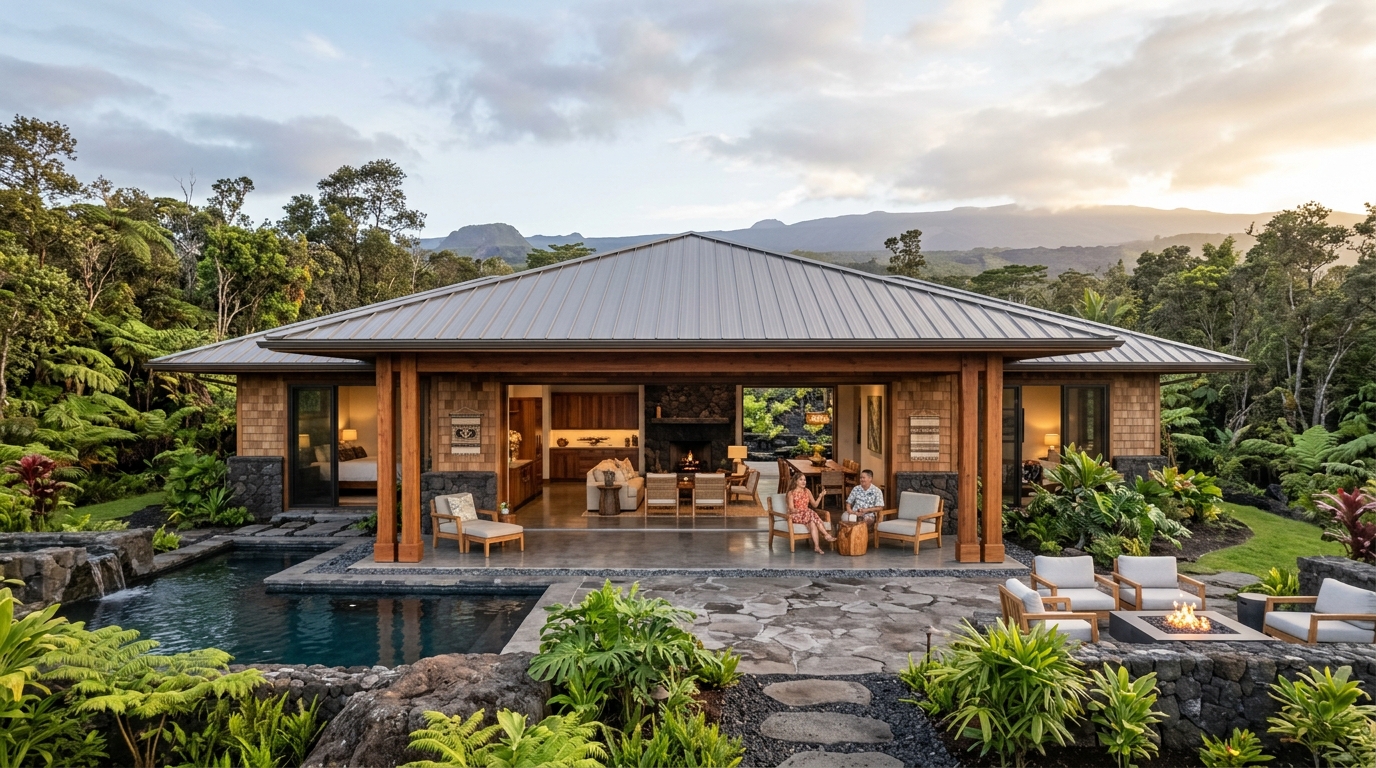
Building a custom home in Volcano, Hawai’i, is unlike any other construction project in the islands. As a dedicated custom home builder volcano team with decades of experience across the state, we know that success here requires a deep understanding of the unique environment—from the high altitude and constant moisture to the volcanic soil and lava zone classifications. It’s about more than just plans and lumber; it’s about building a home that thrives in a rainforest perched on the world’s most active volcano. The process involves meticulous material selection to combat moisture, specialized site work to handle the terrain, and a logistics plan that accounts for getting every last screw and fixture to a remote Big Island location.
At Warrior Construction, we’ve managed complex builds from the salt-sprayed shores of Kailua to the lava fields of Puna, and Volcano presents its own distinct set of challenges and rewards. Many homeowners are surprised by the specific building science required here. For instance, a standard ventilation system that works perfectly in Kapolei would lead to a mold disaster at 4,000 feet of elevation in Volcano. Furthermore, the cost structure is entirely different, influenced by factors like water catchment systems, septic installation, and the significant expense of trucking materials up from the port in Hilo. This guide pulls from our 20+ years of on-the-ground experience to give you a clear, no-nonsense look at what it really takes to bring your dream home to life in this incredible part of Hawai’i. We’ll cover costs, timelines, permits, and the critical design choices that make the difference between a house and a true sanctuary.
Why Volcano Homeowners Trust Warrior Construction for Custom Home Builder
When you’re building in a place as unique as Volcano, you can’t afford to work with a general contractor who sees it as just another job site. You need a team that has firsthand experience with the specific challenges of this high-altitude rainforest environment. That’s where we come in. At Warrior Construction (License BC-34373), our reputation is built on successfully navigating Hawaii’s toughest building conditions, and Volcano is a place we know well. Our approach isn’t just about managing schedules and budgets; it’s about applying specialized building science to create a home that is durable, healthy, and comfortable for decades to come.
Our experience on the Big Island has taught us lessons you can’t learn from a textbook. We understand the supply chain intimately—the cost differences between shipping to Hilo versus Kona, the reliability of local aggregate suppliers, and the lead times for specialty materials from Oahu or the mainland. For a recent project near Volcano Golf & Country Club, we were able to save the client significant time by pre-ordering a custom truss package six months in advance, anticipating the shipping bottlenecks that are common in 2026. This kind of logistical foresight is critical when your job site is an hour’s drive from the nearest major port.
Furthermore, our team is deeply familiar with the nuances of building for this climate. We know that standard galvanized fasteners will rust out in a few years from the acidic rain and vog. That’s why we specify 316 stainless steel for all exterior connections. We understand the importance of a meticulously installed rainscreen system to allow the siding to dry out, preventing rot and mold. Most importantly, we have strong relationships with a core group of Big Island subcontractors—plumbers who know how to design robust water catchment and filtration systems, and electricians who understand the power grid’s quirks in the area. Homeowners trust us because they know we aren’t learning on their dime. We bring proven solutions and a deep respect for the `aina to every project we undertake as a home builder volcano trusts.
What Does Custom Home Builder Cost in Volcano?
Let’s get straight to the point: building a custom home in Volcano in 2026 is a significant investment, and the costs are higher than in many other parts of Hawaii. A realistic budget for a quality, architect-designed home starts around $550 per square foot and can easily exceed $900 per square foot for a true luxury home builder volcano project with high-end finishes and complex engineering. For a 2,000-square-foot home, you should be prepared for a construction cost in the range of $1.1 million to $1.8 million, and that’s before accounting for land, design fees, and landscaping.
So, why the high price tag? It breaks down into a few key areas unique to Volcano:
* **Site Work & Infrastructure:** Most lots in Volcano are on raw land. Unlike a subdivision in Ewa Beach, you don’t have utilities at the curb. This means you’re paying for significant upfront costs that are simply not a factor elsewhere.
* **Septic System:** Since there’s no county sewer, a complete septic system is required. Depending on the soil percolation, this can cost between $25,000 and $45,000.
* **Water Catchment:** County water is unavailable in most of Volcano. A robust water catchment system, including a large tank (10,000-15,000 gallons), pumps, and a multi-stage filtration and UV purification system, will run from $30,000 to $50,000.
* **Grading & Driveway:** Clearing dense ohia forest and grading lava rock is intensive work. A long driveway with a proper rock base can easily add another $20,000 to $60,000.
* **Material Logistics:** Every single piece of material, from the foundation rebar to the final light fixture, has to be shipped to Hilo and then trucked up the mountain. This adds a tangible cost. We typically see a 15-25% premium on materials compared to an Oahu project due to inter-island freight and last-mile delivery costs. Fuel surcharges in 2026 have only amplified this.
* **Climate-Specific Construction:** Building a home to withstand Volcano’s cool, damp climate requires more expensive materials and labor-intensive techniques. This isn’t optional; it’s essential for the home’s longevity.
* **Enhanced Weatherproofing:** We use peel-and-stick membranes over the entire roof deck, not just felt paper. All windows and doors are meticulously flashed with high-end tapes. This adds thousands in material and labor but prevents leaks that could cause catastrophic rot.
* **Superior Materials:** Using 316 stainless steel fasteners, pressure-treated framing lumber, and fiber cement or engineered wood siding instead of cheaper alternatives is non-negotiable. These choices add 5-10% to the overall material cost but prevent premature failure.
* **Mechanical Systems:** A high-efficiency heat recovery ventilator (HRV) or energy recovery ventilator (ERV) is crucial for managing indoor air quality and preventing mold. These systems cost $8,000 – $15,000 installed, compared to simple bath fans used in drier climates.
Here’s a sample cost breakdown for a hypothetical 2,200 sq. ft. custom home in Volcano:
| Cost Category | Estimated Cost (2026) | Cost Per Sq. Ft. | Notes |
| ————————– | ———————— | —————- | ———————————————————————– |
| Soft Costs (Design, Permits) | $120,000 – $180,000 | $55 – $82 | Architect, engineering, surveys, Hawaii County permit fees. |
| Site Work & Infrastructure | $90,000 – $150,000 | $41 – $68 | Clearing, grading, septic, water catchment, driveway. |
| Foundation & Concrete | $100,000 – $140,000 | $45 – $64 | Post-and-pier or slab-on-grade, depending on soil/slope. |
| Framing & Structure | $250,000 – $330,000 | $114 – $150 | Includes lumber, labor, trusses, and structural hardware. |
| Exterior (Roof, Siding, Windows) | $180,000 – $260,000 | $82 – $118 | Standing seam metal roof, high-performance windows, rainscreen siding. |
| Interior Systems (HVAC, Elec, Plum) | $150,000 – $220,000 | $68 – $100 | Includes specialized ventilation (HRV) and water filtration systems. |
| Interior Finishes | $200,000 – $400,000+ | $91 – $182+ | Drywall, flooring, cabinets, countertops, fixtures. Highly variable. |
| **Total Construction Cost** | **$1,090,000 – $1,680,000** | **$495 – $764** | **Excludes land, financing, and landscaping.** |
This level of detail is crucial for realistic budgeting. When you work with our team on pre-construction planning, we develop a comprehensive, line-item budget so you know exactly where every dollar is going. Request a consultation to start the process for your new home construction volcano project.
How Long Does a Custom Home Builder Take in Volcano?
Building a custom home in Volcano is a marathon, not a sprint. Patience is essential. From the first conversation with an architect to the day you receive your keys, a realistic timeline is typically 18 to 36 months. Anyone who tells you they can do it in a year is either inexperienced with Big Island realities or not being fully transparent. At Warrior Construction, we believe in setting clear expectations from day one, because a predictable process is a successful one.
The timeline can be broken down into three main phases:
**Phase 1: Design and Permitting (6-14 Months)**
This is often the longest and most underestimated phase. It’s where your vision takes shape, but it’s also where we encounter the administrative hurdles of building in Hawaii.
* **Architectural Design (3-6 months):** This involves initial concepts, revisions, and the creation of detailed construction documents. We collaborate closely with your architect during this stage to provide constructability feedback and preliminary cost estimates, ensuring the design stays aligned with your budget.
* **Engineering (1-2 months):** A structural engineer will design the foundation and framing to meet Hawaii’s stringent hurricane and seismic codes. You will also likely need a civil engineer for the site plan and a geotechnical engineer to analyze the soil.
* **Hawaii County Permitting (4-8 months):** Once the plans are complete, they are submitted to the Hawaii County Department of Public Works. In 2026, the review process is thorough and can involve multiple departments. Plan reviews for new single-family homes in complex areas like Volcano are taking longer than they used to. We had a Puna project where the county required an updated survey to verify setbacks from a recent lava flow, adding three months to the permit timeline. This is the kind of local knowledge that helps manage the schedule effectively.
**Phase 2: Construction (12-24 Months)**
This is when the physical work happens. The duration depends heavily on the complexity of the home, site conditions, and weather.
* **Site Work & Foundation (1-3 months):** Clearing the land, grading, and pouring the foundation. This phase is heavily dependent on weather. The rainy season in Volcano can turn a job site into a mud bog, causing significant delays if not planned for.
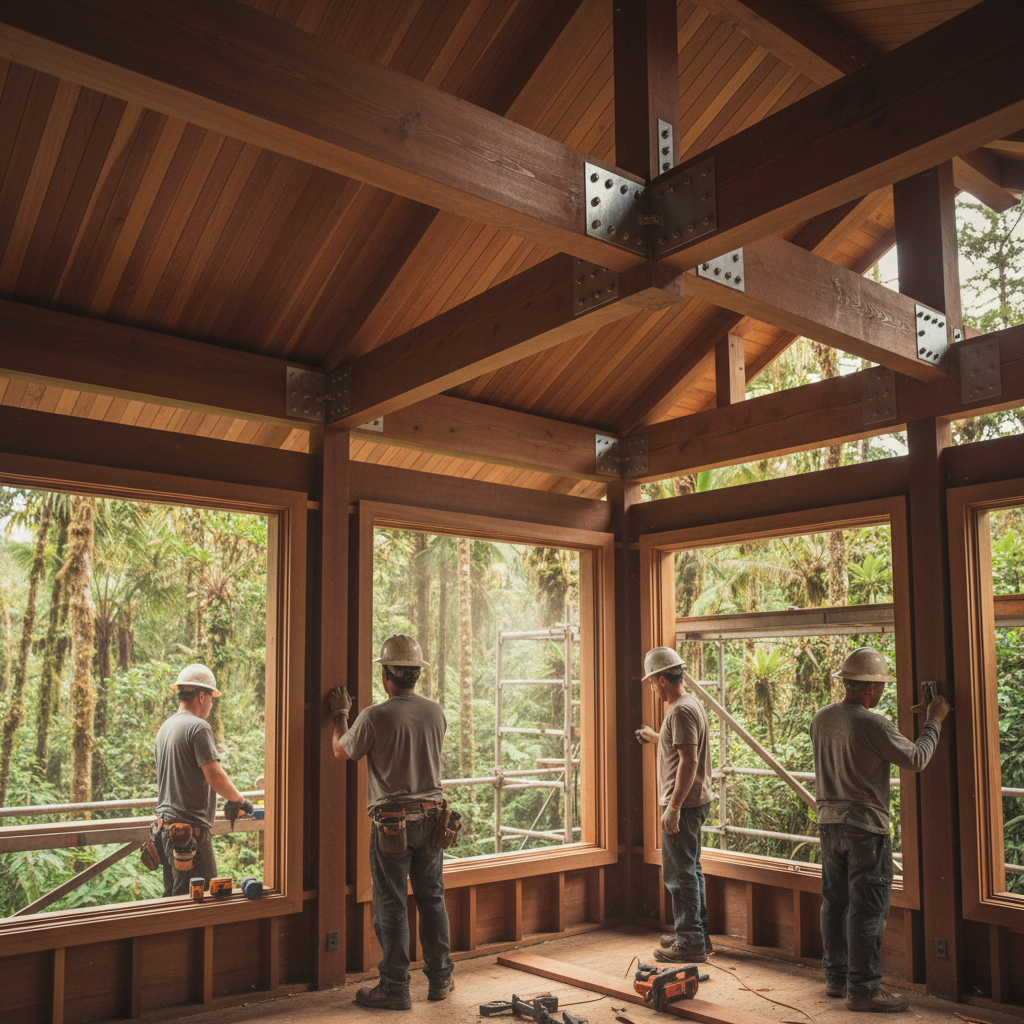
* **Framing and Dry-In (3-5 months):** The skeleton of the house goes up, followed by sheathing, roofing, windows, and doors. Reaching the “dry-in” stage is a major milestone, as it allows interior work to proceed regardless of the weather.
* **Rough-Ins & Exterior Finishes (3-6 months):** Plumbers, electricians, and HVAC technicians run all the wires, pipes, and ducts through the walls. Simultaneously, siding and exterior trim are installed.
* **Interior Finishes (4-8 months):** This is the longest part of the construction phase. It includes insulation, drywall, painting, flooring, tile work, cabinet installation, countertops, and final installation of all fixtures. The timeline here is often dictated by the availability of finish materials and the schedules of specialized finish carpenters and tile setters.
* **Finals and Handover (1-2 months):** This involves final inspections from the county, punch list completion, final site cleanup, and the official handover of the home to you.
**Phase 3: Landscaping and Move-In (1-3 Months)**
While some landscaping can happen concurrently, major work is often best left until after heavy equipment is gone. This includes final grading, planting, and any hardscaping like walkways or patios.
Weather is the biggest wildcard. Volcano can receive over 150 inches of rain a year. A week of solid rain can halt all exterior work and make the site inaccessible. A good contractor builds contingency days into the schedule, but it’s a factor that homeowners must be prepared for. Our project managers provide weekly updates with photos and schedule adjustments, so you are always aware of the progress and any potential delays.
What Permits Do You Need for Custom Home Builder in Volcano?
Navigating the permitting process for a custom home build in Volcano requires experience with the specific requirements of the County of Hawai’i. It’s a different system from the Honolulu Department of Planning and Permitting (DPP)[1], with its own set of reviewers, priorities, and potential bottlenecks. As your general contractor, we manage this entire process, but it’s important for homeowners to understand what’s involved.
For a new single-family residence, you will need a package of permits, not just a single one. The primary application is for the Building Permit, but it’s supported by several others. Here’s a breakdown of the typical requirements in 2026:
1. **Building Permit Application:** This is the main application submitted to the Hawaii County Department of Public Works (DPW), Building Division. It encompasses the architectural and structural plans for the home itself. The plans must be stamped by a Hawaii-licensed architect and structural engineer.
2. **Grading and Grubbing Permit:** If you are moving a significant amount of earth or clearing a large area of vegetation, a separate permit for this site work may be required before the building permit is issued. This is common in Volcano where lots are often on sloped, raw land.
3. **Electrical and Plumbing Permits:** These are typically filed by the licensed subcontractors who will be performing the work, but they are tied to the master building permit. The plans must show all wiring, panel locations, plumbing lines, and fixture locations.
4. **Department of Health (DOH) Approval for Wastewater System:** This is a critical step for Volcano. You must submit plans for your Individual Wastewater System (IWS), which is usually a septic system. The DOH reviews the design based on the number of bedrooms and the results of a soil percolation test to ensure it’s adequate and won’t contaminate the groundwater. This approval is required *before* the county will issue the building permit.
5. **Driveway Permit:** If your new driveway connects to a county road, you will need a permit from the DPW Engineering Division to ensure the connection (the “apron”) is built to county standards for safety and drainage.
**Key Documents Required for Submission:**
* **Construction Plans:** Multiple sets of detailed blueprints.
* **Structural Calculations:** Stamped by a licensed structural engineer.
* **Truss Calculations:** From the roof truss manufacturer.
* **Property Survey:** A recent survey showing property lines, easements, and the proposed location of the house (the “plot plan”).
* **DOH Wastewater Approval:** The stamped approval for your septic system.
* **TMK (Tax Map Key):** The official identification for your parcel of land.
The review process involves multiple agencies within the county. The plans will be reviewed for zoning compliance, building code compliance (based on the 2018 International Residential Code with Hawaii amendments), fire safety, and more. A reviewer may issue comments or corrections, which your architect and engineer will need to address and resubmit. This back-and-forth is normal and is a key reason the permitting phase can take several months. Our role is to proactively communicate with the plan reviewers, clarify any questions they have, and ensure the resubmittals are handled promptly to keep the project moving forward.
Volcano-Specific Considerations: Climate, Materials, Regulations
Building successfully in Volcano is all about defense—defending the structure against water, vog, and the unique challenges of the volcanic landscape. A home designed for the dry side of Kona would fail spectacularly here in just a few years. As a detail-oriented home builder volcano residents rely on, we focus intensely on these three areas:
**1. Climate: The Battle Against Moisture & Vog**
Volcano’s climate is defined by high humidity, frequent rain, and cool temperatures. At 4,000 feet, you’re literally in the clouds. This environment is relentless in finding any weakness in a building’s exterior.
* **Water Management:** Our building envelope strategy is multi-layered. We don’t just rely on the siding. We use a fully adhered or fluid-applied weather-resistive barrier (WRB) behind the siding, coupled with a rainscreen gap. This gap allows air to circulate and dry out any moisture that gets past the siding, which is the number one defense against rot. We also mandate oversized roof overhangs (at least 24-36 inches) to keep rain off the walls and windows.
* **Vog (Volcanic Smog):** The sulfur dioxide in vog creates acidic rain, which is highly corrosive to metal. This is why we insist on using 316-grade stainless steel for all exterior fasteners, connectors, and flashing. Standard galvanized steel, which is acceptable in many other areas, will corrode and fail prematurely here. This includes everything from the nails in the siding to the hurricane straps holding the roof on.
* **Ventilation:** A tightly built, well-insulated home in Volcano can trap moisture inside, leading to mold and poor air quality. To combat this, we install a balanced mechanical ventilation system, like a Heat Recovery Ventilator (HRV). An HRV continuously exhausts stale, moist indoor air while bringing in fresh, filtered outdoor air, all while transferring heat to save energy. It’s an essential system for a healthy home in this climate.
**2. Materials: Choosing for Durability and Logistics**
Material selection is critical. Every choice must be weighed against its ability to withstand moisture and the logistical cost of getting it to the site.
* **Framing:** We use pressure-treated lumber for all exterior walls and floor systems. For interior walls, we often recommend steel studs, which are impervious to termites and won’t warp or rot if they are ever exposed to moisture.
* **Siding:** Fiber cement siding (like James Hardie) or high-quality engineered wood siding are excellent choices. They hold paint well and are resistant to rot and insects. We avoid vinyl siding as it can become brittle in the cool climate and doesn’t offer the high-end aesthetic our clients want for a luxury home builder volcano project.
* **Roofing:** A standing seam metal roof is the gold standard for Volcano. The long, continuous panels have minimal seams, reducing the chance of leaks. We specify a Kynar 500 paint finish, which is highly resistant to fading and corrosion from acid rain.
* **Windows:** We recommend fiberglass or high-end vinyl windows over wood. Wood windows, even clad ones, require significant maintenance and are prone to rot in this environment. Dual-pane, low-E coatings are standard to help with insulation.
**3. Regulations: Lava Zones and Ohia Preservation**
Beyond the building code, there are location-specific rules to follow.
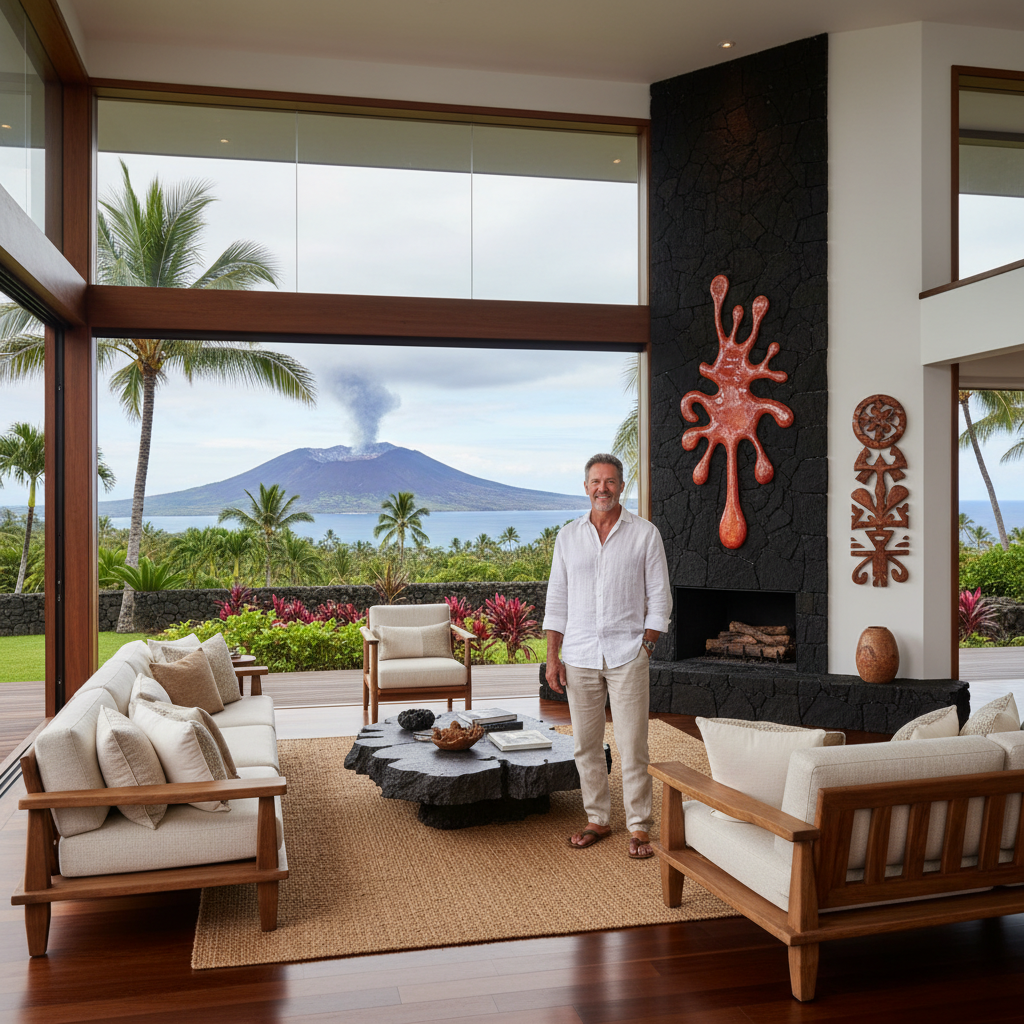
* **Lava Flow Hazard Zones:** This is the most important consideration. Most of Volcano Village and surrounding subdivisions are in Lava Zone 3. While safer than Zones 1 or 2, it still impacts insurance availability and cost. We can help you understand the implications for your specific lot. Building in Zone 2 is possible but extremely challenging from a financing and insurance perspective, and we advise clients to be fully aware of the risks.
* **Ohia Lehua Preservation:** Ohia trees are a keystone species in the native forest and are currently threatened by Rapid Ohia Death (ROD). There are strict protocols to prevent the spread of this fungal disease. During construction, we establish clear no-go zones to protect significant trees, and all equipment brought to the site must be thoroughly cleaned to remove soil and organic matter from other locations. This is part of our commitment to building responsibly.
How to Choose the Right Custom Home Builder Contractor in Volcano
Choosing your contractor is the single most important decision you’ll make for your new home construction volcano project. The right partner will guide you through the complexities, protect your investment, and deliver a home that exceeds your expectations. The wrong one can lead to budget overruns, endless delays, and costly defects. After more than 20 years in this business, we’ve seen what separates the pros from the rest.
Here’s a checklist to help you vet potential builders:
**1. Verify Their License and Insurance.**
This is non-negotiable. Any legitimate contractor in Hawaii must have a valid license. You can and should verify their status on the Hawaii Department of Commerce and Consumer Affairs (DCCA) Professional & Vocational Licensing (PVL) website.[2] Our license is BC-34373. Ask for proof of general liability insurance and workers’ compensation insurance. If a worker gets injured on your property and the builder isn’t insured, you could be held liable.
**2. Demand Big Island, Volcano-Specific Experience.**
Oahu construction is not the same as Big Island construction. Ask potential builders to show you their portfolio of completed homes specifically in Volcano or similar high-rain, high-altitude environments in East Hawaii. Ask them pointed questions:
* “What type of weather-resistive barrier do you prefer for Volcano’s climate and why?”
* “How do you manage site logistics and material deliveries from Hilo?”
* “Describe your process for preventing mold during the construction phase.”
* “What are your protocols for preventing the spread of Rapid Ohia Death?”
Their answers will quickly reveal their level of local expertise.
**3. Interview Their References.**
Don’t just get a list of names; actually call them. A good builder will be proud to connect you with past clients. Ask about their experience with communication, budget management, timeline adherence, and quality of work. Most importantly, ask: “What was the biggest challenge during the project, and how did the builder handle it?” Construction is problem-solving. You want a team that handles challenges professionally and transparently.
**4. Scrutinize the Bid and Contract.**
Beware of a bid that is significantly lower than others. It often means they’ve missed something, are using substandard materials, or plan to make it up with expensive change orders later. A professional bid from a company like ours will be detailed and transparent. It will break down costs by construction phase (e.g., foundation, framing, finishes) and clearly state what is included and what is not (allowances, exclusions). The contract should be equally clear, outlining the payment schedule, change order process, and dispute resolution methods. We use standard AIA (American Institute of Architects) contracts which are fair and well-understood in the industry.
**5. Assess Their Communication and Professionalism.**
From your very first interaction, are they responsive, organized, and professional? Building a custom home is a long-term relationship. You need to be confident that your builder will communicate clearly and consistently. At Warrior Construction, we assign a dedicated project manager to each home. You’ll have their direct cell phone number and receive weekly progress reports with photos and schedule updates. This level of communication is essential for a smooth and low-stress experience, especially if you are managing the project from off-island.
Ultimately, you are hiring a partner. Choose the team you trust, the one that demonstrates deep local knowledge, and the one that is as committed to the quality and longevity of your home as you are.
Real Volcano Custom Home Builder Project Example
To make these concepts concrete, let’s walk through a recent, albeit representative, project our team completed in the Mauna Loa Estates subdivision of Volcano. This project showcases the typical challenges and solutions involved in building a high-quality custom home in this unique environment.
**The Client & Vision:**
A couple from California planning their retirement home. They wanted a modern-meets-rustic design—a 2,500-square-foot, single-level home with clean lines, large windows to capture the forest views, and durable, low-maintenance materials. Their primary goal was a healthy, comfortable, and resilient home that felt connected to the surrounding ohia forest.
**The Lot & Challenges:**
The one-acre lot they purchased was stunning but challenging. It was covered in dense, mature ohia and hapu’u fern forest and had a gentle but consistent slope. The key challenges were:
1. **Site Disturbance:** The clients wanted to save as many mature ohia trees as possible, which made siting the house and driveway difficult.
2. **Moisture Management:** The lot was in one of the wetter parts of the subdivision, requiring an aggressive approach to water and moisture control from the foundation up.
3. **Logistics:** The narrow, unpaved road to the lot posed access challenges for large delivery trucks and concrete mixers.
**The Warrior Construction Solution:**
Our pre-construction team worked with the architect for three months before a shovel ever hit the ground to value-engineer the plans and develop a solid construction strategy.
* **Foundation & Siting:** Instead of a massive slab-on-grade that would have required extensive grading and tree removal, we opted for a post-and-pier foundation. This allowed us to elevate the home slightly off the ground, minimizing the building’s footprint, promoting air circulation underneath the structure to prevent moisture buildup, and preserving the root systems of nearby trees. The house was carefully positioned to require the removal of only three smaller ohia trees.
* **Building Envelope:** We designed a ‘belt-and-suspenders’ envelope. The structure was wrapped in a self-adhered ZIP System R-Sheathing for a continuous air, water, and thermal barrier. Over that, we installed a rainscreen system with vertical furring strips and a beautiful, dark-stained engineered wood siding. This created a durable, breathable wall assembly perfect for the damp climate.
* **Logistical Coordination:** Our project manager coordinated all major deliveries—trusses, concrete, lumber packages—to use smaller, more maneuverable trucks. This required more loads but prevented damage to the road and ensured materials arrived safely on site.
**The Outcome & Numbers:**
* **Project Timeline:** 20 months from groundbreaking to certificate of occupancy. The design and permitting phase took an additional 10 months.
* **Construction Cost:** The final construction cost was approximately $1.625 million, which came out to $650 per square foot.
* **Key Features:** Standing seam metal roof, fiberglass windows, an ERV (Energy Recovery Ventilator) for fresh air, a 15,000-gallon water catchment system with UV and multi-stage filtration, and a custom lanai with a built-in fireplace for enjoying the cool Volcano evenings.
The clients were thrilled with the final product—a home that not only met their aesthetic vision but was also engineered specifically for its environment. It stands as a prime example of how thoughtful planning and climate-specific building techniques result in a superior custom home.
What this means for Hawaii homeowners
Building a custom home in Volcano is a deeply rewarding journey, but it demands careful planning and a realistic understanding of the local conditions. The dream of a home nestled in the ferns and ohia is absolutely achievable, but success hinges on embracing the specific requirements of the environment, not fighting them. For any prospective homeowner considering a project here, the difference between a smooth process and a frustrating one comes down to acknowledging these truths upfront and partnering with a team that has proven expertise on the Big Island.
Here are the most critical takeaways and actionable steps for you:
* **Budget for Infrastructure, Not Just the House.** Your budget must include significant line items for site work, a septic system, and a water catchment system. These can easily add $100,000 or more to your total cost before you even pour the foundation. Don’t get caught by surprise; plan for these essentials from day one.
* **Prioritize a Resilient Building Envelope.** Do not cut corners on roofing, siding, windows, and waterproofing. The relentless moisture in Volcano will exploit any weakness. Investing more in a high-performance envelope, including a rainscreen system and superior materials like stainless steel fasteners, is the best money you can spend. It’s not an upgrade; it’s a requirement for longevity.
* **Hire Your Builder Early.** Bring a qualified, Volcano-experienced contractor into the conversation during the design phase. We can provide critical feedback on constructability and cost, ensuring that the architect’s vision aligns with your budget. This collaborative approach, often called design-build or integrated project delivery, saves time, reduces costly changes later, and leads to a better final product.
* **Embrace the Timeline.** Understand that building a custom home in a remote location in Hawaii takes time. Between permitting, weather delays, and island logistics, the process will likely take two years or more from start to finish. A patient and realistic mindset is your greatest asset. Rushing the process almost always leads to mistakes and compromises in quality.
* **Verify Your Lava Zone.** Before you even purchase a lot, understand its Lava Zone designation. This will have major implications for your ability to get a mortgage and homeowners insurance. Stick to lots in Zone 3 for the most straightforward path forward.
Building in Volcano is a specialized field. Your success depends on choosing a general contractor who treats it as such. We encourage you to start the conversation early and get a detailed estimate that reflects the true scope of your project.
Frequently Asked Questions About Custom Home Builder in Volcano
What’s the #1 mistake people make when building a custom home in Volcano?
The single biggest mistake is underestimating the impact of moisture and failing to budget for a proper building envelope. Homeowners coming from drier climates often don’t grasp how relentless the rain and humidity are at 4,000 feet. They try to save money by using standard construction techniques, which leads to mold, rot, and premature failure of materials within just a few years. Investing in a robust waterproofing system, a rainscreen, and proper ventilation is not a luxury here; it’s an absolute necessity.
Is it more expensive to build in Volcano than in Hilo or Kona?
Yes, generally it is. While land may be less expensive, construction costs per square foot are often 10-20% higher in Volcano than in Hilo. This is due to added logistical costs of trucking all materials up the mountain, the need for more expensive, climate-appropriate materials (like stainless steel), and the universal requirement for costly infrastructure like water catchment and septic systems, which aren’t always needed in more developed areas.
How does the lava zone really affect my project?
The lava zone is a critical factor for financing and insurance. Most of Volcano Village is in Zone 3, for which you can typically get mortgages and insurance, though premiums may be higher. If your lot is in Lava Zone 2, finding a lender or an insurer can be extremely difficult, if not impossible. Building in Lava Zone 1 is generally not feasible for a conventionally financed home. Always verify the lava zone with Hawaii County before purchasing land.
Can I build a large, luxury home in Volcano?
Absolutely. Volcano is home to many beautiful high-end properties. A `luxury home builder volcano` project simply requires an even greater focus on quality materials and systems. This might include features like radiant in-floor heating to combat the cool floors, whole-home dehumidification systems, high-end fiberglass windows, and premium finishes that can withstand the climate without degrading. The principles are the same, just executed at a higher level of specification and craftsmanship.
Do I really need a water catchment system in Volcano?
Yes, in almost all cases. The vast majority of properties in Volcano are not served by the county water supply. A rainwater catchment system is the standard and necessary solution for potable water. A properly designed system with a large tank (10,000+ gallons), good filtration, and a UV purification light provides clean, safe water year-round, thanks to the area’s abundant rainfall.
How much should I budget for site work alone in Volcano?
Site work costs can vary dramatically but plan on a minimum of $75,000 and potentially up to $200,000 or more. This budget covers clearing trees and vegetation, extensive grading if the lot is sloped, trenching for utilities, installing the septic and water catchment systems, and building a long driveway with a proper gravel base capable of supporting heavy trucks during construction. The more challenging the terrain, the higher the cost.
What are the 2026 building code updates I should know for a new home construction volcano project?
The latest Hawaii state building code adoptions emphasize increased structural resilience and energy efficiency. For Volcano, this means stricter requirements for hurricane tie-downs and shear walls to resist high winds. On the energy side, there are more stringent rules for insulation, window performance (U-factor and SHGC), and air sealing the home to prevent leakage. We build to these updated codes to ensure your home is not only safe but also efficient to operate for years to come.
Build Your Volcano Sanctuary with Confidence
Building a custom home in Volcano is a unique undertaking, one that requires a builder with specialized knowledge, logistical expertise, and a deep respect for the environment. At Warrior Construction, we have the experience and the proven processes to navigate the challenges and deliver a home that is as durable as it is beautiful.
If you’re ready to start the conversation about your dream home, our team is here to provide the expert guidance you need. We’ll help you understand the costs, timelines, and possibilities for your Volcano property. Learn more about our custom home building services and how we can bring your vision to life.