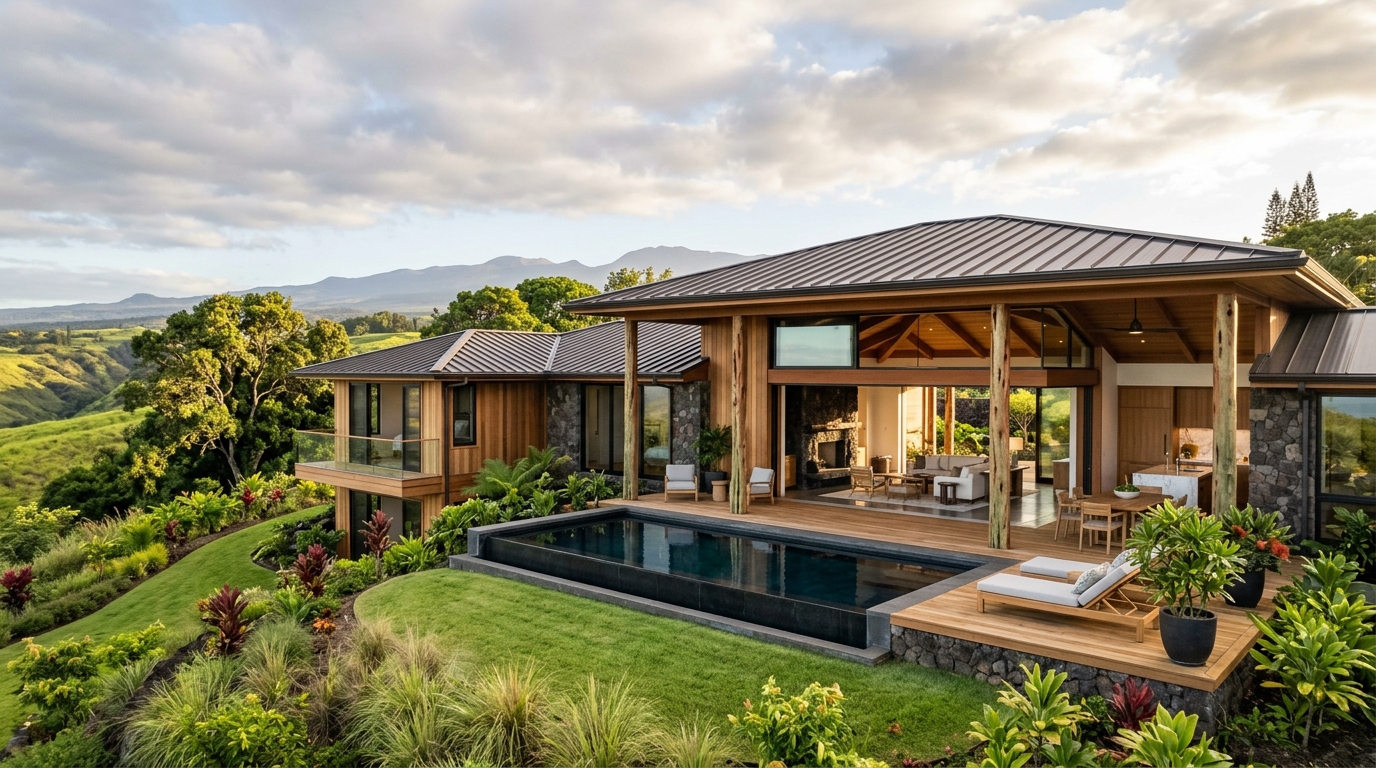
Building a custom home in Waimea isn’t like building anywhere else. As your dedicated custom home builder Waimea, we know the unique challenges and opportunities this part of Hawai’i (Big Island) presents, from the cool, misty rains on the wet side to the dry, windy conditions heading toward the coast. The biggest cost-saving strategy is hiring a general contractor who understands this land, the logistics, and the local permitting process from day one. At Warrior Construction, we bring over two decades of on-the-ground experience to every project, ensuring your new home construction in Waimea is built not just to your vision, but to withstand the specific demands of the island for generations.
This guide will walk you through the real numbers, timelines, and critical decisions you’ll face. We’ll cover nine specific strategies to keep your budget in check, including smart material selection for the Waimea climate, navigating the Hawai’i County permitting maze efficiently, and designing a home that works with the land, not against it. Our goal is to give you the insider knowledge you need to partner with a home builder in Waimea confidently and create a home that is truly yours, without costly surprises along the way.
Why Waimea Homeowners Trust Warrior Construction for Custom Home Builder
Choosing a contractor is the single most important decision you’ll make. It’s not just about a license and a truck; it’s about finding a partner who understands the nuances of building on the Big Island. For over 20 years, our team at Warrior Construction (License BC-34373) has built a reputation on transparency, craftsmanship, and a deep understanding of what it takes to build a lasting home in places like Waimea.
Our approach is built on a design-build philosophy. This means we collaborate with you, your architect, and our engineers from the earliest stages. Consequently, we can value-engineer the project before a single shovel hits the ground, identifying potential issues and cost savings. For example, on a recent project on the wet side of Kamuela, our early involvement allowed us to suggest a specific foundation waterproofing system and French drain layout that added about $9,500 upfront but saved the homeowner an estimated $50,000 in future moisture and mold remediation. That’s the kind of foresight that experience brings.
Furthermore, we understand neighbor island logistics. Everything from lumber to appliances has to come over on a barge. A disorganized builder can cost you weeks of delays and thousands in extra fees waiting for materials. We have long-standing relationships with suppliers in both Hilo and Honolulu, and our logistics team coordinates shipments precisely with the construction schedule. This minimizes downtime and protects your budget. As a luxury home builder in Waimea, we manage these complex supply chains so you don’t have to. We treat your project with the same care and attention to detail as if it were our own home.
Our Commitment to Waimea Homeowners:
- Transparent Bidding: We provide detailed, line-item bids so you see exactly where every dollar is going. No vague allowances or hidden fees.
- Local Expertise: We know the soil conditions, the wind patterns, the best local subcontractors, and the specific requirements of the Hawai’i County Department of Public Works.
- Constant Communication: You get regular updates, photos, and direct access to your project manager. We believe an informed client is a happy client.
- Quality First: We don’t cut corners. From hurricane-rated connections to salt-air-resistant finishes, we build homes that are meant to last in Hawaii’s demanding environment.
When you hire us, you’re not just getting a builder; you’re getting a dedicated team committed to making your new home construction in Waimea a success. We’re proud of the homes we’ve built and the relationships we’ve formed with homeowners across the islands.
What Does Custom Home Builder Cost in Waimea?
This is the first question everyone asks, and for good reason. In 2026, building a custom home in Waimea requires a significant investment, and the numbers are different from what you’d see on Oahu or Maui. Here’s a realistic breakdown based on our recent projects on the Big Island.
For a mid-range custom home, you should budget between $550 to $750 per square foot for the construction itself. For a 2,500-square-foot home, that’s a construction cost of $1,375,000 to $1,875,000. For a high-end luxury home with premium finishes, ocean views, and complex architectural details, that figure can easily climb to $800 to $1,200+ per square foot.
But that’s just the construction cost. It’s crucial to understand the other major expenses that make up your total project budget:
- Land Cost: This varies wildly in Waimea, from agricultural lots to premium view lots. This is your starting point and is separate from construction costs.
- Soft Costs (15-25% of construction): This is a big category that many homeowners underestimate. It includes architectural and engineering fees (8-15%), Hawai’i County permit fees (which can run $25,000-$50,000+ for a new home), surveying, geotechnical reports, and financing costs.
- Site Work (5-15% of construction): Waimea’s volcanic soil and rocky terrain can make site preparation expensive. This includes excavation, grading, utility trenching (septic, water, HELCO), and driveway installation. We recently had a project where we hit a massive amount of blue rock, requiring $30,000 in unexpected rock-hammering and hauling. A good contractor will budget a contingency for this.
- Landscaping & Hardscaping: This can range from a basic package of $25,000 to over $200,000 for extensive rock walls, pools, and mature plantings.
- Furnishings & Appliances: Don’t forget the cost to actually furnish your beautiful new home.
9 Cost-Saving Strategies for Your Waimea Build:
- Embrace a Simple Footprint: A simple rectangular or L-shaped foundation is far cheaper to build than a complex one with multiple corners and bump-outs.
- Design for the Climate: Use large overhangs to protect siding from rain and sun. Position windows to capture trade winds for natural cooling, reducing HVAC costs.
- Standardize Materials: Using standard lumber lengths and window sizes reduces waste and labor costs.
- Choose Local When Possible: While most materials are shipped in, using local stone for rock walls or locally sourced hardwoods for accents can sometimes save on shipping.
- Invest in the Envelope: Spend more on a high-quality roof, windows, and waterproofing. It’s the most expensive thing to fix later. A few thousand extra here saves tens of thousands down the road.
- Plan Your Electrical & Plumbing Carefully: Grouping bathrooms and kitchens back-to-back reduces the length and complexity of plumbing runs, a significant cost saver.
- Consider a Standing Seam Metal Roof: It has a higher upfront cost than asphalt shingles ($18-$25 per sq. ft. installed vs. $9-$14), but its lifespan in Waimea’s wet climate is 50+ years, compared to 15-20 for shingles. It’s a long-term win.
- Get a Geotechnical Report Early: Spending $5,000-$8,000 on a soil report before finalizing your design can save you $50,000 in foundation change orders.
- Hire a Design-Build Firm: As mentioned, having your builder and designer at the same table from day one is the single most effective way to control costs. We can provide real-time cost feedback on design decisions, preventing expensive redraws.
Building a custom home is a major financial undertaking. The key is to work with a home builder in Waimea who is transparent about all the costs involved, not just the attractive cost-per-square-foot number.
How Long Does a Custom Home Builder Take in Waimea?
Building a home in Hawaii moves on its own timeline, often called “island time.” But for a professional general contractor, it’s about careful planning and managing expectations. A full custom home build in Waimea, from the first architectural sketch to getting your keys, typically takes 18 to 24 months in 2026. Anyone who tells you they can do it in under a year for a true custom home is either cutting corners or not being realistic about the process.
Let’s break down a typical project timeline:
- Phase 1: Design & Pre-Construction (6-9 months): This is where the most important work happens. It’s not just drawing floor plans. This phase includes:
- Initial concept and architectural design (3-4 months)
- Structural engineering and truss calculations (1-2 months)
- Material selection and interior design (can happen concurrently)
- Builder bidding and selection (1 month)
- Preparing the full permit application package (a massive undertaking)
- Phase 2: Permitting (6-10 months): This is often the biggest bottleneck. The Hawai’i County Department of Public Works is thorough, and getting building permits for a new home is a multi-stage review process. Plans are reviewed by planning, building, fire, and sometimes other departments. Each review can take weeks or months, and any required revisions reset the clock. Our team has an in-house permit expeditor who knows the county staff and the process, which can help shave a month or two off this timeline, but patience is essential.
- Phase 3: Construction (10-14 months): Once we have the permit in hand, our crews can get to work. This is the exciting part where you see physical progress.
- Site Prep & Foundation (1-2 months): Excavation, grading, and pouring the concrete slab or post-and-pier foundation.
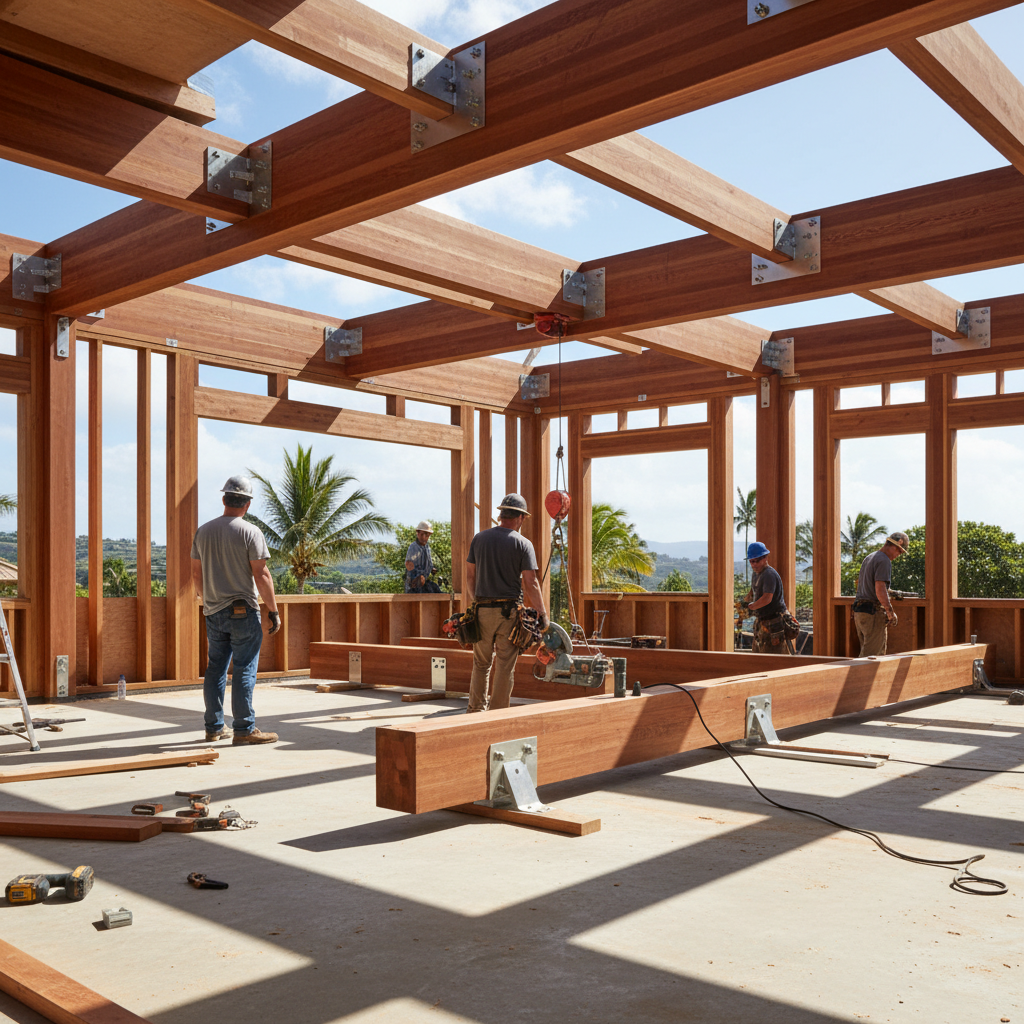
- Framing & Roofing (2-3 months): The skeleton of the house goes up, and we get it dried-in with the roofing and house wrap. This is a critical milestone.
- Rough-ins & Exterior (3-4 months): Plumbers, electricians, and HVAC techs run all the hidden lines. Simultaneously, we install windows, doors, and siding.
- Interior Finishes (3-4 months): This is where the house becomes a home. Drywall, painting, flooring, tile, cabinets, countertops, and fixtures are all installed.
- Final Touches & Landscaping (1 month): Final inspections, punch list items, appliance installation, and landscaping complete the project.
One of the biggest variables is material delivery. We order long-lead-time items like custom windows, trusses, and cabinets months in advance. Still, a delay at the port in Honolulu or Long Beach can have a ripple effect. We build buffer time into our schedules to account for this, but it’s a reality of building on an island. A good custom home builder in Waimea is a master of logistics, constantly tracking shipments and adjusting the work schedule to keep the project moving forward efficiently.
What Permits Do You Need for Custom Home Builder in Waimea?
Navigating the permitting process with the Hawai’i County Department of Public Works (DPW) is one of the most complex parts of any new home construction in Waimea. It’s far more than just submitting a set of blueprints. You need a comprehensive package of documents, plans, and approvals, and a single mistake can send you to the back of the review queue, adding months to your timeline. This is an area where an experienced local general contractor is invaluable.
For a new single-family home, you’ll typically need a consolidated building permit application that includes several components, each requiring its own review and stamp of approval. The main permits and clearances include:
- Building Permit: This is the main permit covering the structure itself. It requires architectural plans, structural engineering calculations (especially for wind and seismic loads), truss designs, and energy code compliance forms.
- Electrical Permit: Requires a full electrical plan showing circuits, load calculations, and fixture locations, all signed off by a licensed electrical engineer.
- Plumbing Permit: Requires a plumbing plan showing supply lines, drain-waste-vent (DWV) systems, and septic/sewer connections. If you’re on a septic system, you’ll need a separate approval from the Department of Health.
- Grading & Grubbing Permit: If you are moving more than 100 cubic yards of earth, you’ll need a separate grading permit, which often requires a civil engineer’s plan for drainage and erosion control.
- Driveway Permit: Any connection to a county road requires a permit to ensure proper slope, visibility, and construction standards.
Beyond these core permits, there are numerous clearances and reviews that must be completed before the DPW will even accept your application:
- Planning Department Review: They check for zoning compliance, setbacks from property lines, and height restrictions.
- Fire Department Review: They check for access for emergency vehicles, hydrant locations, and sometimes require residential sprinkler systems depending on the home’s size and location.
- State Historic Preservation Division (SHPO): If your property is in a culturally sensitive area, a review or even an archaeological survey might be required.
- Department of Water Supply (DWS) Approval: You need to show you have a water meter and that the system can support your new home.
The process is complex, and the county is very particular about how plans are formatted and what information is included. For instance, a common delay we see is when an architect from the mainland isn’t familiar with Hawaii’s specific hurricane code requirements. They might not specify the right type of hurricane straps or window ratings, which the plan reviewer will catch immediately, stopping the entire process. Our team reviews all plans against local codes before submission to catch these issues early. While the Honolulu DPP[1] has its own system, the principles of thorough review and strict code adherence are the same across the state. The key is knowing exactly what the Hawai’i County reviewers are looking for.
Waimea-Specific Considerations: Climate, Materials, Regulations
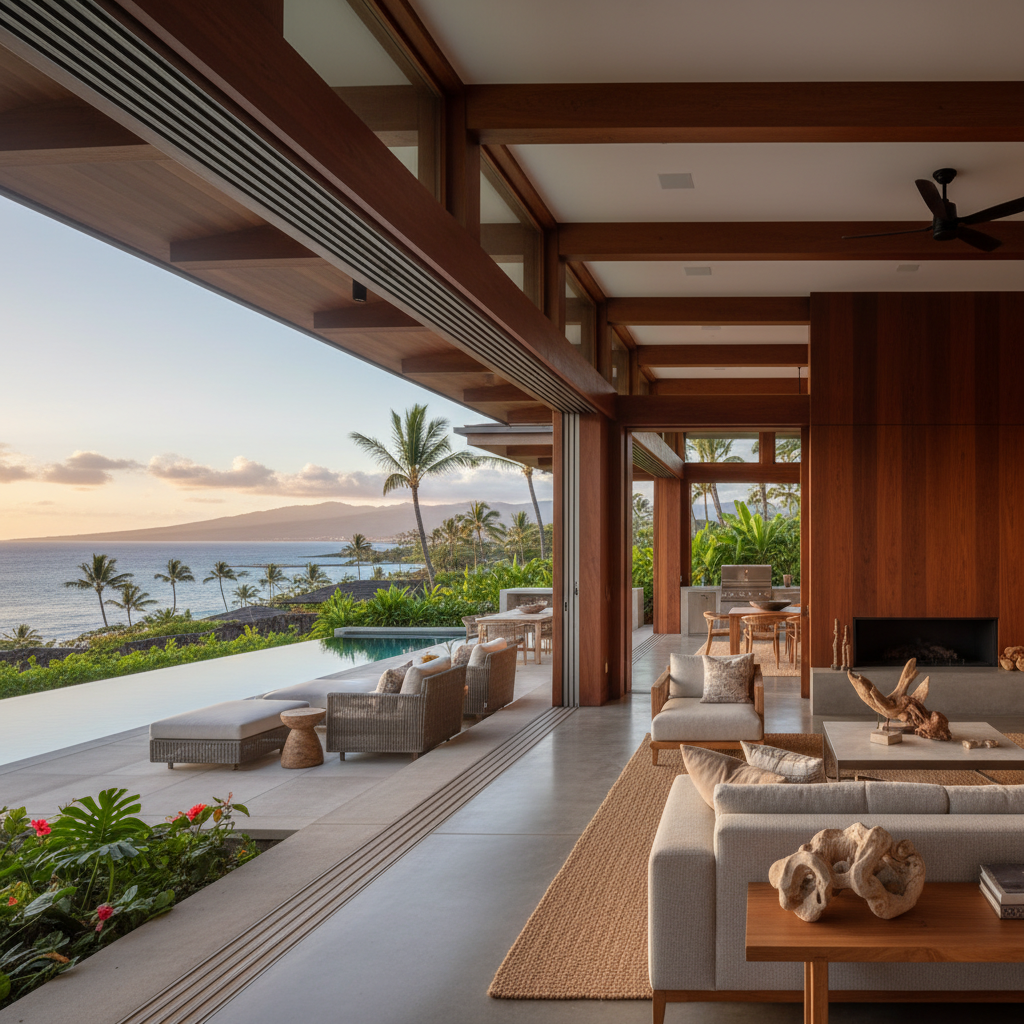
Waimea is a place of microclimates. Building on the wet, green side near Kamuela is completely different from building on the dry, windy plains stretching towards Kawaihae. A successful custom home here must be designed and built specifically for its exact location. As a home builder in Waimea with years of local experience, we engineer every project to thrive in its unique environment.
Climate & Environmental Factors
- Rain and Humidity (Wet Side): The consistent rainfall on the Hamakua side of Waimea demands a robust building envelope. This means going beyond code minimums. We specify high-performance house wraps, meticulous window and door flashing using ZIP System tape or equivalent, and full waterproofing on foundations. A standing seam metal roof is almost always our recommendation here, as its ability to shed water and resist moss growth is superior to any other material. We also design for excellent ventilation to prevent mold and mildew, a constant battle in this climate.
- Wind and Sun (Dry Side): Heading towards the coast, the wind can be relentless. This impacts structural engineering, requiring stronger shear walls and more robust roof-to-wall connections (hurricane straps and clips). The intense sun also dictates material choices. We often recommend fiber cement siding (like James Hardie) over wood, as it holds paint better and won’t warp or crack under the UV assault. Window selection is also critical; low-emissivity (Low-E) coatings are a must to block heat gain and protect interiors from fading.
- Volcanic Soil and Rock: The ground beneath Waimea is often a mix of soil and hard volcanic rock. Excavation can be unpredictable. A geotechnical report is non-negotiable for us. It tells us what we’re dealing with and allows us to design the right foundation, whether it’s a slab-on-grade or a post-and-pier system to accommodate slopes and rock formations. Planning for potential rock hammering in the budget is just smart business here.
Material Selection for Longevity
Material choices are driven by these climate factors. Here’s what we typically specify for a Waimea build:
- Framing: We use pressure-treated lumber for all sill plates in contact with concrete to prevent rot and termite damage. For framing, Douglas fir is standard, but we ensure all hardware—nails, straps, screws—is galvanized or stainless steel to combat corrosion.
- Roofing: As mentioned, 24-gauge standing seam metal roofing is the gold standard for its durability against both rain and wind.
- Windows: We favor high-quality vinyl or fiberglass windows over wood or aluminum. Vinyl and fiberglass offer excellent insulation and won’t rot, corrode from salt air (if you’re closer to the coast), or conduct heat.
- Siding: Fiber cement siding is our top choice for its resistance to moisture, fire, pests, and UV damage. It offers the look of wood without the high maintenance.
Local Regulations & Community Guidelines
Waimea also has specific community and zoning regulations. Many areas, particularly around Parker Ranch, have design review committees or CC&Rs (Covenants, Conditions, and Restrictions) that dictate aesthetic elements like exterior color palettes, roofing materials, and even landscaping choices to maintain the paniolo (Hawaiian cowboy) character of the area. As a luxury home builder in Waimea, we are well-versed in these guidelines and work with your architect to ensure the design complies, ensuring a smooth approval process.
How to Choose the Right Custom Home Builder Contractor in Waimea
Selecting the right general contractor is the most critical decision you’ll make for your project. A great contractor will be your partner, advocate, and problem-solver for the next two years. A bad one can turn your dream into a nightmare of delays, cost overruns, and legal battles. Here’s a checklist we recommend every homeowner use when vetting a custom home builder in Waimea.
- Verify Their License and Insurance. This is the absolute first step. Don’t just take their word for it. Go to the Hawaii Department of Commerce and Consumer Affairs (DCCA) Professional & Vocational Licensing (PVL) website[2] and look up their license number. For example, our license is BC-34373. Ensure it’s active and that there are no complaints against them. Also, ask for a certificate of insurance showing they carry both General Liability and Worker’s Compensation. This protects you from any accidents on your property.
- Look for Specific Big Island Experience. A contractor from Honolulu might be excellent, but do they understand the logistics of shipping to Kawaihae or Hilo? Do they have established relationships with Big Island subcontractors and suppliers? Building here is different. Ask them to show you a portfolio of homes they have built in or near Waimea. Ask about challenges they faced on those projects and how they solved them.
- Interview at Least Three Contractors. Don’t fall in love with the first builder you meet. Getting multiple bids and perspectives is crucial. Pay attention to how they communicate. Do they listen to your vision? Do they explain things clearly and patiently? Do they seem organized? This initial interaction is often a preview of what the working relationship will be like.
- Check Their References Thoroughly. Any good builder will happily provide you with a list of recent clients. Call them. Ask specific questions:
- Did they stick to the budget? If not, were the overages due to your changes or their mistakes?
- Did they finish on time?
- How was the communication throughout the project?
- How did they handle problems when they came up? (Because problems always come up).
- How has the house held up since they finished? Would you hire them again?
- Review Their Contract Carefully. A professional contract will be detailed. It should clearly outline the scope of work, a payment schedule, a process for change orders, material specifications, and warranty information. Be wary of a one-page handshake deal. It’s best to have an attorney review the contract before you sign. This protects both you and the builder.
- Don’t Let Price Be the Only Factor. The lowest bid is often a red flag. It can mean they missed something in the scope, are using subpar materials, or are planning to make up the difference with expensive change orders later. A quality builder who pays their crew and subs fairly and uses proper materials will not be the cheapest. You are investing in a home that should last a lifetime; this is not the place to cut corners on expertise.
Choosing a builder is about trust and rapport. You’re entering a long-term relationship. Make sure it’s with a team you trust to bring your vision to life with integrity and professionalism.
Real Waimea Custom Home Builder Project Example
To make these numbers and concepts more concrete, let’s walk through a recent, albeit hypothetical, project that reflects the typical challenges and outcomes of a custom home build in Waimea.
The Project: A 3,200 sq. ft. modern paniolo-style home on a 1-acre lot on the wet side of Waimea, designed for a family relocating from California.
The Vision: An open-concept living space, large covered lanai for indoor-outdoor living, durable and low-maintenance materials, and an architectural style that blended modern lines with the rustic character of Waimea.
The Budget & Timeline:
- Initial Client Budget: $2,000,000 for construction.
- Initial Timeline Goal: 18 months from start to finish.
- Warrior Construction’s Preliminary Estimate: $2,250,000 ($703/sq. ft.) based on their desired high-end finishes (Ipe wood decking, custom cabinetry, Sub-Zero/Wolf appliances).
- Final Contract Price: $2,150,000 after value-engineering.
Pre-Construction Phase (8 months):
Our team was brought in during the architectural design phase. This early collaboration was key. The initial design had a complex roofline and specified a clear-grain cedar siding. We provided real-time cost feedback:
- Cost-Saving #1 (Roof): By simplifying the roof geometry slightly (reducing the number of hips and valleys), we saved the client approximately $45,000 in framing labor, roofing material, and engineering fees without compromising the aesthetic.
- Cost-Saving #2 (Siding): We showed the client how clear cedar, while beautiful, would require staining every 3-4 years in Waimea’s wet climate. We proposed a high-quality fiber cement siding with a wood-grain texture and a factory-applied finish with a 15-year warranty. This switch saved an immediate $55,000 in material and labor costs and tens of thousands in long-term maintenance.
These two changes brought the project within the client’s revised budget. The permitting process with Hawai’i County took 7 months, which was right within our projected timeline.
Construction Phase (12 months):
The build went smoothly until excavation. Our geotechnical report had indicated rock, but we encountered a larger, denser lava formation than anticipated. This required an extra week of rock-hammering, adding $22,000 to the site work cost. Because we had counseled the client to hold a 10% contingency fund for unforeseen conditions, this did not derail the budget. We were able to absorb the week’s delay by re-sequencing the arrival of the framing materials, which were still on a barge from the mainland. This is active project management in action.
The Outcome:
The project was completed in 20 months total—two months over the initial optimistic goal, but well within a realistic timeframe for a Big Island custom build. The final construction cost, including the rock excavation, was $2,172,000. The family moved into a beautiful, durable home perfectly suited to the Waimea climate, built on budget, and with a clear understanding of the entire process.
What this means for Hawaii homeowners
Building a custom home in Waimea is a journey that requires patience, a realistic budget, and the right expert partner. The process is more complex than on the mainland due to our unique island logistics, stringent building codes, and challenging terrain. The key takeaway is that planning is everything. The decisions you make in the first six months—before any ground is broken—will have the biggest impact on your final cost and timeline.
Here are your actionable next steps:
- Define Your “All-In” Number: Before you even look at land, figure out your total budget, including land, soft costs, construction, and landscaping. A good rule of thumb is that your construction cost will be about 50-60% of your total project cost.
- Hire Your Team Early: Engage a builder and an architect who have experience working together. A design-build approach where the builder is involved from the start is the most efficient path forward. It prevents the common scenario of falling in love with a design you can’t afford to build.
- Invest in Due Diligence: Spend the money upfront on a topographical survey and a geotechnical report for any piece of land you are serious about. This small investment can save you from catastrophic budget surprises related to site work and foundations.
- Embrace Value-Engineering: Be open to your builder’s suggestions for alternative materials or construction methods. An experienced local builder knows what works and what doesn’t in Waimea’s climate. Their advice can save you money both upfront and in long-term maintenance.
Ultimately, a successful custom home project is a collaboration built on trust and transparency. Your builder should be an open book, explaining the costs, anticipating challenges, and guiding you toward smart decisions that align your vision with your budget.
Frequently Asked Questions About Custom Home Builder in Waimea
What is a realistic cost per square foot for a new custom home in Waimea in 2026?
For a quality custom home in Waimea, a realistic budget for construction costs in 2026 is between $550 and $750 per square foot for mid-range finishes. For a luxury home with high-end materials and complex design, expect to be in the $800 to $1,200+ per square foot range. This does not include land, architectural fees, or landscaping.
How long does it really take to get building permits on the Big Island?
For new home construction in Waimea, you should realistically budget 6 to 10 months for the permitting process with Hawai’i County. While simpler projects might be quicker, a complex custom home requires multiple departmental reviews. Delays often happen due to incomplete applications or plans that don’t meet specific local codes, which is why working with an experienced local team is critical.
Should I hire an architect or a builder first?
We strongly recommend a design-build approach where you hire both around the same time or select a builder who can manage the entire process. Bringing a builder in during the design phase allows for real-time cost feedback, ensuring the architectural plans align with your budget from the start. This prevents spending months designing a home you later find out you can’t afford to build.
What are the biggest unforeseen costs when building in Waimea?
The two biggest surprises often come from the ground. First is extensive volcanic rock requiring expensive excavation and hammering, which can add $20,000-$50,000+ to site work. The second is issues with soil stability or drainage that require more extensive and costly foundation engineering. A geotechnical report helps mitigate but cannot eliminate all surprises. Always maintain a 10-15% contingency fund.
How does the Waimea climate affect building material choices?
The climate is a huge factor. On the wet side, we prioritize materials that resist moisture and rot, like standing seam metal roofing, fiber cement siding, and fiberglass windows. On the dry side, we focus on materials that can handle high winds and intense UV sun, such as robust structural connections and siding with durable, factory-applied paint finishes. All hardware should be galvanized or stainless steel to prevent corrosion.
Can I save money by managing the project myself?
Unless you have professional construction management experience in Hawaii, acting as your own general contractor is almost never a good idea. The complexities of permitting, scheduling neighbor island subcontractors, managing material logistics, and passing inspections are immense. The mistakes a novice makes often end up costing far more than the general contractor’s fee you were trying to save.
Is it more expensive to build on the Big Island than on Oahu?
It can be. While labor rates might be slightly lower on the Big Island, the cost of shipping every single material—from lumber to light fixtures—from Oahu or the mainland adds a significant premium. Inter-island shipping and trucking to a place like Waimea can add 5-10% to your material costs compared to a project in Honolulu. A good home builder in Waimea will have efficient logistics to help manage these costs.
Start Your Waimea Custom Home Journey with Confidence
Building your dream home on the Big Island is a once-in-a-lifetime project. It requires a partner with the experience, integrity, and local knowledge to navigate the unique challenges of our island environment. At Warrior Construction, we’ve spent over two decades earning the trust of homeowners by delivering exceptional quality and transparent communication. We’re ready to bring that same commitment to your project.
If you’re ready to discuss your vision for a new custom home in Waimea, our team is here to help. Learn more about our custom home building services or contact us today for a complimentary consultation to get started.