“
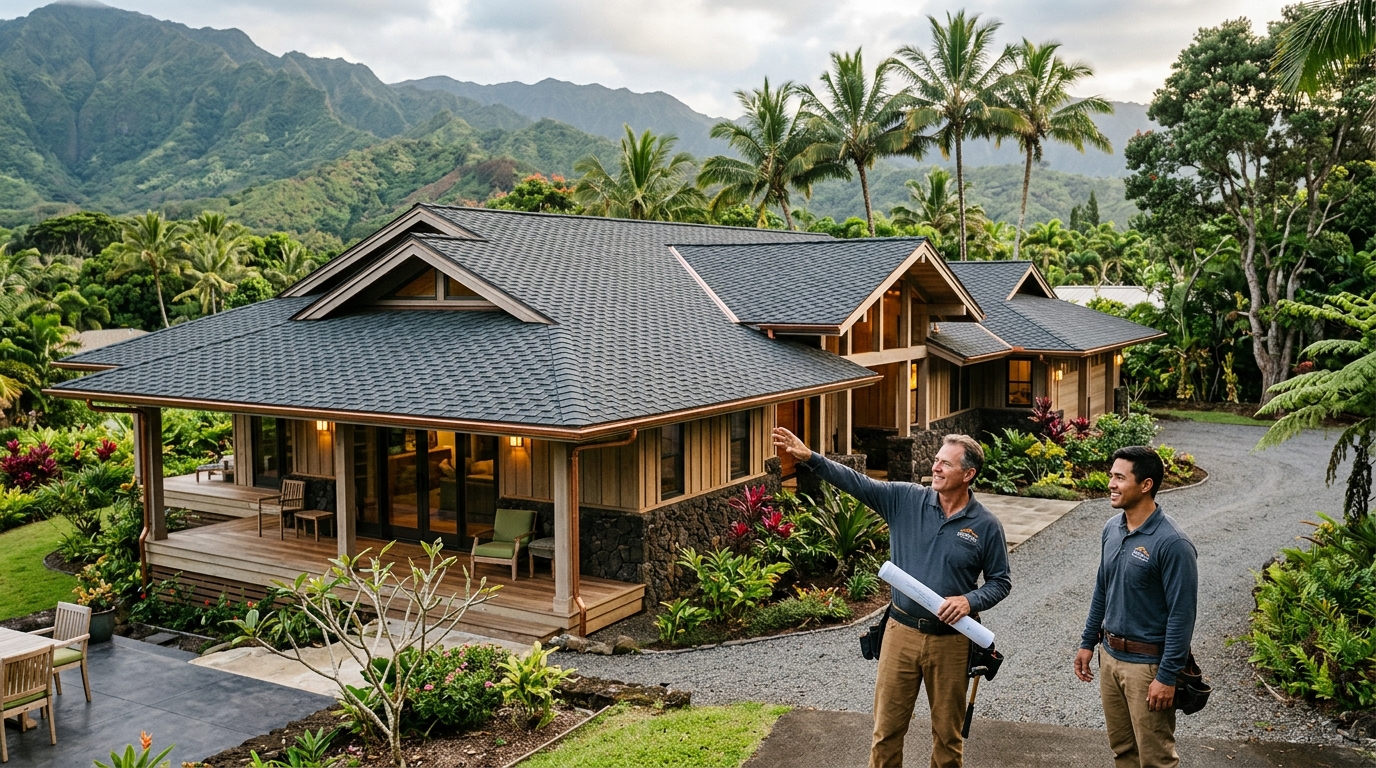
Choosing a roofing contractor in Hanalei means selecting a partner to protect your home from some of the most beautiful yet demanding weather in the world. In 2026, a professionally installed roof isn’t just a component; it’s a complete system designed to handle intense sun, torrential rain, and hurricane-force winds. The typical cost for a quality roof replacement on Kaua’i’s North Shore ranges from $22 per square foot for high-grade architectural shingles to over $75 per square foot for premium, Kynar-coated standing seam metal. At Warrior Construction, we’ve spent more than two decades installing roofs that last, navigating the unique challenges of building on Kaua’i, from material logistics to the specific demands of the salt-laden air. This isn’t mainland construction; this is building for paradise, and that requires a different level of expertise.
Over the years, our team has seen it all, from roofs installed with the wrong type of nails that rusted out in five years to beautiful homes with persistent leaks because of poorly detailed flashing. These costly mistakes are almost always avoidable. That’s why we’ve put together this guide. We’ll walk you through real-world costs for 2026, realistic timelines that account for island shipping, the critical permitting process on Kaua’i, and the specific materials that actually hold up to Hanalei’s climate. You’ll learn the nine most effective cost-saving tips that don’t sacrifice quality, helping you make an informed investment in your home’s most important asset. Think of this as the conversation we’d have over coffee before we even look at a set of plans—straight talk from a licensed general contractor who knows what it takes to build right on the Garden Isle.
\n\n
Why Hanalei Homeowners Trust Warrior Construction for Roofing Contractor
\n
Hanalei homeowners trust our team at Warrior Construction because we bring over 20 years of dedicated, on-the-ground Hawaii construction experience to every project. We’re not just a roofing company; we are a licensed (BC-34373) general contractor. This is a critical distinction. A simple C-42 roofing license allows a company to replace shingles, but when we inevitably find rotted decking or compromised structural members during a tear-off—a common occurrence in older North Shore homes—we are licensed and qualified to perform the necessary structural repairs on the spot. A roofer-only contractor would have to stop work and bring in another company, causing delays and costing you more money. With us, the entire project is handled seamlessly under one roof, with one point of accountability.
Our deep understanding of Kaua’i’s unique environment sets us apart. We know that the fasteners used on a roof in Kapaʻa face different challenges than those on a bluff overlooking Hanalei Bay. For example, on a recent roof replacement Hanalei project on Weke Road, the client’s previous roof, installed only ten years prior, was failing not because of the shingles, but because the mainland contractor used standard electro-galvanized nails. The constant salt spray had completely corroded them, allowing shingles to lift in high winds. Our standard practice is to use 316-grade stainless steel or hot-dip galvanized ring shank nails, a small detail that adds decades to a roof’s lifespan. This is the kind of localized, hard-won knowledge you get when you hire a team that lives and builds here.
\n
Our Commitment to Transparency and Quality
\n
We believe a successful project is built on trust, which starts with a transparent process. Our proposals aren’t one-line estimates; they are detailed scopes of work that break down every phase and material choice. You’ll see line items for:\n
- \n
- Tear-off and Disposal: What happens to the old material and the cost associated with it.
- Decking Inspection and Repair Allowance: We budget for a certain amount of plywood replacement, so you aren’t hit with a massive, unexpected change order.
- Underlayment Specifications: We specify the exact brand and type of high-temperature, self-adhering membrane we use, which is essential for wind-driven rain protection.
- Material Choice: From the specific gauge and paint finish (Kynar 500 is our standard for metal) to the shingle manufacturer and warranty.
- Fastener Type: We specify stainless steel or hot-dip galvanized so you know you’re getting corrosion resistance.
- Flashing Details: How we will handle valleys, chimneys, and vents to ensure a watertight seal.
- Workmanship Warranty: Our confidence in our work is backed by a comprehensive warranty, in writing.
\n
\n
\n
\n
\n
\n
\n
\n
This level of detail ensures you’re comparing apples to apples when looking at bids and eliminates the “surprises” that can plague construction projects. Verifying a contractor’s license is your first step; you can look up our license, BC-34373, on the state’s Professional and Vocational Licensing (PVL) website[1] to see our standing. Choosing the right partner for your Hanalei roofing project is about more than just price—it’s about finding a team with the local expertise and integrity to protect your home for the long haul.
\n\n
What Does Roofing Contractor Cost in Hanalei?
\n
In 2026, the cost for a professional `roof replacement Hanalei` project on a standard 2,000-square-foot home will typically range from $44,000 for quality architectural asphalt shingles to over $120,000 for high-end standing seam metal with a premium coastal finish. For a minor `roof repair Hanalei` job, such as replacing a few blown-off shingles or sealing a leaky vent flashing, you can expect to pay between $800 and $2,500. The final price tag depends on a handful of key factors that are especially pronounced here on Kaua’i: the material you choose, the complexity of your roof’s design, underlying structural issues, and the unavoidable costs of neighbor island logistics.
Material selection is the single biggest driver of cost. While mainland-style asphalt shingles are the most affordable upfront, they have a shorter lifespan in our intense UV light and humid climate. Standing seam metal, while a larger initial investment, offers a 50+ year lifespan and superior performance against hurricanes and salt air, making it the most popular choice for discerning homeowners. Here’s a breakdown of what you can expect to pay per square foot for a full replacement in Hanalei, including professional installation:
\n
| Material Type | Installed Cost per Sq. Ft. (2026) | Realistic Lifespan in Hanalei | Key Considerations |
|---|---|---|---|
| Architectural Asphalt Shingles | $22 – $35 | 15-20 years | Most affordable option, but susceptible to mildew staining and faster degradation from UV exposure. |
| Corrugated Metal (Galvalume) | $35 – $50 | 25-35 years | A cost-effective metal option, but exposed fasteners can be potential failure points if not installed perfectly. |
| Standing Seam Metal (Kynar Finish) | $50 – $75+ | 40-50+ years | The gold standard for `tropical roofing hanalei`. Concealed fasteners, superior Kynar 500 coastal paint finish, and engineered for high wind uplift. |
| Concrete or Clay Tile | $40 – $60 | 30-40 years | Excellent wind resistance, but very heavy. Often requires structural engineering and reinforcement of the roof framing. |
\n\n
9 Cost-Saving Tips for Your Hanalei Roofing Project
\n
While quality should never be compromised, there are smart ways to manage your budget. Here are nine tips our team often shares with homeowners:
\n
- \n
- Invest for the Long Term: Choosing a $50/sf standing seam metal roof that lasts 50 years is cheaper than installing a $25/sf asphalt shingle roof three times over the same period. The math on lifecycle cost almost always favors premium materials in Hawaii.
- Don’t Delay Repairs: A $1,000 repair to fix a small leak today can prevent a $15,000 structural repair bill from rotted framing discovered during a future replacement. Be proactive.
- Ensure Proper Ventilation: A hot attic bakes asphalt shingles from the underside, drastically shortening their life. Installing proper ridge and soffit vents can extend your roof’s lifespan and lower your cooling bills.
- Consider Cool Roof Coatings: Lighter colors and special reflective coatings can significantly reduce heat absorption, lowering your energy consumption and potentially making you eligible for energy credits.
- Bundle Exterior Work: If you’re also planning to paint your home’s exterior or replace gutters, doing it at the same time as the roof can save on scaffolding costs and labor mobilization fees.
- Ask About Material Sourcing: We once saved a client in Princeville nearly $10,000 by timing their material order to coincide with another one of our projects, allowing us to fill a container barge from Honolulu and split the shipping costs.
- Get Detailed, Itemized Bids: A vague, one-page estimate makes it impossible to see where costs can be trimmed. Our detailed bids allow for conversations like, \”What if we switch from this brand of underlayment to another approved brand?\”
- Understand the Warranty: A robust, long-term manufacturer’s warranty can save you from future repair costs. Ensure your contractor is certified to install the product so the warranty is actually valid.
- Finance Strategically: Look into options like a Home Equity Line of Credit (HELOC). The interest may be tax-deductible, and it allows you to choose the right roof for the long term rather than the cheapest one for today.
\n
\n
\n
\n
\n
\n
\n
\n
\n
\n
Managing roofing costs in Hanalei is about making smart, informed choices that prioritize longevity and resilience. A cheap roof that fails in a storm is the most expensive roof you can buy.
\n\n
How Long Does a Roofing Contractor Take in Hanalei?
\n
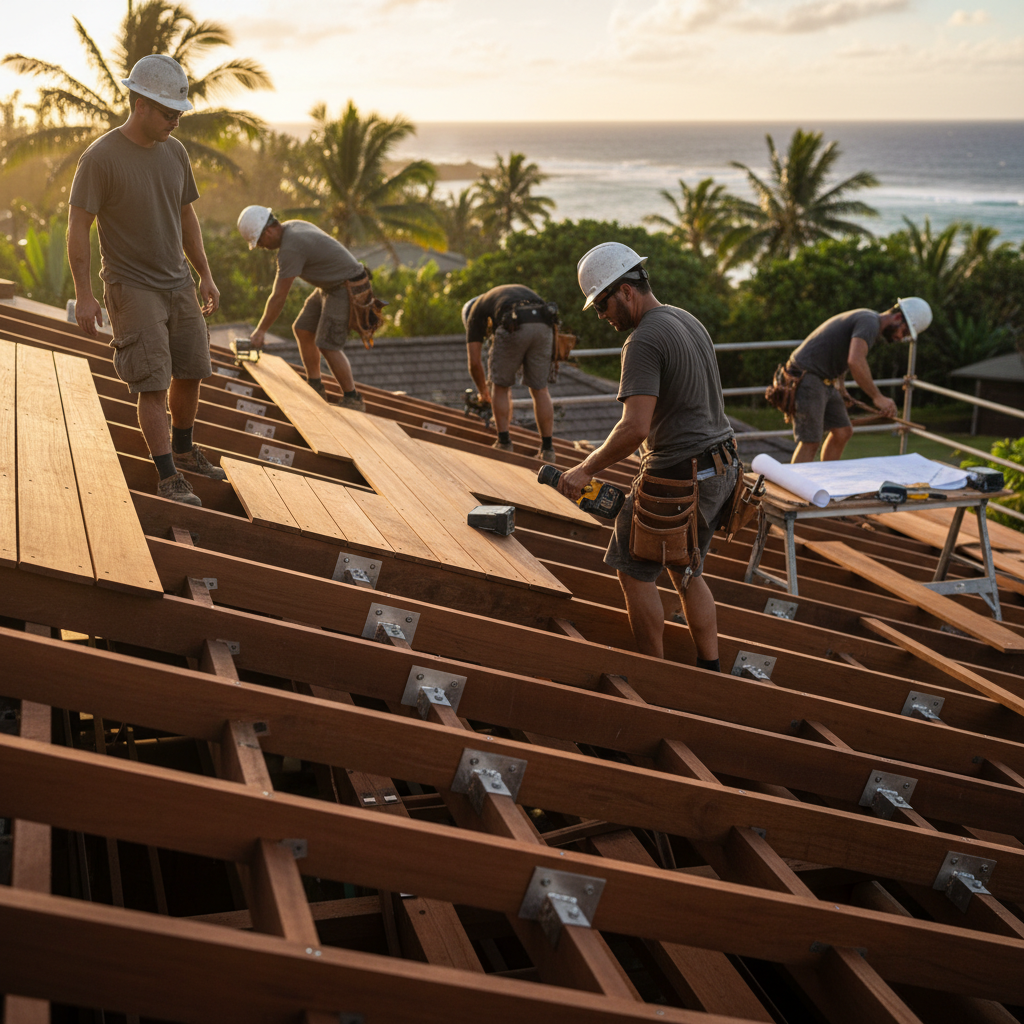
For a standard 2,000 to 2,500-square-foot home in Hanalei, our crew can typically complete the on-site portion of a full roof replacement in 4 to 7 working days. However, the total project timeline from signing the contract to final inspection is much longer, usually between 6 and 12 weeks. The biggest variables that homeowners often overlook are the pre-construction phases: permitting with the County of Kaua’i and material ordering and shipping to the island.
Here’s a realistic step-by-step timeline for a typical Hanalei roofing project in 2026:\n
- \n
- Week 1: Contract & Planning. After you sign the contract, our team finalizes material lists, drafts the necessary plans for the permit application, and gets everything in order.
- Weeks 2-7: Permitting. We submit the permit package to the Kaua’i County Department of Public Works. Depending on their backlog and the complexity of the project (especially if you’re in a Special Management Area or flood zone), this can take anywhere from 4 to 8 weeks. This is often the longest waiting period.
- Weeks 4-9: Material Ordering & Logistics. As soon as the permit is likely to be approved, we place the material orders. Custom-colored metal panels, for example, have a lead time of 2-4 weeks for manufacturing. Then, we have to account for shipping from the mainland to Honolulu, and then barging from Honolulu to Nawiliwili Harbor on Kaua’i. This inter-island leg can add another 1-2 weeks. We saw this last year on a Kilauea project where a shipping delay at Honolulu Harbor pushed our start date back by nine days. It’s a part of building in Hawaii we always factor into our schedules.
- Week 10 (On-Site Work Begins):\n
- \n
- Day 1: Material delivery and site prep. We protect your landscaping and set up safety lines.
- Day 2: Tear-off of the old roofing material and inspection of the underlying wood decking.
- Day 3: Any necessary repairs to the decking or framing are completed.
- Day 4-6: Installation of the new underlayment, flashing, and roofing material (shingles or metal panels).
- Day 7: Final detail work, ridge caps, cleanup, and our internal quality control inspection.
\n
\n
\n
\n
\n
\n
- Week 11: Final Inspection. We schedule the final inspection with the county building inspector to officially close out the permit.
\n
\n
\n
\n
\n
\n
Weather is the biggest wild card during the on-site phase. A few days of heavy Hanalei rain can pause work, as it’s unsafe and improper to install roofing on a wet surface. A professional contractor will never rush a job at the expense of quality. We build buffer days into our schedule, but it’s important for homeowners to be flexible. The key is constant communication, which is something our project managers pride themselves on, providing you with regular updates throughout the entire process.
\n\n
What Permits Do You Need for Roofing Contractor in Hanalei?
\n
For almost any full roof replacement in Hanalei, you will need a building permit from the County of Kaua’i Department of Public Works. While a very minor `roof repair Hanalei`, like replacing a handful of shingles, might be exempt, any project that involves tearing off the existing roof covering requires a permit. This is non-negotiable. The permit process ensures that the work is done to the current building code, which is especially critical on the North Shore with its high-wind and heavy rain requirements.
The process isn’t just a piece of paper; it’s a review of the proposed roofing system. Our team submits detailed plans that specify:\n
- \n
- The type of roofing material and its wind-uplift and fire ratings.
- The type and spacing of fasteners used to attach the roof decking to the trusses. This is a key detail for hurricane resistance.
- The specific underlayment being used (e.g., self-adhering modified bitumen).
- Flashing details for all penetrations, valleys, and roof edges.
- Proof of our contractor’s license (BC-34373) and insurance.
\n
\n
\n
\n
\n
\n
While Hanalei is governed by Kaua’i County, the diligent approach to plan review is similar to what you’d find at the Honolulu Department of Planning and Permitting (DPP)[2]—it’s all about safety and ensuring the structure can withstand our unique weather. Working without a permit is a huge risk. If caught, you can face fines, stop-work orders, and even be forced to tear off the new roof. More importantly, it creates major problems when you try to sell or insure your home, as there’s no official record of the work being done to code.
For properties in sensitive areas, like those near the beach or streams, additional reviews may be required. If your home falls within a Special Management Area (SMA) or has shoreline setback considerations, the permit process can become more complex and take longer. This is where hiring an experienced local general contractor is invaluable. We have long-standing relationships with the Kaua’i planning department and understand how to navigate these specific regulations, ensuring the process is as smooth as possible. We handle the entire application, plan submittal, and inspection scheduling process for our clients. Your only job is to approve the plans; we take care of the rest.
\n\n
Hanalei-Specific Considerations: Climate, Materials, Regulations
\n
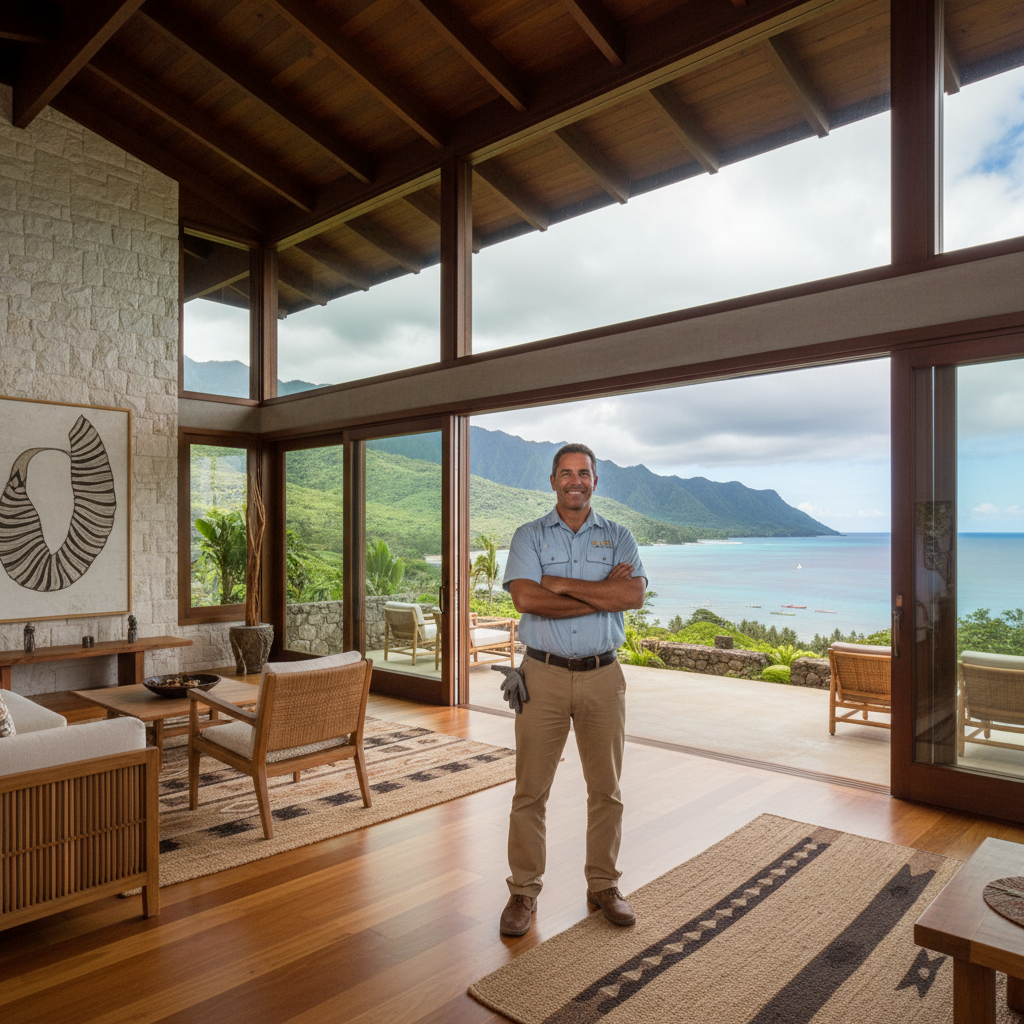
A roof in Hanalei isn’t just a roof; it’s a highly engineered shield against a unique combination of environmental assaults. The three most critical considerations for any North Shore roofing project are the relentless rainfall, the corrosive salt air, and the stringent hurricane building codes. Ignoring any one of these is a recipe for premature failure.
First, let’s talk about water. Hanalei is one of the wettest places on earth, and the rain often comes in wind-driven sheets. This isn’t a gentle shower. It’s a pressure test on every seam and flashing on your roof. This is why the choice of underlayment is arguably as important as the final roofing material itself. We use a full-coverage, self-adhering, high-temperature ice and water shield on most of our projects here. Unlike standard roofing felt, which is just a water-resistant barrier, this membrane seals directly to the roof deck and, crucially, seals around every nail and screw that penetrates it. This creates a completely waterproof secondary barrier, so even if a shingle lifts in the wind, water can’t get to your roof deck.
Second is the salt air. The beautiful ocean breeze carries microscopic salt particles that are incredibly corrosive to metal. This is where material specification becomes paramount. Using standard galvanized steel fasteners is a classic mistake we see from off-island contractors. They will rust and fail within a decade, causing catastrophic roof failure. Our standard for coastal projects is 316-grade stainless steel for all fasteners and clips. For metal roofing, we insist on a panel with a Kynar 500 (PVDF) paint finish. This is a premium resin-based coating that provides the best available protection against salt spray corrosion and UV degradation, which causes cheaper paints to chalk and fade. It’s a significant upgrade over the more common Silicone Modified Polyester (SMP) finishes.
\n
Building Beyond the Code After Iniki
\n
Finally, there’s the ever-present threat of hurricanes. The building codes on Kaua’i were completely rewritten after Hurricane Iniki devastated the island in 1992. The codes are designed to prevent the catastrophic roof failures that were so common during that storm. Key requirements for a `roofing contractor Hanalei` include:\n
- \n
- Enhanced Decking Attachment: The plywood or OSB sheathing that forms the roof deck must be attached with ring-shank nails at a much closer spacing (typically 6 inches on all edges and in the field) than in non-hurricane zones.
- Hurricane Straps/Clips: The roof trusses must be physically tied to the wall framing with galvanized steel straps, creating a continuous load path that prevents the roof from being lifted off the house by high winds.
- Rated Materials: All roofing materials, from shingles to metal panels, must have been tested and rated to withstand specific wind speeds (often 130 mph or higher).
- Impact Resistance: In some cases, especially for commercial or critical buildings, the code may call for materials that can resist impacts from wind-borne debris.
\n
\n
\n
\n
\n
Simply meeting the minimum code is just the starting point for us. We believe in building with a margin of safety. A roof that performs well in Hanalei will perform well anywhere. It requires a deep understanding of how these forces—rain, salt, and wind—work together, and a commitment to using the right system of materials to combat them.
\n\n
How to Choose the Right Roofing Contractor Contractor in Hanalei
\n
Choosing the right roofing contractor in Hanalei involves more than just picking the lowest bid; it’s about vetting a potential partner for their local experience, financial stability, and commitment to quality. The best way to start is by verifying their contractor’s license, confirming their insurance is current, and asking for specific, recent references on the North Shore of Kaua’i. A contractor’s comfort level and knowledge when discussing the specifics of salt spray, wind-driven rain, and hurricane codes will tell you a lot.
Here is a practical checklist every Hanalei homeowner should use when evaluating potential contractors:
\n
- \n
- Verify Their License and Classification. Go to the Hawaii Department of Commerce and Consumer Affairs’ Professional & Vocational Licensing (PVL) website[1]. Enter their name or license number (ours is BC-34373) to confirm it’s active and in good standing. Crucially, check if they hold a B-General Contractor license or just a C-42 Roofing specialty license. A B-license holder like Warrior Construction is legally able to repair any structural wood rot or damage found during the project, which is a very common issue. A C-42 contractor cannot, leading to costly delays.
- Demand a Certificate of Insurance (COI). The contractor must provide you with a current COI that shows two things: General Liability insurance (at least $1 million) to cover any damage to your property, and Worker’s Compensation insurance to cover their employees if they get injured on your job site. If they don’t have worker’s comp, you could be held liable for injuries. Do not skip this step.
- Ask for Hanalei or North Shore References. Don’t accept references from Honolulu or the mainland. Ask for the names and numbers of their last three projects in Hanalei, Princeville, or Kilauea. Call those homeowners and ask them about their experience. Were they on time? Was the communication good? Was the cleanup thorough? Were there any surprise costs?
- Scrutinize the Written Proposal. A red flag is a one-line quote like \”New roof: $80,000.\” A professional proposal from a contractor like us will be a multi-page document that details the exact scope of work, including the brand and type of underlayment, the gauge and paint finish of the metal, the type of fasteners (e.g., 316 Stainless Steel), the flashing details, the plan for rotted wood replacement, and the terms of both the material and workmanship warranties.
- Discuss the Workmanship Warranty. Material warranties (e.g., 50 years on metal panel finish) are from the manufacturer. What you need from the contractor is a workmanship warranty that covers leaks or installation errors. A reputable contractor will offer a warranty of at least 5 years, in writing.
- Inquire About Crew and Project Management. Who will be on-site every day? Will there be a dedicated project manager you can call? Is the crew composed of their own employees or a subcontracted team? A well-managed project with clear lines of communication is essential for a smooth process.
\n
\n
\n
\n
\n
\n
\n
By following this checklist, you move beyond price and focus on value, expertise, and risk management. Your home in Hanalei is too valuable to trust to anyone but a thoroughly vetted, licensed, and insured professional with proven local experience.
\n\n
Real Hanalei Roofing Contractor Project Example
\n
To illustrate how these principles come together, let’s look at a recent project our team at Warrior Construction completed for a family on a bluff overlooking Hanalei Bay. This project is a perfect example of the challenges and solutions common to high-end residential roofing on Kaua’i’s North Shore.
The Client & Property: The Johnsons owned a beautiful 2,800-square-foot, single-story home built in the late 1990s. Its prime location offered stunning views but also exposed it to the full force of the trade winds and salt spray coming directly off the Pacific.
The Problem: Their original asphalt shingle roof, which was about 25 years old, was in severe decline. Many shingles were cracked and losing their protective granules, and they had a persistent, hard-to-trace leak in their great room that only appeared during heavy, wind-driven rains. They were also deeply concerned about their home’s ability to withstand a major storm and wanted to upgrade to a system that met modern hurricane standards.
Our Assessment & Solution: Our initial inspection confirmed the shingles were past their service life. Using an infrared camera inside, we pinpointed the leak to a poorly designed valley flashing detail. We proposed a complete `roof replacement Hanalei` solution focused on longevity and storm protection:\n
- \n
- Complete Tear-Off and Structural Inspection: We removed all layers of the old roof down to the original plywood sheathing. As suspected, we found significant wood rot in the decking and two rafters near the faulty valley flashing.
- Structural Repairs & Upgrades: As a licensed general contractor, we were able to immediately replace the rotted decking and sister new lumber onto the compromised rafters, restoring the roof’s structural integrity. We then re-nailed the entire roof deck to meet the current high-wind code requirements.
- Premium Waterproofing System: We installed a full layer of Grace Ice & Water Shield®, a high-temperature self-adhering membrane, across the entire roof deck. This created a continuous, monolithic waterproof barrier.
- Standing Seam Metal Roof: We installed a 24-gauge standing seam metal roof from Taylor Metal Products, featuring a 1.5-inch mechanical lock seam for maximum wind uplift resistance. The chosen color was a dark bronze with a Kynar 500 paint finish to withstand the salt air and UV rays.
- Coastal Details: All clips and fasteners used were 316-grade stainless steel. All flashing for the valleys, eaves, and the chimney was custom-fabricated from the same Kynar-coated metal for a perfect match and watertight seal.
\n
\n
\n
\n
\n
\n
The Outcome:\n
- \n
- Final Cost: Approximately $182,000 (around $65/sq ft), which included the structural repairs.
- Project Timeline: 10 days on-site, following a 7-week period for permitting and material fabrication and shipping.
- Result: The Johnsons now have a stunning, architecturally appropriate roof that is not only completely watertight but is also engineered to handle a Category 4 hurricane. Their homeowner’s insurance provider even gave them a discount on their premium due to the documented wind-mitigation upgrades. They have peace of mind knowing their investment is protected by the best possible system for the Hanalei environment.
\n
\n
\n
\n\n
What this means for Hawaii homeowners
\n
For any homeowner in Hanalei, undertaking a roofing project is a significant investment that goes far beyond aesthetics. Your roof is the single most critical element protecting your family and your property from Hawaii’s unique and sometimes severe weather. Making the right choices in materials, installation techniques, and contractor selection can mean the difference between a roof that lasts 50 years and one that fails in the first major storm.
\n
Here are the key takeaways you should focus on:
\n
- \n
- Prioritize Performance Over Price: The upfront cost of a cheap roof is nothing compared to the cost of water damage, structural repairs, and repeated replacements. In Hanalei’s climate, investing in a high-quality system like Kynar-coated standing seam metal with stainless steel fasteners provides the best long-term value and peace of mind.
- Hire a Licensed General Contractor: Don’t just hire a \”roofer.\” Hidden damage like wood rot is common in older Hawaii homes. A licensed General Contractor (like Warrior Construction, BC-34373) is legally qualified to perform these structural repairs, preventing delays and ensuring the work is done correctly without needing to hire a second company.
- Understand the Entire System: The visible metal or shingles are only part of the equation. The underlayment, ventilation, and flashing details are what truly keep the water out. Insist on a self-adhering waterproof membrane and a contractor who can explain their flashing techniques in detail.
- Plan for Island Time: Do not wait until you have an active leak to start planning your roof replacement. Between Kaua’i County permitting (4-8 weeks) and material shipping logistics (2-4 weeks), the pre-construction process takes time. Start the conversation with a contractor 3 to 6 months before you want the work to begin.
\n
\n
\n
\n
\n
Ultimately, your roof is a system that must be designed and built specifically for the Hanalei environment. By focusing on a long-term strategy and partnering with an experienced, local contractor, you can ensure your home remains safe, dry, and beautiful for decades to come.
\n
\n\n
Frequently Asked Questions About Roofing Contractor in Hanalei
\n
Can I install a new roof over my old shingles in Hanalei?
\n
Generally, no. The County of Kaua’i building code, like most codes in Hawaii, requires a full tear-off of the old roofing material for a replacement. This allows the contractor to inspect the underlying wood decking for rot or termite damage, which is a critical step. Covering up old problems is never a good long-term solution and is not permitted.
\n
\n
What is the best roof color for a home in Hanalei to save on energy bills?
\n
Lighter colors are significantly more energy-efficient. A white, beige, or light gray metal roof with a ‘cool roof’ reflective coating can reflect a large portion of the sun’s solar radiation, keeping your attic and home cooler. This can reduce your air conditioning costs by up to 20-30% compared to a traditional dark asphalt shingle roof.
\n
\n
How much does a simple roof repair in Hanalei cost in 2026?
\n
A minor `roof repair Hanalei` typically costs between $800 and $2,500. This would cover things like replacing a dozen blown-off shingles, re-sealing the flashing around a vent pipe, or securing a loose piece of ridge cap. The cost depends on the roofing material, the steepness of your roof, and the accessibility of the repair area.
\n
\n
Are metal roofs noisy when it rains in Hanalei?
\n
This is a common myth. When installed correctly over a solid roof deck with proper underlayment and attic insulation, a modern standing seam metal roof is no louder than any other roofing material. The sound of heavy rain is diffused by the layers of the complete roofing system, resulting in a gentle, pleasant sound inside the home.
\n
\n
What’s the difference between a workmanship warranty and a material warranty?
\n
A material warranty is provided by the manufacturer and covers defects in the roofing product itself (e.g., paint peeling on a metal panel). A workmanship warranty is provided by the installing contractor and covers errors in the installation that lead to leaks or failures. At Warrior Construction, we provide a robust workmanship warranty because we stand behind the quality of our team’s installation.
\n
\n
Why are roofing costs on Kaua’i higher than on the mainland?
\n
There are three main reasons: material shipping, labor costs, and code requirements. Virtually all roofing materials must be shipped from the mainland and then barged to Kaua’i, adding significant cost. Skilled labor rates are also higher in Hawaii. Finally, our stringent hurricane code requirements necessitate more robust materials and installation methods than in most mainland locations, which increases both material and labor costs.
\n
\n
Do I need a special ‘coastal’ warranty for my roof in Hanalei?
\n
Yes, this is an extremely important detail. Many standard material warranties are voided if the home is within a certain distance of the coast (usually 1,500 feet). When we install a product like a Kynar-coated metal roof, we ensure you receive the manufacturer’s specific coastal or salt-air warranty, which is designed to cover performance in a marine environment. Always get this in writing.
\n
\n
\n\n
Protect Your Hanalei Home with a Roof Built to Last
\n
Your roof is the most important defense your home has against the elements. At Warrior Construction, we combine decades of local Hawaii experience with the highest quality materials to build roofing systems that stand up to Hanalei’s sun, salt, and storms. We’re a fully licensed and insured general contractor (BC-34373) ready to handle your project from permitting to final inspection.
\n
If you’re ready for a transparent, professional roofing experience, our team is here to help. Let’s discuss building a hurricane-resistant roof for your Hanalei home. Contact us today for a free, detailed estimate.
\n
\n\n
References
\n