“
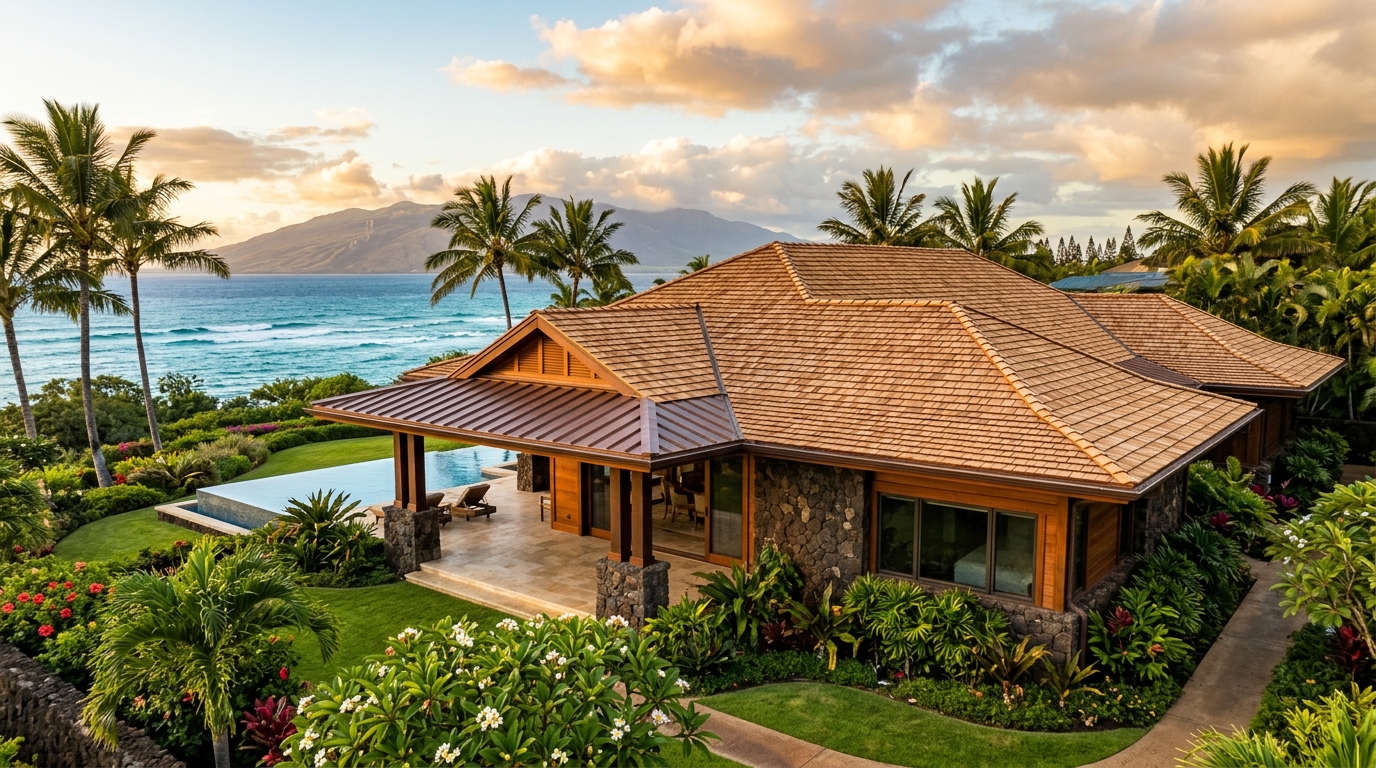
Choosing a roofing contractor in Kapalua for a full replacement in 2026 means budgeting between $25 to $45 per square foot for high-quality architectural shingles, or up to $60 to $85+ per square foot for premium standing seam metal. This investment protects your home from Maui’s unique and demanding climate—from the intense UV exposure to the corrosive salt air and seasonal downpours that sweep across the West Maui Mountains. A roof here isn’t just a covering; it’s the first and most critical line of defense for your entire structure.
\n\n
For over two decades, our team at Warrior Construction has been navigating the specific challenges of building on Maui. We’ve seen firsthand what happens when mainland-style roofing techniques meet our island environment. Fasteners rust out in five years, underlayment turns to dust under the constant sun, and poorly ventilated attics create a host of problems. That’s why we approach every roofing project, whether it’s a simple `roof repair kapalua` or a full-scale replacement, with a Hawaii-first mindset.
\n\n
This guide breaks down everything a Kapalua homeowner needs to know in 2026. We’ll cover realistic costs, permitting timelines with Maui County, and the specific materials that hold up best against salt spray and tropical storms. Most importantly, we’ll detail seven critical upgrades that can extend the life of your roof and improve your home’s resilience for decades to come.
\n\n
Why Kapalua Homeowners Trust Warrior Construction for Roofing
\n\n
When you own a home in a place like Kapalua, you’re not just buying property; you’re stewarding a significant investment in a world-class location. You need a partner who understands the stakes. Our clients trust us because we’re not just a roofing company; we are a fully licensed and insured Hawaii general contractor (BC-34373) with deep roots in the islands. This means we see the whole picture—how the roof integrates with the walls, the foundation, and the overall building envelope to protect you from the elements.
\n\n
Our experience in West Maui is specific and hard-won. We know that the microclimate in Kapalua can be dramatically different from Kihei or Kula. The combination of sea spray from the Pailolo Channel and the frequent moisture coming off the mountains creates a uniquely corrosive environment. A few years ago, on a project in Plantation Estates, we tore off a 15-year-old roof where the mainland contractor had used standard galvanized nails. The roof panels looked fine, but nearly every fastener had disintegrated from salt-air corrosion, leaving the entire system vulnerable to being peeled off in the next big storm. It’s this kind of on-the-ground knowledge that prevents costly mistakes.
\n\n
Here’s what sets our approach apart:
\n
- \n
- Logistical Mastery: Getting the right materials to Maui on time and on budget is a major hurdle. We have established relationships with suppliers and shipping companies, allowing us to manage the entire supply chain, from ordering custom-length metal panels to scheduling barge space and coordinating delivery to your job site. This prevents the frustrating delays that can plague island projects.
- Code and Regulation Expertise: The building codes in Hawaii, and specifically on Maui, are constantly evolving, especially regarding hurricane and wildfire preparedness. We are deeply familiar with the latest requirements for wind-load calculations, hurricane strap retrofitting, and the use of Class A fire-rated materials—all of which are critical for safety, insurability, and permitting.
- A General Contractor’s Perspective: Often, a failing roof is a symptom of other issues like poor attic ventilation, rotted fascia boards, or termite damage in the trusses. As a general contractor, we don’t just put a band-aid on the problem. Our team assesses the underlying structure and can perform any necessary structural repairs, ensuring your new roof is built on a solid foundation. You won’t need to hire a separate contractor to fix the wood rot our roofers uncover.
- Uncompromising Quality: We believe in doing it right the first time. For us, that means using stainless steel fasteners instead of galvanized, recommending high-temperature, self-adhering underlayment for the entire roof deck (not just the eaves), and ensuring proper ventilation to fight attic heat and moisture. These aren’t upgrades; they are our standard for `tropical roofing kapalua`.
\n
\n
\n
\n
\n
Choosing a contractor is about trust. You can verify our license and history anytime with the Hawaii Department of Commerce and Consumer Affairs (DCCA) Professional & Vocational Licensing Division[1]. Our reputation across the islands is our most valuable asset, and we protect it on every job.
\n\n
What Does a Roofing Contractor Cost in Kapalua?
\n\n
In 2026, a full `roof replacement kapalua` will typically cost between $25 and $85 per square foot, installed. That’s a wide range, but it’s driven almost entirely by your choice of material and the complexity of your roof. The price includes labor, materials, tear-off of the old roof, disposal fees, permits, and the infamous “neighbor island premium” that accounts for shipping and logistics to Maui.
\n\n
Let’s break down the all-in costs you can expect for a typical 2,500-square-foot roof in the Kapalua area:
\n\n
| Roofing Material | Cost per Sq. Ft. (Installed) | Estimated Total for 2,500 sq. ft. Home | Pros for Kapalua | Cons |
|---|---|---|---|---|
| Architectural Asphalt Shingle | $25 – $45 | $62,500 – $112,500 | Good value, wide color selection, Class A fire rating. | Shorter lifespan (20-25 years), susceptible to algae/moss, can be damaged by high winds. |
| Standing Seam Metal (G-90 Steel) | $60 – $85 | $150,000 – $212,500 | Excellent longevity (50+ years), superior hurricane resistance, salt-air resistant, energy efficient. | Higher upfront cost, requires specialized installation expertise. |
| Concrete or Clay Tile | $55 – $75 | $137,500 – $187,500 | Classic resort aesthetic, very durable, excellent fire resistance. | Heavy (may require structural reinforcement), brittle and can crack if walked on improperly. |
| Presidential Shake (Composite) | $40 – $60 | $100,000 – $150,000 | Looks like traditional wood shake without the fire risk or maintenance. | Higher cost than asphalt, newer technology without 50+ years of proven island history. |
\n
\n\n
Key Cost Factors Beyond the Material
\n
The material itself is only part of the equation. Several other factors can significantly impact your final invoice:
\n
- \n
- Tear-Off and Disposal: Removing one layer of old asphalt shingles is standard. If we discover two or more layers, or heavy materials like tile, the labor and disposal costs increase. On Maui, disposal fees at the Central Maui Landfill are a real line item we have to account for.
- Structural Repairs: It’s common to find soft spots in the plywood sheathing or rotted fascia boards once the old roof is off. We budget a contingency for this, but extensive damage from termites or long-term leaks can add several thousand dollars to the project. We always document this with photos and get your approval before proceeding.
- Roof Complexity: A simple gable roof is far less expensive to work on than a complex roof with multiple hips, valleys, dormers, and skylights. Each of these features requires more material, custom flashing, and significantly more skilled labor hours.
- Underlayment and Fasteners: This is where some contractors cut corners. We insist on using premium, high-temperature synthetic underlayment across the entire roof deck, not just cheap felt paper. For Kapalua’s corrosive environment, using 316 stainless steel fasteners is non-negotiable for us. They cost more upfront but prevent catastrophic failure down the road.
\n
\n
\n
\n
\n
When you get an estimate from our team at Warrior Construction, it will be fully itemized so you see exactly where your money is going. We want you to understand the value of investing in a robust roofing system designed specifically for Maui. Take a look at some of our past projects to see the quality we deliver.
\n\n
How Long Does a Roofing Contractor Take in Kapalua?
\n\n
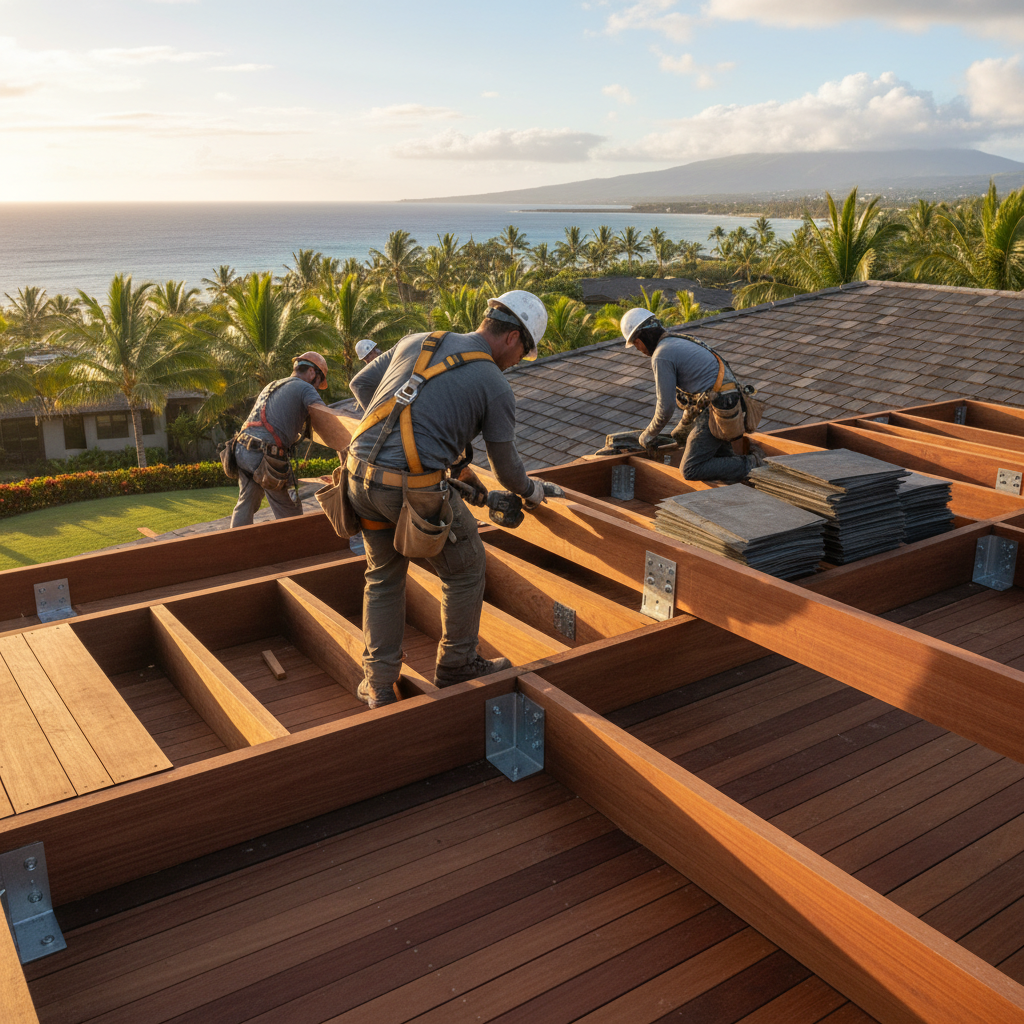
A full roof replacement in Kapalua takes much longer than on the mainland, primarily due to permitting and material logistics. From the day you sign a contract to the final inspection, a realistic timeline for 2026 is between 13 and 27 weeks. Anyone promising to start next week is a major red flag.
\n\n
Here’s a step-by-step breakdown of a typical project timeline:
\n\n
- \n
- Consultation, Design & Material Selection (1-2 Weeks): This is the initial phase where we meet with you at your home, measure the roof, discuss your options, and help you choose materials and colors. We’ll then prepare a detailed proposal and contract.
- Material Ordering & Shipping (4-8 Weeks): This is the biggest variable. Almost all roofing materials have to be shipped to Hawaii. Custom-ordered metal panels or specialty tiles can have lead times of a month or more just to be fabricated. Then, they have to be booked on a barge from the West Coast to Kahului Harbor. We track this process obsessively, but weather and port congestion can cause delays.
- Permit Application & Review (6-12 Weeks): Once materials are confirmed, we submit the building permit application to the Maui County Department of Public Works. Even for a seemingly straightforward re-roof, the review process can be lengthy. The county plan reviewers are thorough, and they’ll check for compliance with the latest wind load and building codes. We handle the entire submission and follow-up process, but the timeline is largely out of our hands.
- On-Site Work (1-3 Weeks): This is the part you actually see. Once we have the permit in hand and materials on-site, our crew gets to work. For an average-sized home (2,000-3,500 sq. ft.), the process of tearing off the old roof, making minor repairs, installing new underlayment, and putting on the new roofing material typically takes 1 to 3 weeks, weather permitting. We watch the trade wind and rain patterns carefully to ensure your home is never left exposed.
- Inspections & Final Walkthrough (1 Week): After the installation is complete, the county building inspector needs to come out to sign off on the work. Once we pass the final inspection, we do a meticulous site clean-up and a final walkthrough with you to ensure you’re 100% satisfied.
\n
\n
\n
\n
\n
\n\n
The key takeaway is to plan ahead. If you know your roof is nearing the end of its life, start the process at least six months before you want the work to be done. Rushing a roofing project in Hawaii inevitably leads to compromises in material choices or workmanship, and that’s a risk not worth taking.
\n\n
What Permits Do You Need for Roofing Contractor in Kapalua?
\n\n
In Maui County, you absolutely need a building permit for a full roof replacement. The old myth that you don’t need a permit if you’re just replacing shingles is false and dangerous. Maui County regulations are clear: if you are repairing, replacing, or altering more than one square (100 square feet) of roofing, a permit is required.
\n\n
Attempting a re-roof without a permit can lead to huge problems. The county can issue a stop-work order, levy significant fines, and even require you to tear off the new, unpermitted roof. Furthermore, if you have a non-permitted roof and suffer damage in a hurricane, your insurance company may have grounds to deny your claim. It’s simply not worth the risk.
\n\n
As your general contractor, Warrior Construction manages the entire permitting process with the Maui County Department of Public Works. It’s a complex process, but we’ve done it hundreds of times. Here’s what it involves:
\n
- \n
- Application Package: We prepare and submit the complete package, which includes the building permit application, detailed roofing plans, material specifications, and structural calculations for wind loads if required.
- Plan Review: A county plans examiner reviews our submission to ensure it complies with the International Building Code (IBC) and all local amendments. They pay close attention to things like fastener patterns, underlayment type, and flashing details, especially for high-wind zones like Kapalua. This is where having a professional, detailed plan saves a lot of back-and-forth.
- Required Inspections: A typical roof replacement requires at least two inspections. The first is often a “decking inspection” after the old roof is removed and any necessary sheathing repairs are made. The final inspection occurs after the new roof is fully installed but before our equipment is removed. The inspector will verify that the work matches the approved plans.
\n
\n
\n
\n\n
The bureaucracy in Hawaii can be challenging to navigate. The permitting process on Maui, while generally more straightforward than on Oahu with the Honolulu DPP[2], still requires patience and diligence. We have dedicated staff who focus solely on this, ensuring that applications are submitted correctly the first time and that we stay on top of communications with the county. This service is a core part of our commitment to a smooth and professional project experience for you.
\n\n
Kapalua-Specific Considerations: Climate, Materials, Regulations
\n\n
A roof in Kapalua has to perform under some of the most demanding conditions in the world. It’s not just about keeping the rain out; it’s about withstanding a constant, multi-front assault from sun, salt, wind, and moisture. As a local `roofing contractor in Kapalua`, we engineer our roofing systems specifically for this environment.
\n\n
The Kapalua Climate Challenge
\n
Kapalua’s weather is a unique blend of coastal and mountain climates. You get the direct, intense sun and salt-laden air of a beachfront location, combined with the higher rainfall and persistent humidity that comes from being nestled against the West Maui Mountains. This combination accelerates the degradation of most common building materials.
\n
- \n
- Salt-Air Corrosion: This is the number one enemy of any metal component on your roof. Salt spray is carried on the trade winds and deposits on your roof. When combined with moisture, it creates an aggressive corrosive agent that will eat through standard galvanized steel in just a few years. This is why we almost exclusively use G-90 galvanized steel (which has a thicker zinc coating) or, preferably, aluminum and 316-grade stainless steel for all fasteners, clips, and flashings.
- UV Radiation: The UV index in Hawaii is extreme. This intense sunlight breaks down the oils in asphalt shingles, making them brittle and causing them to lose their protective granules. It can also degrade cheap felt underlayment, turning it into a useless, dusty sheet. We recommend shingles with high UV-reflective granule technology or metal roofing with advanced Kynar 500® paint finishes that are warrantied against fading and chalking.
- Wind-Driven Rain: When it rains in Kapalua, it’s often not a gentle shower. Storms can bring heavy rain blown sideways by strong winds. This is why the quality of your underlayment and the detail of your flashing work are so critical. Water can be forced uphill and under shingles or panels. A fully-adhered, high-temperature ice and water shield provides a secondary waterproof barrier that is essential for true peace of mind.
\n
\n
\n
\n\n
The 7 Essential Upgrades for a Kapalua Roof in 2026
\n
Based on our experience, here are seven upgrades that we consider essential for any `tropical roofing kapalua` project. These aren’t just add-ons; they are smart investments in the longevity and resilience of your home.
\n
- \n
- High-Temperature, Self-Adhering Underlayment: Instead of standard felt paper, using a peel-and-stick membrane across the entire roof deck provides superior water protection and seals around every nail penetration. The high-temp rating is crucial to prevent it from melting and degrading under a hot metal roof.
- Stainless Steel Fasteners: We cannot stress this enough. Using stainless steel screws, clips, and nails is the single most important upgrade for preventing premature failure due to corrosion. It adds a few thousand dollars to the cost but adds decades to the roof’s life.
- Enhanced Ridge & Soffit Ventilation: A properly ventilated attic is cooler and drier, which prolongs the life of the roof structure and sheathing. We often recommend adding vented ridge caps and ensuring soffit vents are clear to create a continuous airflow that pulls hot, moist air out.
- Cool-Roof Technology: Many modern metal panels and even some shingle lines come with cool-roof finishes. These coatings have special pigments that reflect infrared radiation from the sun, keeping your attic and home cooler and reducing your air conditioning bills.
- Integrated Solar-Ready Flashing: Even if you aren’t installing solar panels now, preparing for the future is smart. We can install special flashing kits and conduits during the re-roofing process, making a future solar installation much cheaper and easier without creating new penetrations in your brand-new roof.
- Upgraded Hurricane Strapping: While replacing the roof, it’s the perfect time to access and upgrade the roof-to-wall connections. We can inspect and, if necessary, replace old hurricane straps with new, higher-capacity hardware to meet the latest hurricane code requirements.
- Wildfire-Resistant Underlayment & Vents: In light of recent events in West Maui, building for wildfire resistance is a new and critical consideration. This includes using Class A fire-rated roofing materials (standard for most products we use), installing fire-resistant underlayment, and using ember-proof vents to prevent sparks from entering the attic.
\n
\n
\n
\n
\n
\n
\n
\n\n
How to Choose the Right Roofing Contractor in Kapalua
\n\n
Choosing the right contractor is the most important decision you’ll make for your roofing project. A great roofing system installed improperly will fail. Here’s a checklist to use when vetting potential contractors on Maui.
\n\n
- \n
- Verify Their License and Insurance. This is non-negotiable. Any legitimate contractor will have a Hawaii C-42 Roofing Contractor license or a B-General Building Contractor license like ours (Warrior Construction, BC-34373). You can and should verify this on the state’s DCCA PVL website[1]. Also, ask for a certificate of insurance showing they have both General Liability and Worker’s Compensation coverage. If an uninsured worker gets hurt on your property, you could be held liable.
- Look for Deep Maui Experience. Ask them directly: “How many roofs have you installed in West Maui?” A contractor based in Honolulu might not understand the logistical challenges or the specific climate issues in Kapalua. Ask for references from homeowners in Kapalua, Napili, or Kaanapali. A good contractor will be proud to share them.
- Get a Detailed, Itemized Bid. A one-page estimate with a single bottom-line number is a red flag. A professional proposal should be several pages long and break down the costs for materials, labor, tear-off, disposal, permits, and specific quantities. It should specify the exact brand and type of shingles, underlayment, and fasteners to be used. This protects you from a bait-and-switch on material quality.
- Ask About Their Crew. Find out if they use their own employees or subcontract the work. An in-house crew generally means more consistency, better training, and clearer accountability. At Warrior Construction, we use our own team of skilled, long-term employees who are trained in our specific installation methods for Hawaii.
- Discuss Safety and Site Management. A professional worksite is a safe worksite. Ask about their safety plan. How will they protect your landscaping, lanai, and pool during the tear-off? Where will the dumpster be placed? What does their daily cleanup process look like? The answers to these questions reveal a lot about their level of professionalism.
- Understand the Warranty. There are two types of warranties: the manufacturer’s warranty on the materials and the contractor’s warranty on their workmanship. Make sure you get both in writing. A typical workmanship warranty should be for at least 5-10 years. A contractor who stands behind their work will have no problem putting that promise on paper.
\n
\n
\n
\n
\n
\n
\n\n
Taking the time to properly vet your contractor will save you an enormous amount of stress and money in the long run. Our team is always ready to provide all of this information and answer any questions you have during an initial consultation.
\n\n
Real Kapalua Roofing Project Example
\n\n
To make this all feel more concrete, let’s walk through a recent project we completed that’s typical for the Kapalua area.
\n\n
- \n
- The Homeowner & Property: A retired couple with a 20-year-old, 3,200-square-foot custom home in the Pineapple Hill community of Kapalua.
- The Problem: Their original roof was a heavy concrete tile system. Over the years, dozens of tiles had cracked from maintenance foot traffic and thermal expansion. They were experiencing several persistent leaks, and their insurance company had warned them that their policy would not be renewed without a full roof replacement. Furthermore, the original underlayment was standard felt paper, which had completely disintegrated under the heavy tiles.
- Our Proposed Solution: After assessing the structure, we determined the home’s trusses could support a new tile roof, but the homeowners wanted a more modern, lower-maintenance solution. We recommended a full `roof replacement kapalua` with a Kynar 500-coated standing seam metal roof in a dark bronze color. This would provide superior hurricane protection, a 50+ year lifespan, and a sleek look that updated the home’s aesthetic. Our plan included the 7 essential upgrades, including a full deck of high-temp self-adhering underlayment and 316 stainless steel clips and fasteners.
- The Process & Timeline: The entire project took about 20 weeks from contract signing to final inspection. The longest phases were the 6 weeks for the custom metal panels to be fabricated and shipped, and the 9-week wait for the Maui County permit to be approved. The on-site work itself was relatively quick. The tear-off of the heavy concrete tiles took our crew 4 days. We then replaced about 10 sheets of water-damaged plywood sheathing. The installation of the new underlayment and metal roofing system took another 9 working days.
- The Numbers:\n
- \n
- Roof Size: 3,200 sq. ft.
- Total Project Cost: Approximately $240,000
- Cost per Square Foot: $75
\n
\n
\n
\n
- The Outcome: The homeowners now have a beautiful, watertight, and highly resilient roof that is fully permitted and insurable. The cool-roof finish on the metal has noticeably reduced their afternoon cooling costs. Most importantly, they have peace of mind knowing their home is protected by a system specifically designed and installed to handle the worst that the Kapalua climate can throw at it.
\n
\n
\n
\n
\n
\n
\n\n
What this means for Hawaii homeowners
\n
For a homeowner in Kapalua, investing in a new roof is one of the most significant capital improvements you can make. Doing it right means thinking beyond just the shingles and focusing on the entire system—from the fasteners and underlayment to the ventilation and flashing. The harsh coastal environment of West Maui will quickly expose any shortcuts or weaknesses in a roofing installation.
\n
Here are the key takeaways for your 2026 roofing project:
\n
- \n
- Budget for Quality: The price of a quality roof in Kapalua reflects the high cost of durable, salt-resistant materials and the skilled labor required to install them correctly. Expect to invest between $60,000 and $200,000+ for a full replacement. Trying to save 15-20% by using cheaper materials or an unlicensed contractor will almost certainly lead to costly repairs and a much shorter lifespan.
- Plan for Delays: The timeline for any major construction project in Hawaii is longer than on the mainland. Embrace the reality of “island time” when it comes to shipping and permitting. Start the process 6-9 months before you need the roof completed to avoid stress.
- Hire a Licensed General Contractor: Don’t just hire a “roofer.” A licensed General Contractor like Warrior Construction (BC-34373) has the expertise to assess and repair any underlying structural issues, manage the complex permitting process, and ensure the entire project is up to Hawaii’s stringent building codes.
- Insist on Stainless Steel: For any home near the coast in Hawaii, this is a rule that should never be broken. Make sure your contract explicitly states that all fasteners, screws, and clips will be 316-grade stainless steel. This single detail is critical for longevity in a salt-air environment.
- Focus on the System, Not Just the Surface: A great roof is more than what you see from the street. The performance comes from the layers underneath. A premium self-adhering underlayment and proper attic ventilation are just as important as the metal panels or shingles on top.
\n
\n
\n
\n
\n
\n
Your home in Kapalua is a legacy. Protecting it with a robust, professionally installed roofing system is a wise investment that will pay dividends in safety, energy efficiency, and peace of mind for decades to come.
\n
\n\n
Frequently Asked Questions About Roofing in Kapalua
\n
How often should a roof be replaced in Kapalua?
\n
Lifespan depends heavily on the material. A standard architectural asphalt shingle roof typically needs replacement every 20-25 years in Kapalua’s harsh climate. A properly installed standing seam metal roof, however, can last 50 years or more, making it a better long-term investment. Concrete tile falls somewhere in between, with the tiles lasting a long time but the underlayment often failing around the 25-30 year mark, requiring a \”lift and re-lay\”.
\n
\n
Is a metal roof noisy when it rains?
\n
This is a common myth. Modern metal roofs installed over a solid plywood deck with proper underlayment and insulation are not noisy. The sound of rain on a metal roof is often quieter than on an asphalt shingle roof. The solid materials underneath dampen the sound effectively, so you’ll hear a gentle pitter-patter, not the loud drumming you might associate with an old tin roof on a shed.
\n
\n
What is the best roofing material for resisting salt-air corrosion?
\n
For salt-air resistance, aluminum is the top choice, followed closely by G-90 galvanized steel with a high-quality Kynar 500 paint finish. Standard galvanized steel (G-60) is not sufficient for a coastal Maui environment. It’s equally important that all fasteners—the screws, clips, and nails—are made from 316-grade stainless steel, as they are often the first points of failure.
\n
\n
How much does a simple roof repair cost in Kapalua?
\n
A minor `roof repair kapalua`, like replacing a few blown-off shingles or sealing a leaking vent flashing, can range from $750 to $2,500 in 2026. The cost is driven by the time it takes to identify the source of the leak and the materials needed. More significant repairs, like fixing a rotten section of roof decking, could cost between $3,000 and $7,000 or more, depending on the extent of the damage.
\n
\n
Will my homeowners insurance pay for a new roof?
\n
It depends on the cause of the damage. If your roof was damaged by a specific event like a hurricane, falling tree, or fire, your insurance will likely cover the replacement cost (minus your deductible). However, insurance does not cover roof replacement due to old age, deferred maintenance, or general wear and tear. Many Hawaii insurers are now requiring homeowners to replace roofs over 20-25 years old at their own expense to maintain coverage.
\n
\n
Do I need an engineer’s report to get a roofing permit on Maui?
\n
Usually, for a simple re-roof where you are replacing the existing material with a similar-weight material (e.g., asphalt shingles for new asphalt shingles), you do not need an engineer. However, if you are making a significant change, such as switching from lightweight shingles to heavy concrete tiles, Maui County will require a structural engineer to verify that your home’s framing can handle the additional load.
\n
\n
Can you install a new roof over the old one?
\n
While some jurisdictions allow for a second layer of asphalt shingles to be installed over an existing single layer, we strongly advise against it in Hawaii. A complete tear-off allows us to inspect the underlying plywood decking for rot or termite damage, which is a common problem here. It also ensures the new underlayment has a clean, solid surface to adhere to, providing a much more reliable and long-lasting waterproof system.
\n
\n
\n\n
Your Kapalua home deserves a roof that’s as resilient and beautiful as the island itself. It’s a complex project, but with the right planning and the right partner, you can be confident in your investment. Our team at Warrior Construction has the local knowledge and technical expertise to deliver a roofing system that will protect your family and your property for decades.
\n
If you’re ready to discuss your roofing needs and learn more about building a home that can stand up to the elements, we’re here to help. Reach out to our team to start planning your hurricane-resistant construction project today.
\n\n
References
\n