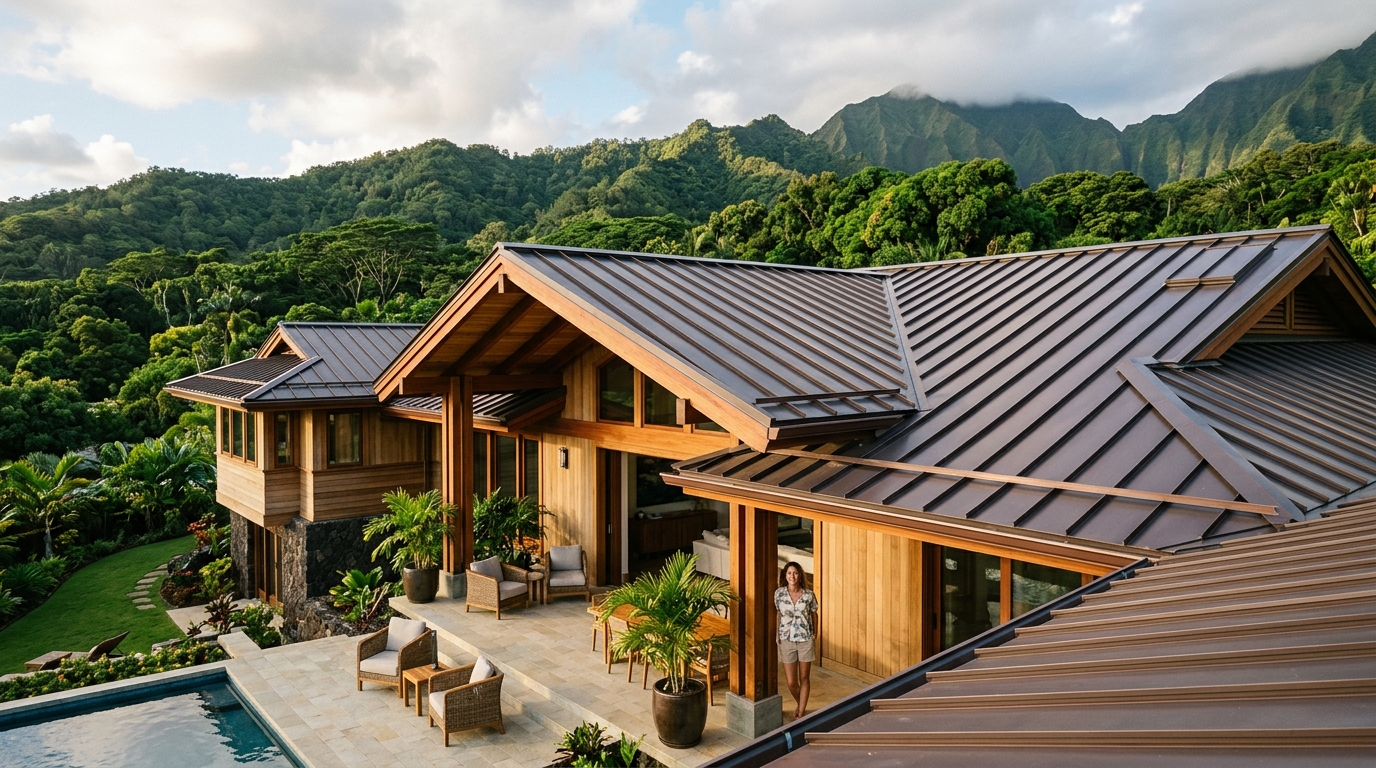
Finding the right roofing contractor in Manoa means choosing a team that understands the unique challenges of the valley—from the near-constant misty rain to the construction styles of older homes. A successful roofing project here isn’t just about shingles and nails; it’s about creating a watertight, durable system that can handle decades of moisture, protect against hurricanes, and respect the character of your home. With over 20 years of experience as a general contractor on O’ahu, our team at Warrior Construction (License BC-34373) has seen firsthand what works and what fails in Manoa’s demanding climate. The biggest mistake we see homeowners make is choosing a contractor based solely on the lowest bid, only to face leaks and structural damage a few years later because the team didn’t use the right underlayment or flashing techniques for this specific environment.
This guide is built from our on-the-ground experience replacing and repairing roofs across the valley. We’ll break down the real costs you can expect in 2026, from materials to labor and permitting. Furthermore, we’ll explain the specific timelines involved with Honolulu’s Department of Planning and Permitting (DPP) and why rushing this step is a recipe for disaster. We will cover the best materials for tropical roofing in Manoa, how to verify a contractor’s license and insurance properly, and walk through a real-world project example to make the process clear. Ultimately, you’ll learn how to hire a professional who can deliver a roof that not only looks great but provides peace of mind for the long haul.
Why Manoa Homeowners Trust Warrior Construction for Roofing Contractor
Choosing a contractor for a major project like a roof replacement in Manoa comes down to trust and expertise. Homeowners in the valley trust our team at Warrior Construction because we’re not just a roofing company; we’re a fully licensed general contractor (BC-34373). This distinction is critical. A simple roofer might just cover up a problem, but as a GC, we’re trained to identify and fix the underlying issues—like rotted fascia boards from years of gutter overflow or termite damage in the roof trusses that a less experienced eye might miss. We handle the entire project, from structural repairs to final waterproofing, ensuring a complete solution, not just a cosmetic fix.
Our experience is specifically tailored to Hawaii’s unique conditions. We’ve managed countless projects, from custom homes in Kailua to large-scale AOAO repairs in Honolulu, and we bring that depth of knowledge to every Manoa roofing job. We understand the logistics of getting materials to the island without delays and have long-standing relationships with local suppliers. This means we can often source high-quality standing seam metal or architectural shingles more reliably than out-of-state companies. For example, on a recent project near Manoa Falls, the homeowner wanted a specific color of metal roofing that was backordered for months. Because of our network, we were able to find an almost identical, high-performance alternative from a local supplier, keeping the project on schedule before the rainy season hit.
Here’s what sets our approach apart for Manoa homeowners:
- Holistic Assessment: We don’t just look at the shingles. We get in the attic to inspect for ventilation issues, check the integrity of the sheathing, and examine the fascia and soffits for signs of water damage. This comprehensive view prevents future problems.
- Manoa-Specific Material Selection: We guide you to materials proven to perform in high-moisture environments. We often recommend Kynar-coated metal roofing or high-grade architectural shingles with algae-resistant properties, which are essential for preventing the green and black streaks common in the valley.
- Transparent Process: From the initial estimate to pulling the DPP permits, we handle everything in-house. You have a single point of contact, and we provide regular updates. There are no surprises.
- Licensed and Insured: We carry comprehensive liability and workers’ compensation insurance, and our license (BC-34373) is always in good standing with the Hawaii Department of Commerce and Consumer Affairs (DCCA).[1] This protects you, your property, and our crew.
Ultimately, homeowners choose us because we treat your home like our own. We know a roof is a massive investment, and our reputation is built on doing the job right the first time, ensuring your family and home are protected for decades to come.
What Does Roofing Contractor Cost in Manoa?
In 2026, a full roof replacement in Manoa will typically cost between $15 and $35 per square foot, installed. For a standard 2,000-square-foot roof area on a single-story home, this translates to a total project cost of $30,000 to $70,000. This price includes tear-off of the old roof, disposal, new underlayment, the roofing material itself, flashing, and labor. The final cost depends heavily on the material you choose and the complexity of your roof’s structure. A simple gable roof on a home in lower Manoa will be on the lower end, while a complex roof with multiple dormers, valleys, and a steep pitch on a hillside property will be significantly more.
Let’s break down the costs for common materials we use for tropical roofing in Manoa:
- Architectural Asphalt Shingles: This is a popular and cost-effective choice. For 2026, expect to pay around $15 to $22 per square foot installed. A 2,000 sq ft roof would therefore range from $30,000 to $44,000. We only use shingles with high algae-resistance ratings (AR) for Manoa homes to combat the inevitable moss and streaking from the moisture.
- Standing Seam Metal Roofing: This is our most recommended option for Manoa’s climate due to its longevity and superior water-shedding capabilities. The cost is higher, typically $25 to $35 per square foot installed. For that same 2,000 sq ft roof, the project cost would be between $50,000 and $70,000. While the upfront investment is greater, a properly installed metal roof can last 50+ years, more than double the lifespan of shingles.
- Concrete or Clay Tile: Tile offers a classic look but comes with a high price tag and requires a structure engineered to support its weight. Costs can range from $28 to $45+ per square foot. Many older homes in Manoa may not have the framing to support a tile roof without significant structural upgrades.
Factors That Can Increase Your Roofing Cost
Several factors beyond materials can impact the final price. It’s important to have your contractor identify these during the initial inspection:
- Number of Layers to Tear Off: If your home has two or more layers of old shingles, the labor and disposal costs will increase. We recently did a roof replacement in Manoa on a home from the 1950s that had three layers of shingles. The tear-off and disposal added nearly $5,000 to the project cost.
- Roof Pitch and Complexity: A steep roof (anything over a 6/12 pitch) requires more safety equipment and slower, more careful work, increasing labor costs by 10-20%. Roofs with many valleys, dormers, or skylights require intricate flashing work, which also adds to the labor bill.
- Structural Repairs: If we uncover termite damage or wood rot in the roof sheathing, trusses, or fascia boards during tear-off, those repairs are an additional cost. We always build a contingency into our proposals for this possibility, especially on older Manoa homes.
- Permitting Fees: The cost for a residential roofing permit from the Honolulu DPP is typically between $500 and $1,500, depending on the project valuation. Our team handles this entire process.
To get a precise figure, the only solution is a detailed, on-site inspection and estimate from a qualified general contractor. Be wary of any company that gives you a price over the phone without seeing your roof firsthand.
How Long Does a Roofing Contractor Take in Manoa?
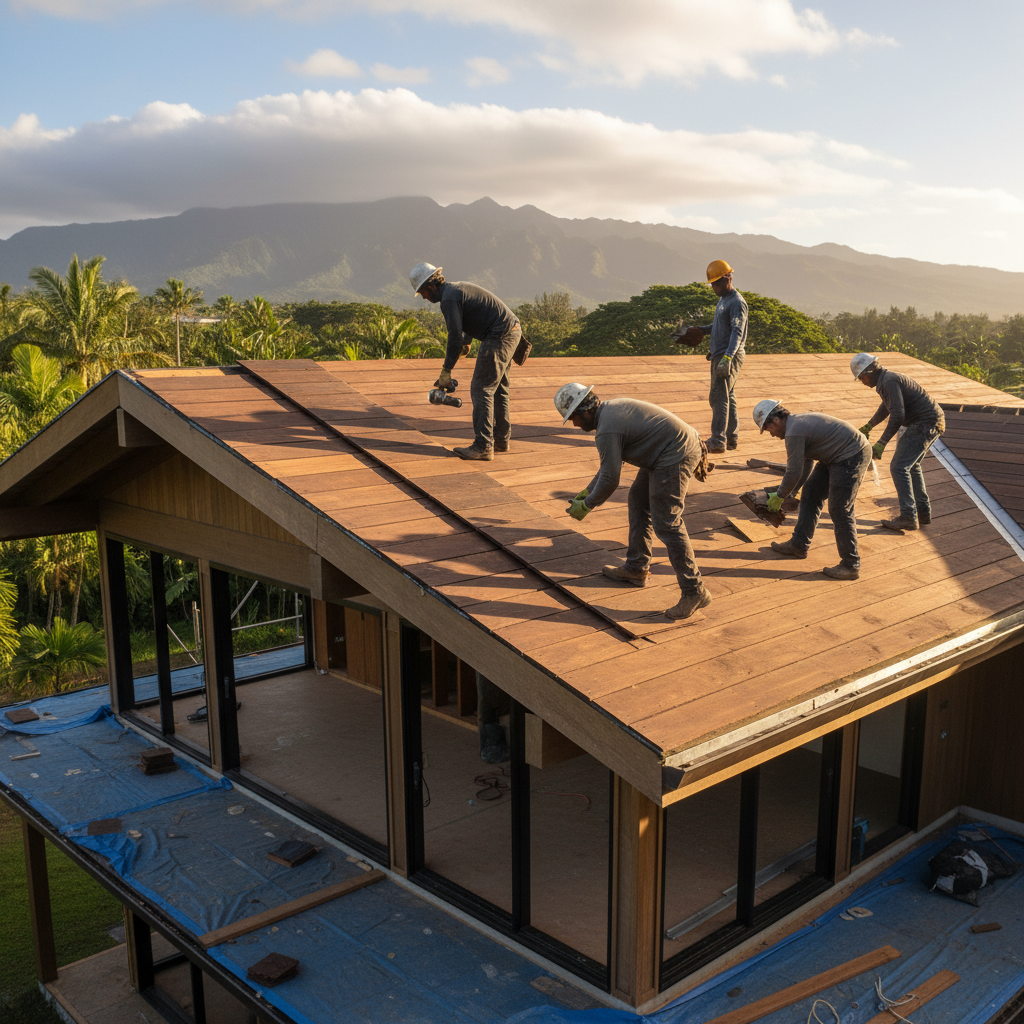
For a complete roof replacement on a typical Manoa home, the entire process from signing the contract to final inspection takes approximately 6 to 12 weeks in 2026. However, the actual on-site construction—the part where our crew is at your house—is much shorter, usually just 1 to 3 weeks. The biggest variable, by far, is the Honolulu DPP permit approval process. Homeowners are often surprised by this, but it’s the most critical and time-consuming phase before any work can begin.
Here’s a realistic timeline breakdown for a roof replacement in Manoa:
- Phase 1: Planning and Permitting (4 to 8 weeks)
- Initial Consultation & Contract (1-3 days): We meet with you, inspect the roof, discuss materials, and provide a detailed proposal.
- Plan Drafting and Submission (1 week): Our team prepares the necessary plans and documents for the permit application.
- DPP Permit Review (4-8 weeks): This is the waiting game. Once submitted, the DPP reviews the plans. In 2026, even for a straightforward roofing permit, the backlog in Honolulu means a 4-week turnaround is optimistic. We plan for 6-8 weeks to be safe. We track the application closely and respond immediately to any requests for information to keep things moving.
- Phase 2: Material Procurement (1 to 4 weeks, often concurrent with permitting)
- Material Ordering: As soon as the contract is signed, we order your chosen materials. Given Hawaii’s supply chain, it can take several weeks for specific colors of metal roofing or shingles to arrive from the mainland. We time this so materials are on-island and ready to go once the permit is issued.
- Phase 3: On-Site Construction (1 to 3 weeks)
- Material Delivery and Site Prep (1-2 days): Materials are delivered to your home. We protect your landscaping, siding, and windows.
- Tear-Off (1-3 days): We remove all old roofing materials down to the wood sheathing.
- Sheathing Inspection and Repair (1-2 days): This is when we discover any hidden damage. If repairs are needed, this can add a day or two.
- Installation of New Roof (3-7 days): We install the underlayment, flashing, and your new roofing material. This is the main event.
- Site Cleanup and Final Walk-through (1 day): We clean the entire area meticulously and walk the property with you to ensure you’re completely satisfied.
- Phase 4: Final Inspection (1 week)
- DPP Inspection: Once the work is done, we schedule the final inspection with the DPP. This typically happens within a few days of project completion.
Weather is another factor, especially in Manoa. A week of heavy rain can easily push the on-site schedule back a few days. A good contractor will watch the forecast closely and only tear off sections of the roof that they can make watertight by the end of the day. A roof repair in Manoa, like fixing a leak or replacing a small section of shingles, is much faster and often doesn’t require a permit, usually taking just 1-2 days to complete.
What Permits Do You Need for Roofing Contractor in Manoa?
For almost any full roof replacement in Manoa, you will need a building permit from the City and County of Honolulu’s Department of Planning and Permitting (DPP).[2] This is a non-negotiable step required by law. Any contractor who tells you a permit isn’t needed for a complete tear-off and reroof is cutting corners and putting you, the homeowner, at significant risk. The permit ensures that the work is done to current building codes, especially crucial for hurricane-readiness, and that it will be inspected by a city official upon completion.
The general rule is this: if you are removing the existing roofing material and replacing it, you need a permit. This is considered an alteration. If you are simply installing a second layer of shingles over an existing single layer (which we strongly advise against, especially in Manoa’s wet climate), you might not need a permit, but this is a poor long-term solution. For a simple roof repair in Manoa—like replacing a few blown-off shingles or fixing a small leak—a permit is typically not required as long as the repair area is under a certain size (usually less than one square, or 100 square feet) and you aren’t touching structural components.
The Permitting Process Explained
Navigating the DPP can be a complex process, which is why it’s essential to hire a licensed roofing contractor in Manoa who handles it for you. At Warrior Construction, we manage the entire permit lifecycle:
- Application Preparation: We complete all the necessary paperwork, which includes details about your property, the scope of work, the materials to be used, and proof of our contractor’s license (BC-34373) and insurance.
- Plan Submission: For a reroof, we submit plans that detail how the new roof will be attached, the type of underlayment, and the flashing details. This shows the DPP that we are complying with the latest building codes, including hurricane-tie requirements.
- Review and Approval: The DPP plan reviewer examines the application. This is the longest part of the process, often taking 4-8 weeks in 2026. They may have questions or require minor clarifications, which we handle promptly.
- Permit Issuance: Once approved, the permit is issued, and we can post it at the job site and begin work.
- Inspections: The DPP requires at least one final inspection after the work is complete. The inspector verifies that the roof was installed according to the approved plans and meets code standards. This is your official assurance that the job was done correctly.
Working without a permit can lead to serious consequences. The DPP can issue a stop-work order, levy heavy fines, and even require you to tear off the unpermitted new roof. Furthermore, when you go to sell your home, the lack of a finalized permit for a major renovation like a new roof will be a major red flag for buyers and lenders, potentially derailing the sale. The permit fee, typically $500 to $1,500, is a small price to pay for the peace of mind and legal protection it provides.
Manoa-Specific Considerations: Climate, Materials, Regulations
Roofing in Manoa is unlike roofing anywhere else on O’ahu. The valley has its own microclimate characterized by high humidity, frequent rainfall, and lush vegetation. A roofing system that works perfectly in dry, sunny Kapolei can fail prematurely here. As a contractor who has worked extensively in the valley, we prioritize systems designed for moisture management and longevity.
The Manoa Climate Challenge
The primary challenge is water—and lots of it. Manoa Valley receives significantly more rainfall than most of Honolulu. This constant moisture creates several specific problems:
- Moss, Algae, and Mildew: Shaded, damp surfaces are perfect breeding grounds. This is why we see so many older asphalt shingle roofs in Manoa covered in black streaks (Gloecapsa magma algae) and green moss. Moss can lift shingles and trap water, leading to rot.
- Debris Buildup: The beautiful, mature trees that give Manoa its character also shed leaves, flowers, and branches that clog gutters and pile up in roof valleys. Clogged gutters cause water to back up under the roof edge, rotting the fascia and sheathing.
- High Humidity: The humid air can lead to condensation problems in poorly ventilated attics, which can cause mold growth and saturate insulation, reducing its effectiveness.
Best Roofing Materials for Manoa
Choosing the right material is your first line of defense. Here’s what we recommend for a successful tropical roofing in Manoa project:
- Standing Seam Metal: This is the premium choice for a reason. The interlocking panels run vertically from the ridge to the eaves, leaving no horizontal seams for water to penetrate. They shed rain and debris easily. We specify panels with a Kynar 500 paint finish, which is highly resistant to fading and chalking and often includes warranties against corrosion, even in our salt-air environment.
- High-Quality Architectural Shingles: If you prefer the look of shingles, it’s critical to choose a product designed for our climate. We use shingles that have a high Algae Resistance (AR) rating, often incorporating copper granules that inhibit moss and algae growth. They are also thicker and heavier, providing better resistance to wind lift during a storm.
- Superior Underlayment: What’s underneath the roofing material is just as important. In Manoa, we always use a high-performance synthetic underlayment, which is far more water-resistant and durable than traditional felt paper. In critical areas like valleys, eaves, and around penetrations (vents, skylights), we install a self-adhering ice-and-water shield for a completely waterproof seal.
Local Regulations and Codes
Beyond the standard building codes, there are specific regulations to keep in mind:
- Hurricane Code Compliance: Since Hurricane Iniki, Hawaii building codes have been significantly strengthened. Any new roof must meet stringent wind-uplift requirements. This involves specific nailing patterns for shingles and clip systems for metal panels. Your permit and inspection process ensures this is followed.
- Bill 7 (ADU Regulations): While not directly a roofing regulation, if your roofing project is part of a larger renovation that includes an ADU (Accessory Dwelling Unit), it falls under a more complex set of rules. As a general contractor, we can navigate these integrated projects seamlessly. See our portfolio for examples of our work.
- Property Line and Setback Issues: Many Manoa properties are on smaller lots with unique setback requirements. We ensure our work, including scaffolding and material storage, respects these boundaries and minimizes disruption to your neighbors.
A successful roofing project in Manoa requires a deep understanding of these interconnected factors. It’s about building a complete system, not just laying down new shingles.
How to Choose the Right Roofing Contractor Contractor in Manoa
Hiring the right team is the single most important decision you’ll make for your roofing project. A great contractor will ensure a durable, leak-free roof, while a poor one can lead to years of expensive problems. Here is a practical checklist based on our 20+ years of experience in the Hawaii construction industry.
1. Verify Their License and Insurance
This is non-negotiable. Anyone you consider must have a valid Hawaii C-42 Roofing Contractor license or, even better, a B-General Contractor license like ours (Warrior Construction, BC-34373). You can and should verify this yourself on the Hawaii DCCA Professional & Vocational Licensing (PVL) website.[1] Also, ask for a Certificate of Insurance showing both General Liability and Workers’ Compensation coverage. If a worker gets hurt on your property and the contractor isn’t insured, you could be held liable.
2. Look for Specific Manoa Experience
Don’t just ask, “Have you worked on O’ahu?” Ask, “How many roofs have you replaced in Manoa in the last five years? Can you give me the addresses of a few so I can see your work?” A contractor familiar with the valley will understand the unique challenges of the climate, the construction style of older homes, and even the logistics of navigating the narrow streets. They’ll know which materials hold up best to the constant moisture and how to properly flash a roof against driving rain.
3. Get a Detailed, Written Proposal
A one-page estimate is a red flag. A professional proposal should be several pages long and include:
- A clear scope of work, including tear-off, sheathing inspection/replacement allowance, underlayment type, and specific roofing material (brand, model, color).
- Details on flashing, ventilation, and gutters.
- A breakdown of costs for labor, materials, and permits.
- The project timeline and payment schedule.
- Information on their warranty for both materials and workmanship.
This document protects both you and the contractor and ensures everyone is on the same page.
4. Don’t Let Price Be the Only Factor
It’s wise to get 2-3 bids, but the lowest price is often a warning sign. A significantly lower bid might mean the contractor is using substandard materials, is uninsured, is not pulling a permit, or is using an inexperienced crew. I remember a homeowner in Manoa who went with a low-ball offer, and a year later we were called in to fix leaks around the chimney. The first contractor had reused the old, failing flashing and just sealed it with tar. The proper repair cost them thousands more than they had “saved” on the initial job.
5. Check Reviews and References
Look for reviews online, but also ask the contractor for references from recent clients, preferably in your area. Call those references and ask about their experience. Was the crew professional? Did they clean up the site daily? Did the project stay on budget and on schedule? How did they handle unexpected issues?
Choosing your roofing contractor in Manoa is about finding a long-term partner who will stand behind their work. Taking the time to do this research upfront will save you immense stress and money down the road.
Real Manoa Roofing Contractor Project Example
To make this process more concrete, let’s walk through a typical project our team recently completed in upper Manoa. This provides a real-world look at the costs, timeline, and decisions involved.
The Property: A 2,400-square-foot, single-story home built in the late 1960s on an upslope lot off Manoa Road. The existing roof was the original asphalt shingle, now covered in moss and actively leaking in two places.
The Problem: The homeowners were experiencing water stains on their ceiling after heavy rains. Our initial inspection confirmed the shingles were well past their service life. We also noted the gutters were clogged with decomposing leaves from an overhanging lychee tree, causing water to back up against the fascia boards, which showed signs of wood rot. An attic inspection revealed inadequate ventilation, which was contributing to high humidity and mildew growth on the underside of the roof deck.
Our Proposed Solution:
- Full Tear-Off: Complete removal of the old shingles and felt paper down to the original plywood sheathing.
- Structural Repairs: A budget allowance to replace any rotted sheathing and the damaged fascia boards along the back of the house.
- Ventilation Upgrade: Installation of a new continuous ridge vent and additional soffit vents to create proper airflow through the attic space, reducing heat and moisture buildup.
- New Roofing System: We recommended a 24-gauge standing seam metal roof with a Kynar 500 finish for maximum longevity and water-shedding performance in Manoa’s climate. The homeowners chose a dark bronze color to complement their home’s exterior. The system included high-temperature ice-and-water shield underlayment at all eaves, valleys, and penetrations.
- New Gutters: Installation of new, seamless aluminum gutters with high-capacity downspouts to handle heavy rainfall.
Project Breakdown:
- Total Cost: $78,500 (This included the roof, structural repairs, ventilation upgrade, and new gutters).
- Permitting Timeline: The Honolulu DPP permit took 7 weeks from submission to approval.
- On-Site Construction Timeline: 2.5 weeks. Day 1-2 for tear-off, Day 3-4 for sheathing and fascia repairs, Day 5-11 for metal roof installation, Day 12 for gutter installation, and Day 13 for final cleanup and inspection.
The Outcome: The homeowners now have a beautiful, durable roof that is engineered to handle Manoa’s weather for the next 50+ years. The improved attic ventilation has already made the home feel cooler and less humid inside. By addressing the root causes—the old material, the poor ventilation, and the failing gutters—we provided a comprehensive solution, not just a simple roof replacement in Manoa. This is the difference a general contractor’s perspective brings to a roofing project.
What this means for Hawaii homeowners
For a homeowner in Manoa, replacing a roof is one of the most significant investments you’ll make in protecting your property. The key takeaway is that you’re not just buying shingles or metal panels; you’re investing in a complete system that must be tailored to one of the most demanding microclimates in Hawaii. The constant rain, high humidity, and lush vegetation mean that shortcuts or substandard materials will fail, guaranteed. It’s not a matter of if, but when.
Here are your actionable steps:
- Prioritize Longevity Over Upfront Cost: A standing seam metal roof might cost 50-75% more upfront than asphalt shingles, but it will likely last three times as long and require far less maintenance. In Manoa, the long-term value of metal is almost always the smarter financial decision.
- Insist on a GC’s Perspective: Hire a licensed General Contractor, not just a roofer. A GC will properly assess and repair underlying issues like rotted fascia, termite damage, or poor ventilation, which a simple roofer might just cover up. This holistic approach is critical for older Manoa homes.
- Budget for the Permit Timeline: Don’t plan to start your roofing project next week. In 2026, you must factor in a 1-2 month wait for DPP permit approval. A reputable contractor will not start work without a permit in hand. Plan accordingly, ideally scheduling the work for the drier summer months.
- Focus on the Underlayment: Ask your contractor what they plan to put *under* the roof. Insist on a high-quality synthetic underlayment and a self-adhering ice-and-water shield in all valleys and eaves. This secondary water barrier is your last line of defense and is absolutely essential in Manoa.
Your roof is the single most important component protecting your home from the elements. Making the right choices in materials and, more importantly, the right contractor, will provide decades of security and peace of mind.
Frequently Asked Questions About Roofing Contractor in Manoa
How much does a roof replacement cost in Manoa in 2026?
A full roof replacement in Manoa typically costs between $15 and $35 per square foot. For a 2,000 sq. ft. roof, this comes to $30,000 to $44,000 for architectural shingles or $50,000 to $70,000 for a standing seam metal roof. Costs can increase with a steep roof pitch, complex design, or the discovery of structural damage.
Do I need a permit for a roof repair in Manoa?
For a minor roof repair in Manoa, like replacing a few shingles over a small area (less than 100 sq. ft.), you generally do not need a permit. However, for any full replacement (tear-off and reroof), a building permit from the Honolulu DPP is absolutely required by law. A licensed contractor will handle this process for you.
What is the best type of roof for Manoa’s rainy climate?
Standing seam metal roofing is widely considered the best choice for Manoa. Its vertical panels and concealed fasteners offer superior protection against heavy rain and prevent leaks. Additionally, high-quality architectural shingles with an Algae Resistance (AR) rating are a good, more budget-friendly option to combat the moss and black streaks common in the valley.
How long does it take to replace a roof in Manoa?
The entire process takes 6-12 weeks. This includes 4-8 weeks for the Honolulu DPP to approve the permit, 1-4 weeks for materials to ship to Hawaii, and 1-3 weeks for the actual on-site tear-off and installation. The work at your home is the shortest part of the timeline.
How do I know if I need a roof repair or a full replacement?
If you have an isolated leak, a few missing shingles, or damage to a small area, a repair may be sufficient. However, if your roof is over 20 years old, has widespread granule loss on shingles, extensive moss growth, or multiple leaks, a full replacement is usually the most cost-effective long-term solution.
What is that black streaking on my Manoa roof?
Those black streaks are a type of algae called Gloeocapsa magma. It thrives in damp, humid environments like Manoa Valley. While mostly a cosmetic issue, it can shorten the life of your shingles over time. Modern architectural shingles with copper granules (AR-rated) are designed to prevent this growth.
Should I be concerned about hurricane code for my new roof?
Absolutely. All new roofs on O’ahu must comply with stringent hurricane codes, which dictate specific nailing patterns, fastener types, and uplift resistance. The DPP permit and inspection process ensures your new roof meets these critical safety standards. Hiring a licensed, reputable contractor guarantees this will be done correctly.
Protect Your Manoa Home with an Expertly Built Roof
A new roof is a critical investment in your home’s safety and value. Don’t leave it to chance. At Warrior Construction, we bring over two decades of general contracting experience to every roofing project, ensuring that not only the surface is perfect, but the underlying structure is sound. Our team understands the unique demands of Manoa’s climate and builds roofing systems designed to last.
If you’re ready for a durable, watertight roofing solution from a team you can trust, learn more about our Exterior Envelope & Waterproofing services. You can also request a free, no-obligation estimate to get started today.