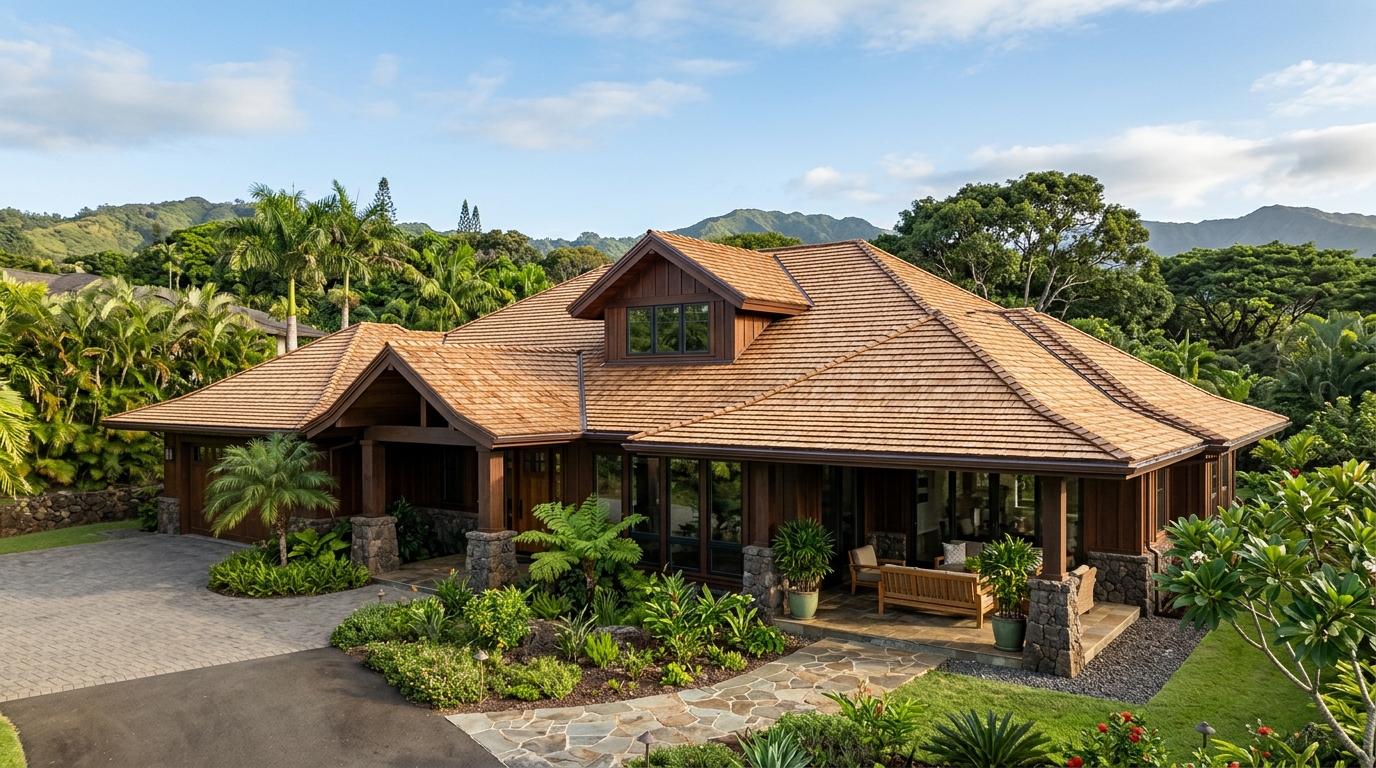
Choosing a roofing contractor in Mililani means finding a team that understands more than just shingles and nails. It requires deep knowledge of Central O’ahu’s specific climate—from the misty mauka rains to the intense sun—and the building codes designed to protect us from hurricanes. A roof replacement is one of the most significant investments you’ll make in your home, and here on the island, doing it right the first time is everything. At Warrior Construction, we’ve spent over two decades protecting O’ahu homes, and we know that a Mililani roof has to perform under unique conditions that mainland contractors simply don’t face.
The right contractor doesn’t just give you the lowest bid; they provide a comprehensive solution that accounts for proper ventilation to fight humidity, hurricane-rated materials that stand up to high winds, and the logistics of getting quality materials to the island without endless delays. This guide will walk you through the critical factors every Mililani homeowner needs to consider in 2026. We’ll cover realistic costs, what to expect with Honolulu’s permitting process, the best materials for our environment, and how to spot a truly qualified, licensed professional. Getting this decision right protects your family and your property value for decades to come.
Why Mililani Homeowners Trust Warrior Construction for Roofing Contractor
When you’re looking for a roofing contractor, you’re not just buying a product; you’re hiring a partner to protect your biggest asset. Here in Mililani, from the older homes in Mililani Town to the newer developments in Mauka, we’ve seen firsthand what happens when roofing projects are handled by off-island companies or inexperienced crews. The results are often leaks, premature aging, and code violations. Our team at Warrior Construction brings a different level of experience and commitment to every job, which is why your neighbors continue to trust us.
First and foremost, we are a fully licensed and insured Hawaii General Contractor (License BC-34373). This is more than just a piece of paper. A general contractor’s license means we understand the entire structure of your home, not just the roof. On a recent project in Mililani, we began a standard re-roof and discovered significant termite damage in the roof trusses and top plates of the walls. A simple roofing-only company would have had to stop work and tell the homeowner to find another contractor to fix the structure. For our client, it was a seamless process. Our in-house carpentry crew performed the structural repairs correctly, we coordinated the necessary inspections with the Department of Planning and Permitting (DPP), and then our roofing team completed the new roof. This integrated approach saves homeowners time, money, and massive headaches.
Furthermore, our two decades on O’ahu mean we have established, long-term relationships with local suppliers. This is a huge deal in Hawaii. We know who has the best inventory of hurricane-rated architectural shingles and who can get a special order of standing seam metal from the mainland to Honolulu Harbor the fastest. These relationships help us mitigate the shipping delays and supply chain issues that can stall a project for weeks. We build realistic timelines that account for island logistics, so you’re not left with a blue tarp on your roof longer than necessary. Our proposals are built on real-world, current-day costs for materials and shipping, not wishful thinking. We believe in transparency from the start, ensuring there are no surprises down the line.
What Does Roofing Contractor Cost in Mililani?
Let’s talk numbers. The cost of a full roof replacement in Mililani in 2026 depends primarily on three things: the size of your roof, the material you choose, and the condition of the underlying structure. You can’t use mainland cost estimators; they don’t account for our shipping costs, higher labor rates, and the specific materials required by our building codes. Our team always provides a detailed, line-item estimate, but here’s a realistic breakdown of what to budget for.
For a typical single-story, 1,800-square-foot Mililani home, here are the all-in costs you can expect, including tear-off of the old roof, labor, materials, and disposal fees:
- Architectural Asphalt Shingles: This is the most common choice in Mililani. For a quality, hurricane-rated shingle like GAF Timberline HDZ, you should budget between $13 and $16 per square foot. For our 1,800 sq. ft. example home, this works out to a total project cost of roughly $23,400 to $28,800.
- Standing Seam Metal Roofing: This is a premium option, excellent for durability, longevity, and solar panel installation. It performs exceptionally well in our rainy climate. The cost is significantly higher, running between $24 and $30 per square foot. That same 1,800 sq. ft. roof would cost between $43,200 and $54,000.
- Concrete or Clay Tile: While less common in Mililani than in areas like Hawaii Kai, tile is an option. It’s very heavy and often requires structural reinforcement. Costs can range from $28 to $40+ per square foot, putting the project well over $50,000 to $72,000.
Now, what about the hidden costs? The biggest variable we see on older Mililani homes is dry rot or termite damage to the plywood sheathing and rafters underneath the old shingles. We always include a contingency clause in our contracts for this. Replacing a 4×8 sheet of plywood, including labor, can cost $120-$150. If 10-15 sheets need replacement, that adds $1,200-$2,250 to the project. A small `roof repair mililani` for a simple leak might only be $500-$1,500, but once the damage is widespread, a full `roof replacement mililani` is the only sound financial decision.
How Long Does a Roofing Contractor Take in Mililani?
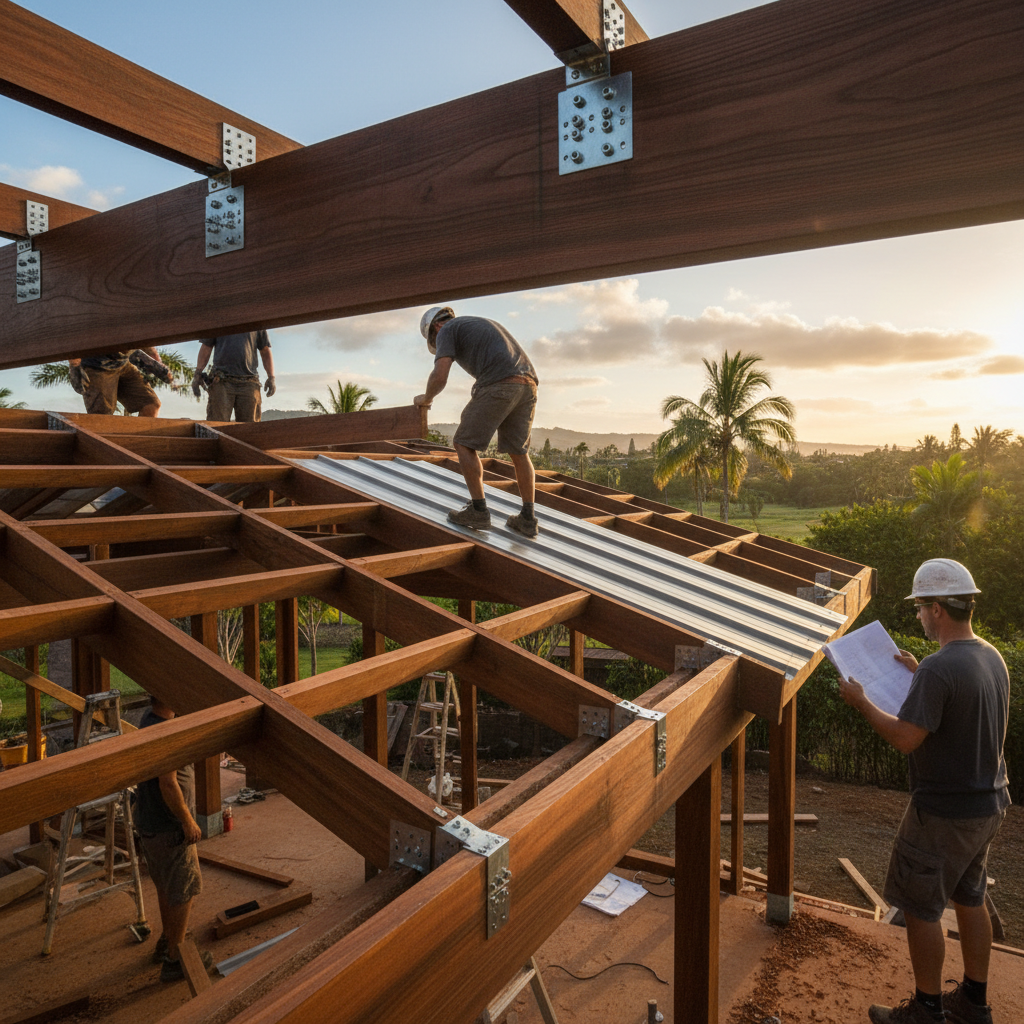
The actual time our crew spends on your roof is surprisingly short. The part that requires patience is everything that happens before we drive the first nail. Homeowners are often surprised by the upfront logistical work required here in Hawaii. A typical roof replacement project in Mililani has several distinct phases, and understanding them helps set realistic expectations for the 2026 timeline.
Here’s a step-by-step breakdown of the schedule for a standard residential project:
- Consultation, Measurement, and Contract (3-5 days): Our process starts with a site visit. We get on your roof, take precise measurements, inspect for problem areas, and discuss material options with you. We then prepare a detailed proposal. Once you sign the contract, we get the ball rolling.
- Material Ordering and Island Shipping (3-6 weeks): This is the biggest variable and the one mainland homeowners don’t have. Almost all roofing materials are shipped to Hawaii. Even if a local supplier has stock, it might not be enough for your entire project or in the color you want. We have to order it, have it put on a container in Long Beach, and wait for it to cross the Pacific and clear the port in Honolulu. We manage this entire process, but the ocean is the boss. We typically tell clients to expect a 4-week wait for materials to be on-island and ready.
- Permitting with Honolulu DPP (If Required) (4-8 weeks): For a simple re-roof (swapping asphalt shingles for new asphalt shingles), a permit isn’t always required. However, if we’re changing materials (shingle to metal) or if we need to do any structural repairs like replacing rafters, a building permit from the Department of Planning and Permitting (DPP) is mandatory. The DPP review process can take anywhere from a month to two months, sometimes longer. We handle all the paperwork and submissions.
- On-Site Work (4-7 days): Once materials are here and permits are approved, our team works quickly and efficiently.
- Day 1: Material delivery and site prep. We protect your landscaping and property.
- Day 1-2: Tear-off of the old roof and inspection of the underlying sheathing.
- Day 2-3: Repair any damaged wood and prepare the surface.
- Day 3-5: Installation of underlayment, flashing, and the new roofing material.
- Day 5-7: Final detailing, ridge caps, ventilation, and thorough cleanup.
- Final Inspections and Project Closeout (1 week): If a permit was pulled, we coordinate with the DPP inspector for a final sign-off.
All told, from the day you sign the contract to the day you have a new, fully installed roof, a realistic timeline is 10 to 16 weeks. The key is to partner with a contractor who understands and can navigate the unique logistical and bureaucratic hurdles of building in Hawaii.
What Permits Do You Need for Roofing Contractor in Mililani?
Navigating the permitting process with the City and County of Honolulu Department of Planning and Permitting (DPP) can be intimidating for homeowners, but for an experienced contractor, it’s a standard part of the job. The rules are in place to ensure your roof is safe, up to code, and properly installed, which is especially important given our hurricane risk. Knowing when you need a permit for your Mililani roofing project is crucial.
The general rule of thumb from the DPP is based on the scope of work.[1] Here’s how it typically breaks down for roofing:
- Permit NOT Required: For a direct, like-for-like `roof repair mililani` or replacement. If you have asphalt shingles and you are replacing them with new asphalt shingles, and there is no structural damage to the underlying wood, you generally do not need a building permit. This covers the majority of simple re-roofing projects. The exemption applies as long as you’re not altering the roof framing.
- Permit IS Required: A building permit is absolutely mandatory if your project involves any of the following:
- Structural Repairs: This is the most common trigger. If we tear off your old roof and find that termites or water damage have compromised the plywood sheathing, the trusses, or the rafters, those structural elements must be repaired. Any repair to load-bearing components of the roof structure requires a permit. On a home in Mililani Mauka last year, we found the entire ridge beam had been hollowed out by termites; that definitely required a permit.
- Changing Roofing Material Weight: If you are switching from a lightweight material like asphalt shingles to a much heavier material like concrete or clay tile, a permit is needed. The DPP needs to ensure your home’s existing structure can handle the additional load. This may require a structural engineer’s assessment.
- Altering the Roofline: If you are changing the pitch of your roof, adding dormers, or making any other changes to the physical shape and structure of the roof, a permit and detailed architectural plans are required.
As your general contractor, Warrior Construction manages the entire permitting process. We prepare the necessary drawings and forms, submit the application to the DPP, respond to any comments from the plan reviewers, and schedule all required inspections. Trying to do this yourself is a recipe for frustration and delays. By letting a professional handle it, you ensure the project is compliant with all current building codes, including the latest hurricane-wind-resistance requirements. This official record from the DPP is also valuable documentation when you eventually sell your home.

Mililani-Specific Considerations: Climate, Materials, Regulations
A roof in Mililani faces different challenges than one in Hawaii Kai or on the North Shore. Being in Central O’ahu gives us a unique microclimate—less direct salt spray than the coast, but more humidity and consistent rainfall, especially in Mililani Mauka. A successful roofing project here means choosing the right materials and design for this specific environment.
Climate and Ventilation
Mililani’s humidity is a major factor. Without proper ventilation, that humid air gets trapped in your attic. In the heat of the day, it can bake your shingles from below, drastically shortening their lifespan. Worse, it creates a perfect breeding ground for mold and mildew, which can damage the roof structure and affect your home’s air quality. We always conduct a full ventilation assessment. Many older Mililani homes are under-ventilated. We often recommend adding ridge vents, soffit vents, or even solar-powered attic fans to create a continuous flow of air that pulls heat and moisture out. This simple step can extend the life of your new roof by 5-10 years and lower your cooling bills.
Best Roofing Materials for Mililani
- Architectural Shingles: The workhorse of Mililani. They offer the best balance of cost, durability, and aesthetics. We only use shingles with a 130-mph wind rating and features like Algae Resistance (AR), which is critical for preventing the dark streaks you see on older roofs caused by our damp climate. Brands like GAF and CertainTeed offer excellent options for our `tropical roofing mililani` needs.
- Standing Seam Metal: An increasingly popular choice, especially for homeowners installing solar. Metal roofs have a lifespan of 50+ years, are highly reflective to keep the home cooler, and provide an excellent, secure platform for mounting photovoltaic panels without making a single penetration in the roof itself. The interlocking panels are also incredibly resistant to wind uplift during a hurricane.
- Solar Tiles: While still a premium product in 2026, integrated solar tiles are becoming more viable. They offer a sleek look but come at a higher cost and require specialized installation. We can help you weigh the long-term energy savings against the upfront investment.
HOA and Community Regulations
Many neighborhoods in Mililani are part of a homeowners association (HOA). Before you fall in love with a specific color or material, it is absolutely essential to check your HOA’s covenants and restrictions. Most HOAs have pre-approved color palettes and may have rules about the type of roofing material you can use. As your contractor, we ask for these documents upfront to ensure our proposal is compliant. There’s nothing worse than ordering 4 tons of shingles only to find out the color isn’t allowed. We help you navigate this approval process to ensure a smooth project from start to finish.
How to Choose the Right Roofing Contractor Contractor in Mililani
Hiring the right team is the most important decision you’ll make for your roofing project. A great roof installed by a bad contractor will fail, while a standard roof installed by a master craftsman will last for decades. In Hawaii, where our homes take a beating from the sun and storms, the quality of the installation is paramount. Here are the non-negotiable checks you must perform before signing any contract.
- Verify Their License – The Right Way: Don’t just take their word for it. Every legitimate contractor in Hawaii must have a license issued by the Department of Commerce and Consumer Affairs (DCCA). You can verify any license instantly on the Professional & Vocational Licensing (PVL) search website.[2] Look for a C-42 specialty license for roofing, or even better, a B-General Contractor license like ours (Warrior Construction, BC-34373). A “B” license means the contractor is qualified to handle any structural issues they might uncover, which is a huge advantage. Ensure the license is “Active” and in “Good Standing.”
- Demand Proof of Insurance: A valid license is just the first step. The contractor must carry two key types of insurance. Ask to see the actual certificates:
- General Liability Insurance: This protects your property from damage. If a worker accidentally puts a ladder through your window or damages your landscaping, this policy covers it. A minimum of $1 million in coverage is standard.
- Workers’ Compensation Insurance: This is critical. It protects you from liability if a worker gets injured on your property. Without it, you could be held financially responsible for their medical bills. Never hire a contractor who cannot provide proof of workers’ comp.
- Analyze the Written Estimate: A professional estimate is more than a number on a napkin. It should be a detailed, multi-page document that clearly specifies:
- The exact brand, type, and color of materials being used (e.g., “GAF Timberline HDZ Architectural Shingles, Color: Weathered Wood”).
- Scope of work, including tear-off of old layers, sheathing inspection, installation of new underlayment, flashing, and ventilation.
- The cost of labor, materials, and permit fees broken down separately.
- Procedures for handling unforeseen issues, like discovering rotten wood, and the cost for those repairs (e.g., “cost per sheet of plywood replaced”).
- Cleanup procedures and warranty information (both for materials and workmanship).
- Ask for Local References: Any reputable contractor should be proud to share the addresses of recent projects they’ve completed in your area. Don’t just call the references; drive by the homes. Look at the details. Are the lines straight? Is the flashing around chimneys and vents neat and clean? Does the overall job look professional? Seeing their work in person is the best way to judge the quality of their craftsmanship.
Taking these steps separates the true professionals from the rest. It’s a bit of homework upfront, but it ensures your significant investment is protected by a qualified, insured, and reputable local company.
Real Mililani Roofing Contractor Project Example
To make this all concrete, let’s walk through a project our team recently completed in 2026 for a family in Mililani Town. This case study highlights the common issues and the value of a comprehensive approach.
The Homeowner & The Problem: The Tanaka family lives in a single-story home built in the late 1980s. Their original 3-tab asphalt shingle roof was well past its lifespan. They had a persistent leak in their living room that two different handymen had failed to fix, and their homeowner’s insurance company had warned them they would be dropped if the roof wasn’t replaced.
Our Assessment: During our initial inspection, we identified widespread granule loss on the shingles, a sign of advanced age. The leak was originating from improperly installed flashing around a plumbing vent stack. Using an infrared camera, we also detected a large area of moisture saturation in the plywood sheathing around the leak, indicating probable wood rot that wouldn’t be visible until tear-off.
The Proposed Solution: We recommended a full `roof replacement mililani` with CertainTeed Landmark PRO architectural shingles for their superior wind rating and algae resistance. Our detailed proposal included:
- Complete tear-off of the old shingle layer.
- A line-item allowance for replacing up to 10 sheets of 1/2″ CDX plywood sheathing.
- Installation of synthetic underlayment and new metal drip edge.
- Replacement of all pipe boot flashing and installation of a new ridge vent system to improve attic ventilation.
- The full cost breakdown and a project timeline.
The Process & Outcome: Upon tear-off, we confirmed our suspicions. We needed to replace eight sheets of water-damaged plywood. Because this is a structural repair, we filed for a building permit with the DPP. While the permit was in review (which took about five weeks), we had the materials ordered and shipped to our yard. Once the permit was issued and materials were on site, our crew completed the entire on-site job—tear-off, wood replacement, and new roof installation—in just six days. The DPP inspector signed off on the final inspection without issue. The Tanakas now have a beautiful, watertight roof that is up to current hurricane code, and their insurance company is satisfied. The total project cost, including the wood repairs and permit fees, was $26,800, and the total duration from contract signing to completion was just under 12 weeks.
What this means for Hawaii homeowners
For a homeowner in Mililani, replacing a roof in 2026 is about more than just keeping the rain out. It’s about navigating a unique set of local challenges to make a smart, long-term investment. The sun, rain, and hurricane risk we face on O’ahu demand a higher standard of work and materials than on the mainland. Cutting corners is not an option when your family’s safety is on the line.
Here are the key takeaways you should focus on:
- Budget for Reality: Understand that Hawaii’s material and labor costs are higher. A quality roof replacement will likely cost between $20,000 and $35,000 for an average-sized home. Be wary of any bid that comes in significantly lower; it likely means they are using inferior materials, are uninsured, or don’t understand their true costs.
- Patience is Required: Your project will not start next week. Between material shipping from the mainland and potential DPP permitting, a realistic timeline from signing a contract to project completion is 2-4 months. Plan accordingly and choose a contractor who is transparent about these island-specific delays.
- Hire a Licensed General Contractor: Don’t just hire a “roofer.” On older homes, it’s very common to find hidden structural damage. A licensed General Contractor (like Warrior Construction, BC-34373) is qualified to perform these repairs legally and correctly, preventing your project from stalling.
- Prioritize Hurricane Protection: Ensure your contract specifies the use of materials and installation techniques that meet or exceed Honolulu’s building code for high-wind areas. This includes the wind rating of the shingles and the specific nailing pattern required. This is your home’s first line of defense in a storm.
Making the right choice means partnering with a contractor who lives here, understands these challenges intimately, and has a proven track record of protecting Hawaii homes. Your roof is a system, and every part of it—from ventilation to flashing to the shingles themselves—has to work together to handle our unique Mililani climate.
Frequently Asked Questions About Roofing Contractor in Mililani
Can I just patch my roof instead of replacing it?
A `roof repair mililani` is a good option for isolated damage, like a few shingles blown off or a leak around a single vent pipe on an otherwise healthy roof. However, if your roof is over 20 years old, has widespread granule loss, or multiple leak spots, patching is just a temporary, costly fix. A full replacement is the more economical and safer solution in the long run.
How much does a small roof repair cost in Mililani?
For a simple, non-emergency repair in 2026, such as replacing a dozen blown-off shingles or re-sealing a leaky flashing, you can expect to pay between $600 and $1,800. The cost depends on the steepness of your roof, the accessibility of the damaged area, and the type of materials required. More complex repairs involving structural wood could cost more.
Does my Mililani homeowner’s insurance cover a new roof?
Typically, homeowner’s insurance covers roof replacement only if it’s damaged by a specific, covered event, like a hurricane, a fire, or a fallen tree. It does not cover replacement due to old age or lack of maintenance. We can provide all the necessary documentation to help you with your claim if the damage is from a covered peril.
What’s the best roofing material for solar panels in Hawaii?
Standing seam metal roofing is widely considered the best choice for solar installations. Solar panels can be clamped directly to the standing seams without creating any penetrations in the roof, eliminating potential leak points. A metal roof’s 50+ year lifespan also ensures it will outlast the solar panels themselves, so you won’t have to remove a costly solar array to re-roof in 20 years.
How do I know if my contractor is properly licensed in Hawaii?
The best way is to use the public license search on the Hawaii DCCA Professional & Vocational Licensing (PVL) website.[2] You can search by company name or license number. Be sure the license status is “Active” and check for any complaints. Our license, for example, is Warrior Construction, BC-34373.
Do I need a permit for a simple re-roof in Mililani?
Generally, no. According to the Honolulu DPP, if you are replacing existing roofing with the same type of material (e.g., asphalt shingle for asphalt shingle) and there are no structural repairs, a permit is not required. However, a permit is always needed if you change material types to something heavier or if any plywood sheathing or rafters must be replaced.
Are metal roofs too loud during heavy Mililani rain?
This is a common myth based on old metal roofs on barns. Modern residential standing seam metal roofs are installed over a solid plywood deck and high-quality synthetic underlayment. Combined with your attic insulation, the sound of rain on a new metal roof is often quieter than the sound on an old shingle roof. Most homeowners report hearing a gentle, pleasing patter, not a loud drumming noise.
Protect Your Mililani Home with an Expert Team
A new roof is a major investment in your home’s safety and value. Don’t leave it to chance. The team at Warrior Construction has the local experience, technical skill, and logistical know-how to deliver a roof that will stand up to Mililani’s unique climate for decades. We handle everything from material selection and shipping to permitting and flawless installation.
If you’re ready to discuss your roofing project with a licensed, experienced, and trusted local contractor, we’re here to help. Learn more about our home remodeling and renovation services or contact us today to schedule a free, no-obligation estimate.