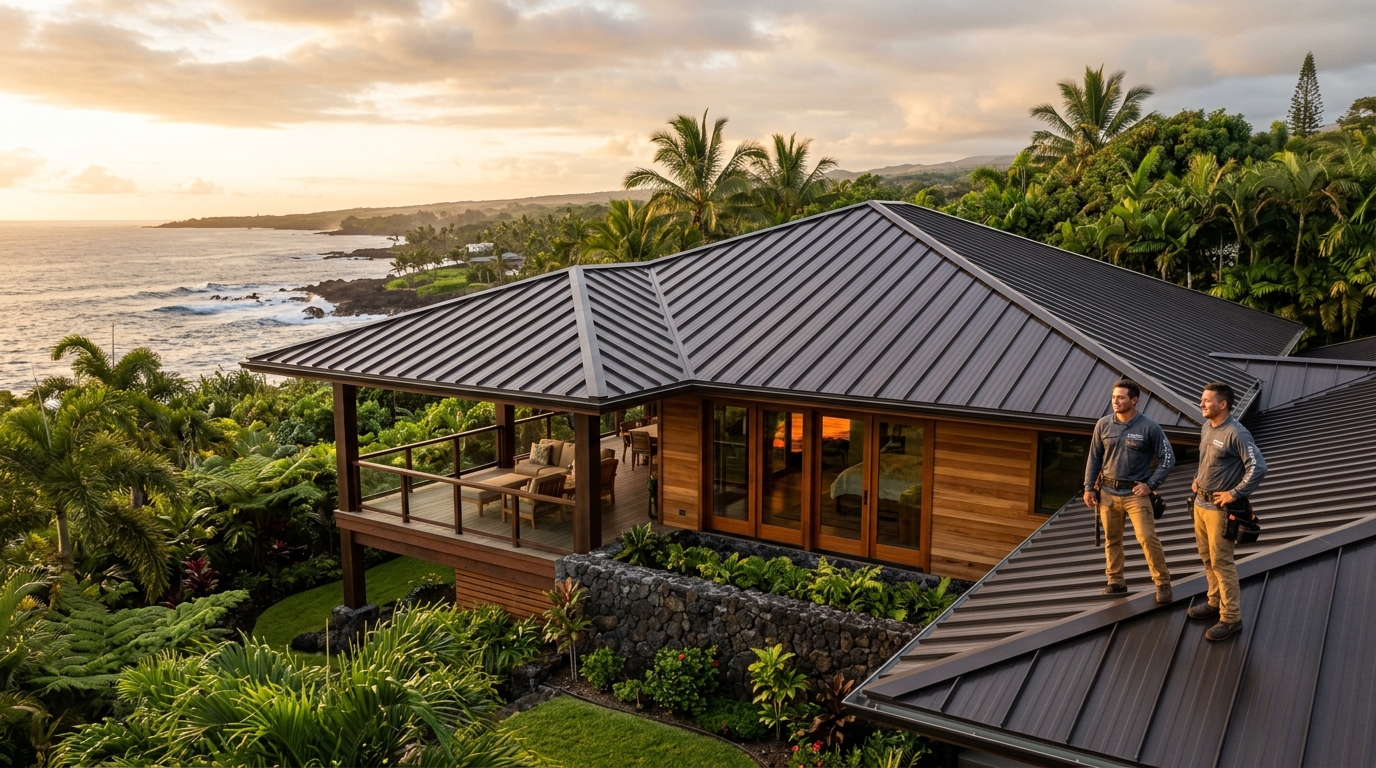
When you’re looking for a roofing contractor in Pahoa, you’re not just hiring someone to nail down some shingles. You’re entrusting them with the single most important shield your home has against the unique and relentless weather of the Puna district. Hiring a local, licensed contractor who truly understands the challenges of our environment—from over 120 inches of annual rainfall to corrosive VOG and hurricane-force winds—is the most critical decision you’ll make for the longevity and safety of your property. At Warrior Construction, we’ve spent over two decades building and repairing homes across Hawai’i, and we know firsthand that a Pahoa roof is a different beast entirely compared to one in Kapolei or even Kona.
The difference between a roof that lasts 30 years and one that fails in under 10 often comes down to local knowledge. It’s about knowing which specific underlayment can handle the sheer volume of water we get, why stainless steel fasteners are non-negotiable, and how to properly ventilate an attic to fight the inevitable moisture and humidity. A contractor from off-island simply won’t have the calluses and hard-earned lessons that come from working day-in and day-out in East Hawai’i’s climate. They might not account for the added cost and lead time of shipping materials to Hilo, or understand the specific nuances of permitting with the County of Hawai’i. This guide breaks down the essential reasons why hiring a seasoned, local team is the only way to go for your Pahoa roofing project, covering everything from real-world costs and timelines to material selection that can withstand our tropical environment.
Why Pahoa Homeowners Trust Warrior Construction for Roofing Contractor
Choosing a contractor for your Pahoa home is a decision built on trust, and that trust has to be earned. Here on the Big Island, a contractor’s reputation is everything. At Warrior Construction, our BC-34373 license isn’t just a number on a truck; it represents years of dedicated work, a deep understanding of Hawai’i’s building codes, and a commitment to our clients. We live here, our kids go to school here, and we understand that a quality roof is fundamental to protecting a family’s biggest investment.
Our team specializes in building systems designed for Hawai’i’s specific challenges. We’re not just a roofing company; we are a full-service general contractor. This gives us a huge advantage because we see the house as a whole system. A leaking roof in Pahoa is rarely just about the shingles. On a recent project in Hawaiian Paradise Park, a homeowner called us about a persistent leak that two other roofers couldn’t solve. We quickly identified the issue wasn’t the metal panels themselves, but improperly installed flashing around a skylight combined with inadequate attic ventilation. The trapped, humid air was causing condensation to form on the underside of the roof deck, leading to rot that mimicked a leak. A specialized roofer might miss that. A general contractor who understands building science in a tropical climate nails the diagnosis every time.
Furthermore, we have the logistical network to manage projects efficiently on the neighbor islands. Sourcing and shipping high-quality roofing materials to Pahoa isn’t as simple as a trip to a big-box store. We have established relationships with suppliers on Oahu and the mainland, allowing us to accurately forecast costs and timelines, including the inter-island barge schedule. This prevents the kind of costly delays that can leave your home exposed to the elements. When you work with our team, you’re getting decades of on-the-ground experience specifically tailored to the Big Island.
What Does Roofing Contractor Cost in Pahoa?
Let’s get right to the numbers, because a budget is reality. In 2026, the cost for a professional roof replacement in the Pahoa area is driven by materials, labor, and the sheer logistics of working on a neighbor island. Vague estimates don’t help you plan, so here’s a realistic breakdown based on a standard 1,800-square-foot, single-story home.
The biggest factor is your choice of material. Here’s how it typically plays out in Puna:
- Architectural Asphalt Shingles: This is a common mid-grade option. It looks better and lasts longer than old-school 3-tab shingles. For a full tear-off and replacement, you’re looking at roughly $12 to $16 per square foot installed. For our 1,800 sq. ft. example home, this comes out to approximately $21,600 to $28,800.
- Standing Seam Metal Roofing (24-Gauge): This is the superior choice for Pahoa’s climate and what we recommend most often. It’s incredibly durable against rain and wind. The upfront cost is higher, running from $20 to $28 per square foot installed. That puts the total for the same home between $36,000 and $50,400. While it’s a bigger investment, a properly installed metal roof can last 50+ years, while shingles might need replacing in 15-20 years.
- Corrugated Metal Roofing: A more budget-friendly metal option, but with exposed fasteners that can be a weak point for leaks over time if not installed perfectly. Costs are typically in the range of $15 to $20 per square foot installed, totaling $27,000 to $36,000.
What’s included in these prices? The total cost of a Pahoa roofing project is more than just materials:
- Materials (~40%): This includes the shingles or metal panels, high-quality synthetic underlayment (critical for our rain), ice-and-water shield for valleys and eaves, flashing, fasteners, and ridge caps. Remember to factor in a 15-20% premium for shipping to the Big Island compared to Honolulu prices.
- Labor (~50%): This covers our skilled, insured crew for the tear-off of the old roof, inspection of the underlying wood deck, repairs to any rot or damage (this is a common hidden cost), installation of the new system, and meticulous cleanup.
- Overhead & Logistics (~10%): This includes permits, disposal fees at the Hilo landfill, project management, insurance, and warranty.
The final price for your `roof replacement pahoa` can also be affected by the complexity of your roof (its pitch, number of valleys, dormers, and skylights) and the extent of any underlying damage we discover once the old roof is off. We always build a contingency into our proposals to account for potential wood rot, because in Puna, it’s not a matter of if, but how much.
How Long Does a Roofing Contractor Take in Pahoa?
A common question we get is, “How long will my life be disrupted?” Understanding the full project timeline, from signing the contract to final inspection, is key. For a typical residential roof replacement in Pahoa, the on-site work is surprisingly fast, but the prep work is what takes the most time. Here’s a realistic 2026 timeline:
Phase 1: Pre-Construction (4 to 8 weeks)
- Week 1: Contract signing, material selection finalization, and initial measurements.
- Week 1-2: We prepare and submit the building permit application to the County of Hawai’i Department of Public Works in Hilo.
- Week 2-6: This is the waiting game. Permit review by the county can take anywhere from two to six weeks, sometimes longer if their workload is heavy. During this time, we place the order for your roofing materials.
- Week 6-8: Your materials are shipped from the mainland or Oahu. This involves container freight and barge shipping to Hilo, which adds significant lead time compared to an Oahu project. We track this closely to schedule our crew the moment it arrives.
Phase 2: On-Site Construction (5 to 10 working days)
Once the permit is in hand and materials are on-site, our crew gets to work. This timeline assumes a standard 1,500-2,500 sq. ft. roof and, critically, cooperative weather. Pahoa’s daily showers mean we have to be strategic.
- Day 1: Material delivery and site preparation. We protect your landscaping, set up safety lines, and stage the materials.
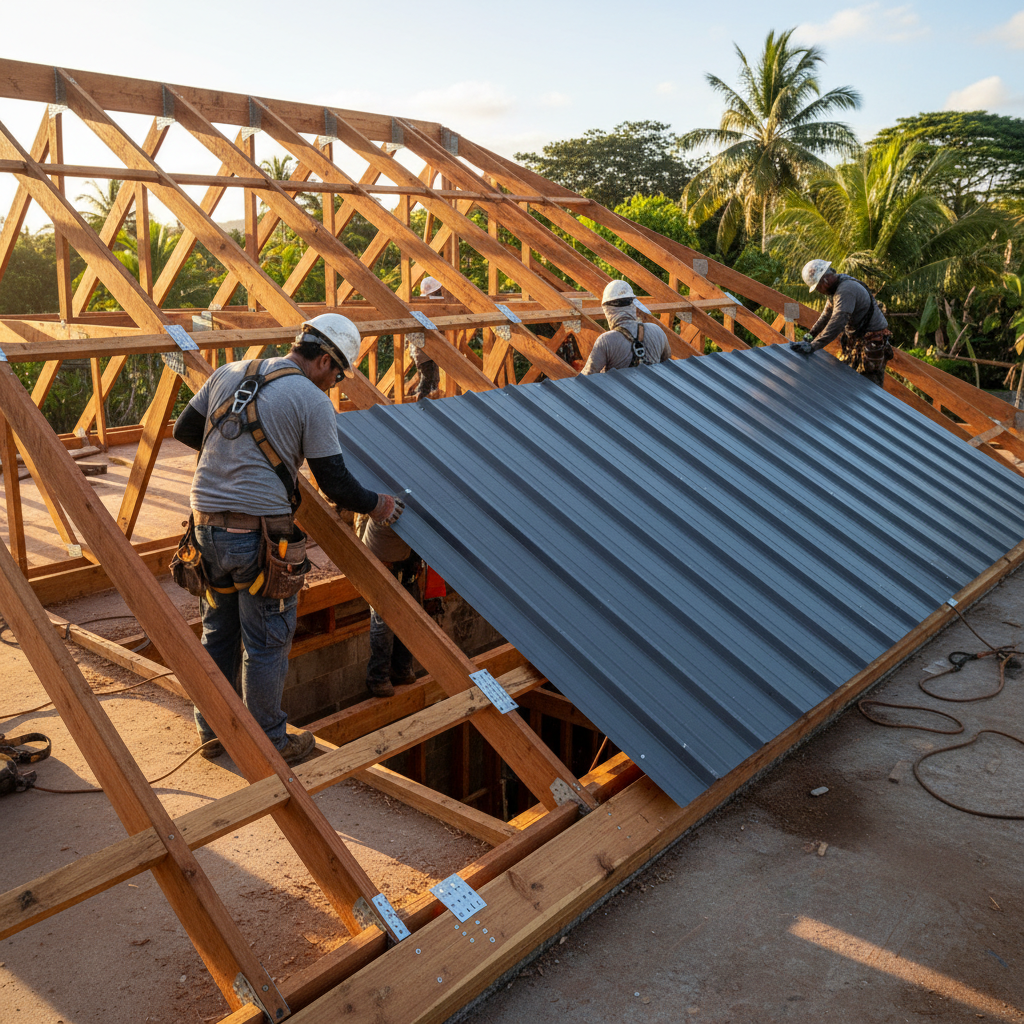
- Day 2-3: Tear-off and inspection. We remove all old roofing material down to the wood decking. This is when we uncover any hidden damage like soft or rotted plywood, which must be replaced.
- Day 3-4: Deck repairs and underlayment. We replace any damaged decking and then install a high-performance synthetic underlayment over the entire roof. This is a critical waterproofing layer.
- Day 4-7: Installation of new roofing. Whether it’s standing seam metal or architectural shingles, this is when the new roof goes on. We pay meticulous attention to nailing patterns and flashing details around vents, skylights, and chimneys.
- Day 8-9: Detailing and finishing. We install ridge caps, seal all penetrations, and complete the final trim work.
- Day 10: Final cleanup and site inspection. We use magnetic rollers to pick up stray nails and leave your property cleaner than we found it. We’ll then schedule the final inspection with the county building inspector.
The biggest variable is weather. A week of solid rain can push the on-site timeline back. A professional `roofing contractor pahoa` will never tear off more roof than they can make watertight by the end of the day. This careful planning prevents a sudden downpour from flooding your home.
What Permits Do You Need for Roofing Contractor in Pahoa?
Navigating the permitting process is one of the most valuable services a professional contractor provides. In Hawai’i County, you absolutely need a building permit for a full roof replacement (a “re-roof”). Trying to bypass this process is a huge mistake that can lead to fines, work-stoppage orders, and major problems when you try to sell your home.
The governing body here is the County of Hawai’i Department of Public Works (DPW), with offices in Hilo and Kona. While the general principles are similar across the state, the specific forms and review times differ from, say, the Honolulu Department of Planning and Permitting (DPP)[1]. An experienced Big Island contractor knows exactly what the Hilo office needs to see to approve a permit quickly.
Here’s what’s generally required for a roofing permit in Pahoa:
- Building Permit Application: A completed form with owner information, property details (your TMK number), and a description of the work.
- Licensed Contractor Information: The permit must be pulled by a licensed contractor, like Warrior Construction (BC-34373). The county needs to see that a qualified and insured professional is responsible for the work. You can and should verify any contractor’s license on the state’s Professional & Vocational Licensing (PVL) website[2].
- Scope of Work: A clear description of the project, including the type of roofing material being removed and the new material being installed.
- Material Specifications: We often have to submit the manufacturer’s specifications for the new roofing material to show it meets Hawai’i’s stringent hurricane code requirements for wind uplift and impact resistance.
For a simple `roof repair pahoa`—like replacing a few blown-off shingles or sealing a leaky flashing—a permit is typically not required. However, the rule of thumb is if you are replacing the roofing material down to the deck, you need a permit. If the project involves any structural changes, like replacing rotted rafters or trusses, that escalates the permit requirements significantly and may require engineered drawings.
As of 2026, the permit fee for a typical residential re-roof in Hawai’i County is usually a few hundred dollars, and the review time, as mentioned, is about 4-6 weeks. Our team handles the entire submittal and follow-up process, so you don’t have to worry about navigating the county bureaucracy.
Pahoa-Specific Considerations: Climate, Materials, Regulations
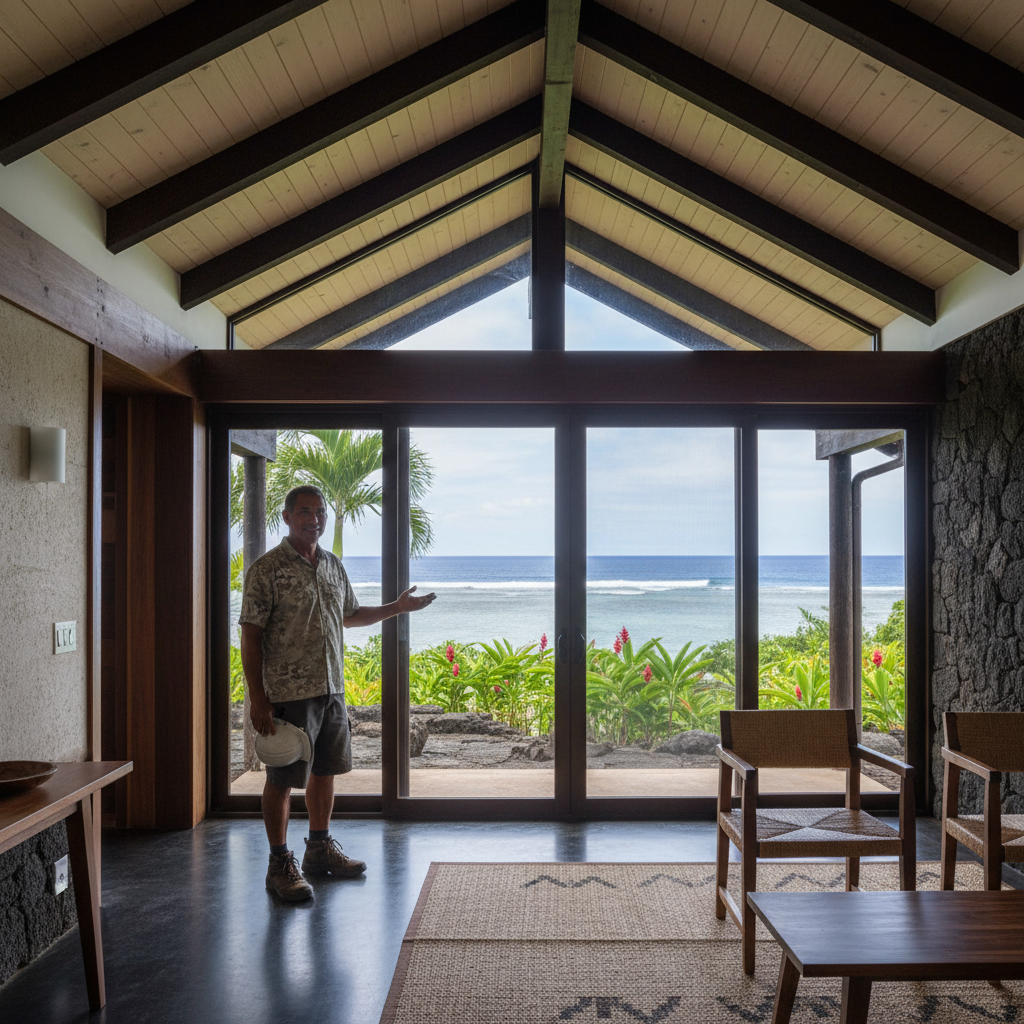
A roof in Pahoa has to endure a unique trifecta of abuse: torrential rain, corrosive air, and the ever-present threat of hurricane-force winds. A mainland approach to roofing is doomed to fail here. At Warrior Construction, our system for `tropical roofing pahoa` is built from the deck up specifically for these conditions.
Climate: Rain, Humidity, and VOG
Puna is one of the wettest places in the United States. With 120-150 inches of rain annually, water is the primary enemy. This impacts roofing in several ways:
- Underlayment is Key: Standard felt paper isn’t enough. We use a high-quality, self-adhering synthetic underlayment across the entire roof deck. It acts as a secondary, independent waterproof barrier. If a wind-driven drop of rain gets under a shingle or metal panel, it still won’t reach your home.
- Flashing Details Matter Most: The weakest points on any roof are penetrations—vents, pipes, skylights, and chimneys—and valleys where large amounts of water concentrate. We use robust, custom-fabricated metal flashing and install ice-and-water shield in all valleys and around all penetrations to ensure a permanent seal.
- Ventilation is Non-Negotiable: High humidity means trapped attic air becomes saturated with moisture. This leads to condensation, mold, and rot from the inside out. We design a balanced ventilation system with continuous soffit vents (intake) and a ridge vent (exhaust) to keep air moving and your attic dry.
- VOG and Salt Air: Pahoa gets a mix of volcanic gases (VOG) and salt spray from the coast. This combination creates a mildly acidic, highly corrosive environment. This is especially hard on metal roofs and fasteners.
Materials: Choosing for Longevity
Material selection is about investing in a long-term solution, not just a temporary fix.
- Standing Seam Metal: We strongly advocate for 24-gauge Galvalume standing seam metal with a Kynar 500 (PVDF) factory finish. The Galvalume substrate offers excellent corrosion resistance, and the Kynar 500 finish is a thick, durable coating that provides superior protection against fading and degradation from UV rays and VOG.
- Fasteners: This is a detail where many cut corners. We exclusively use stainless steel clips and screws for our metal roofs in Pahoa. Standard galvanized screws will corrode and fail within a decade, creating hundreds of potential leak points. Stainless steel is a lifetime solution.
- Architectural Shingles: If you choose shingles, we recommend products with high algae and mold resistance ratings. Many top brands offer shingles specifically treated to prevent the black streaks and growth so common in our humid climate.
Regulations: Hurricane Code is Standard
Since Hurricane Iniki devastated Kauai in 1992, Hawai’i has adopted some of the toughest building codes in the nation, especially for roofing. These aren’t just suggestions; they are requirements enforced by county inspectors.
- Wind Uplift Ratings: All roofing materials must be tested and rated to withstand specific wind speeds. In Pahoa, we install systems rated for at least 130 mph winds.
- Enhanced Nailing Patterns: The code dictates the exact number and placement of nails or screws per shingle or panel. For shingles, this often means using six nails per shingle instead of the standard four. For metal, it means specific spacing for clips.
- Deck Attachment: The inspector will verify that your roof decking is properly nailed to the trusses or rafters. If we find an older home with inadequate fastening, we are required to re-nail the entire deck to meet current code before installing the new roof.
- Hurricane Straps: We also verify the connection between your roof trusses and the top of your walls. Modern homes have metal hurricane straps, but we often have to retrofit them on older homes during a re-roofing project.
How to Choose the Right Roofing Contractor Contractor in Pahoa
Choosing the right contractor is the most important step. A great material installed poorly will fail. Here’s a simple checklist to vet any `roofing contractor pahoa` you’re considering.
-
Verify Their License and Insurance. First things first, go to the Hawai’i Department of Commerce and Consumer Affairs’ Professional and Vocational Licensing (PVL) website[2]. Enter their name or license number (ours is BC-34373) and ensure their license is active, in good standing, and is the correct type. A “BC” license is a general building contractor. Also, ask for certificates of general liability and worker’s compensation insurance. Do not skip this step. If an uninsured worker gets hurt on your property, you could be held liable.
-
Confirm Their Big Island Experience. Ask them directly: “How many roofs have you completed in Puna in the last year?” Ask for addresses of recent projects. A contractor based primarily on Oahu may not understand the unique material and logistical challenges we face here. They might not have relationships with local suppliers or be prepared for the weather delays. Look for a contractor with a physical presence and a track record on Hawai’i Island.
-
Get a Detailed, Written Proposal. A one-line estimate on the back of a business card is a massive red flag. A professional proposal should be several pages long and clearly detail:
- The full scope of work, including tear-off and disposal.
- The exact materials to be used (manufacturer, product name, color, thickness).
- Details on the underlayment and flashing system.
- The payment schedule.
- The estimated start and completion dates.
- Warranty information, for both materials and workmanship.
-
Don’t Let Price Be the Only Factor. It’s tempting to take the lowest bid, but in construction, you almost always get what you pay for. An unusually low bid often means they’re cutting corners somewhere—using cheaper materials, uninsured labor, or skipping crucial steps like replacing rotted decking. A slightly higher price from a reputable contractor often saves you thousands in future repairs and headaches.
-
Check Their Communication and Professionalism. Do they return your calls promptly? Do they answer your questions clearly and patiently? The way a contractor communicates during the bidding process is a good indicator of how they’ll communicate once they have your deposit. A roofing project is a partnership, and you want a partner you can trust and easily work with.
Real Pahoa Roofing Contractor Project Example
To put all this into perspective, let’s walk through a recent, typical project our team completed in the Ainaloa subdivision of Pahoa. This case study highlights the common issues and our approach to providing a long-term solution.
The Client: A family who bought their home five years ago. The house was built in the late 1990s and had its original asphalt shingle roof.
The Problem: The homeowner called us for a `roof repair pahoa` after noticing water stains on their ceiling in two different rooms. The old, dark shingles were covered in moss and algae, and many tabs had broken off during a recent storm. They were tired of patching leaks and wanted a permanent fix.
Our Assessment: During our initial inspection, we found the shingles were brittle and had lost most of their protective granules. On the inside, our thermal camera showed extensive moisture saturation in the attic insulation. We knew that once we tore off the old roof, we’d likely find significant rot in the plywood decking underneath, a very common issue in homes of this age in Puna.
The Proposed Solution: We recommended a full `roof replacement pahoa` with a 24-gauge standing seam metal roof system. Our detailed proposal included:
- A complete tear-off of the two existing layers of asphalt shingles.
- A contingency for replacing up to 25% of the 1,600 sq. ft. roof deck’s plywood.
- Installation of a high-temperature, self-adhering ice-and-water shield over the entire deck.
- Installation of the new standing seam panels with a Kynar 500 finish in a light gray color to improve reflectivity.
- Use of all stainless steel clips and fasteners.
- Installation of a new continuous ridge vent and ensuring soffit vents were clear to improve attic ventilation.
Timeline & Cost:
- Permitting & Material Order: 7 weeks
- On-Site Work: 9 days (we lost one full day to heavy rain)
- Final Project Cost: $39,500. This included replacing about 20% of the roof deck, which was slightly less than we had budgeted for in the contingency.
The Outcome: The family now has a safe, dry, and energy-efficient roof that is built to last for 50 years or more in Pahoa’s demanding climate. The improved ventilation will prevent future mold and rot issues, and the lighter color helps keep the home cooler, slightly reducing their energy bills. They have peace of mind knowing the job was done right, to code, and with the best materials for our island.
What this means for Hawaii homeowners
For homeowners in Pahoa and across the Big Island, your roof is your first and most critical line of defense. The constant humidity, heavy rainfall, and potential for severe storms mean that investing in a high-quality roofing system isn’t a luxury—it’s a necessity. Cutting corners by hiring an unlicensed contractor or choosing the cheapest materials is a short-term saving that almost inevitably leads to long-term costs, from interior water damage and mold remediation to premature roof failure.
Here are the key takeaways you should focus on:
- Prioritize Local Expertise: A contractor who understands Puna’s microclimate, Hawai’i County permitting, and neighbor island logistics will deliver a better result with fewer surprises than an off-island company. They know the challenges because they live with them too.
- Invest in Better Materials: While the upfront cost of a standing seam metal roof is higher than asphalt shingles, its lifespan is two to three times longer in our environment. The investment pays for itself by avoiding the need for another full replacement in 15-20 years. Always insist on stainless steel fasteners for any metal roof.
- Don’t Underestimate Underlayment and Ventilation: The parts of your roof you can’t see are just as important as the parts you can. A premium, self-adhering waterproof underlayment and a properly designed attic ventilation system are essential to combatting moisture intrusion and rot.
- Always Use a Licensed and Insured Contractor: Verify every contractor’s license with the state’s PVL database. Ensure they carry both General Liability and Worker’s Compensation insurance. This protects you from liability and ensures they are accountable for their work.
Ultimately, a new roof is a significant investment. By choosing the right materials and, most importantly, the right local contractor, you are protecting your home and your family for decades to come. Make the smart choice upfront to avoid costly problems down the road.
Frequently Asked Questions About Roofing Contractor in Pahoa
What is the best roofing material for Pahoa’s heavy rain?
Without a doubt, a properly installed standing seam metal roof is the best long-term solution for Pahoa. The interlocking panels have no exposed fasteners, which minimizes potential leak points. The Kynar 500 finish provides excellent protection against corrosion from VOG and salt air. While architectural shingles are a viable option, they have a shorter lifespan in our harsh, humid climate.
How much does a simple roof repair in Pahoa cost?
A minor `roof repair pahoa`, like sealing a flashing around a vent pipe or replacing a handful of missing shingles, can range from $450 to $900 in 2026. The cost depends on the accessibility of the repair and the materials needed. For more extensive repairs, like fixing a localized leak that requires replacing a section of plywood decking, the cost could be $1,500 to $3,000 or more.
Can I just install a new roof over my old shingles?
While some jurisdictions allow a second layer of shingles, we strongly advise against it in Pahoa. A tear-off is the only way to properly inspect the underlying wood deck for rot, which is extremely common here due to moisture. Covering up a problem only hides it and allows it to get worse. It also adds significant weight to your roof structure and can void the new shingle manufacturer’s warranty.
How can I tell if my roof has vog or salt air damage?
On a metal roof, look for signs of rust, especially around any scratches or cut edges, and on the heads of exposed fasteners. If you have galvanized screws, they will show rust long before the panels. On asphalt shingles, VOG and humidity accelerate the growth of algae and moss, which appear as dark streaks or green patches and can degrade the shingles over time.
Does my homeowner’s insurance cover a new roof?
Typically, homeowner’s insurance covers roof replacement only if the damage is from a specific, covered event, like a hurricane or a fallen tree. It does not cover replacement due to old age or lack of maintenance. We can help you document any storm-related damage to support your claim, but routine wear and tear is considered a homeowner’s responsibility.
What kind of warranty does Warrior Construction offer on a new roof?
Our projects come with a dual warranty. First, there’s the manufacturer’s warranty on the materials, which can range from 25 years for shingles to 50 years for a high-end metal roof finish. Second, and just as important, Warrior Construction provides our own workmanship warranty, which covers any issues related to our installation. This ensures you’re protected from both material defects and installation errors.
How much more does it cost to ship roofing materials to the Big Island?
Logistics are a real cost here. Compared to buying the same materials on Oahu, you can expect to pay a 15% to 25% premium for materials delivered to a Pahoa job site. This covers barge fees from Honolulu to Hilo, ground transportation, and handling. A professional local contractor will have this factored into their initial bid so there are no surprises.
Your home in Pahoa deserves a roof that’s as strong and resilient as the community itself. Protecting your investment starts with a system designed and built by a team that understands the unique challenges of building in paradise. At Warrior Construction, we combine decades of experience with the best materials and practices to deliver roofs that stand the test of time and weather.
If you’re ready to discuss a permanent solution for your roofing needs, our team is here to help. We provide detailed, transparent estimates and expert guidance through every step of the process. Learn more about our approach to building hurricane-resistant homes and schedule your free consultation today.