“
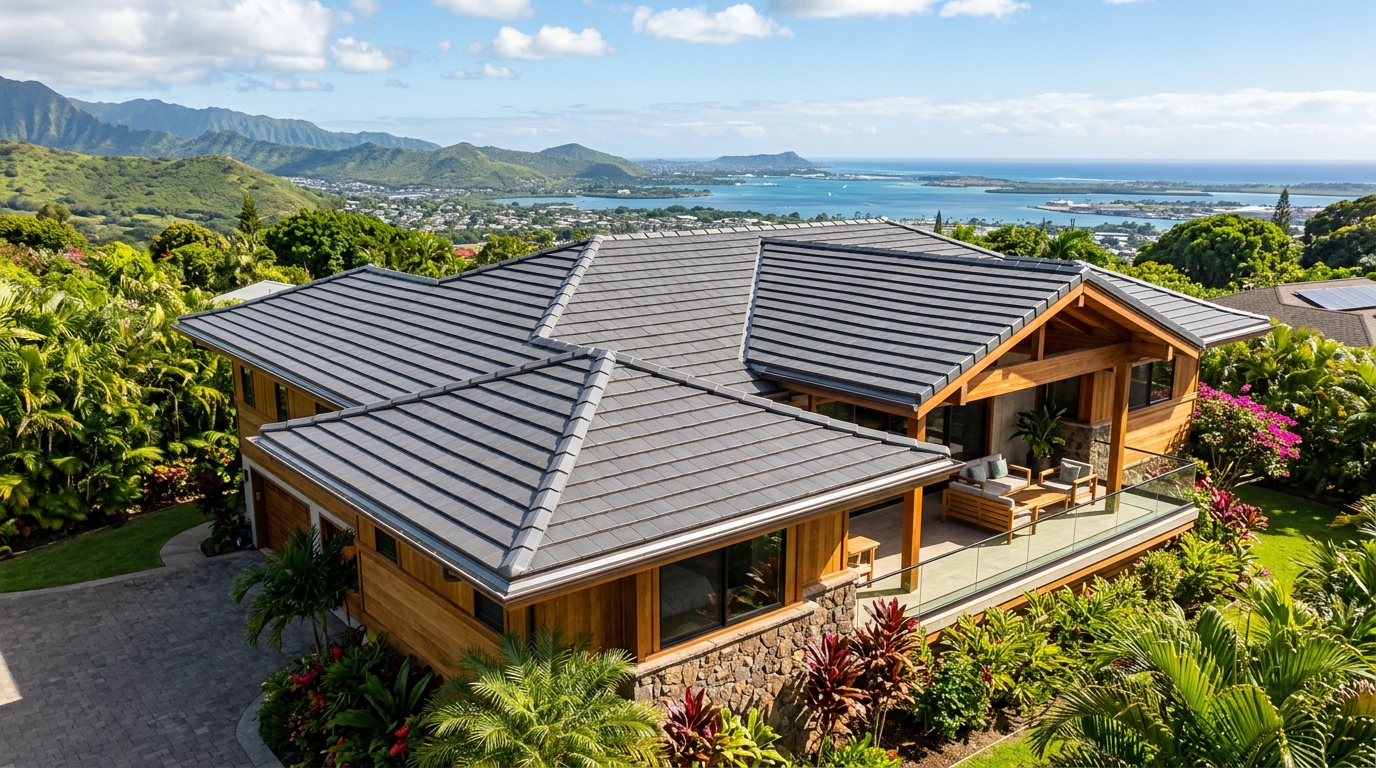
A solid, dependable roof is the single most important protector of your home here in Hawaii. Finding the right roofing contractor in Pearl City involves more than just getting a few quotes; it’s about finding a team that understands our island’s unique challenges. A full roof replacement in Pearl City in 2026 typically costs between $18 to $25 per square foot for high-quality architectural asphalt shingles, and the project itself usually takes our crew about 4 to 7 working days, not counting the permit approval time. At Warrior Construction, we’ve spent over 20 years navigating everything from the intense Leeward sun to the specific permitting requirements of the Honolulu DPP, ensuring your investment lasts.
\n\n
Many homeowners think all roofs are the same, but a roof that works in Arizona will fail quickly here. The constant UV exposure, occasional torrential downpours, and the threat of hurricane-force winds demand specific materials and installation techniques. This guide isn’t just about costs and timelines; it’s about making smart, long-term decisions for your Pearl City home. We’ll walk you through the real numbers we see on jobs every week, explain the permitting maze so it makes sense, and give you six practical, cost-saving solutions that don’t compromise on quality. From choosing the right materials for tropical roofing in Pearl City to understanding the ‘why’ behind hurricane code upgrades, you’ll get the insider knowledge you need to hire with confidence.
\n\n
Why Pearl City Homeowners Trust Warrior Construction for Roofing Contractor
\n\n
When you’re looking for a roofing contractor, you’re looking for trust. It’s a big investment, and you need a team that’s going to be here long after the last nail is hammered in. At Warrior Construction, our reputation across Pearl City and all of O’ahu is built on a foundation of local experience, transparency, and an obsession with doing the job right the first time. Our license, BC-34373, isn’t just a number; it’s a promise of accountability and professionalism.[1]
\n\n
What sets our team apart is our deep understanding of Pearl City’s specific environment. It’s not the same as working in Kaneohe with its constant salt spray, nor is it like the cooler, wetter conditions in Manoa Valley. Pearl City gets intense, direct sun, which can absolutely bake lower-quality shingles and underlayment. We’ve seen it countless times on older homes in Waiau and Manana—roofs that should have lasted 20 years are failing after 12 because the wrong materials were used or ventilation was an afterthought. We know which products have the UV resistance and durability to stand up to that Leeward heat.
\n\n
Furthermore, our experience extends to the unique architecture of the area. Many homes in Pearl City were built in the 60s, 70s, and 80s, often with complex rooflines, low pitches, or additions that require careful integration. Just last year, on a project near Pearl City High School, we uncovered three layers of old roofing on a low-slope patio cover that previous contractors had just covered up. Instead of taking a shortcut, we did a full tear-off, replaced the water-damaged decking, and installed a modern, high-performance membrane system that solved their leak problem for good. It’s this commitment to addressing the root cause, not just the symptom, that our clients appreciate.
\n\n
Here’s what you get when you work with Warrior Construction:
\n
- \n
- Local Knowledge: We understand the microclimates of O’ahu and recommend materials and systems proven to work here, not just on the mainland.
- Licensed and Insured: We carry comprehensive general liability and worker’s compensation insurance, protecting you and your property from any what-ifs. Our BC license means we’re vetted and held to the state’s highest standards.
- Transparent Quoting: Our estimates are detailed and line-itemized. You’ll see exactly what you’re paying for—materials, labor, permits, disposal. No hidden fees or surprises.
- In-House Crew: We use our own experienced, dedicated roofing crew, not a random subcontractor. This ensures consistent quality, better communication, and accountability from start to finish.
\n
\n
\n
\n
\n
Choosing a roofing contractor is a major decision. Our goal is to provide the peace of mind that comes from working with a seasoned, local general contractor who treats your home like our own.
\n\n
What Does Roofing Contractor Cost in Pearl City?
\n\n
Let’s get straight to the numbers, because that’s what every homeowner wants to know. In 2026, the cost for a professional roof replacement in Pearl City ranges from $18 to over $50 per square foot, depending almost entirely on the material you choose. A cheap bid significantly below this range should be a major red flag—it often signals unlicensed labor, inadequate insurance, or corners being cut that will cost you far more down the road.
\n\n
Here’s a realistic breakdown of what our team at Warrior Construction typically sees for a standard 1,800-square-foot, single-story home in a neighborhood like Pearl City Heights:
\n
- \n
- Architectural Asphalt Shingles: This is the most popular choice for its balance of cost, durability, and aesthetics. Expect to pay between $18 and $25 per square foot installed. For our 1,800 sq. ft. example home, that’s a total project cost of approximately $32,400 to $45,000. This includes full tear-off, new underlayment, all flashings, and proper ventilation.
- Standing Seam Metal: A fantastic long-term investment for Hawaii. It’s incredibly durable, reflects solar heat, and resistant to high winds. The cost is higher, typically $30 to $45 per square foot. Our example home would run between $54,000 and $81,000. While the upfront cost is significant, these roofs can last 50 years or more.
- Concrete or Clay Tile: Offers a classic, high-end look and great durability. However, it’s heavy and requires a roof structure engineered to support the weight. The cost is usually between $35 and $50 per square foot, putting the total for our example home at $63,000 to $90,000.
\n
\n
\n
\n\n
Of course, the material is just one piece of the puzzle. Several other factors impact the final price for any `roof replacement pearl city` job:
\n
- \n
- Tear-Off and Disposal: Is there one layer of old roofing or multiple? More layers mean more labor and higher disposal fees at the landfill. We always recommend a full tear-off to properly inspect the underlying wood decking.
- Decking Repair: We never know the full condition of the plywood or plank decking until the old roof is off. If we find soft spots from old leaks or termite damage, that wood must be replaced. We typically budget for a few sheets on every job, but extensive damage can add to the cost. We bill for this transparently, at around $120-$150 per 4×8 sheet of plywood, installed.
- Roof Complexity: A simple gable roof is far less expensive to work on than a roof with multiple valleys, dormers, and steep pitches. The more cuts and complex flashing required, the more labor is involved.
- Ventilation Upgrades: Proper attic ventilation is critical in Pearl City’s heat. We often recommend adding ridge vents or even a solar attic fan to help exhaust hot air, extending the life of your new roof and lowering your AC bills. This can add $800 to $2,000 to the project.
- Permitting Fees: The City and County of Honolulu DPP has its own fee schedule, which is typically a few hundred dollars for a residential roofing project. We handle the entire permitting process as part of our service.
\n
\n
\n
\n
\n
\n\n
For a minor `roof repair pearl city`, like replacing a few blown-off shingles or sealing a leaking pipe flashing, you might expect to pay between $450 and $1,200. However, chasing small leaks on an old, brittle roof can be a temporary fix at best. We always give an honest assessment of whether a repair makes sense or if you’d be better off putting that money toward a full replacement.
\n\n
How Long Does a Roofing Contractor Take in Pearl City?
\n\n
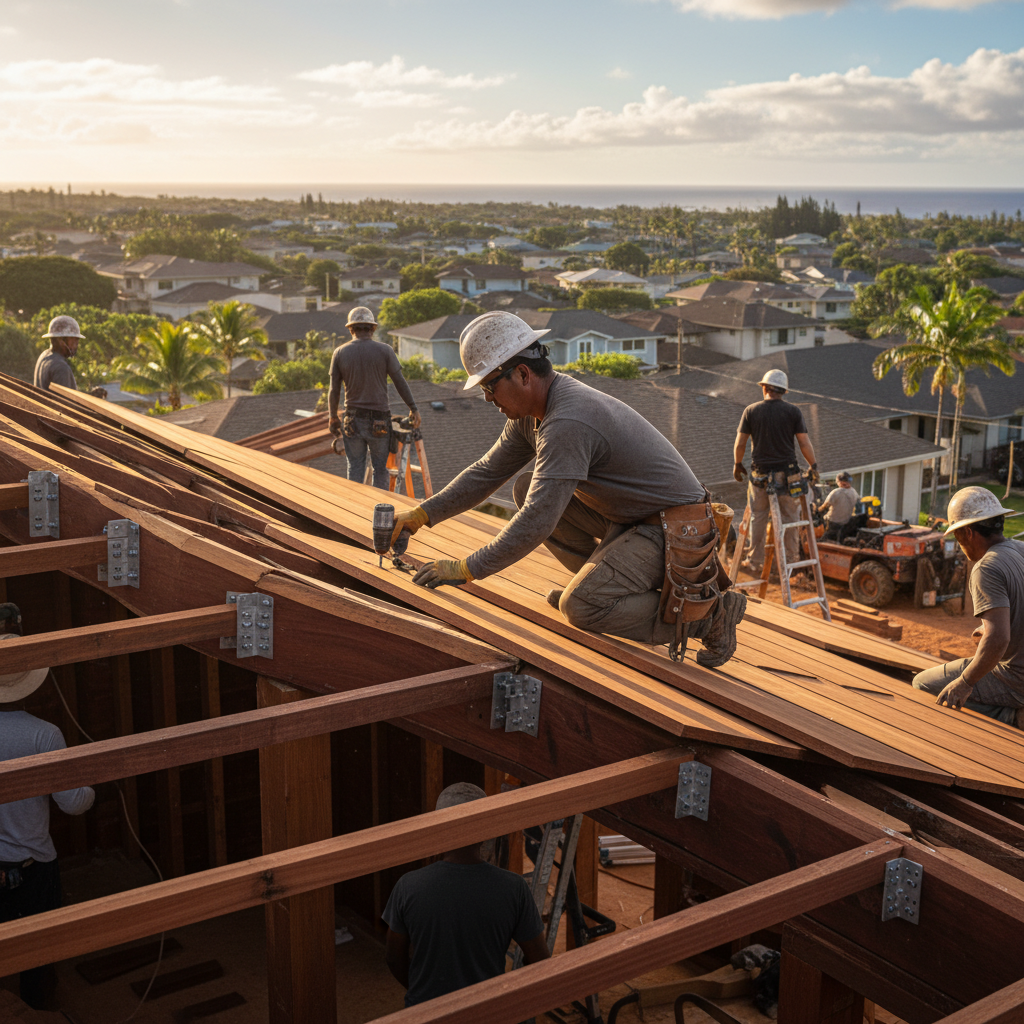
Time is a critical factor for any major home project. You want the work done efficiently and correctly, with minimal disruption to your life. For a standard residential roof replacement in Pearl City, our crew can typically complete the entire on-site process in 4 to 7 business days. This assumes a single-story home of about 1,500 to 2,500 square feet with a straightforward roofline.
\n\n
It’s important to understand that the “on-site” work is just one phase of the project. The total timeline from signing a contract to final inspection is longer. Here’s a play-by-play of a typical roofing project schedule with Warrior Construction in 2026:
\n\n
- \n
- Week 1: Pre-Construction. This is where the behind-the-scenes work happens. After you sign the contract, we immediately order your specific roofing materials. Given island logistics, materials that aren’t stocked locally can take a few weeks to arrive from the mainland. Simultaneously, we prepare and submit the building permit application to the Honolulu Department of Planning and Permitting (DPP).
- Weeks 2-5: Permitting and Material Delivery. The biggest variable is the DPP’s review time.[2] Even for a straightforward roofing permit, we plan for a 2- to 4-week approval process in 2026. Once the permit is issued and all materials have arrived at our supplier, we’ll schedule a firm start date with you.
- Week 6: The On-Site Work (The 4-7 Day Window). This is when you’ll see our trucks and team at your home.
- Day 1: Prep and Tear-Off. Our crew arrives early. We protect your landscaping, siding, and windows with tarps. Then, we begin the tear-off, removing all old roofing materials down to the wood decking. A dumpster is placed carefully on your property for all debris.
- Day 2: Decking Inspection and Repair. With the roof stripped bare, we conduct a thorough inspection of the plywood sheathing. Any rotten, soft, or delaminated sections are cut out and replaced with new, solid wood. This step is non-negotiable for a long-lasting roof.
- Day 3-4: Underlayment and Roofing Installation. We install a high-quality synthetic underlayment, which is your roof’s secondary water barrier. Then, we begin installing the new shingles or metal panels, working from the eaves up to the ridge, ensuring every course is perfectly aligned and properly fastened to meet Hawaii’s stringent hurricane code.
- Day 5: Flashing, Vents, and Ridges. This is the detail work that separates a great roof from a mediocre one. We install new metal flashing in all valleys, around chimneys, and at wall intersections. We install ridge caps and ensure proper ventilation is in place.
- Day 6-7: Final Cleanup and Inspection. Our team does a meticulous cleanup, including using magnetic rollers to pick up any stray nails. We haul away the dumpster and all debris. We then schedule the final inspection with the DPP inspector to officially close out the permit.
\n
\n
\n
- \n
\n
\n
\n
\n
\n
\n
\n\n
Certain factors can extend this timeline. Unpredictable weather, like a sudden series of rainy days, can cause delays as we can’t work on an open roof in the rain. Discovering extensive termite damage in the roof trusses or beams can also pause the project while we coordinate structural repairs. On a recent project in Aiea with a very steep, two-story roof, the job took closer to 9 days due to the extra safety precautions and difficult access. We believe in clear communication, and if any delays pop up, our project manager will be in constant contact with you to explain the situation and adjust the schedule accordingly.
\n\n
What Permits Do You Need for Roofing Contractor in Pearl City?
\n\n
Navigating the permitting process with the City and County of Honolulu Department of Planning and Permitting (DPP) can be intimidating for homeowners, but for a professional, licensed general contractor, it’s a standard part of every job. The short answer is: yes, you almost certainly need a building permit for a full roof replacement in Pearl City.
\n\n
The DPP’s rules are quite clear. A permit is required any time you are replacing roofing materials on more than one “square” of roofing (a square is a 10×10 foot area, or 100 square feet). Since a full replacement involves the entire roof, it always exceeds this threshold. Furthermore, if the project involves replacing any of the underlying wood sheathing or decking—which is common on older homes—a permit is absolutely mandatory. For a very minor `roof repair pearl city`, like replacing a handful of shingles, a permit is typically not required.
\n\n
Here’s why the permit is so important and not something to be skipped:
\n
- \n
- Ensures Code Compliance: The permit triggers inspections by a city official. This inspector’s job is to verify that our work meets the latest building codes, particularly Hawaii’s stringent hurricane-resistant construction requirements. They check that we’re using the right number of nails per shingle, that flashing is installed correctly, and that the roof-to-wall connections are secure. It’s an independent, third-party check that ensures your safety.
- Protects Your Investment: A non-permitted roof can create huge problems when you decide to sell your home. It can scare off buyers, cause issues with lenders, and even lead to fines from the city. A properly permitted and inspected job is documented and adds legitimate value to your property.
- Insurance Requirements: After a major storm, some insurance companies may be reluctant to cover damage to a roof that was replaced without a permit. Having that closed-out permit is proof that the work was done to code.
\n
\n
\n
\n\n
As your licensed general contractor (BC-34373), Warrior Construction handles the entire permitting process from start to finish. You don’t have to set foot in the DPP office or wrestle with the online portal. Our process includes:
\n
- \n
- Preparing the Application: We complete all the necessary paperwork, including plans and material specifications.
- Submitting to DPP: We submit the application package through the city’s electronic system.[2]
- Managing Plan Review: If the DPP plan reviewer has any questions or requires clarification, we respond directly to them.
- Scheduling Inspections: Once work begins, we coordinate with the city inspector for the required job site inspections (like a decking inspection before we cover it up, and a final inspection).
- Closing the Permit: We ensure the permit is officially closed out upon successful completion of the project.
\n
\n
\n
\n
\n
\n\n
Attempting to do a major roofing project without a permit is a risky gamble. It exposes you to potential safety issues, legal trouble, and financial loss. Working with a professional ensures it’s all done by the book, giving you total peace of mind.
\n\n
Pearl City-Specific Considerations: Climate, Materials, Regulations
\n\n
A roof in Pearl City faces a different set of challenges than one on the mainland, or even one just a few miles away in Kailua. As a local contractor, we design and build roofing systems specifically for the conditions your home will endure right here on the Leeward side of O’ahu. Thinking through these local factors is key to a long-lasting roof.
\n\n
Climate: The Sun is Your Biggest Enemy
\n
Unlike the Windward side which battles constant salt spray and moisture, the primary adversary for a Pearl City roof is the relentless, intense sun. The UV radiation here is no joke. It breaks down the asphalt in shingles, makes them brittle, and causes the protective granules to flake off over time. This is why we are very particular about the shingles we recommend.
\n\n
We often steer clients toward products with high solar reflectivity ratings, sometimes called \”cool roofs.\” These are designed to reflect more of the sun’s infrared radiation, which accomplishes two things:
\n
- \n
- Extends Roof Life: By keeping the shingle’s surface temperature lower, it slows the degradation process caused by UV exposure and heat.
- Lowers Energy Bills: A cooler roof means a cooler attic, which translates to less heat radiating into your living space. Your air conditioner doesn’t have to work as hard, and you can see real savings on your HECO bill, especially during the hot summer months.
\n
\n
\n
Proper attic ventilation is just as important. A poorly ventilated attic can reach temperatures of 150 degrees, literally cooking your shingles from the underside. We always assess a home’s ventilation system during our initial inspection and almost always recommend installing a continuous ridge vent system paired with soffit vents to create a passive airflow that pulls hot air out.
\n\n
Materials: Durability over Everything
\n
Material selection is critical for a good `tropical roofing pearl city` system. While standard 3-tab shingles are the cheapest option, we rarely recommend them. They simply don’t have the weight or wind resistance needed for our area. Here are the materials that perform best:
\n
- \n
- Architectural Shingles: This is our go-to recommendation for most homeowners. They are thicker, heavier, and have a dimensional look. More importantly, they typically come with a 130-mph wind warranty, which is essential here. Brands like GAF Timberline HDZ or CertainTeed Landmark Pro offer excellent performance and algae resistance.
- Standing Seam Metal: This is the premium choice for longevity. A properly installed metal roof is a 50+ year solution. It’s impervious to termites, highly wind-resistant, and offers the best solar reflectivity. The Kynar 500 paint finishes used on modern metal roofing are specifically designed to resist fading and chalking under intense UV exposure.
- Underlayment: We’ve moved away from traditional felt paper entirely. Modern synthetic underlayments are far superior. They are incredibly tear-resistant, don’t absorb moisture, and provide a much more reliable secondary water barrier if any wind-driven rain gets under the primary roofing material.
\n
\n
\n
\n\n
Regulations: Hurricane Code is Non-Negotiable
\n
Since Hurricane Iniki devastated parts of the islands in 1992, Hawaii’s building codes have been significantly strengthened. These aren’t just suggestions; they are the law, and they are enforced by DPP inspectors. For roofing, this means a focus on high-wind resistance.
\n\n
Key hurricane code requirements we follow on every job include:
\n
- \n
- Enhanced Fastening: Instead of the old standard of four nails per shingle, the code requires six nails in high-wind zones. This dramatically increases the shingle’s ability to resist uplift.
- Reinforced Roof Decking: We use proper nailing patterns for the plywood decking itself to ensure it is securely attached to the roof trusses.
- Hurricane Straps: While not always part of a standard re-roof, if we have to replace decking or framing, we are often required to upgrade the roof-to-wall connections with modern hurricane straps (like Simpson H2.5A ties). This mechanically fastens the roof structure to the walls of the house, preventing it from lifting off in a major storm.
\n
\n
\n
\n
Building to these standards isn’t about passing an inspection; it’s about protecting your family and your biggest asset. It’s a critical part of any responsible roofing project in Hawaii.
\n\n
How to Choose the Right Roofing Contractor Contractor in Pearl City
\n\n
Choosing the right contractor is the single most important decision you’ll make for your roofing project. A great contractor using quality materials will give you a roof that lasts for decades; a bad one can lead to leaks, property damage, and years of headaches. Here is a practical checklist our team at Warrior Construction recommends to every homeowner before they sign a contract.
\n\n
1. Verify Their License and Insurance – No Exceptions
\n
This is the absolute first step. Never consider a contractor who can’t immediately provide you with their Hawaii contractor’s license number and proof of insurance. You can and should verify any license number on the Hawaii Department of Commerce and Consumer Affairs (DCCA) Professional & Vocational Licensing (PVL) website.[1] Our license is BC-34373. A \”BC\” classification means we are a licensed General Building Contractor, qualified to take on a wide range of projects, including complex structural work.
\n
Equally important is insurance. Ask for a Certificate of Insurance showing two things:
\n
- \n
- General Liability Insurance: This protects your property from damage caused by the contractor’s work. A minimum of $1 million in coverage is standard.
- Worker’s Compensation Insurance: This covers the contractor’s employees if they are injured on your property. Without it, you could be held liable for their medical bills. This is a huge risk you should never take.
\n
\n
\n
An unlicensed or uninsured contractor is cutting corners to give you a low price, and they are putting all the risk directly on you, the homeowner.
\n\n
2. Get a Detailed, Itemized Written Proposal
\n
A legitimate proposal is more than a single number on a piece of paper. It should be a detailed document that clearly outlines the entire scope of work. A professional proposal should include:
\n
- \n
- The specific type and brand of materials to be used (e.g., \”GAF Timberline HDZ Architectural Shingles, color: Charcoal\”).
- A clear statement about the tear-off of old roofing layers.
- The type of underlayment to be installed.
- Details on flashing, drip edge, and ventilation.
- The cost for replacing any damaged plywood decking (usually a per-sheet price).
- Labor costs, permit fees, and disposal fees.
- Information on both material and workmanship warranties.
- A clear payment schedule.
\n
\n
\n
\n
\n
\n
\n
\n
\n
Comparing detailed proposals allows you to see if you’re truly comparing apples to apples. A low bid might be using inferior materials or skipping critical steps like replacing old flashing.
\n\n
3. Check Local References and Past Work
\n
Don’t just rely on a company’s website. Ask for references from recent projects, preferably in or around your Pearl City neighborhood. A reputable contractor will be happy to provide them. Take the time to call a few and ask about their experience. Were they happy with the communication? Did the crew keep the job site clean? Was the project completed on time and on budget? You can also drive by past project sites to see the quality of their work for yourself.
\n\n
4. Understand the Warranty
\n
There are typically two warranties involved in a roofing project. The first is the manufacturer’s warranty on the materials themselves, which can range from 25 years to a limited lifetime warranty. The second, and arguably more important, is the contractor’s workmanship warranty. This covers any issues that arise from improper installation. A contractor who stands behind their work will offer a solid workmanship warranty of at least 5 to 10 years. At Warrior Construction, we provide a robust warranty because we are confident in the skill of our crews and the quality of our installation.
\n\n
Real Pearl City Roofing Contractor Project Example
\n\n
Sometimes the best way to understand the process is to walk through a real-world example. Let’s look at a recent `roof replacement pearl city` project our team completed for a family in the Manana neighborhood, just above the Pearl City Gateway shopping center.
\n\n
The Client: The Kamaka family, owners of a 1,750-square-foot, single-story home built in 1982. The home had its original wood shake roof, which was well past its service life.
\n\n
The Problem: The old wood shake roof was in terrible condition. It had active leaks in two places, was covered in moss, and many of the shakes were cracked and curling. Their homeowner’s insurance company had sent them a non-renewal notice, citing the poor condition of the roof. They needed a full replacement, and they needed it done correctly to satisfy their insurance carrier.
\n\n
Our Proposed Solution: After a thorough inspection, we recommended a complete tear-off of the old wood shake roof and the underlying spaced sheathing. We proposed installing a new, solid plywood deck, followed by a modern `tropical roofing pearl city` system using CertainTeed Landmark PRO architectural shingles in the color Moire Black. This would not only solve the leak and insurance issues but also dramatically improve the home’s curb appeal and energy efficiency.
\n\n
The Process and Timeline:
\n
- \n
- Week 1-3: We signed the contract, ordered materials, and submitted the permit application to the Honolulu DPP.
- Week 4 (Monday): Permit approved! We scheduled the job to start the following Monday. Material and dumpster were delivered on Friday.
- Project Day 1: Crew arrived at 7:30 am. We began the messy job of tearing off the old wood shake and the 1×4 spaced sheathing. The debris filled an entire 20-yard dumpster.
- Project Day 2: With the roof structure exposed, we installed all new 5/8\” CDX plywood sheathing over the entire roof. This created a strong, solid deck for the new roofing system. The city inspector came out for the required decking inspection and approved it.
- Project Day 3: We installed Grace Ice & Water Shield in all valleys and around all penetrations, followed by high-quality synthetic underlayment on all remaining roof surfaces.
- Project Day 4 & 5: Our crew meticulously installed the new CertainTeed Landmark PRO shingles, using a 6-nail fastening pattern for maximum wind resistance. We installed new metal flashing, drip edge, and a new ridge vent system.
- Project Day 6: Final details, including painting all pipe flashings to match the roof color. We performed a comprehensive cleanup of the entire property.
- Project Day 7: The city inspector performed the final inspection and signed off on the project, officially closing the permit.
\n
\n
\n
\n
\n
\n
\n
\n
\n\n
The Final Cost: The total project cost came to $44,625. This broke down to roughly $25.50 per square foot, which included the significant additional labor and material for installing a completely new plywood deck, a necessary step when converting from wood shake.
\n\n
The Outcome: The Kamaka family received a beautiful, durable, and code-compliant new roof with a 50-year manufacturer’s warranty and our 10-year workmanship warranty. They were able to submit the completed permit and our invoice to their insurance company, who immediately renewed their policy. They also noticed a significant reduction in heat buildup in their home on sunny afternoons.
\n\n
What this means for Hawaii homeowners
\n\n
So, what are the key takeaways from all this information? A roof replacement is a complex and significant investment, but it doesn’t have to be overwhelming. By focusing on the right priorities, you can ensure you get a durable, safe, and beautiful roof that protects your family and enhances your home’s value for decades to come. Here are the most important action items for any Pearl City homeowner considering a new roof in 2026.
\n\n
- \n
- \n Budget for Quality, Not for Speed: Understand that in Hawaii, a quality roof replacement will cost between $18 and $45 per square foot. Bids that are significantly lower are cutting corners somewhere—likely in materials, insurance, or skilled labor. Resisting the temptation of the lowest price is the single best way to avoid future problems. Think of it as an investment that pays you back in longevity and peace of mind.\n
- \n Prioritize a Full Tear-Off: Do not let a contractor talk you into roofing over your existing shingles. While it might save a little money upfront, it’s a terrible idea in Hawaii. It prevents a proper inspection of the wood decking, adds unnecessary weight, and traps heat, which shortens the life of the new shingles. Always insist on a full tear-off down to the decking.\n
- \n Insist on a Licensed and Insured Contractor: Make this a non-negotiable part of your screening process. Use the DCCA PVL website to verify their license is active and in good standing.[1] Ask for physical copies of their General Liability and Worker’s Compensation insurance certificates. This is your primary protection against liability and shoddy work.\n
- \n Focus on the System, Not Just the Shingles: A great roof is more than just the shingles you see from the street. It’s a complete system. Pay close attention to the contractor’s recommendations for underlayment, ventilation, and flashing. A high-quality synthetic underlayment and proper attic ventilation are just as crucial to your roof’s long-term health as the shingles themselves, especially in Pearl City’s sunny climate.\n
- \n Build the Permit Process into Your Timeline: Don’t expect work to start the day after you sign a contract. The Honolulu DPP permit process takes time, typically 2-4 weeks for a roofing job. A professional contractor will manage this for you, but you need to factor this waiting period into your overall project plan. Any contractor who says you don’t need a permit is a contractor to avoid.\n
\n
\n
\n
\n
\n
\n\n
By following this framework, you move from being a passive buyer to an educated homeowner who can confidently manage the process and hire the right team for the job.
\n
\n\n
Frequently Asked Questions About Roofing Contractor in Pearl City
\n
How much does a simple roof repair cost in Pearl City?
\n
For a minor `roof repair pearl city`, like sealing a leaking vent pipe flashing or replacing a small section of wind-damaged shingles, you can expect to pay between $450 and $1,200 in 2026. The cost depends on the accessibility of the repair area and the type of roofing material. Keep in mind that on an older roof (15+ years), chasing one leak can sometimes be a temporary fix as other issues may soon appear.
\n
\n
Can I put a new roof over my old one?
\n
While some building codes technically allow for a second layer of shingles, we at Warrior Construction strongly advise against it for Hawaii homes. A \”roof-over\” prevents us from inspecting the underlying wood decking for water damage or termites, which is a critical step. It also adds significant weight and traps heat, which can drastically shorten the lifespan of the new roof in our sunny climate. A full tear-off is always the best long-term solution.
\n
\n
What’s the best roofing material for Hawaii’s sun and salt?
\n
For most homes, high-quality architectural asphalt shingles with algae-resistant properties offer the best balance of performance and value. For homeowners seeking maximum longevity and energy efficiency, a standing seam metal roof is the premium choice. It’s highly resistant to wind, reflects solar heat effectively, and can last over 50 years, making it an excellent investment for our `tropical roofing pearl city` environment.
\n
\n
Does a new roof increase my home’s value in the Pearl City market?
\n
Absolutely. A new roof is one of the most valuable improvements you can make. In a competitive market like Pearl City, a new, permitted, and warrantied roof is a major selling point that can command a higher price. It provides buyers with peace of mind, knowing they won’t face a major capital expense soon after purchasing. Remodeling Magazine’s data often shows a return on investment of 60% or more for a roof replacement at resale.
\n
\n
How long does a new asphalt shingle roof last in Hawaii?
\n
While many architectural shingles come with a \”lifetime\” warranty from the manufacturer, the realistic lifespan in Hawaii’s intense UV environment is shorter. With proper installation and adequate ventilation, you should expect a high-quality architectural shingle roof to last 20 to 25 years in Pearl City. Lower quality 3-tab shingles may only last 12 to 15 years.
\n
\n
Do you service areas outside of Pearl City, like Kapolei or Kaneohe?
\n
Yes, we do. While this guide focuses on Pearl City, Warrior Construction is a licensed general contractor serving the entire island of O’ahu. Our crews regularly complete projects everywhere from Hawaii Kai to the North Shore, and from Kapolei to Kaneohe. We understand the different climate and building challenges unique to each part of the island.
\n
\n
What kind of warranty does Warrior Construction offer?
\n
We provide two layers of protection. First, you get the full manufacturer’s warranty on the materials, which is typically a limited lifetime warranty for architectural shingles. More importantly, we provide our own comprehensive workmanship warranty, which covers any issues related to our installation. This ensures that if a problem arises from our work, we come back and fix it at no cost to you.
\n
\n
\n\n
Choosing a roofing contractor in Pearl City is a decision that will affect your home for decades. It’s about more than just shingles and nails; it’s about finding a partner you can trust to protect your most valuable asset with skill, integrity, and local expertise. Our team at Warrior Construction (BC-34373) has built our reputation one successful project at a time, right here on O’ahu. If you’re ready to discuss your roofing needs, we’re here to provide a clear, detailed, and honest assessment.
\n
Ready to get a roof that’s built to last in Hawaii? Learn more about our General Contracting services or contact our team today for a free, no-obligation estimate.
\n\n
References
\n