“
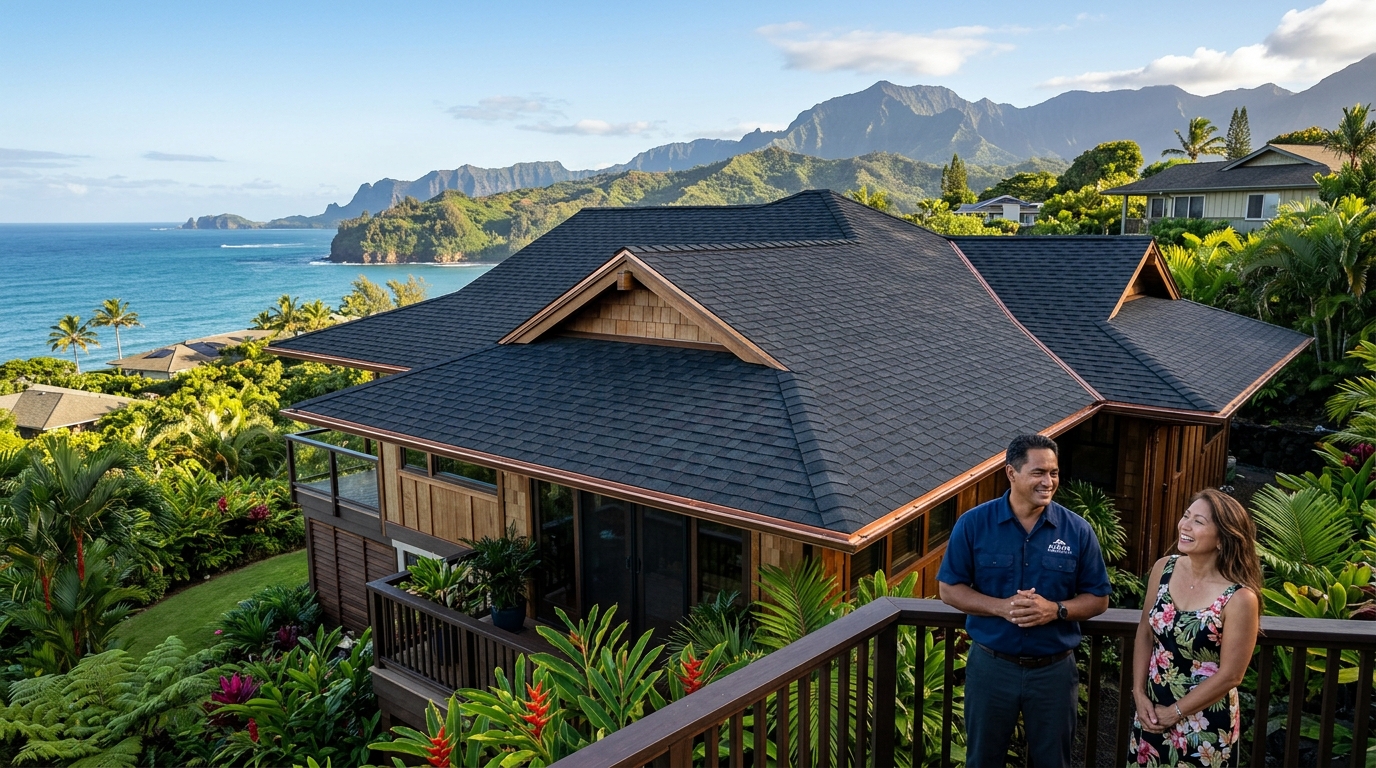
Finding the right roofing contractor in Princeville involves more than just getting a few quotes. Here on Kaua’i’s North Shore, a roof isn’t just a cover; it’s a high-performance system engineered to withstand some of the heaviest rainfall on the planet, constant salt-laden air, and hurricane-force winds. For a standard roof replacement in Princeville in 2026, you can expect to invest between $25 to $45 per square foot, which for a typical 2,500 square-foot home translates to a project cost of $62,500 to $112,500. This investment reflects the higher-grade materials, specialized labor, and logistical challenges of building in this unique paradise.
\n\n
For over two decades, our team at Warrior Construction has been navigating these exact challenges. We’re not just builders; we’re a licensed general contractor (BC-34373) with deep roots in Hawaii, and we’ve seen firsthand what works and what fails spectacularly in Princeville’s demanding climate. Too many homeowners get sold a mainland-style roofing solution that simply can’t hold up. The fasteners rust, the underlayment fails, and within a few years, they’re dealing with leaks and rot. It’s a costly and frustrating mistake.
\n\n
This guide is different. We’re pulling back the curtain to give you the insider insights we share with our own clients. We’ll break down the real costs you’ll face in 2026, explain the lengthy but necessary timelines, demystify the permitting process with both the County of Kaua’i and the Princeville Design Committee, and detail the specific material choices that will protect your home for decades. Think of this as the conversation we’d have over coffee before we even start talking about a contract.
\n\n
Why Princeville Homeowners Trust Warrior Construction for Roofing
\n\n
Trust isn’t built overnight, especially in the construction industry. For us at Warrior Construction, it’s been earned over 20 years, one project at a time, by understanding that building in a place like Princeville is fundamentally different from anywhere else. Homeowners here don’t just need a roofer; they need a partner who gets the nuances of the North Shore, from the microclimates to the specific covenants of the community.
\n\n
First and foremost, our experience is local and specific. We’re not an Oahu-based company that occasionally flies a crew over. We have dedicated teams and established supply chains on Kaua’i. This is critical. For instance, on a recent project near the Makai Golf Course, the homeowner was considering a specific brand of composite shake. We knew from experience that a particular batch of that product had issues with color fading under the intense UV and rain exposure common in Princeville. We were able to steer them toward a standing seam metal roof with a Kynar 500 finish, a solution proven to hold its color and integrity for 30+ years in this environment. That kind of localized knowledge prevents expensive, long-term problems.
\n\n
Furthermore, we navigate the complex regulatory landscape for you. Princeville isn’t just governed by the County of Kaua’i’s building code. The Princeville Design Committee has its own stringent aesthetic requirements, covering everything from roof color and material to the profile of the flashing. We have a long-standing professional relationship with the committee. We know what they look for, what gets approved, and how to present the plans for a smooth review process. This avoids months of back-and-forth and ensures your project starts on time. Many out-of-town contractors are completely unprepared for this second layer of approval and it can derail a project before it even begins.
\n\n
Finally, our approach is comprehensive. As a full-service general contractor (BC-34373), we look beyond just the shingles. When we do a tear-off for a roof replacement in Princeville, we’re meticulously inspecting the underlying sheathing, the trusses, and the ventilation. The humidity here is no joke, and we often find inadequate attic ventilation has led to moisture buildup and the beginning of rot or mold. A simple roofer might just cover it up. Our team addresses the root cause, recommending improved ridge vents or soffits to create a healthy, breathing roof system that protects the entire structure of your home. It’s this holistic view that sets us apart and gives our clients lasting peace of mind.
\n\n
What Does a Roofing Project Cost in Princeville?
\n\n
Let’s get straight to the numbers. In 2026, the cost for a professional roofing contractor in Princeville is significantly higher than on the mainland, and even a bit more than in Honolulu. The reason is twofold: the high cost of shipping every single nail and panel to Kaua’i, and the requirement for superior, salt-and-rain-resistant materials. A simple patch for a `roof repair princeville` might run from $1,200 to $3,000, but for a full replacement, you need to budget properly.
\n\n
Here’s a realistic cost-per-square-foot breakdown for a complete `roof replacement princeville`, including tear-off of the old roof, new underlayment, all materials, and labor:
\n\n
- \n
- Architectural Asphalt Shingles (High-Wind Rated): $25 – $32 per sq. ft. These are not your standard mainland shingles. We only use products rated for 130+ mph winds and with algae-resistant granules. For a 2,500 sq. ft. home, this would be roughly $62,500 – $80,000.
- Standing Seam Metal (24-Gauge with Kynar 500 Finish): $35 – $45 per sq. ft. This is the gold standard for `tropical roofing princeville`. The upfront cost is higher, but the lifespan is 50+ years, and its performance against wind and rain is unmatched. For that same 2,500 sq. ft. home, you’re looking at $87,500 – $112,500.
- Presidential or Composite Shake: $32 – $40 per sq. ft. This offers the look of traditional wood shake without the maintenance nightmare. It’s a great aesthetic choice that holds up well, but the material cost is high. Budget around $80,000 – $100,000.
- Concrete or Clay Tile: $40 – $55+ per sq. ft. While beautiful and durable, tile is extremely heavy. Many older Princeville homes were not engineered to support this load, so a structural assessment is mandatory, potentially adding thousands in engineering fees and structural reinforcement costs. The project cost can easily exceed $125,000.
\n
\n
\n
\n
\n\n
What’s included in that price? It’s more than just the surface material. Here’s a typical cost allocation:
\n\n
- \n
- Materials (45-55% of total): This includes the shingles/panels, but also crucial components like high-temperature peel-and-stick underlayment (we use it on the entire roof deck, not just the eaves), stainless steel fasteners (an absolute must), custom Z-Max flashing for all penetrations, and new ventilation systems.
- Labor (30-40% of total): This covers our skilled, insured, and licensed crew. The work is physically demanding and requires precision, especially with metal roofing systems.
- Logistics & Overhead (10-15% of total): This bucket includes inter-island freight costs from Honolulu, barge fees, local trucking on Kaua’i, job site insurance, waste disposal at the Kekaha landfill, and project management.
- Permit Fees (1-2% of total): This includes the County of Kaua’i building permit and the Princeville Design Committee review fee.
\n
\n
\n
\n
\n\n
Beware of any contractor whose bid is dramatically lower. They are likely cutting corners on one of these critical components—using cheaper galvanized nails that will rust in five years, skipping the full underlayment, or using an uninsured crew. On a Princeville roof, those shortcuts will always lead to failure.
\n\n
How Long Does a Roofing Project Take in Princeville?
\n\n
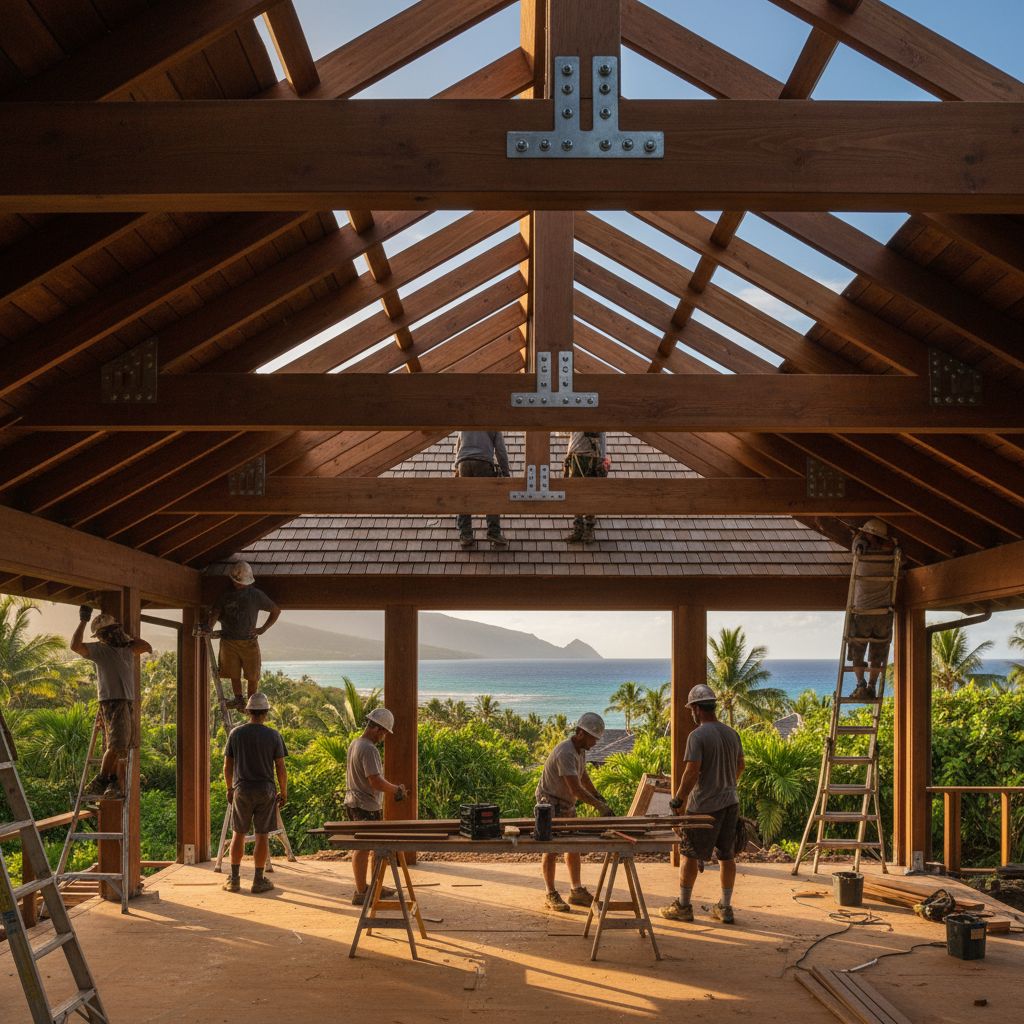
Patience is a virtue in Hawaii construction, and this is especially true for a roofing project on Kaua’i’s North Shore. The timeline is much longer than a mainland project due to permitting, design review, and island logistics. A contractor who tells you they can start next week is either misinformed or not telling you the whole story. For a full roof replacement, a realistic timeline from signing the contract to final inspection is typically 3 to 5 months.
\n\n
Here’s how we break down the schedule for our clients:
\n\n
Phase 1: Pre-Construction (6 to 10 Weeks)
\n
- \n
- Planning & Design (1-2 weeks): Our team works with you to select the right material and color. We then prepare the necessary drawings and documentation for the permit applications.
- Princeville Design Committee Review (3-4 weeks): This is a critical step that many overlook. We submit our package to the Design Committee for their aesthetic approval. They review color, material choice, and overall appearance to ensure it meets community standards. Their meeting schedule can influence this timeline.
- County of Kaua’i Permitting (4-8 weeks): Once we have the Design Committee’s approval, we submit the building permit application to the County offices in Lihue. Depending on their backlog, this review process can take one to two months. No work can begin before this permit is issued.
\n
\n
\n
\n\n
Phase 2: Procurement & Logistics (3 to 6 Weeks)
\n
- \n
- Material Ordering: The moment the permit is approved, we place the order for all roofing materials. If it’s a custom-color standing seam metal roof, the panels need to be fabricated on the mainland.
- Shipping & Delivery: This is the “hurry up and wait” phase. Materials are shipped from the West Coast to Honolulu Harbor, then offloaded and put onto a Young Brothers barge for the trip to Nawiliwili Harbor on Kaua’i. This process alone can take 3-5 weeks and is subject to ocean conditions and shipping schedules. We track this process obsessively for our clients.
\n
\n
\n\n
Phase 3: Construction (2 to 4 Weeks)
\n
- \n
- Site Prep & Tear-Off (2-4 days): We protect your landscaping and property, then begin the careful removal of the old roofing material.
- Sheathing Inspection & Repair (1-3 days): This is a key checkpoint. We inspect every square foot of the underlying plywood deck for water damage or rot. On a 20-year-old roof in Princeville, it’s common for our team to replace 5-10 sheets of plywood.
- Installation (7-14 days): This is the main event. We install the new underlayment, flashing, and roofing material. This phase is heavily dependent on weather. The North Shore is famous for its passing rain showers, and we have to work strategically between them, ensuring the roof is watertight at the end of every single workday.
- Cleanup & Final Inspection (2-3 days): We conduct a thorough cleanup, including a magnetic sweep for any stray nails. Then we schedule the final inspection with the County building inspector to officially close out the permit.
\n
\n
\n
\n
\n\n
As you can see, the actual on-site work is just a small fraction of the total project duration. A good contractor manages the entire extended timeline, providing clear communication at every step.
\n\n
What Permits Do You Need for a Roofing Project in Princeville?
\n\n
Navigating the permitting process for a roofing project in Princeville requires a dual-track approach. You’re not just dealing with the government; you’re also working within a private community’s stringent guidelines. Handling this correctly is a core responsibility of your roofing contractor, and any misstep can cause serious delays and fines.
\n\n
First, let’s talk about the government entity: the County of Kaua’i Department of Public Works, Building Division. For roofing, their rules are straightforward:
\n
- \n
- A `roof repair princeville` that involves replacing less than one “square” (a 10×10 foot area, or 100 sq ft) of roofing material with the same type of material generally does not require a permit.
- However, a full `roof replacement princeville`, even if you are using the exact same type of shingle, *always* requires a building permit. This is because the county wants to ensure the new installation meets the current hurricane code requirements for fasteners and underlayment, which have been updated significantly since Hurricane Iniki.
- If you are changing the roofing material type (e.g., from asphalt shingles to standing seam metal), a permit is absolutely mandatory. In this case, you may also need to provide calculations from a licensed Hawaii structural engineer to prove the existing roof structure can handle any change in weight.
\n
\n
\n
\n
The permit application we submit on your behalf includes detailed plans of the roof, specifications for the materials being used, fastening patterns, and flashing details. We handle the entire submittal and follow-up process with the county offices in Lihue.
\n\n
Second, and equally important, is the Princeville at Hanalei Community Association (PHCA) Design Committee. This is the part that trips up many off-island contractors. Before we can even submit to the county, we must get the project approved by the Design Committee. Their review is focused on aesthetics and maintaining the cohesive look of the community. They have specific rules regarding:
\n
- \n
- Material Types: Certain materials may be discouraged or prohibited. For example, highly reflective or industrial-looking metal roofs might not be approved.
- Color Palette: They maintain a list of pre-approved colors for roofing. If you want a color that isn’t on the list, you have to submit a sample for special review, which can add weeks to the process.
- Profile and Finish: They look at the gloss level (matte finishes are preferred) and the profile of the material (e.g., the height of the ribs on a standing seam panel).
\n
\n
\n
\n\n
Our process is to prepare a comprehensive submittal package for the Design Committee first. This includes the application forms, material samples, color chips, and a site plan. Only after we receive their stamped letter of approval do we proceed with the county permit. Managing these two parallel, yet sequential, approval processes is a key part of our service. It’s an administrative headache that we take completely off the homeowner’s plate.
\n\n
Princeville-Specific Considerations: Climate, Materials, Regulations
\n\n
A roof in Princeville is in a constant battle with the elements. The combination of intense sun, torrential rain, high humidity, and corrosive salt air creates one of the most challenging roofing environments in the world. Choosing the right materials and techniques isn’t a luxury; it’s a necessity for the longevity of your home.
\n\n
The Climate Assault: Rain, Sun, and Salt
\n
Mount Waiʻaleʻale, just a few miles from Princeville, is one of the wettest spots on Earth. That moisture is carried on the trade winds and dumped on the North Shore. A Princeville roof must be designed as a complete waterproofing system. This is why our standard practice includes laying a high-temperature, self-adhering ice and water shield over the *entire* roof deck, not just the eaves and valleys as is common on the mainland. It provides a critical secondary layer of protection. Furthermore, ventilation is key. The high humidity can lead to moisture condensing in the attic, causing mold and rot. We always evaluate and often upgrade the ventilation system with new ridge and soffit vents to ensure the roof can breathe.
\n
The salt air is another major factor. It aggressively corrodes any unprotected metal. On a project in Kilauea, we replaced a 10-year-old roof where the previous contractor had used standard galvanized fasteners. Every single nail head had rusted, leaving long, ugly streaks down the roof and creating pathways for water intrusion. It was a complete roof failure caused by a tiny, inexpensive component. This is why our company policy is to use only 316-grade stainless steel fasteners on all our coastal projects. They cost more, but they are virtually immune to salt corrosion.
\n\n
Material Selection for Longevity
\n
Given the climate, material choice is everything. Here’s our take on the best options for a `tropical roofing princeville` system:
\n
- \n
- Standing Seam Metal: This is our top recommendation. A 24-gauge Galvalume panel with a factory-applied Kynar 500 or Hylar 5000 paint finish offers the best possible protection. The concealed fastener system protects the screws from the elements, and the Kynar finish is a high-end resin that resists fading from UV exposure and chalking from the rain.
- High-Quality Composite Shakes: Brands like CertainTeed Presidential Shake or DaVinci Roofscapes offer excellent performance. They have high wind ratings, Class A fire ratings, and are impervious to rot and insects. They provide a beautiful, textured look that fits well with Princeville’s architecture.
- Asphalt Shingles: If you choose asphalt, it must be a top-tier “lifetime” architectural shingle specifically designed for high-wind areas and containing algae-resistant (AR) granules to prevent the dark stains that can form in humid climates.
\n
\n
\n
\n\n
Navigating Local Regulations
\n
Beyond the permits, the most important regulation is the building code itself. Hawaii has adopted stringent hurricane-resistant construction codes, largely as a result of the devastation from Hurricane Iniki in 1992, which made a direct hit on Kaua’i. For roofing, this means specific requirements for the number and placement of fasteners per shingle or panel, mandatory flashing details, and uplift resistance ratings. As a licensed general contractor in Hawaii, we build every roof to exceed these code requirements. You can verify our license status (BC-34373) anytime at the Department of Commerce and Consumer Affairs website.[2] We take this responsibility seriously, because we know the next big storm is always a possibility.
\n\n
How to Choose the Right Roofing Contractor in Princeville
\n\n
Choosing your contractor is the single most important decision you’ll make for your roofing project. A great contractor using the right materials will give you a roof that lasts for decades; a bad one can lead to a nightmare of leaks, repairs, and even litigation. Here’s the checklist our team recommends you use when vetting any potential `roofing contractor princeville`.
\n\n
- \n
- Verify Their Hawaii License. This is non-negotiable. Any contractor performing work over $1,000 in Hawaii must be licensed. The specific license for roofing is a C-42 specialty license. As a general contractor (BC-34373), we hold the overarching license that covers all trades. You can and should verify any contractor’s license on the Hawaii DCCA Professional & Vocational Licensing (PVL) website.[2] Check that it’s active and that there are no complaints against them.
- Confirm Their Insurance Coverage. A valid license requires the contractor to have both General Liability insurance and Worker’s Compensation insurance. Ask for a “Certificate of Insurance” (COI) sent directly from their insurance agent to you. Don’t just accept a photocopy they provide. If an uninsured worker gets hurt on your property, you could be held liable. Our policy limits are substantial to protect our clients and our team.
- Demand Local, Kaua’i-Specific References. Don’t settle for a list of projects in Honolulu or on Maui. Ask for the addresses of 3-4 roofing projects they have completed *in Princeville or on the North Shore* within the last few years. Take a drive by and look at the quality of their work. A reputable contractor will be proud to share their local portfolio.
- Analyze the Written Proposal. A one-page quote with a single price is a major red flag. A professional proposal should be several pages long and detail the scope of work, the exact materials to be used (brand names, colors, fastener types), the underlayment system, flashing details, the plan for tear-off and disposal, the payment schedule, and the estimated start and completion dates. This document becomes part of your contract, so clarity is essential.
- Ask About Their Team. Are they using their own employees or subcontracting the labor? At Warrior Construction, we use our own highly trained and vetted team members. This ensures consistent quality control and clear lines of communication. We know the people working on your home.
- Discuss Logistics and Communication. How will they handle material delivery and storage? How will they protect your property and landscaping? Who is your dedicated point of contact for the project? What is the plan for weather delays? Their answers will reveal their level of professionalism and experience with island logistics.
\n
\n
\n
\n
\n
\n
\n\n
Taking the time to thoroughly vet your contractor will pay dividends for the life of your roof. Your home in Princeville is too valuable to trust to anyone but a licensed, insured, and experienced local professional.
\n\n
Real Princeville Roofing Project Example
\n\n
To make this tangible, let’s walk through a recent project we completed on Ka Haku Road in Princeville. It’s a perfect example of the challenges and solutions we’ve been discussing.
\n\n
The Homeowner & The Problem: The clients were a retired couple from California who had owned their 3,200-square-foot home for over 20 years. Their original cedar shake roof, while beautiful in its day, was at the end of its life. It was brittle, had developed numerous leaks, and their insurance company had warned them it would need to be replaced to maintain their hurricane coverage. They were also concerned about the fire risk of a wood roof.
\n\n
Our Proposed Solution: After our initial consultation, we recommended a full `roof replacement princeville` using a DaVinci Bellaforté Shake composite tile in a \”Tahoe\” color blend. This product offered the aesthetic of real shake that the homeowners loved, but with a Class A fire rating, a 110-mph wind warranty, and a 50-year material warranty. We paired this with a full deck of high-temperature peel-and-stick underlayment and all-new 316 stainless steel fasteners and copper flashing.
\n\n
The Process & Timeline:\n
- \n
- Weeks 1-4: We prepared the submittal package for the Princeville Design Committee. The \”Tahoe\” blend was a pre-approved color, so we received their approval in just under three weeks.
- Weeks 5-10: We immediately submitted the plans to the County of Kaua’i. The permit was issued in about six weeks. During this wait, we placed the material order.
- Weeks 11-15: The DaVinci tiles were manufactured and shipped from the mainland to Kaua’i. This took about five weeks, including the barge transit from Honolulu.
- Weeks 16-18: Our crew was on-site. The tear-off revealed significant rot in the plywood sheathing around a skylight that had been improperly flashed years ago. We replaced 12 sheets of plywood and re-flashed all three of the home’s skylights using a multi-layer technique. The installation of the new composite tiles took about 10 working days, with a couple of days lost to heavy morning rains.
\n
\n
\n
\n
\n
\n\n
The Final Numbers: The total project cost came to approximately $125,000. This broke down to about $39 per square foot, which was right in line with our initial estimate for a premium composite shake material.
\n\n
The Outcome: The homeowners now have a stunning, worry-free roof that dramatically improves their home’s curb appeal, safety, and insurability. They have peace of mind knowing the job was done right, from the sheathing up, with materials designed to last a lifetime in Princeville’s challenging environment.
\n\n
What this means for Hawaii homeowners
\n
A roofing project in Princeville is a significant investment, and it’s crucial to approach it with the right mindset and information. The harsh coastal environment means that shortcuts and cheap materials will inevitably lead to costly failures down the road. Treating your roof as a critical, high-performance system is the key to protecting your larger investment—your home.
\n\nHere are the key takeaways for any Princeville homeowner considering a roof repair or replacement:\n
- \n
- Budget for Quality: Expect to pay a premium for a roof on Kaua’i’s North Shore. The costs of logistics and corrosion-resistant materials are real. A budget of $25 to $45 per square foot for a full replacement in 2026 is a realistic starting point. Trying to find a cheaper deal often means you’re getting inferior materials that won’t last.
- Plan for a Longer Timeline: The process will take months, not weeks. The dual-track approval from the Princeville Design Committee and the County of Kaua’i, combined with inter-island shipping, cannot be rushed. Start the process well before you have an active leak.
- Insist on a Salt-Air Material Package: Do not let any contractor talk you into using anything other than stainless steel fasteners. Ensure they are using a full, self-adhering underlayment membrane and Kynar-coated metal or high-grade composite materials. This is non-negotiable.
- Hire a Licensed, Insured, and Local Expert: Your contractor’s experience with the specific challenges of Princeville is their most valuable asset. Verify their license, get proof of insurance, and check their local references. A contractor who primarily works in Honolulu may not be prepared for the unique logistical and regulatory hurdles on Kaua’i.
\n
\n
\n
\n
\n\nUltimately, the goal is to do the job once and do it right. A properly installed, high-quality roof in Princeville should provide you with 30 to 50 years of protection and peace of mind, making it one of the smartest investments you can make in your property.\n\n
Frequently Asked Questions About Roofing in Princeville
\n
Can I put a new roof over my old one to save money?
\n
We strongly advise against this. While technically allowed in some cases, it’s a poor practice in Princeville. Covering old shingles prevents a proper inspection of the underlying plywood sheathing for rot and water damage, which is a common problem here. It also adds significant weight and can void the warranty of the new roofing material. A full tear-off is the only professional way to ensure a long-lasting roof.
\n
\n
How much does a simple roof repair cost in Princeville?
\n
For a common repair, like replacing a few blown-off shingles or re-sealing flashing around a vent pipe, you can expect to pay between $1,200 and $3,000 in 2026. The cost reflects the high demand for skilled labor on Kaua’i and the time it takes for a crew to mobilize for a smaller job. If the repair involves replacing a section of rotted plywood, the cost can be higher.
\n
\n
What is the best roofing material for the heavy rain on the North Shore?
\n
For pure watertight performance, a standing seam metal roof is the superior choice. The interlocking panels and concealed fasteners create a nearly impenetrable surface with minimal seams. The panels run vertically from the ridge to the eave, shedding water incredibly efficiently, which is ideal for the torrential downpours common in Princeville.
\n
\n
Do I need to get my roofing project approved by the Princeville HOA?
\n
Yes, absolutely. All exterior modifications, including re-roofing, must be approved by the Princeville at Hanalei Community Association (PHCA) Design Committee *before* you apply for a county permit. They have specific rules on materials and colors. A qualified local contractor will handle this entire submittal process for you as part of their service.
\n
\n
How do I know if my roof needs repair or a full replacement?
\n
Look for signs like curled, cracked, or missing shingles; significant loss of the protective granules (you’ll see them in your gutters); rust stains on the roof; or any signs of water staining on your interior ceilings. As a general rule, if your asphalt shingle roof is over 20-25 years old, it is likely nearing the end of its effective lifespan in our climate and you should start budgeting for a replacement.
\n
\n
Are metal roofs noisy in the rain?
\n
This is a common myth. Modern metal roofs installed over a solid plywood deck with proper underlayment and attic insulation are not noisy. The sound of heavy rain on a metal roof is often quieter than the sound on a shingle roof. The solid materials underneath dampen the sound effectively, so you won’t hear a loud ‘pinging’ noise.
\n
\n
Does my homeowner’s insurance cover roof replacement?
\n
Insurance typically covers roof replacement only if the damage is from a sudden, specific event like a hurricane or a major storm. It does not cover replacement due to old age, deferred maintenance, or general wear and tear. We can provide all the necessary documentation for you to file a claim if your roof has sustained storm damage.
\n
\n
\n\n
Your Princeville home deserves a roof built to withstand the unique demands of the islands. It’s a complex job that requires deep local knowledge, meticulous planning, and an unwavering commitment to quality. At Warrior Construction, we’ve built our reputation on delivering exactly that.
\n
If you’re ready to discuss your roofing project, our team is here to provide a detailed, transparent assessment and estimate. We’ll help you choose the right materials and develop a plan that protects your home for decades to come. Learn more about our approach to building durable, hurricane-resistant homes and structures.
\n\n
References
\n