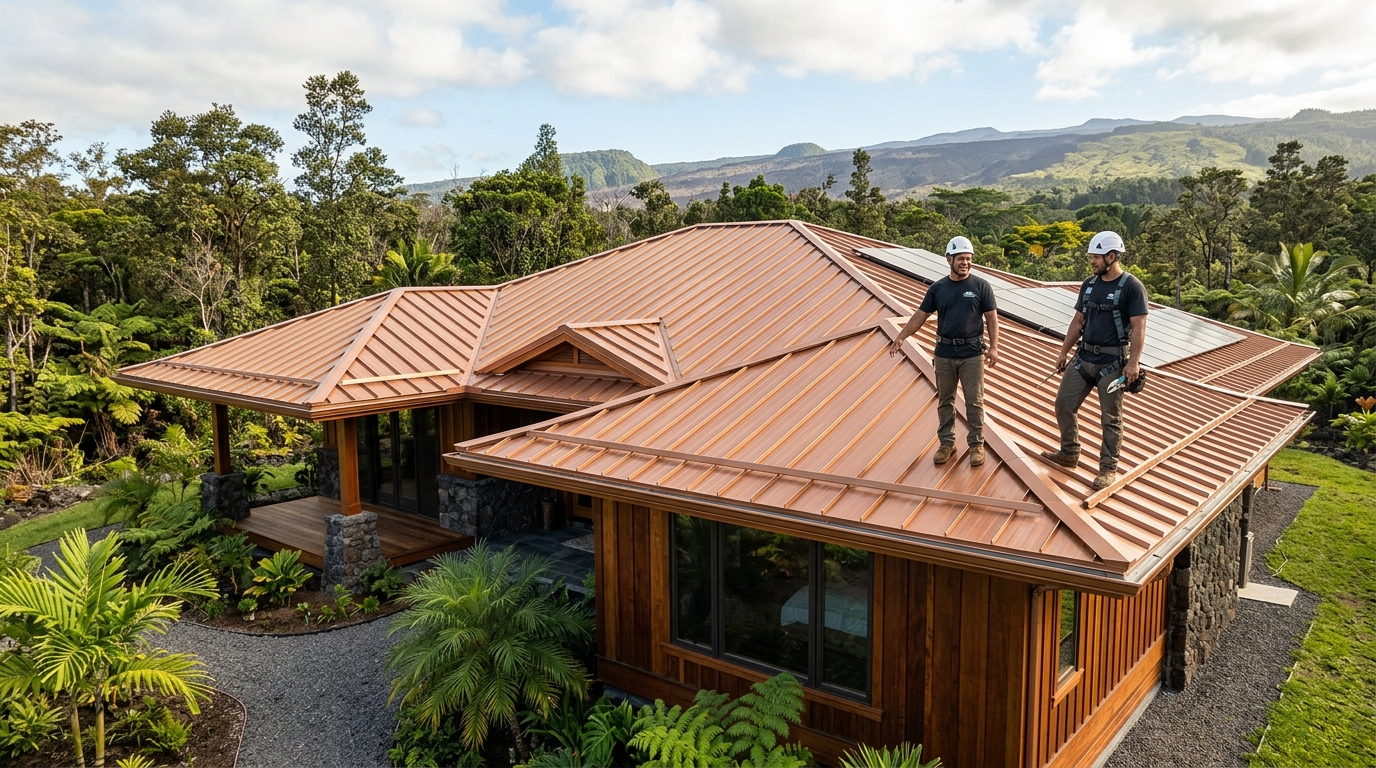
A reliable roofing contractor in Volcano must understand more than just shingles and nails; they need a deep knowledge of our unique high-altitude rainforest climate. The constant rain, acidic vog, and potential for seismic activity create a roofing challenge unlike anywhere else in Hawaii. The right roofing system here isn’t a luxury; it’s the primary defense for your home against the elements. Our team at Warrior Construction has spent years working on the Big Island, and we’ve learned that a successful Volcano roof replacement comes down to three things: superior materials, meticulous installation, and a contractor who understands the logistics of getting the job done right, miles from the nearest major port. These six tactics aren’t just about saving a few dollars upfront; they’re about investing wisely to avoid catastrophic, and expensive, failures down the road.
Why Volcano Homeowners Trust Warrior Construction for Roofing
Choosing a roofing contractor on the Big Island, especially for a unique area like Volcano, means finding a team with proven neighbor island experience. At Warrior Construction, we aren’t just an Oahu-based company that occasionally flies over. We have dedicated teams and established supply chains specifically for Big Island projects. This is crucial because the logistics are half the battle. Getting a 40-foot container of standing seam metal panels and specialized underlayment from the mainland to Hilo, then trucked up the mountain, requires a level of coordination that purely local or purely Oahu-based contractors often struggle with. Our license, BC-34373, represents decades of work across the entire state, not just one island.
Furthermore, our experience extends beyond just the physical installation. We understand the specific challenges of the Volcano environment. For example, on a recent project near the Volcano Golf & Country Club, the homeowner’s primary concern was their water catchment system. They needed a roof that was not only durable against acid rain but also certified as potable-water safe. We sourced a specific Kynar 500-coated metal roofing system with NSF/ANSI 61 certified coatings and ensured all sealants and fasteners were equally safe. This is a detail a less experienced contractor might overlook, potentially contaminating a family’s primary water source. It’s this granular, location-specific knowledge that our clients rely on. We know that a fastener that works perfectly fine in dry Kapolei will corrode in a year under the misty, sulfur-tinged air of Volcano.
Our approach is built on transparency and communication. From the initial consultation, we provide a detailed plan that includes material sourcing, shipping timelines, and a clear installation schedule. Homeowners in Volcano appreciate this because they know how easily things can get delayed due to weather or shipping. We build those contingencies into our schedule, so there are no surprises. Our team provides regular updates, so you’re never left wondering where your materials are or when the crew will be on-site. We treat your home with the same care and precision whether it’s a multi-million dollar custom build on the North Shore of Oahu or a cherished family home in Volcano Village.
What Does a Roofing Contractor Cost in Volcano?
In 2026, the cost for a professional roof replacement in Volcano is significantly influenced by material choice and the immense logistical challenges of the location. A full tear-off and replacement with high-quality standing seam metal, the preferred material for this climate, typically runs between $22 and $30 per square foot. For an average 1,800-square-foot home, you can expect a total project cost of $39,600 to $54,000. This is an all-in price that includes materials, inter-island shipping, labor, permits, and disposal of the old roof. Cheaper options like architectural asphalt shingles might seem tempting, costing closer to $12-$16 per square foot, but they are a poor investment for Volcano’s climate. The constant moisture leads to rapid moss and algae growth, and the granules can be stripped by acidic rain, drastically reducing their lifespan to just 10-15 years, compared to the 50+ years of a properly installed metal roof.
Let’s break down where the money goes:
- Materials (45-55% of total cost): This is the largest expense. A 24-gauge standing seam metal panel with a Kynar 500 finish is more expensive than asphalt shingles, but its longevity more than justifies the cost. This also includes high-temperature, self-adhering ice and water shield underlayment, stainless steel fasteners, and custom-fabricated flashing.
- Labor (25-35%): Skilled labor is a premium on the Big Island. Our crews are experts in metal roofing installation, which is a more complex and time-consuming process than laying shingles. This ensures every detail, from flashing to ridge caps, is perfectly sealed against Volcano’s driving rains.
- Logistics & Shipping (10-15%): This is the ‘Big Island tax.’ Materials are shipped from the mainland to Honolulu, then barged to Hilo. From there, they are trucked up the mountain. These costs are substantial and must be factored into any realistic budget.
- Permits & Disposal (5%): This covers the Hawai’i County permit fees and the cost of hauling away the old roofing material to the appropriate landfill.
A major money-saving tactic is to choose materials wisely and plan ahead. By ordering materials well in advance, we can sometimes consolidate shipments, which can shave a few percentage points off the logistics cost. Most importantly, investing in the right system from the start saves you from the massive expense of a premature roof replacement and the potential interior water damage that comes with a failing roof. A cheap roof is the most expensive mistake a homeowner can make in this environment.
| Roofing Material | Estimated Cost per sq. ft. (Installed) | Lifespan in Volcano Climate | Pros & Cons |
|---|---|---|---|
| Standing Seam Metal (24-Gauge) | $22 – $30 | 50+ years | Pros: Extremely durable, excellent against acid rain, catchment-safe, low maintenance. Cons: Highest upfront cost. |
| Corrugated Metal (26-Gauge) | $16 – $22 | 25-40 years | Pros: Good durability, lower cost than standing seam. Cons: Exposed fasteners can be a failure point, less modern aesthetic. |
| Architectural Asphalt Shingles | $12 – $16 | 10-15 years | Pros: Lowest initial cost. Cons: Prone to moss/algae, granules degrade in acid rain, not ideal for low-slope roofs common in the area. |
How Long Does a Roofing Contractor Take in Volcano?
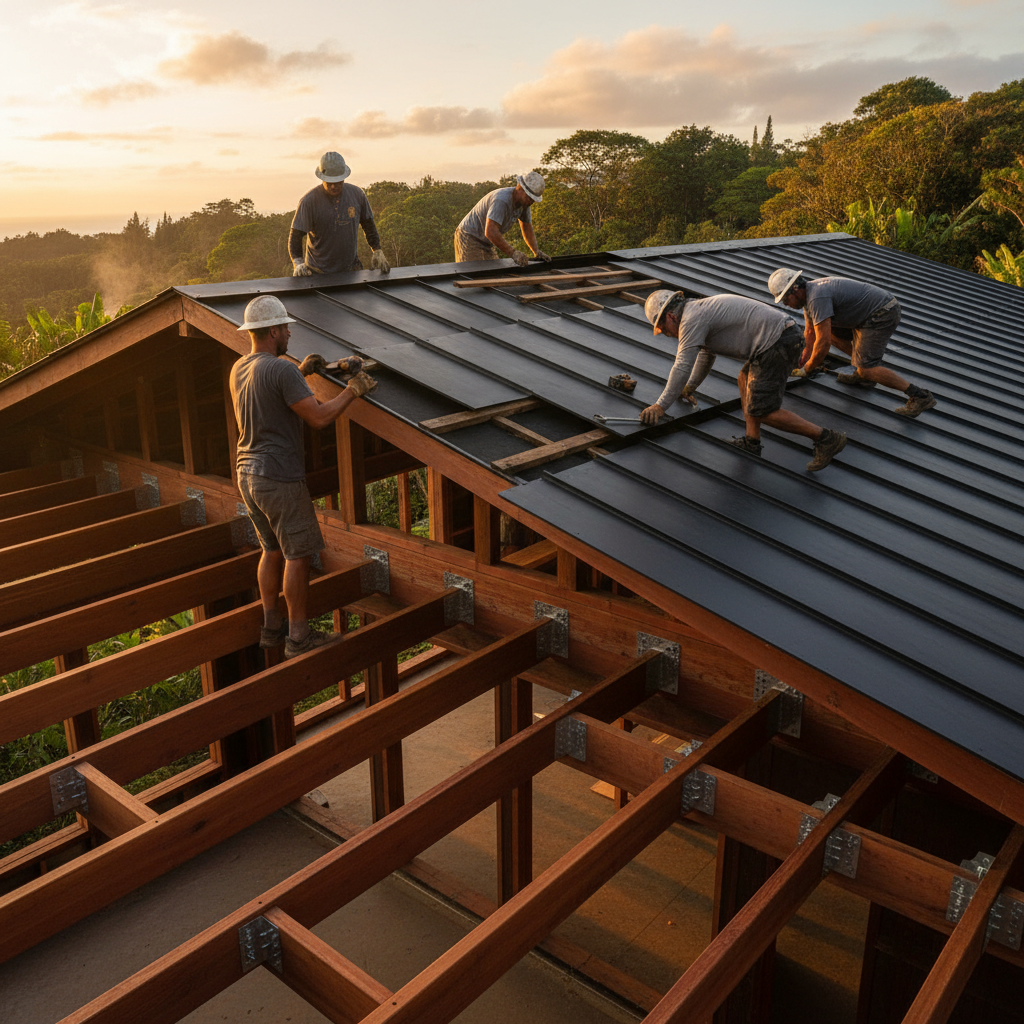
The total timeline for a roof replacement in Volcano, from signing the contract to final inspection, is typically between 8 and 14 weeks in 2026. The actual on-site work is only a fraction of this time. The biggest factor influencing the schedule is material procurement and shipping. Unlike an Oahu project where materials might be in-stock or a short trip away, everything for a Volcano roof needs to be ordered, fabricated, and shipped across the Pacific and then between islands. Homeowners need to have realistic expectations and understand that good planning is essential to a smooth project.
Here’s a typical project timeline breakdown:
- Consultation, Design & Contract (1 Week): Our team meets with you on-site, performs a detailed roof inspection, discusses material options, and finalizes the contract.
- Permit Application (Immediate): As soon as the contract is signed, we submit the building permit application to the Hawai’i County Department of Public Works.
- Material Ordering & Fabrication (1-2 Weeks): We place the order for your specific metal panels, underlayment, and accessories. Custom colors or profiles can add time here.
- Shipping & Logistics (4-7 Weeks): This is the longest and most variable phase. Materials are shipped from the mainland to Honolulu, then barged to Hilo. We track the shipment every step of the way and coordinate trucking to your property. Delays due to port congestion or bad weather can happen, which is why we build buffer time into the schedule.
- Permit Approval (Concurrent with Shipping): While materials are in transit, the county is reviewing the permit application. This typically takes 4-8 weeks. We aim for the permit to be issued right as the materials arrive on-site.
- On-Site Work (1-2 Weeks): Once materials are on-site and the permit is in hand, our crew gets to work. This includes tearing off the old roof, inspecting and repairing the underlying sheathing, installing the new underlayment and metal roofing system, and cleaning up the site. Weather is a big factor here; we can’t work in heavy rain for safety and quality reasons.
- Final Inspection (1 Week): After our work is complete, we schedule the final inspection with the county building inspector to close out the permit.
A key money-saving tactic related to timing is to schedule your project during the drier season (typically summer) if possible. While Volcano gets rain year-round, fewer rainy days mean our crew can work more efficiently, reducing the on-site labor timeline and minimizing the risk of your home being exposed to the elements during the tear-off phase. However, the best contractors are booked months in advance, so the most important step is to start the planning process early.
What Permits Do You Need for Roofing in Volcano?
For any significant roofing work in Volcano, you absolutely need a building permit from the Hawai’i County Department of Public Works. This is not optional. A full roof replacement, known as a ‘re-roof,’ always requires a permit. This involves tearing off the old material down to the wood sheathing and installing a new system. Even some large-scale roof repair jobs may trigger the need for a permit, especially if you’re replacing more than a certain percentage of the roof area (typically over 500 square feet) or altering the roof structure in any way. It’s a common misconception that you can just hire someone to do it over the weekend without involving the county. This is a risky move that can lead to fines, stop-work orders, and major problems when you try to sell your home.
The permitting process on the Big Island is distinct from what homeowners might be used to on other islands. Unlike on Oahu, where projects are routed through the Honolulu Department of Planning and Permitting (DPP)[1], here we work directly with the Hilo or Kona offices of the county’s DPW. As your general contractor, Warrior Construction handles the entire permitting process for you. This involves preparing detailed plans that show the existing roof structure, the proposed new materials, and specifications for how it will be attached to meet Hawaii’s stringent hurricane code requirements. The plans must demonstrate compliance with wind load calculations and proper flashing details.
The cost for a roofing permit in Hawai’i County in 2026 typically ranges from $500 to $1,500, depending on the valuation of the project. The review process itself can take anywhere from 4 to 8 weeks, which is why we submit the application as early as possible. One of the biggest money-saving tactics is simply to follow the rules. Hiring an unlicensed contractor who offers to skip the permit process is a massive red flag. If something goes wrong, you have no recourse. Furthermore, if the county discovers unpermitted work, they can force you to tear the entire roof off and start over, this time with a permit and a licensed contractor. That’s an unimaginably expensive mistake. A licensed contractor who insists on a permit is protecting you, your investment, and ensuring the job is done to code.
Volcano-Specific Considerations: Climate, Materials, Regulations
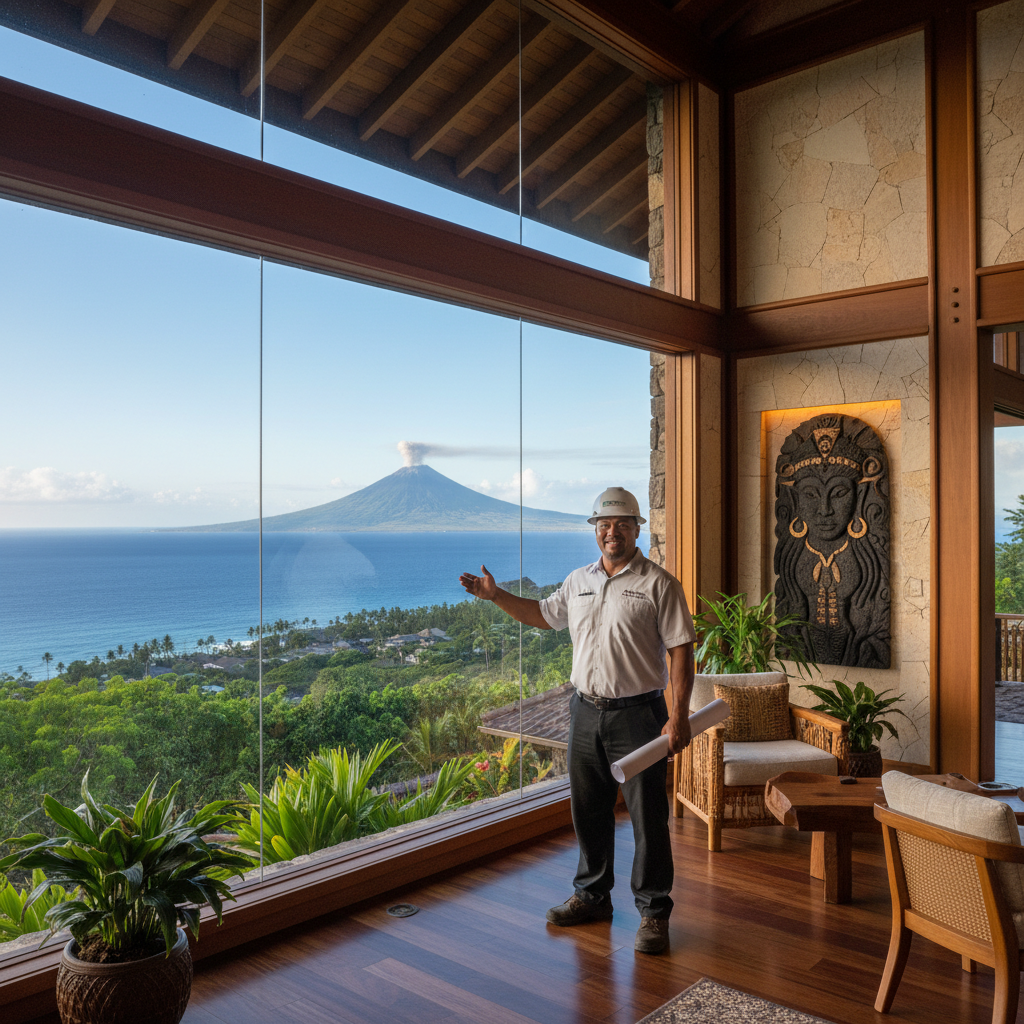
Roofing in Volcano is an exercise in extreme climate management. The conditions here dictate every choice we make, from the type of metal coating to the size of the gutters. Ignoring these local factors is a recipe for a failed roof within a decade. Our team at Warrior Construction focuses on building systems designed specifically for this high-rainfall, volcanically active environment.
Climate: Rain, Vog, and Sun
Volcano Village receives over 150 inches of rain annually. This constant saturation is enemy number one. It promotes moss and algae growth on materials like asphalt shingles, which traps moisture and accelerates deterioration. This is why we almost exclusively recommend metal roofing. The smooth, non-porous surface sheds water and debris easily, preventing organic growth. Furthermore, the air often carries volcanic gases (vog), creating a mild acidic rain. This acidity can eat away at galvanized (G-90) coatings on cheaper metal roofs. To combat this, we specify materials with a Kynar 500 (or similar PVDF) paint finish. This is a high-performance resin-based coating that offers superior resistance to chemical corrosion and UV degradation from the high-altitude sun.
Materials: Beyond the Metal
The success of a Volcano roof depends just as much on what’s underneath the metal panels. A critical, non-negotiable component is a high-temperature, self-adhering ice and water shield underlayment applied over the entire roof deck. In many parts of the country, this is only used at eaves and valleys, but with Volcano’s wind-driven rain, full coverage is the only way to ensure a truly waterproof secondary barrier in case of any primary failure. We also insist on using stainless steel fasteners with neoprene washers. Standard galvanized screws will corrode from the acid rain, leaving streaks on the roof and eventually failing, turning a small leak into a major problem. For homes with catchment systems, every single component, from the panels to the sealants, must be rated as potable-water safe.
Regulations and Building Codes
All construction in Hawaii must comply with codes designed to withstand hurricane-force winds. For roofing, this means specific nailing patterns for the sheathing and the use of hurricane straps to ensure a continuous load path, tying the roof structure firmly to the walls of the house. During a re-roof, we inspect all existing straps and replace any that are corroded or improperly installed. Additionally, given Volcano’s location in a high seismic zone, we ensure the roofing system is lightweight and securely fastened to not add unnecessary stress to the structure during an earthquake. While Oahu’s recent focus has been on regulations like Bill 7 for ADUs, the Big Island’s primary regulatory focus remains on resilience to natural disasters like hurricanes and earthquakes, which is reflected in how we build and inspect our roofs.
How to Choose the Right Roofing Contractor in Volcano
Choosing the right roofing contractor in Volcano is the single most important decision you’ll make for your project. A great contractor with quality materials will give you a roof that lasts a lifetime; a poor one can leave you with leaks, code violations, and a voided material warranty. It’s about more than just getting the lowest bid. You need to find a true partner with the right experience, licensing, and insurance.
Here is a checklist to use when vetting potential contractors:
- Verify Their License: This is non-negotiable. Any contractor performing work over $1,000 in Hawaii must have a valid license from the Department of Commerce and Consumer Affairs (DCCA). Our license is BC-34373. You can and should verify any contractor’s license online at the PVL website[2]. Ensure their status is ‘Current’ and that they have the correct classification for the work (a ‘C-42’ specialty license for roofing or a ‘B’ General Contractor license like ours).
- Confirm Their Insurance: A reputable contractor will carry both General Liability insurance (at least $1,000,000) and Worker’s Compensation insurance. Ask for a copy of their insurance certificate. If a worker gets injured on your property and the contractor isn’t insured, you could be held liable.
- Ask for Big Island References: Don’t just ask for references; ask for references specifically on the Big Island, and ideally in the Volcano or surrounding Puna/Ka’u area. A contractor who has successfully completed projects here understands the unique logistical and climate challenges. Call those references and ask about their experience with communication, scheduling, and overall quality.
- Review Their Material Choices: A knowledgeable contractor will have a strong opinion on why they recommend certain materials. They should be able to explain the benefits of a Kynar 500 finish, stainless steel fasteners, and high-temp underlayment specifically for the Volcano climate. If they suggest standard asphalt shingles to save money without explaining the significant downsides, be wary.
- Get a Detailed, Written Contract: The contract should specify everything: the exact materials to be used (including brand, color, and gauge), the scope of work (tear-off, sheathing inspection/replacement, installation), the total cost, the payment schedule, and an estimated start and completion date. Vague contracts lead to expensive misunderstandings.
- Discuss Their Logistics Plan: Ask them directly: “How do you manage getting materials to my home in Volcano?” A confident, experienced contractor will have a clear answer involving their freight forwarder, trucking arrangements, and on-site storage plan. This is a great way to separate the pros from those who are unprepared for neighbor island work.
Finding the cheapest price often means cutting corners on one of these critical points—unlicensed labor, inadequate insurance, or inferior materials. A roof is a long-term investment in protecting your home. It’s worth paying for a professional, licensed, and insured contractor who will do it right the first time.
Real Volcano Roofing Project Example
To illustrate how these principles come together, let’s look at a project we recently completed in 2026 for the Tanaka family in the Mauna Loa Estates subdivision of Volcano. Their 30-year-old home had its original asphalt shingle roof, which was failing badly. It was covered in a thick layer of moss, shingles were cracking, and they had several active leaks causing damage to their beautiful ohia wood ceilings.
The Challenge: The home had a complex roofline with multiple valleys and a low 3:12 pitch on one section, making it especially vulnerable to water intrusion from Volcano’s heavy, wind-driven rain. The Tanakas also rely on a catchment tank for their water, so the new roofing material had to be certified potable-water safe.
Our Solution:
- Project Scope: A complete tear-off of the old shingles and felt paper from the 2,150-square-foot roof.
- Structural Prep: We discovered several areas of rotted plywood sheathing near the leaks, which we replaced. We also verified and reinforced the hurricane strapping to meet current code.
- Waterproofing System: We installed a full, self-adhering high-temperature ice-and-water shield membrane directly to the entire roof deck. This created a seamless, waterproof barrier before any metal was installed.
- Roofing Material: We used a 24-gauge standing seam metal roofing system in a dark bronze color with a Kynar 500 finish. This provides maximum durability against acid rain and UV exposure while being certified safe for their catchment system.
- Details: All flashing, ridge caps, and valleys were custom-fabricated from the same material for a perfect fit and color match. We used stainless steel clip fasteners and screws to prevent corrosion and ensure longevity.
The Outcome:
- Total Project Cost: $61,000
- Project Timeline: 11 weeks from contract signing to the final county inspection. This included 6 weeks for material fabrication and shipping to Hilo. The on-site work was completed in 9 working days.
- Result: The Tanaka family now has a beautiful, durable, and watertight roof that will protect their home for the next 50+ years. Their catchment water is safe, and their homeowner’s insurance premiums were reduced due to the upgrade to a hurricane-rated metal roof. They have peace of mind knowing the job was done right, fully permitted, and built to withstand the unique rigors of the Volcano climate.
What this means for Hawaii homeowners
For any homeowner in Volcano or a similar high-rainfall area on the Big Island, roofing is one of the most critical investments you’ll make. The constant moisture and unique atmospheric conditions mean that cutting corners is not an option. A cheap, improperly installed roof will fail, and the cost of repairing the resulting water damage will far exceed any initial savings. You have to think of your roof as a complete system, not just the top layer of metal or shingles.
Here are the key takeaways and actionable steps you should take:
- Budget for Quality: Understand that roofing in Volcano costs more than in Honolulu or on the mainland due to logistics and the need for premium, corrosion-resistant materials. Plan for a standing seam metal roof; it is the single best long-term value for this specific climate. Expect to invest between $22 and $30 per square foot for a professional installation in 2026.
- Prioritize the Underlayment: The secret to a truly dry home in a rainforest is the secondary water barrier. Insist that your contractor use a full-coverage, high-temperature, self-adhering ice-and-water shield. This is your ultimate insurance policy against leaks.
- Vet Your Contractor Rigorously: Do not just get three bids and pick the cheapest. Use the checklist provided above. Verify their license (our BC-34373 is always current), check for Big Island-specific references, and confirm they carry full insurance. Ask detailed questions about their materials and logistics plan.
- Plan for the Timeline: A roof replacement is not a quick project on a neighbor island. The 8-14 week timeline is realistic. Start the process months before you need the roof replaced, especially if you want to schedule it during a drier part of the year. Patience and planning are your best tools.
- Insist on a Permit: Never agree to skip the permitting process. A permit ensures the work is done to code, inspected by the county, and properly documented. It protects you, your investment, and is essential for insurance and future resale value.
By taking a proactive, informed approach, you can ensure your home is protected by a roofing system that is truly built for the unique and beautiful environment of Volcano, Hawai’i.
Frequently Asked Questions About Roofing in Volcano
How much does a simple roof repair cost in Volcano?
A small, straightforward roof repair in Volcano, like sealing a leaking flashing or replacing a few damaged metal panels, typically costs between $750 and $2,500 in 2026. The cost depends on the accessibility of the leak and the materials required. A major factor is the minimum service charge for a qualified, licensed crew to travel up to Volcano and set up safely on your roof.
Is a metal roof noisy during Volcano’s heavy rains?
This is a common concern, but modern installation techniques have solved it. When a metal roof is installed over a solid wood deck (sheathing) with a proper underlayment, the sound is significantly muffled. The combination of the plywood, the dense membrane, and proper attic insulation makes the sound of rain on a new metal roof comparable to, or even quieter than, an old asphalt shingle roof.
What’s the best color for a roof in Volcano’s cool climate?
Unlike hot, sunny areas like Kapolei where light-colored, reflective roofs are preferred to reduce cooling costs, Volcano’s climate is much cooler. While color is largely an aesthetic choice, darker colors like charcoal, forest green, or dark bronze are popular and can help the roof absorb a bit of warmth. The high-quality Kynar 500 coatings we use are highly resistant to fading, so even dark colors will retain their look for decades.
Do I really need a permit just to patch a leak?
Generally, you do not need a permit from Hawai’i County for minor repairs (typically defined as less than one roofing square, which is 100 square feet). However, if the repair involves replacing any of the underlying structural wood like rafters or a large section of sheathing, a permit is absolutely required. It is always best to work with a licensed contractor who knows the exact threshold and can advise you correctly.
How long does a standing seam metal roof really last in Volcano?
A properly installed 24-gauge standing seam metal roof with a Kynar 500 finish and stainless steel fasteners has a service life of 50 years or more, even in Volcano’s harsh environment. The material itself won’t corrode or break down. The lifespan is determined by the quality of the installation, particularly the flashing details and fastener integrity, which is why choosing an expert installer is so critical.
Can I install solar panels on a new metal roof?
Yes, a standing seam metal roof is the ideal platform for solar panels. We use non-penetrating clamping systems that attach directly to the standing seams of the panels. This means no holes are drilled through your new roof, maintaining the integrity of the waterproofing and the roofing material’s warranty. It’s a secure and leak-proof way to add solar.
My house has a very low-slope roof. Is metal still a good option?
Standing seam metal is one of the best options for low-slope roofs, down to a 2:12 pitch or in some cases even lower. The interlocking vertical seams are highly resistant to water infiltration from pooling or wind-driven rain, unlike shingles which require a steeper slope to shed water effectively. For very low slopes, we often recommend extra precautions like additional sealant in the seams for maximum protection.
Protecting your home in Volcano starts from the top down. A well-built roof is your first and most important line of defense against the elements. If you’re seeing signs of wear, dealing with leaks, or planning for the future, our team at Warrior Construction is ready to help. We have the Big Island experience, the logistical expertise, and the commitment to quality to ensure your roofing project is a lasting success.
Ready to secure your home with a roof built for Volcano? Learn more about our Exterior Envelope & Waterproofing services and let’s start the conversation.