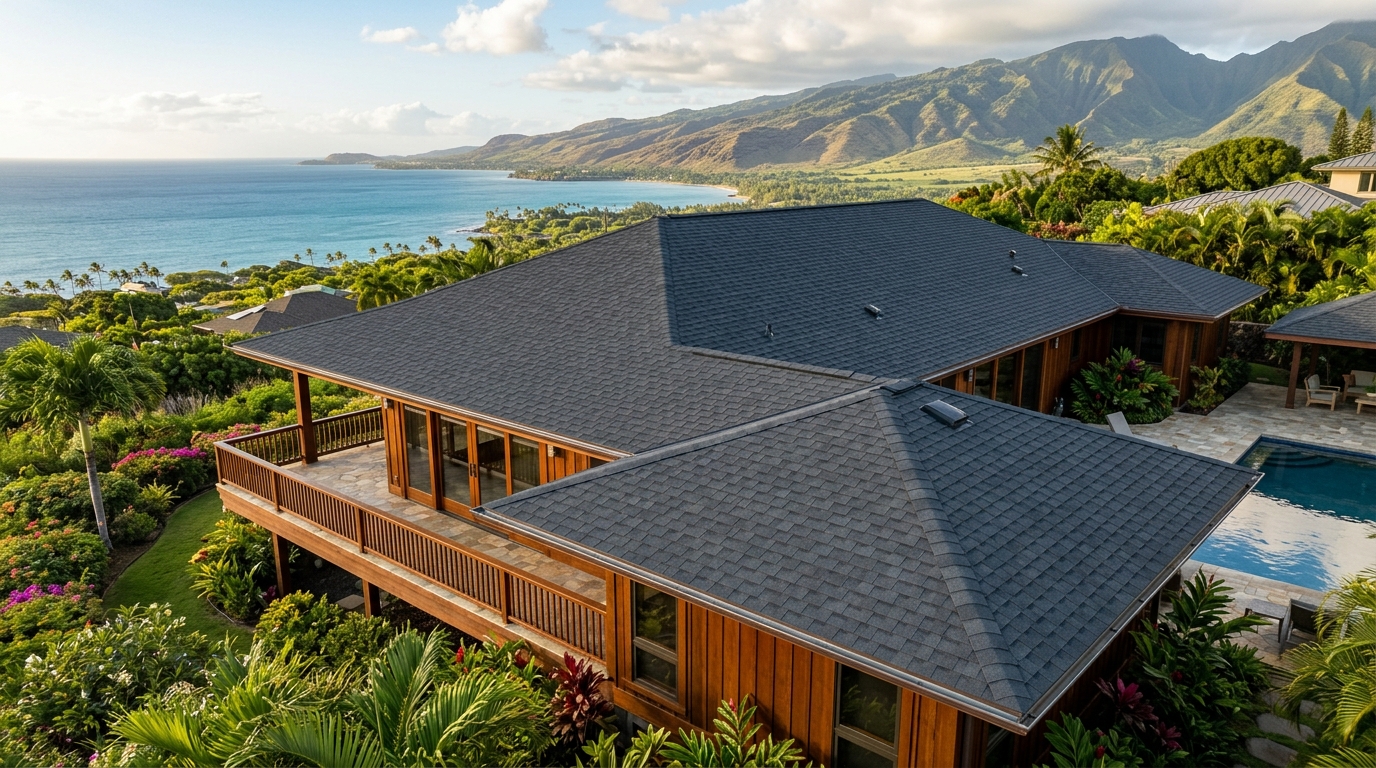
When you’re looking for a roofing contractor in Wailuku, you need a team that understands more than just shingles and nails. You need someone who gets the specific challenges of our Maui climate—the persistent trade winds whipping through the Central Valley, the intense UV exposure, and the corrosive salt air. The right roofing system, installed by an experienced local contractor, is the single most important investment you can make in protecting your home from the elements. As a general contractor with over two decades of experience here in Hawaii, our team at Warrior Construction has seen firsthand what happens when roofing jobs are done wrong. We’ve replaced roofs that failed in under 10 years because the wrong materials were used or the installation couldn’t stand up to our unique weather patterns.
This isn’t just about keeping the rain out. It’s about ensuring your home is secure, energy-efficient, and compliant with ever-evolving hurricane codes. Choosing the right contractor means looking for a licensed, insured team with a deep portfolio of Maui-based projects. In this guide, we’ll walk you through the critical factors every Wailuku homeowner should consider, from understanding the real costs in 2026 to navigating the Maui County permitting process. We’ll cover material selection for tropical environments, what a realistic timeline looks like, and how to spot a reputable contractor from a mile away. Our goal is to give you the confidence to make an informed decision for your home and family.
Why Wailuku Homeowners Trust Warrior Construction for Roofing Contractor
Choosing a roofing contractor on Maui goes beyond a simple Google search. You need a team with a proven track record right here in our community. At Warrior Construction, we’re not just a company with a license; we are a part of the local building fabric. Our license, BC-34373, is something we hold with pride, but our real credentials are the homes we’ve protected across the island, from the rainy slopes of Iao Valley to the sunny coasts of Kihei.
Our experience is rooted in solving Hawaii-specific problems. For example, we recently handled a complex roof replacement in Wailuku for a home in the Waikapu Gardens area. The original asphalt shingle roof, only 15 years old, was failing prematurely. The granules had been stripped away by years of sun and wind, and the underlayment was brittle. More importantly, the previous contractor had used standard galvanized nails, which were already showing significant signs of rust from the salt-laden air. This is a classic mistake we see all the time. Our team specified stainless steel fasteners and a high-temperature, self-adhering water and ice shield as the underlayment—products specifically designed for our high-wind, high-moisture, and high-UV environment. It’s this level of detail that makes all the difference.
Here’s what sets our approach apart for Wailuku homeowners:
- Local Climate Expertise: Wailuku isn’t like the rest of Maui. It gets more rain and wind than South Maui but less direct coastal spray than Paia. We understand this microclimate and recommend systems, like 24-gauge standing seam metal roofs with a Kynar 500 finish, that are engineered to handle these specific conditions for 50+ years.
- Transparent Process: We believe a homeowner should never be in the dark. From the initial inspection where we use drones to document every issue, to the detailed proposal that breaks down material and labor costs, we keep you informed. There are no surprises.
- Neighbor Island Logistics Mastery: Getting materials to Maui on time and on budget is a huge part of the job. We have long-standing relationships with suppliers on Oahu and the mainland, which allows us to manage the shipping and handling process efficiently, minimizing the delays that can plague neighbor island projects.
- In-House Skilled Labor: Our roofing crews are our employees, not random subcontractors. They are trained in the specific techniques required for tropical roofing in Wailuku, including proper flashing details for our wind-driven rain and hurricane strap retrofitting to meet current codes. This ensures quality control from start to finish.
Ultimately, homeowners trust us because we build roofs designed to last a lifetime in Hawaii, not just to pass a final inspection. We live here too, and our reputation is built one secure, waterproof, and beautiful roof at a time.
What Does Roofing Contractor Cost in Wailuku?
In 2026, the cost for a professional roofing contractor in Wailuku is driven by materials, labor, and the complexities of island logistics. A full roof replacement is a significant investment, and it’s critical to understand where the money goes. Unlike the mainland, we can’t just run down to a big box store for materials. Everything is shipped in, adding a considerable percentage to the final cost.
Let’s break down the realistic, all-in costs you can expect on Maui right now. These figures include tear-off of the old roof, any minor sheathing repairs, underlayment, new materials, installation, and disposal fees.
Estimated 2026 Wailuku Roofing Costs (per square foot, installed):
- Architectural Asphalt Shingles: $15 – $22 per sq. ft. This is a common choice, but we always recommend higher-end shingles with better wind ratings (130 mph) and algae resistance for our climate. For a typical 1,800 sq. ft. roof, you’re looking at a total cost of roughly $27,000 to $39,600.
- Standing Seam Metal (24-Gauge Steel): $25 – $35 per sq. ft. This is our most recommended system for Maui. It offers superior longevity (50+ years), excellent hurricane resistance, and energy efficiency. The same 1,800 sq. ft. roof would cost between $45,000 and $63,000. The Kynar 500 paint finish is crucial for resisting fading and chalking under the intense Hawaiian sun.
- Concrete or Clay Tile: $28 – $40+ per sq. ft. While aesthetically pleasing, tile roofs are heavy and may require structural engineering assessments to ensure your framing can support the load. They are durable but can be prone to cracking and require specialized labor for repairs. A tile project often exceeds $50,000 for a standard-sized home.
Several factors can influence these baseline costs:
- Roof Complexity: A simple gable roof is far less expensive than a roof with multiple valleys, dormers, and steep pitches. Each change in plane requires more labor for flashing and cuts.
- Structural Repairs: Once we tear off the old roof, we often find hidden damage—termite-eaten rafters, rotted fascia boards, or delaminated plywood sheathing. We budget a small contingency for this, but extensive damage can add several thousand dollars to the project. On a recent roof repair in Wailuku, we uncovered decades of termite damage that required replacing four major rafters, adding $6,500 to the total job cost.
- Two-Story Homes: Working on a second story requires additional safety equipment, scaffolding, and labor, which can increase the overall project cost by 15-25%.
- Underlayment Choice: A standard felt paper underlayment is the budget option, but it’s inadequate for our climate. We exclusively use high-temperature, self-adhering synthetic underlayments which add about $1.00 – $1.50 per square foot but provide a critical secondary water barrier.
When you get a quote, make sure it clearly itemizes these components. A suspiciously low bid often means corners are being cut on materials, safety, or insurance. Investing in a quality roof from a reputable roofing contractor in Wailuku is one of the soundest financial decisions you can make for your property.
How Long Does a Roofing Contractor Take in Wailuku?
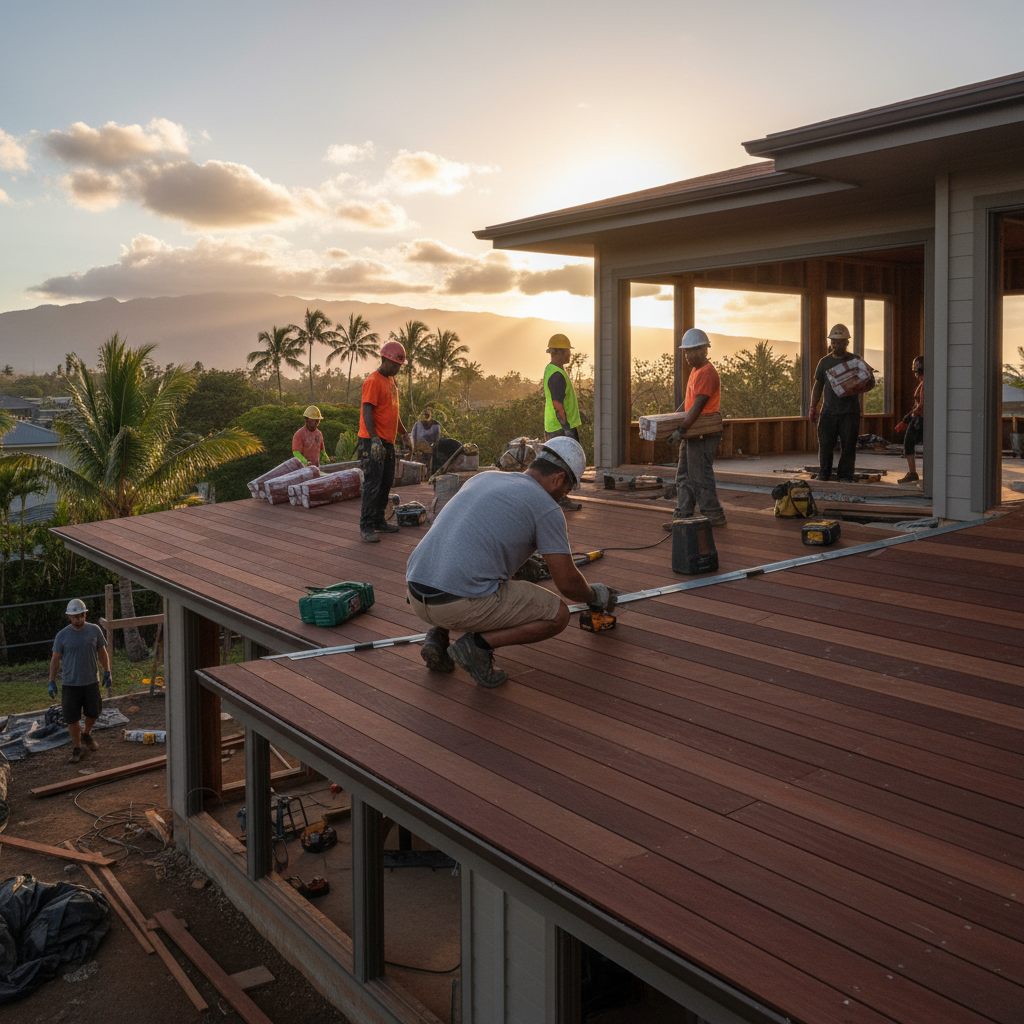
One of the most common questions we get from homeowners is about the timeline. Here on Maui, the timeline for a roof replacement is about more than just the days our crew is physically on your property. The pre-construction phase, particularly material acquisition, is a major factor that mainland homeowners don’t have to contend with in the same way.
Here’s a realistic breakdown of the entire process for a typical roof replacement in Wailuku in 2026, from signing the contract to final inspection:
Total Project Duration: 8 to 14 weeks
- Phase 1: Planning & Permitting (2-6 weeks)
- Contract & Deposit: Once you approve our detailed proposal, we sign the contract and collect the initial deposit. (1-2 days)
- Permit Application: Our team prepares and submits the building permit application to the Maui County Department of Public Works. Depending on their workload, a straightforward roofing permit can take anywhere from 2 to 5 weeks for approval. (We track this daily.)
- Phase 2: Material Sourcing & Shipping (4-8 weeks)
- Material Order: This happens concurrently with permitting. As soon as the contract is signed, we place the order for your specific roofing materials—whether it’s custom-length standing seam metal panels from a manufacturer in California or a specific brand of architectural shingles.
- Manufacturing & Crating: The materials are manufactured and prepared for ocean freight. This can take 1-3 weeks.
- Ocean Freight & Unloading: The container is shipped to Kahului Harbor. This journey and the subsequent unloading and processing can take another 2-4 weeks. We’ve seen this get delayed by a week or more due to port congestion.
- Delivery to Job Site: Once cleared, the materials are delivered to your property.
- Phase 3: On-Site Construction (1-3 weeks)
- Day 1: Site Prep & Tear-Off: We protect your landscaping, set up safety lines, and begin tearing off the old roofing material. We typically have a dedicated dumpster on site.
- Day 2-3: Inspection & Repairs: With the roof deck exposed, we inspect for any wood rot, termite damage, or other structural issues. Any necessary repairs to sheathing, rafters, or fascia boards are completed.
- Day 3-6: Underlayment & Dry-In: We install the new high-performance underlayment. This is a critical step that makes your home watertight while the final roofing is installed. Your home is protected from rain from this point forward.
- Day 6-12: Installation of New Roofing: Our crew meticulously installs the new roofing material—shingles, metal panels, or tile—along with all new flashing, vents, and ridge caps.
- Day 13-14: Final Details & Cleanup: We complete the final trim details, conduct a thorough cleanup of the entire property (including a magnetic sweep for nails), and perform our internal quality control inspection.
- Phase 4: Final Inspection (1 week)
- County Inspection: We schedule the final inspection with the Maui County building inspector. They verify that the installation meets all current building codes.
- Project Completion: Once we have the green tag from the inspector, we complete the final project paperwork with you.
As you can see, the on-site work is actually the shortest part of the process. A reliable roofing contractor in Wailuku will manage this entire logistical chain for you and provide regular updates so you always know what’s happening next.
What Permits Do You Need for Roofing Contractor in Wailuku?
Navigating the permitting process with the Maui County Department of Public Works is a crucial step that protects you as a homeowner. A permit ensures that the work is performed to the safety and structural standards of the current building code. Any reputable roofing contractor in Wailuku will handle the entire permitting process for you from start to finish. If a contractor tells you a permit isn’t needed, that’s a major red flag.
In general, here’s when a building permit is required for roofing work on Maui in 2026:
- Full Roof Replacement (Re-roofing): Any time you are tearing off an old roof and installing a new one, a permit is mandatory. This is the most common scenario.
- Recovering an Existing Roof: If you are adding a second layer of roofing material over an existing one (something we strongly advise against), a permit is still required. Building code generally prohibits more than two layers of roofing for structural weight reasons.
- Significant Roof Repair: While minor repairs (like replacing a few shingles) may not require a permit, any substantial roof repair in Wailuku that involves replacing more than one square (100 square feet) of roofing or any structural components like rafters or sheathing will trigger the need for a permit.
- Changing Roofing Material: If you’re switching from a lighter material like asphalt shingles to a heavier one like concrete tile, a permit is absolutely necessary. The County will likely require a structural engineer to verify that your home’s framing can support the additional weight.
The permitting process involves submitting a detailed application package, which typically includes:
- Building Permit Application Form: The official county form with owner and contractor information.
- Roofing Plans & Details: This includes a site plan, a roof plan showing dimensions and slope, and details on the type of materials being used (shingles, metal, underlayment), and how they will be attached (fastener type and schedule).
- Structural Calculations (if applicable): Required for changes in material weight or significant structural repairs.
- Contractor Information: Proof of our Hawaii General Contractor license (BC-34373) and insurance.
The permit review process in Maui County currently takes about 4 to 8 weeks for a standard residential re-roofing project. The permit fees are typically based on the total valuation of the job and usually run between $500 and $1,500 for an average-sized home. This cost is part of the overall project budget we provide. While the process can seem slow, it serves a vital purpose. The final inspection by a county official provides a third-party verification that your new roof was installed correctly and meets the hurricane-ready standards required for our islands.
Wailuku-Specific Considerations: Climate, Materials, Regulations
Roofing in Wailuku is not like roofing anywhere else, not even other parts of Maui. The town sits at the mouth of the Iao Valley, which acts as a natural funnel for trade winds and moisture. This creates a unique microclimate that demands a specialized approach to roofing. A system that works perfectly in sunny, dry Kihei might fail prematurely here.
Here are the key Wailuku-specific factors our team at Warrior Construction always addresses:
1. Wind-Driven Rain and High Humidity
Wailuku gets significantly more rainfall than the south or west sides of the island. More importantly, the persistent trade winds mean that rain often comes in sideways. This is where a roof is most vulnerable.
- Underlayment is Critical: We consider the underlayment to be just as important as the roof itself. A high-temperature, self-adhering membrane (often called an ice and water shield) is our standard for the entire roof deck, not just the eaves and valleys. This creates a secondary waterproof barrier that protects your home even if a shingle or panel is lifted by extreme wind.
- Flashing Details: Wall-to-roof intersections, chimneys, and skylights must have robust, multi-layered flashing systems to prevent wind-driven rain from being forced underneath. We often solder our metal flashing joints for maximum protection.
2. Salt-Air Corrosion
While not directly on the ocean, Wailuku’s proximity to Kahului Bay and the constant onshore breeze means a high concentration of salt in the air. This salt is incredibly corrosive to metal roofing components.
- Material Choice: This is why we advocate for G90 galvanized steel at a minimum, but preferably aluminum or steel with a high-quality Kynar 500 (PVDF) paint finish for metal roofs. This finish provides a thick, durable barrier against salt spray.
- Fasteners Matter Most: The single point of failure on many Maui roofs is the fasteners. We use only stainless steel or long-life coated screws and nails. Using cheaper galvanized fasteners is a recipe for disaster; they will rust and fail within a decade, compromising the entire roof system. It’s a non-negotiable part of a quality tropical roofing Wailuku installation.
3. Intense UV Exposure
The UV radiation in Hawaii is relentless. It breaks down materials, fades colors, and reduces the lifespan of many roofing products, especially asphalt shingles.
- Reflective Colors: Lighter-colored metal roofs with high solar reflectivity index (SRI) values not only last longer but can also significantly reduce your home’s cooling costs by reflecting solar heat.
- Shingle Quality: If you choose asphalt shingles, it’s essential to select ones specifically formulated for southern climates with algae-resistant (AR) granules to prevent the black streaking common in our humid environment.
4. Hurricane Code Compliance
Since Hurricane Iniki, Hawaii’s building codes have become progressively stricter. Every roof replacement in Wailuku must comply with the latest standards for high-wind regions. This includes:
- Enhanced Fastening Schedules: The code specifies the exact number and pattern of fasteners required per shingle or metal panel, especially in the more vulnerable zones at the corners and perimeter of the roof.
- Roof-to-Wall Connections: We often inspect and, if necessary, upgrade hurricane straps that tie the roof trusses to the wall framing. This is a critical part of the home’s structural integrity during a major storm.
- Plywood Sheathing Renailing: The code may require us to add more nails to the existing roof deck to improve its uplift resistance before the new roof is installed.
A deep understanding of these local conditions is what separates an expert Maui contractor from the rest. We build every roof with the expectation that it will have to endure the worst our climate can throw at it.
How to Choose the Right Roofing Contractor Contractor in Wailuku
Choosing the right contractor is the most important decision you’ll make in your roofing project. A great roof installed by a bad contractor will fail, while a standard roof installed by an expert can last for decades. Here is a practical checklist to help you vet potential contractors on Maui.
1. Verify Their License and Insurance – No Exceptions.
This is the absolute first step. A legitimate contractor will have a Hawaii C-42 Roofing Contractor license or a B-General Contractor license like ours (Warrior Construction, BC-34373). You can and should verify any contractor’s license status on the Hawaii Department of Commerce and Consumer Affairs (DCCA) Professional & Vocational Licensing (PVL) website[1]. Ask for a certificate of insurance showing both General Liability and Worker’s Compensation. If a worker gets hurt on your property and the contractor isn’t insured, you could be held liable.
2. Look for Deep Local, Maui-Specific Experience.
A company based on Oahu or the mainland might have a great portfolio, but do they understand the realities of working in Wailuku? Ask them specific questions:
- “How do you manage material shipments to Kahului Harbor?”
- “What specific underlayment and fasteners do you recommend for Wailuku’s wind and rain?”
- “Can you provide addresses of 3-5 projects you’ve completed in Central Maui in the last two years?”
Go take a look at their work. The quality of the details, like flashing and trim, will tell you a lot.
3. Get a Detailed, Itemized Written Proposal.
A one-page quote with a single price is not enough. A professional proposal should be several pages long and clearly break down:
- Scope of Work: Exact details of the tear-off, any anticipated repairs, and installation.
- Materials: The specific brand, type, and color of roofing, underlayment, flashing, and fasteners. No generic terms like “metal roof.” It should say “24-gauge standing seam metal roof in ‘Forest Green’ by ‘Manufacturer X’ with Kynar 500 finish.”
- Labor Costs: The cost for the installation crew.
- Contingencies: A clear explanation of how unforeseen costs, like wood rot repair, will be handled (e.g., a per-foot cost for rafter replacement).
- Warranty Information: Separate warranties for materials (from the manufacturer) and workmanship (from the contractor). A good contractor will offer at least a 5-10 year workmanship warranty.
4. Don’t Let Price Be the Only Factor.
It’s tempting to go with the lowest bid, but in construction, you almost always get what you pay for. A significantly lower bid often means they are using inferior materials, are uninsured, are not pulling a permit, or are paying their workers under the table. A roof is meant to protect your most valuable asset. The extra 10-15% for a top-tier contractor is an investment in peace of mind that will pay for itself over the lifetime of the roof.
5. Communication and Professionalism.
From the very first phone call, evaluate their professionalism. Do they answer the phone? Do they return calls promptly? Do they answer your questions clearly and patiently? A construction project is a relationship. You want to work with a team that is organized, respectful, and communicative. This is often a good indicator of how they will manage the actual project.
Taking the time to do this due diligence is the best way to ensure your project is a success and you have a roof that will protect your Wailuku home for decades to come.
Real Wailuku Roofing Contractor Project Example
To put all this information into context, let’s walk through a typical roofing project our team recently completed in Wailuku Heights. This case study illustrates the process and the kind of challenges we often solve for Maui homeowners.
The Property: A 2,200 square-foot, single-story home built in the late 1990s. The roof was a complex hip roof with several valleys and a relatively low slope (3:12 pitch).
The Problem: The original architectural asphalt shingle roof was at the end of its life. It had significant granule loss, black algae streaks, and the homeowners had experienced several leaks near a skylight and in a valley. During our initial inspection, we also noted several cracked and sun-damaged plastic roof vents that were close to failing completely.
Our Proposed Solution: The homeowners wanted a long-term, low-maintenance solution that would also help with their cooling bills. We recommended a complete roof replacement in Wailuku with the following system:
- New Roofing: 24-gauge standing seam metal roof system with a 1.5” mechanical-lock seam in a light bronze Kynar 500 finish to maximize solar reflectivity.
- Underlayment: Full coverage of the roof deck with Grace Ice & Water Shield HT, a high-temperature self-adhered membrane.
- Ventilation: A modern ridge vent system to improve attic airflow and reduce heat buildup, replacing the old, inefficient box vents.
- Skylight: Removal of the old, leaking skylight and installation of a new Velux fixed skylight with an upgraded, pre-manufactured flashing kit.
- Structural: We budgeted for the potential replacement of up to 100 linear feet of fascia board and 2 sheets of plywood sheathing, pending the tear-off inspection.
The Process & Timeline:
- Weeks 1-4: Contract signed, permit submitted to Maui County. We discovered the original plans were not on file, requiring our team to create new drawings for the permit submission.
- Weeks 5-10: While the permit was in review, the custom-length metal panels and other materials were ordered, shipped from the mainland, and received at Kahului Harbor.
- Week 11 (On-Site): Permit approved. Our crew began work. During tear-off, we found moderate rot in the sheathing around the old skylight and about 60 feet of water-damaged fascia board, all of which were within our budgeted contingency.
- Week 12 (On-Site): All repairs were completed, the new underlayment was installed, and the skylight was replaced. The house was fully “dried-in” and waterproof.
- Week 13 (On-Site): The new standing seam panels were installed, along with the ridge vent and all custom flashing. The project was completed, and the site was thoroughly cleaned.
- Week 14: The final inspection with the Maui County inspector was passed on the first visit.
The Final Cost: The total project cost came to approximately $72,500. This included all materials, shipping, labor, permitting, dump fees, and the structural repairs identified during the tear-off. The homeowners now have a beautiful, energy-efficient roof that is warrantied for 50 years and engineered to withstand a Category 3 hurricane.
What this means for Hawaii homeowners
For anyone owning a home in Wailuku, or anywhere on Maui for that matter, your roof is your first line of defense. The information we’ve covered isn’t just technical detail; it’s a roadmap to protecting your most significant investment. The key takeaway is that roofing in Hawaii is a specialized trade. The contractor you choose must have a deep, practical understanding of our unique climate challenges, from wind-driven rain to salt-air corrosion and intense UV exposure.
Here are the actionable steps you should take:
- Prioritize Longevity Over Upfront Cost: A cheap roof is often the most expensive one in the long run. Investing in a high-quality system like standing seam metal may cost more initially, but its 50+ year lifespan and superior durability provide a far better return on investment than an asphalt shingle roof you’ll have to replace again in 15-20 years.
- Insist on a Local, Licensed, and Insured Contractor: Never compromise on this. Use the DCCA PVL website[1] to verify their license. Ask for their insurance certificates. Check their local references. This simple due diligence protects you from shoddy work and potential liability.
- Focus on the System, Not Just the Shingles: A great roof is more than what you see. Pay close attention to the contractor’s recommendations for underlayment, fasteners, and flashing. In Wailuku’s climate, these ‘unseen’ components are what will prevent leaks and premature failure. Stainless steel fasteners and a full-deck, self-adhering water shield are not upgrades; they are necessities.
- Plan for the Timeline: Understand that due to neighbor island shipping, a roof replacement is a multi-month process from contract to completion. A contractor who promises to start next week likely doesn’t have a solid supply chain or is cutting corners. Be patient and plan accordingly.
Your home’s roof is a complex system. By arming yourself with this knowledge, you can ask the right questions, evaluate bids intelligently, and partner with a true professional who will deliver a safe, durable, and long-lasting solution for your Wailuku home.
Frequently Asked Questions About Roofing Contractor in Wailuku
Can I install a new roof over my old shingles in Wailuku?
While building code sometimes allows for one layer of ‘recover’ roofing, we strongly advise against it in Hawaii. Trapping old, moist shingles underneath a new roof can accelerate rot in your roof deck. It also prevents us from properly inspecting the sheathing for termite damage or weak spots. A full tear-off is the only way to ensure a quality, long-lasting installation.
What is the best roofing material for Maui’s sun and heat?
Standing seam metal is widely considered the best choice for Hawaii’s climate. A light-colored metal roof with a high-quality Kynar 500 finish can reflect over 50% of solar radiation, keeping your attic and home cooler and reducing your energy bills. This finish is also highly resistant to UV degradation, chalking, and fading, ensuring it looks great for decades.
How much does a minor roof repair cost in Wailuku?
For a small, non-emergency roof repair in Wailuku, such as replacing a few blown-off shingles or sealing a leaking vent flashing, you can expect a service call to cost between $450 and $900 in 2026. If the repair requires replacing a larger section of underlayment or plywood, the cost can easily exceed $1,500. It’s often more cost-effective to address several small issues at once.
Does my homeowner’s insurance cover a roof replacement?
It depends. Insurance typically covers roof replacement if it’s damaged by a specific, sudden event, like a hurricane or a fallen tree (‘peril’). It does not cover replacement due to old age, wear and tear, or lack of maintenance. We can provide all necessary documentation for you to file a claim if your damage is from a covered event.
What kind of warranty should I expect from a Wailuku roofing contractor?
You should receive two warranties. First is the manufacturer’s warranty on the material itself, which can range from 25 years for shingles to 50 years for a metal roof finish. Second, and more importantly, is the contractor’s workmanship warranty. A reputable contractor like Warrior Construction will provide a workmanship warranty of 5 to 10 years, covering any issues related to the installation.
How do you handle rain during the roofing process?
This is a critical concern in a place like Wailuku. Our crews are trained to only tear off sections of the roof that they can make watertight again in the same day. We constantly monitor weather radar. If rain is imminent, we immediately install the synthetic underlayment or secure tarps to ensure the inside of your home stays completely dry.
Are solar panels a problem for a roof replacement?
They need to be handled properly. If you have a solar PV or solar hot water system, it must be removed by a licensed solar contractor before we begin the re-roofing and then reinstalled after we are finished. We can coordinate this process with a trusted solar partner to ensure it’s done safely and your system’s warranty is maintained.
Ready to Protect Your Wailuku Home?
Your roof is too important to leave to chance. If you’re seeing signs of wear, dealing with leaks, or planning for the future, our team at Warrior Construction is here to help. We combine decades of Hawaii-specific building science with a commitment to quality and transparency. We understand the unique demands of Wailuku’s climate and build roofing systems that provide lasting protection and peace of mind, especially when it comes to hurricane readiness.
Let’s start the conversation about your roofing project. Reach out to our team for a comprehensive, no-obligation estimate. We’ll assess your current roof, discuss the best options for your home and budget, and show you why we’re Maui’s trusted choice for hurricane-resistant construction and roofing.