
In 2026, the real oahu bathroom remodel cost for a master suite starts around $35,000 for a quality, functional upgrade and can easily exceed $90,000 for a full spa-like retreat in Kailua or Kahala. We see it every day. With so many homeowners choosing to stay put and reinvest in their properties, the master bathroom has become the number one project on the list. For most people, the big question isn’t *if* they should remodel, but how much they need to budget for a project that will last in our island climate and actually add value to their home.
This isn’t mainland pricing. Here in Hawaii, we deal with a unique set of challenges—from the corrosive salt air that eats cheap fixtures for breakfast to the logistical puzzle of getting every single tile and faucet across the Pacific on time. As a result, understanding the true cost requires a local perspective. Over the past 20 years, our team at Warrior Construction has managed hundreds of bathroom renovations across the island, from compact condo bathrooms in Honolulu to sprawling indoor-outdoor oases on the North Shore.
Consequently, we’ve developed a clear picture of what things really cost and where your money is best spent. In this guide, we’ll break down the realistic 2026 Oahu bathroom remodel cost across three distinct tiers. Furthermore, we’ll cover which features the Honolulu Board of REALTORS® says provide the best return on investment, which materials can actually withstand our humidity, and how long you can realistically expect your project to take from the first swing of a sledgehammer to the final plumbing inspection.
How Much Does a Master Bathroom Remodel Cost on Oahu in 2026?
The honest answer is that the average Oahu bathroom remodel cost is driven by three main factors: the size of the space, the quality of materials you choose, and the complexity of the job (like moving walls or plumbing). A simple pull-and-replace of a 5’x8′ hall bathroom is a completely different project than a 200-square-foot master suite expansion. However, based on our 2026 projects, we can break it down into three common budget tiers.
The $35,000 – $50,000 Functional Upgrade (Ewa Beach, Mililani)
This is the most common price range for a master bathroom remodel in a single-family home or townhouse in areas like Ewa Beach, Kapolei, or Mililani. The goal here is a major functional and aesthetic improvement without changing the existing layout. In this tier, we’re not moving any walls, toilets, or shower drains, which helps keep plumbing and electrical costs under control.
For this budget, you can expect:
- Vanity: A good quality, pre-fabricated vanity (36” to 60”) with a quartz or solid-surface countertop.
- Fixtures: Quality fixtures from brands like Delta or Moen with a durable PVD finish to resist corrosion.
- Tile: Mid-range porcelain tile for the floor and shower walls. This typically covers a standard tub/shower combo or a small walk-in shower.
- Tub/Shower: A new acrylic alcove tub or a pre-fabricated shower pan. We focus on a full waterproofing system behind the tile, which is non-negotiable.
- Lighting & Ventilation: A new, quiet, and powerful ventilation fan (critical for fighting moisture) and an updated vanity light fixture.
- Labor: This price includes all professional labor for demolition, plumbing, electrical, waterproofing, tile setting, and painting. Remember, a licensed plumber on Oahu bills out at around $145/hour, so keeping the layout simple is key to staying in this budget.[1]
Essentially, this price point delivers a brand-new, reliable, and beautiful bathroom that will function well for years and significantly improve your home’s appeal without breaking the bank. The focus is on quality installation and durable, mid-range materials.
The $55,000 – $85,000 Mid-Range to High-End Remodel (Kailua, Hawaii Kai)
This is where most of our master bathroom projects in neighborhoods like Kailua, Kaneohe, and Hawaii Kai land. In this budget range, you have much more flexibility with both layout and materials. This is where we start converting old tub/shower combos into large, luxurious walk-in showers—often the primary goal for our clients.
Here’s what a mid-range Oahu bathroom remodel cost allows for:
- Layout Changes: Moving a toilet, expanding the shower footprint, or reconfiguring the vanity location is feasible. This involves significant plumbing and electrical work.
- Walk-In Shower: The centerpiece is usually a spacious, custom-tiled walk-in shower with a frameless glass enclosure, a built-in bench, and multiple recessed niches for storage.
- Vanity: A semi-custom or custom vanity (72” or larger) with double sinks and a high-quality slab countertop (quartzite or natural stone).
- High-End Tile: A larger budget for premium porcelain, natural stone, or intricate mosaic tiles. This allows for floor-to-ceiling tile in the shower and often a feature wall.
- Luxury Fixtures: Upgraded fixtures from brands like Brizo, Kohler, or Hansgrohe, possibly including a rain shower head and a handheld wand.
- Lighting: A layered lighting plan with recessed cans in the ceiling, stylish sconces at the vanity, and dimmers throughout to create different moods.
For example, on a recent project in Kailua, we removed a bulky, unused jacuzzi tub and used that space to create a stunning 6’x4′ walk-in shower with a linear drain. This single change completely transformed the room from feeling dated to feeling like a modern spa. This is the kind of transformative project this budget enables.
The $90,000+ Luxury Spa Retreat (North Shore, Kahala)
When you enter the $90,000+ territory, you are creating a true luxury experience. These projects are common in high-end neighborhoods like Kahala, Portlock, or on beachfront properties on the North Shore. Here, the bathroom becomes a destination within the home, often involving structural changes and the highest-end materials available.
A luxury Oahu bathroom remodel cost can include:
- Major Structural Changes: Removing walls to combine rooms, adding new windows for more natural light, or even relocating the entire bathroom to a different part of the house.
- Curbless Wet Room: A fully waterproofed “wet room” design with a curbless shower, where the entire floor slopes gently to a hidden drain. This creates a seamless, open feel and is fantastic for aging-in-place.
- Freestanding Tub: A sculptural freestanding soaking tub as a major focal point.
- Premium Materials: Large-format slab materials (like porcelain or marble) for walls to minimize grout lines, custom cabinetry with furniture-grade finishes, and heated floors.
- Smart Home Tech: Integrated technology like a smart toilet/bidet, a digital shower system that controls temperature and flow, built-in speakers, and steam shower functions.
- Indoor-Outdoor Connection: A popular feature in this range is creating a connection to a private outdoor shower garden, using large glass doors to blur the lines between inside and out.
These projects are less about simple renovation and more about custom design and craftsmanship. They require meticulous planning and a team that can execute complex details flawlessly.
What Drives These Costs? Labor, Materials, and Island Logistics
It’s crucial to understand why the Oahu bathroom remodel cost is what it is. First, skilled labor is expensive and in high demand here. UHERO’s 2026 forecast confirms the residential renovation market is surging, keeping the best subcontractors booked months in advance.[2] Good tile setters, plumbers, and electricians command top dollar for their expertise. Second, nearly every single material—from the vanity to the screws—has to be shipped to the island. This adds a significant percentage to the material cost that you simply don’t have on the mainland. Finally, the complexity of working in older homes with outdated plumbing or unexpected termite damage can add to the scope once we open up the walls. A good contractor will plan for these contingencies in the budget from day one.
What Bathroom Features Add the Most Resale Value in Hawaii?
When you’re investing a significant amount of money into a renovation, you want to know it’s a smart financial move. Based on market data and our experience, some features provide a much better return on investment (ROI) than others. The focus for bathroom remodel ROI oahu is on creating a clean, modern, and functional space that appeals to the broadest range of buyers.
Curbless, Walk-In Showers: The #1 Value-Add
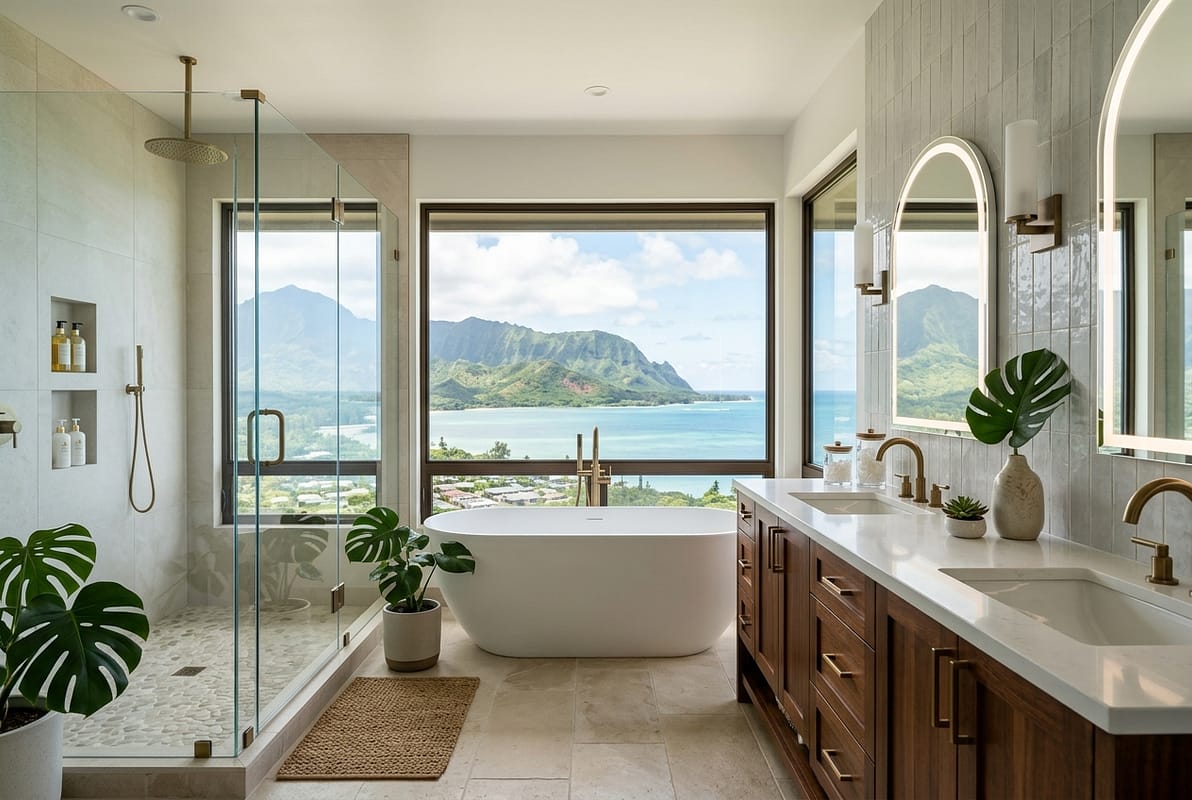
If you do only one thing, this is it. Bulky tubs and tiny, framed shower stalls are majorly outdated. The Honolulu Board of REALTORS®’ 2026 market analysis is clear: a large, bright, curbless walk-in shower is one of the most desired features in a master bathroom. Their data indicates it can add as much as $40,000 in appraised value, offering a fantastic ROI.[3] The term “curbless” or “zero-threshold” means there’s no curb to step over, making the bathroom feel larger and more accessible. Properly building one requires expert waterproofing and floor sloping, so it’s not a DIY job, but the payoff is huge. The typical curbless shower cost hawaii can add $5,000 to $10,000 to the overall project compared to a standard curbed shower, but the value it adds is undeniable.
Smart Aging-in-Place Features (Blocking, Wider Doors)
Hawaii has many multi-generational households, and buyers are thinking long-term. Integrating aging-in-place features is not just practical; it’s a major selling point. Honolulu DPP permit data shows a 20% year-over-year increase in designs specifying features like curbless showers.[4]
The smartest (and cheapest) time to do this is during a remodel:
- Blocking for Grab Bars: Before we put up the drywall, we install solid wood blocking inside the walls around the toilet and shower. This costs very little but means future grab bars can be installed securely anywhere, at any time.
- Wider Doorways: Expanding the bathroom door from the standard 28” or 30” to 36” makes the room accessible for walkers or wheelchairs.
- Comfort-Height Toilet: Installing a toilet that is 17-19 inches high (a few inches taller than standard) makes it much easier to sit and stand.
These features signal to buyers that the home is thoughtfully designed for the long haul. For more details on this, check out our guide to aging-in-place remodels.
Double Vanities and Quality, Layered Lighting
These are considered standard expectations in a master bathroom today. A cramped, single-sink vanity is a functional bottleneck for couples. A spacious double vanity with ample counter space and storage is a must-have. Similarly, a single light fixture over the mirror is no longer enough. A good lighting plan includes overhead recessed lighting for general illumination, sconces or vertical lights on either side of the mirror to eliminate shadows, and a waterproof light in the shower. Putting everything on dimmers allows for task lighting when getting ready and soft, ambient light for a relaxing bath.
How Long Does a Bathroom Remodel Take in Honolulu?
A full master bathroom gut remodel on Oahu typically takes between 6 to 10 weeks of active construction. However, this is only after a lengthy pre-construction phase of design, material selection, and permitting, which can take 4 to 8 months or more. Anyone who tells you they can start next week and be done in a month is cutting corners. A quality job has a deliberate, multi-stage process.
Our Typical Timeline: From Design to Final Walk-Through
Here’s a realistic breakdown of the entire process:
- Phase 1: Design & Planning (4-8 weeks): We work with you to finalize the layout, select all materials (tile, vanity, fixtures, etc.), and create detailed construction plans.
- Phase 2: Material Procurement & Permitting (8-20+ weeks): This is the “hurry up and wait” phase. We order everything—from cabinets to tile—to ensure it’s physically on-island before we start. Simultaneously, we submit plans to the Honolulu Department of Planning and Permitting (DPP).
- Phase 3: Demolition & Rough-In (1-2 weeks): The active construction begins. We tear out the old bathroom down to the studs and our licensed plumbers and electricians rough-in the new plumbing and wiring. This is followed by a city inspection.
- Phase 4: Waterproofing, Tile & Grout (2-3 weeks): This is a meticulous, multi-step process. We install the waterproofing membrane, float the shower pan, set the tile, and grout. This cannot be rushed.
- Phase 5: Installation & Finishes (1-2 weeks): The vanity, countertops, toilet, and fixtures are installed. We also handle painting and trim work.
- Phase 6: Final Details & Inspections (1 week): Frameless glass is measured and installed, along with mirrors, hardware, and final fixtures. We then have our final plumbing and electrical inspections with the city.
- Phase 7: Final Walk-Through: We walk through the completed project with you to ensure every detail is perfect.
Why Honolulu Permitting Adds to the Schedule
The single biggest wildcard in any Honolulu bathroom remodel schedule is the DPP. If you are not moving walls, plumbing, or major electrical, you may not need a permit. However, for most of the mid-range and luxury projects we do, a permit is required. As of 2026, the review times for a straightforward renovation permit can stretch from 5 to 7 months. If the project is more complex, it can be even longer. This is why we order all materials while the permit is in review. This parallel processing is the only way to manage the timeline effectively and avoid having a torn-up bathroom sitting idle while waiting for a faucet to arrive from the mainland.
Which Materials Best Withstand Hawaii’s Salt Air and Humidity?
Choosing the right materials is arguably more important in Hawaii than anywhere else. Our combination of high humidity, salt-laden air (especially on the Windward side), and aggressive termites can destroy inferior products in just a few years. Part of our job is guiding clients to materials that look great *and* will last.
Fixtures: PVD Finishes Over Chrome
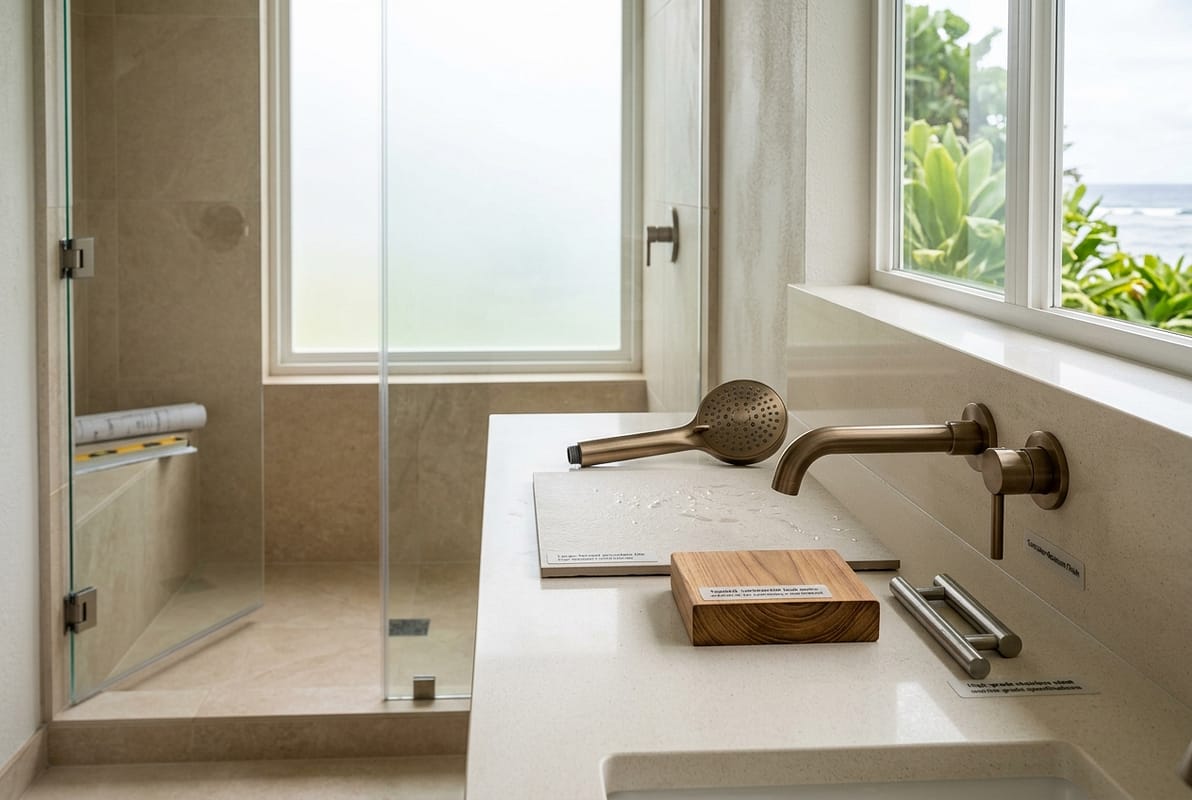
Standard chrome-plated fixtures look shiny and new for a while, but the thin chrome layer is easily compromised by salt air, leading to pitting and corrosion. We’ve seen it happen in as little as two years in homes in Kailua and Lanikai. For faucets, shower heads, and hardware, we strongly recommend finishes applied with Physical Vapor Deposition (PVD). PVD finishes (like Brilliance Stainless from Delta or Vibrant Brushed Nickel from Kohler) are molecularly bonded to the fixture, making them incredibly resistant to scratches, tarnish, and corrosion. They cost a bit more upfront, but they will look new for a decade or more.
Tile & Grout: Why We Recommend Porcelain for Island Homes
Porcelain tile is our go-to for floors and shower walls. It is fired at a higher temperature and is denser than standard ceramic tile, making it less porous. It absorbs less than 0.5% of water, which is a huge advantage in our damp environment. This helps prevent mildew growth within the tile itself. For grout, we always recommend using a high-performance, stain-resistant epoxy or cementitious grout. These advanced grouts resist moisture penetration and are much easier to clean, preventing the dreaded black mildew that can plague bathrooms in Manoa or other humid areas.
Cabinetry & Vanities: Fighting Off Moisture and Termites
The wrong vanity can be a disaster waiting to happen. Particleboard or MDF (medium-density fiberboard) will swell and disintegrate in a humid bathroom. For cabinetry, we recommend two primary options:
- Solid Wood or Plywood Construction: Avoid particleboard at all costs. Vanities made from solid wood or furniture-grade plywood with quality factory finishes will hold up much better to moisture.
- Marine-Grade Polymer: For a completely waterproof and termite-proof solution, especially for outdoor or wet room applications, marine-grade polymer cabinetry is an excellent choice. It won’t warp, rot, or delaminate, ever.
Investing in the right core materials is a cornerstone of a successful Hawaii bathroom renovation.
How Can You Maximize Space in a Small Honolulu Bathroom?
Many older Honolulu homes and condos have surprisingly small master bathrooms. But a small footprint doesn’t have to feel cramped. With smart design strategies, we can make even a 40-square-foot bathroom feel open and functional.
Wall-Mounted “Floating” Vanities
This is our number one trick for small spaces. By mounting the vanity to the wall so it floats above the ground, you allow the flooring to extend all the way to the wall. This simple visual trick makes the room feel significantly wider and more open. As a bonus, it’s also much easier to clean the floor underneath.
Recessed Niches and Medicine Cabinets
Every inch counts in a small bathroom. Instead of having storage that protrudes into the room, we use the space between the wall studs. A recessed shower niche provides a sleek, built-in spot for shampoo bottles without needing a bulky corner caddy. A recessed medicine cabinet provides essential storage over the sink without a cabinet jutting out over your face.
Pocket Doors: The Ultimate Space Saver
A standard swinging door requires a significant amount of clear floor space to open—space you often don’t have in a tight bathroom. A pocket door slides discreetly into the wall, freeing up that valuable real estate. In many ADU or condo bathrooms, a pocket door can save nearly 10 square feet of floor space, which can be the difference between fitting a comfortable shower or a tiny one.
Are Indoor-Outdoor Bathrooms a Practical Idea on Oahu?
Absolutely. For homes with the right setting and privacy—think hillside lots in Manoa or larger properties on the North Shore—an indoor-outdoor bathroom can be a defining feature. It elevates the daily routine into a resort-like experience and embraces Hawaii’s unique lifestyle. However, it requires careful design and material selection.
Design Considerations for Privacy and Function on the North Shore
The key is to create a seamless transition while maintaining complete privacy. This is usually achieved by connecting the indoor bathroom to an enclosed garden or courtyard via large sliding glass doors. The outdoor area is typically walled with lava rock, dense bamboo, or custom wood screening. Functionally, the outdoor space often includes a shower for rinsing off after a surf session, surrounded by tropical landscaping. This setup helps keep sand and salt out of the main house.
Durable Materials for an Outdoor Shower Garden (Basalt & Ipe)
Materials in the outdoor portion of the bathroom are fully exposed to the elements, so they have to be bulletproof. We often use dark basalt tile for flooring and walls, as it’s a natural volcanic stone that holds up incredibly well and has a timeless Hawaii aesthetic. For any wood elements like decking or benches, we only use dense, rot-resistant hardwoods like Ipe or Teak. These materials will patina beautifully over time and won’t succumb to rain or sun.
Case Study: A $75,000 Kailua Master Bathroom Renovation
To illustrate what a mid-range Oahu bathroom remodel cost looks like, let’s consider a recent project we completed in Kailua for a 1980s home. The existing bathroom was 120 sq. ft. but was poorly laid out with a giant, unused corner tub, a tiny 3’x3′ shower stall, and a single vanity.
The Goals: The homeowners wanted to create a more open, spa-like feel. Their top priorities were a large walk-in shower, a double vanity, and better lighting.
Our Solution & Scope:
- Demolition: We removed everything, including the non-load-bearing wall that separated the shower and tub.
- Layout Change: We eliminated the tub entirely and relocated the toilet by about 2 feet to make way for a new 6’x4′ walk-in shower along the back wall.
- Plumbing & Electrical: This involved re-routing the drain for the new shower, moving the toilet supply line, and adding a second set of plumbing for the new double vanity. We also added four new recessed LED lights and two vanity sconces.
- Materials: The clients chose a beautiful large-format porcelain tile for the floor and shower walls, a semi-custom 72-inch shaker-style vanity with a quartz countertop, and high-quality Brizo fixtures in a PVD brushed gold finish.
- Features: The new shower included a custom tiled bench, a linear drain for a modern look, and a frameless glass panel.
The Numbers:
- Design & Permitting: $6,500
- Labor (Plumbing, Electrical, Tile, etc.): $38,000
- Materials (Vanity, Tile, Fixtures, Glass, etc.): $26,500
- Contingency (10%): $4,000 (used for some unexpected framing repair)
- Total Project Cost: ~$75,000
Timeline: The design and material selection took about 6 weeks. The Honolulu permit took nearly 6 months to get approved. Once we had the permit and all materials on hand, the actual construction took 8 weeks from demolition to the final walk-through. The result was a complete transformation that dramatically improved the homeowners’ daily lives and significantly increased their property value.
What this means for Hawaii homeowners
Understanding the real Oahu bathroom remodel cost in 2026 is about more than just numbers—it’s about setting realistic expectations and making smart, long-term investments in your property. High interest rates and a tight housing market mean more people are renovating rather than moving. This has increased demand for qualified contractors and driven up costs for both labor and materials.
Here are the key takeaways for your project:
- Budget Realistically: A basic pull-and-replace for a small 5’x8′ hall bathroom in Ewa Beach or Mililani now starts at a minimum of $28,000. For a master bathroom, plan for at least $35,000 and be prepared for that number to climb to $55,000-$85,000 if you plan to move plumbing or use higher-end finishes. Trying to do it for less often means cutting corners on waterproofing or using unqualified labor, which will cost you far more down the road. You can find more details in our guide to common renovation budget-busters.
- Plan for the Timeline: The biggest mistake we see is homeowners underestimating the pre-construction phase. You must account for 4-8 months of design, material selection, and permitting *before* any construction begins. The best contractors are booked far in advance, so start the conversation with a builder at least 9-12 months before you hope to have a finished bathroom.
- Invest in Durability and ROI: Don’t get swayed by trendy finishes that won’t last in our climate. Prioritize a bulletproof waterproofing system, PVD-coated fixtures, and porcelain tile. For the best return on investment, focus on creating a large, curbless walk-in shower and incorporating a double vanity. These are the features that today’s buyers demand.
- Hire a Licensed, Reputable Contractor: A detailed contract, proper licensing (our Hawaii General Contractor license is BC-34373), and a track record of successful projects are non-negotiable. A good contractor will manage the entire process, from navigating the DPP to coordinating skilled trades, ensuring your investment is protected and the final result is exactly what you envisioned.
A successful bathroom remodel is a carefully orchestrated project. By planning ahead and working with an experienced team, you can create a beautiful, functional space that enhances your life in Hawaii and adds significant value to your home.
Frequently Asked Questions
What is the average ROI on a bathroom remodel on Oahu?
For a mid-range master bathroom remodel in the $55,000 to $85,000 range, homeowners on Oahu can expect to recoup approximately 70-85% of their investment upon resale, according to the Honolulu Board of REALTORS®. The highest ROI comes from features like large, walk-in showers and double vanities, which are now standard expectations for buyers in the market.
Do I need a permit for a simple bathroom remodel in Honolulu?
If you are only replacing fixtures in their existing locations (a ‘pull-and-replace’), you often do not need a building permit. However, the moment you move or add plumbing drains, electrical outlets, or alter any load-bearing walls, a permit from the Honolulu DPP is required. Most comprehensive remodels fall into this category.
How can I save money on my Oahu bathroom remodel cost?
The best way to control your Oahu bathroom remodel cost is to keep the existing layout. Not moving the toilet, shower drain, or vanity will save you thousands in plumbing and electrical work. Additionally, selecting high-quality but standard-sized porcelain tile and a pre-fabricated vanity instead of custom cabinetry can provide significant savings without sacrificing durability.
Is it cheaper to remodel two bathrooms at the same time?
Yes, there are definite cost efficiencies. While your material costs will be higher, you save on labor and overhead. We can have our tile setter, plumber, and electrician work on both spaces consecutively, reducing setup and travel time. This typically results in an overall savings of 10-15% compared to doing the two projects separately.
What’s the biggest hidden cost in a Hawaii bathroom renovation?
The most common surprise is finding extensive water or termite damage after we open up the walls, especially in older single-wall construction homes. We always include a 10-15% contingency in our budgets to cover unforeseen issues like replacing rotted framing, subflooring, or dealing with old, corroded cast iron pipes that need to be replaced.
How much does a curbless shower cost in Hawaii?
Adding a true, zero-threshold curbless shower typically adds between $5,000 and $10,000 to the total Oahu bathroom remodel cost compared to a standard shower with a curb. The extra cost covers the specialized labor to recess the floor structure, the meticulous multi-layer waterproofing required for a wet room, and often a more expensive linear drain system. While it’s a significant investment, its value for accessibility and aesthetics is unparalleled.
Can you convert a tub into a walk-in shower?
Yes, a tub-to-shower conversion is one of the most popular requests we get. It’s a key part of many mid-range projects. The process involves removing the old tub, re-routing the plumbing drain to the center of the new shower space, installing a new shower valve, and then building out and waterproofing the new, larger shower enclosure. It’s a straightforward job for a professional crew and completely transforms the room’s functionality.
Ready to Start Your Project?
Get a free, no-obligation estimate from Hawaii’s most trusted licensed general contractor. We bring 20+ years of island-specific construction expertise to every project.


