
Investing in a “defensively built” home in Hawaii typically adds 15-25% to your upfront construction budget. However, this isn’t just an expense; it’s a strategic investment that delivers a powerful long-term return through drastically lower maintenance, reduced insurance premiums, and a significantly higher resale value. Over my 20+ years building on Oahu, I’ve seen time and again how spending more on the right materials from the start saves homeowners hundreds of thousands in repairs down the road. This guide breaks down the real hawaii resilient building costs for creating a home that can stand up to our islands’ unique challenges: hurricanes, Formosan termites, and corrosive salt air.
Many homeowners understandably focus on the initial price tag of a new build or major remodel. But here in Hawaii, the real cost of a home isn’t what you pay on day one. It’s the total cost of ownership over 30 years. Making smart, defensive choices during construction means you’re not just building a house; you’re building a fortress designed for this specific environment. It’s the difference between a home that looks great for five years and one that performs for fifty.
What Does ‘Defensive Building’ Mean for a Hawaii Home?
Simply put, ‘defensive building’ in Hawaii means constructing a home as a complete, integrated system designed to resist our three primary threats: high winds, voracious termites, and relentless salt and sun degradation. It’s not about picking one or two “upgraded” products. Instead, it’s a holistic approach that starts at the foundation and goes all the way to the paint finish on your roof. Think of it as building for the worst-case scenario so you can enjoy the best-case scenario every day.
For us at Warrior Construction, this philosophy is built into every project. It means we don’t just follow the minimum code requirements; we build beyond them. The 2018 International Residential Code, which the Honolulu Department of Planning and Permitting (DPP) enforces, is a good baseline, but it’s still just the minimum legal standard.[1] Defensive building means asking what will truly last in this environment.
A perfect example is a project we completed in Kaneohe a few years back. The client chose to invest in a full defensive package: standing seam metal roof, impact-rated windows, and 316-grade stainless steel hardware. Six months later, a major storm system brought gale-force winds and driving rain to the windward side. While his neighbors were dealing with lost shingles, water intrusion around window frames, and rust stains from failing fasteners, his home was completely unscathed. That’s the tangible result of building defensively. It’s about peace of mind when the wind starts howling.
How Much Does It Cost to Hurricane-Proof a New Home on Oahu?
Building a hurricane-resistant home on Oahu in 2026 adds approximately $75,000 to $150,000 to the cost of a typical 2,500 square-foot residence, depending on the design and location. This premium covers a system of non-negotiable upgrades, including a robust roofing system, impact-rated windows and doors, and a continuous load path from the roof to the foundation. This isn’t gold-plating; it’s the new standard for durable construction, especially in high-wind zones like the North Shore or the windward coast.
Standing Seam Metal Roofs: Are They Worth the Investment?
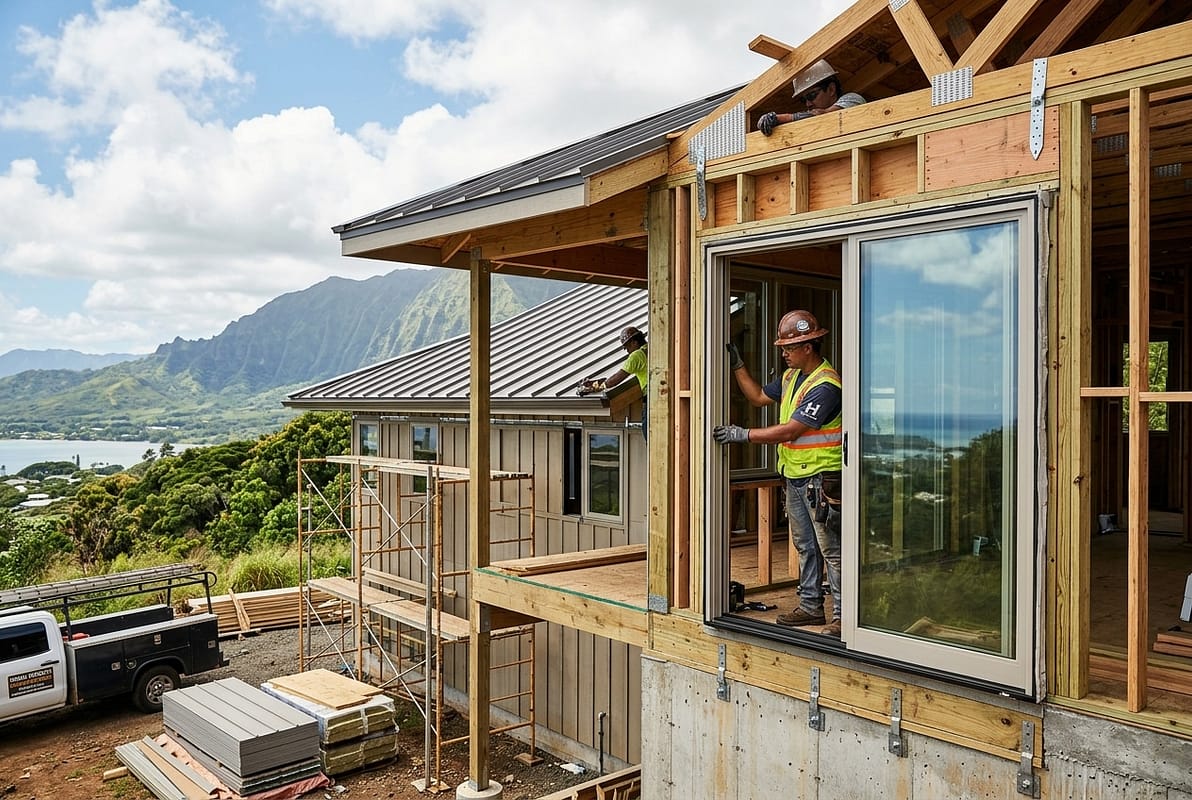
Absolutely. A 24-gauge standing seam metal roof is the single most important investment you can make for hurricane resistance. For a 2,500 sq. ft. home, this system typically costs between $50,000 and $60,000. In contrast, a standard architectural shingle roof might only run you $30,000. That $20,000 to $30,000 difference buys you incredible performance.
Here’s why we strongly recommend them. Each panel is mechanically seamed and fastened directly to the roof deck, creating a single, monolithic surface that can withstand wind uplift forces far greater than any shingle system. Data from the Hawaii Contractors Association confirms this is the gold standard for resilience.[2] Furthermore, we specify panels with a Kynar 500 finish. This is a high-performance fluoropolymer coating that carries a 20-year warranty against fading and chalking, even in our intense UV environment. An asphalt shingle roof, on the other hand, will likely need replacement in 15-20 years, whereas a properly installed metal roof can last 50 years or more.
The Real Price of Code-Compliant Impact Windows and Doors
Your window and door package is another major component of the hurricane proof home cost in Hawaii. Since Hurricane Iniki, building codes have become rightfully strict. The Honolulu DPP now requires either impact-rated glazing (windows and doors with a laminated inner layer that stays intact even if shattered) or a certified shutter system for all new construction.[1]
For a modest Kailua residence of about 2,200 sq. ft., you should budget a minimum of $45,000 for a code-compliant impact-rated window and door package. This is easily double or triple the cost of standard non-impact windows. While the price can be a shock, the alternative is dealing with bulky, difficult-to-deploy shutters or, worse, taping up your windows and hoping for the best. Impact windows provide 24/7 passive protection. They also offer significant acoustic benefits, reducing road noise, and provide an added layer of security against break-ins.
Mandatory Hurricane Ties and Structural Connectors
This is the hidden part of the system that literally holds your house together. A continuous load path is created using galvanized or stainless steel connectors, like those from Simpson Strong-Tie, that mechanically fasten the roof trusses to the wall framing, the walls to the floor, and the floor to the foundation. This ensures that when the wind pushes against the house, the forces are safely transferred all the way into the ground.
The Honolulu DPP’s code enforcement makes this non-negotiable.[1] For a typical 2,200 sq. ft. home, the material and labor for this comprehensive system of straps, ties, and connectors adds about $4,000 to $6,000 to the framing budget. It’s one of the most cost-effective defensive upgrades you can make, and it’s something our team inspects meticulously at every stage of the framing process.
What Are the Best Ways to Termite-Proof a Home During Construction?
A multi-layered approach is the only effective strategy for termite proof construction in Hawaii. There is no single magic bullet against our aggressive Formosan subterranean termites. The best defense integrates physical barriers, treated materials, and chemical ground treatments. This combination typically adds $5,000 to $12,000 to a new home’s cost but can save you from a $50,000 structural repair bill and the nightmare of tenting your home in the future.
Pre-Construction Ground and Foundation Treatments
Your first line of defense happens before we ever pour the concrete slab. We always start with two critical steps:
- Chemical Ground Treatment: As mandated by the DCCA’s Pest Control Board, a licensed pest control company must apply a liquid termiticide like Termidor to the entire soil pad before the vapor barrier goes down. This creates a chemical barrier that is lethal to termites. The mandatory pre-slab pour termite ground treatment costs homeowners around $1.50 per square foot.[3] For a 2,000 sq. ft. foundation, that’s a $3,000 investment.
- Physical Barrier: We often supplement the chemical treatment with a physical barrier. Research from the University of Hawaii’s CTAHR has shown that options like the Basaltic Termite Barrier (BTB), a layer of precisely-sized gravel installed around the foundation perimeter, are nearly 100% effective when installed correctly.[4] This is a one-time cost of about $5 to $7 per linear foot of foundation perimeter.
Upgrading to Termite-Resistant Framing Materials
The next layer of defense involves the wood itself. We build to the standards set by UH CTAHR, which means making smart choices about framing materials.
First, we exclusively use H-2 rated, borate-treated lumber for all sill plates—the wood that sits directly on top of the concrete foundation. Borate is toxic to termites but safe for humans. This simple upgrade adds about $1,800 to the framing package for a standard home but eliminates the most common entry point for termites into the wood structure.[4]
For clients in termite-heavy areas like Manoa, Mililani, or parts of Ewa Beach, we often recommend upgrading the entire wall framing package to light-gauge steel. The upfront material cost for steel studs is about 20% higher than wood. However, steel is completely impervious to termites and rot. This virtually eliminates the risk of future structural damage and tenting, a process that can cost $10,000-$20,000 and force you out of your home for days. Considering the long-term cost of building a home in Hawaii, steel framing is a smart financial move in high-risk zones.
How Do You Protect a Home from Hawaii’s Salt Air and Sun?
Protecting a home from our marine environment comes down to specifying the right salt resistant building materials from the outset, particularly for fasteners, coatings, and window frames. The ‘coastal premium’ on materials can add a consistent 5-8% to the budget for any home built within a mile of the shoreline, but failing to pay it upfront means you’ll pay far more in premature replacements and repairs.[5]
Choosing the Right Fasteners and Hardware for Coastal Homes
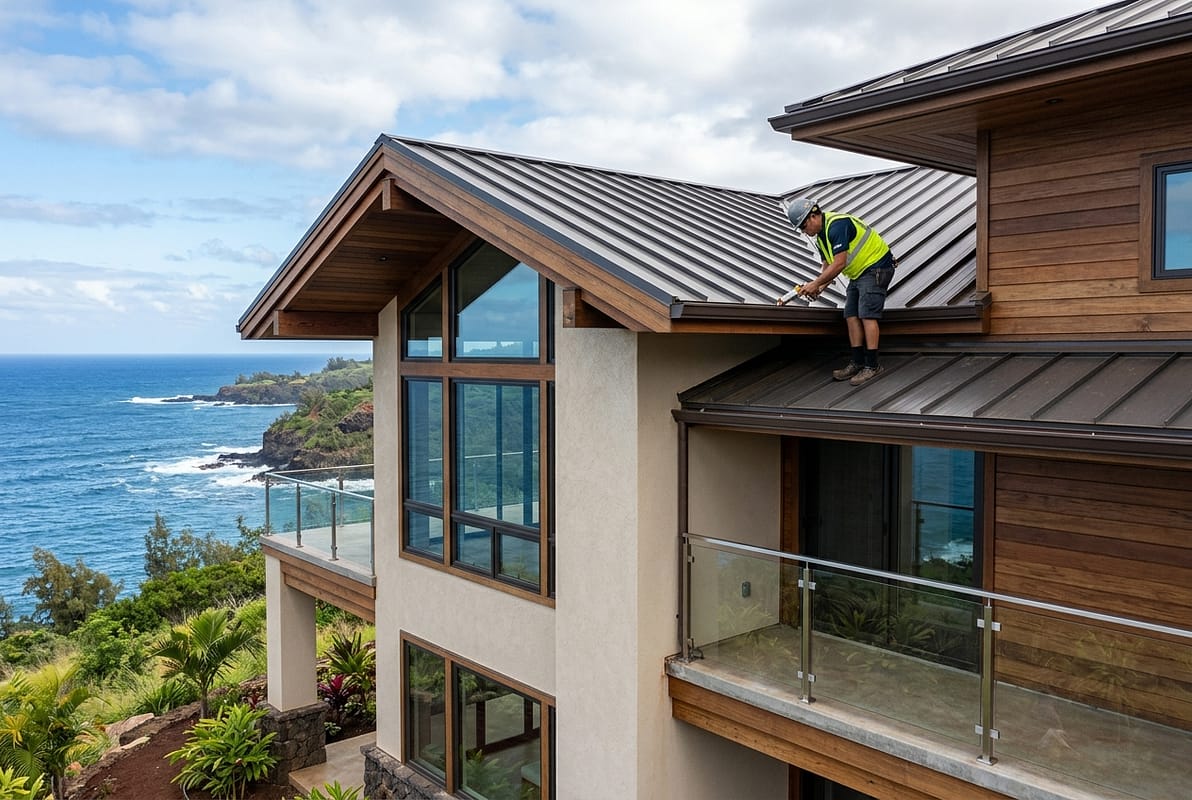
This is a detail that gets overlooked by less experienced builders, and the consequences are ugly. Every single screw, nail, bolt, and joist hanger exposed to the exterior must be made of the right material. For our projects in Lanikai, Portlock, or along the North Shore, we will only use 316-grade stainless steel fasteners and hardware. This marine-grade stainless steel has a higher nickel and molybdenum content, making it far more resistant to corrosion from salt spray.
The catch? It’s expensive. Specifying 316-grade stainless steel fasteners and hardware costs three to four times more than standard galvanized options.[5] On a typical home, this can add $8,000 to $10,000 to the budget. But if you’ve ever seen a beautiful white stucco wall ruined by dripping orange rust stains from cheap screws, you understand why this is non-negotiable. It protects the integrity of your structure and the beauty of your finish.
High-Performance Coatings & Finishes that Last
Our intense sun and salt-laden air are brutal on exterior finishes. Standard exterior paint can begin to fade and chalk in as little as 5-7 years, forcing a costly repainting job. The defensive building approach is to invest in a coating system that’s engineered for this environment.
We apply the same standards we see in new commercial construction in Kaka’ako to our custom homes. We specify fluoropolymer paint systems like Kynar 500 for all metal roofing, fascia, and aluminum window frames. This type of finish adds approximately $25,000 to the exterior finish budget of a luxury home. However, it comes with a 20-year manufacturer’s warranty against fading, chalking, and degradation. This protects your home’s curb appeal and, by extension, its value.
Investing in Corrosion-Proof Windows and Railings
Standard aluminum window frames and lana’i railings are a recipe for disaster in coastal zones. Even powder-coated aluminum will eventually start to pit and corrode when constantly exposed to salt spray. We are often hired to do costly replacements on homes that are only 10-15 years old because the wrong materials were chosen.
For 2026, the best practice is to specify windows made from fiberglass composite or high-quality vinyl. Supply chain reports from the Hawaii Contractors Association show that while fiberglass windows cost about 25% more than high-end vinyl, their near-zero corrosion rate makes them a wise long-term investment.[6] For railings, we recommend solid stainless steel or marine-grade powder-coated aluminum systems from reputable manufacturers. They cost more, but they won’t fail prematurely.
Is There a Real ROI on Defensive Building in Hawaii?
Yes, the return on investment for defensive building in Hawaii is clear, measurable, and multi-faceted. It shows up in lower annual costs, reduced risk of catastrophic loss, and a significantly higher price when you eventually sell. While you might spend an extra $100,000 on a $1 million build, that investment can easily return $200,000 or more over the life of your home.
Let’s break down the returns:
- Higher Resale Value: This is the most direct return. Data from the Honolulu Board of REALTORS in 2026 makes it clear: homes built with documented defensive measures command a 3-5% market premium at resale.[7] A clean termite inspection report and a 50-year metal roof are powerful selling points that savvy buyers are willing to pay for. These features also help a home sell faster, as properties with known issues can sit on the market for weeks longer.
- Lower Insurance Premiums: Homeowner’s insurance in Hawaii is expensive, especially for hurricane coverage. Most major insurers offer significant discounts or mitigation credits for homes with features like a certified hurricane-rated roof, impact-rated windows, and proper structural connections. These credits can save you 15-30% on your annual premium, which can add up to thousands of dollars per year.
- Drastically Reduced Maintenance & Repair Costs: This is where the savings really accumulate. A defensive build is a low-maintenance build.
- No re-roofing every 15-20 years ($30,000+ savings).
- No termite tenting every 10 years ($10,000+ savings per treatment).
- No repainting every 7 years due to fading ($15,000+ savings per cycle).
- No replacing rusted-out lanai railings or window frames ($20,000+ savings).
Over a 30-year mortgage, these avoided costs can easily exceed your initial upfront investment.
Ultimately, the ROI isn’t just financial. It’s the peace of mind knowing your home—your biggest asset—is protected. It’s the confidence that you won’t face a massive, unexpected repair bill. That’s a return you can’t always put a number on, but it’s incredibly valuable.
What This Means for Hawaii Homeowners
When you’re planning a new build or a major renovation in Hawaii, it’s crucial to shift your mindset from initial cost to total cost of ownership. The numbers show that paying more upfront for resilient, durable materials is the financially smarter decision over the long run. Here’s how to apply this thinking to your project:
- Budget for Resilience: When you start your preconstruction planning, factor in a 15-25% budget increase specifically for defensive building upgrades. Don’t treat it as an optional add-on; treat it as a core part of the project.
- Prioritize the Envelope: Focus your investment on the home’s “envelope”—the roof, walls, windows, doors, and foundation. These are the components that protect everything else. You can always upgrade your kitchen countertops later, but you can’t easily replace your structural connectors or foundation termite treatment.
- Hire a Contractor Who Understands: Work with a general contractor who has deep experience with Hawaii’s specific environmental challenges. Ask potential builders about their approach to hurricane resistance, termite prevention, and material selection for coastal environments. Their answers will tell you everything you need to know. A knowledgeable partner will guide you to the right investments, not the cheapest ones. For an in-depth look at our approach, you can explore our 5-point guide to building a durable home in Hawaii.
- Document Everything: Keep detailed records of all the defensive features installed in your home, including product specifications and warranties. This documentation is gold when it comes time to insure your home or sell it, as it proves the added value you’ve built in.
Making these choices requires a long-term perspective, but it’s the key to building a home that is not only beautiful but also a safe, sound, and lasting investment for your family.
Frequently Asked Questions
Does ‘defensive building’ make my home completely hurricane-proof?
No home is 100% ‘hurricane-proof,’ but defensive building makes it highly hurricane-resistant. The goal is to build a structure that can withstand the forces of a major storm as defined by the building code, protecting the occupants and minimizing damage. It dramatically increases the odds that your home will survive intact while others around it may suffer catastrophic failure.
What is the biggest mistake homeowners make when choosing materials in Hawaii?
The biggest mistake is choosing materials based on mainland aesthetics or a lower upfront cost without considering our salt air environment. We frequently see homeowners select beautiful but inappropriate light fixtures, railings, or window hardware that begins to rust and fail within 2-3 years. Specifying marine-grade materials like 316 stainless steel or solid brass is critical for longevity here.
Are there financing options that recognize the value of resilient construction?
Yes, some lenders are beginning to offer ‘green’ or ‘resilient’ mortgage products that may offer slightly better terms for homes built to higher standards of durability and energy efficiency. Additionally, the higher appraised value that comes from these features can improve your loan-to-value ratio, potentially helping you avoid private mortgage insurance (PMI). Always discuss these features with your lender early in the process.
How much does just a ground termite treatment cost for a new build on Oahu?
For a new home construction on Oahu, the mandatory pre-slab pour chemical ground treatment typically costs around $1.50 per square foot of the foundation area. For a 2,500 square-foot home, you can expect to pay about $3,750 for this service from a licensed pest control operator. This is a non-negotiable step required by the state before we can pour the concrete foundation.
Is steel framing better than treated wood for termite proof construction in Hawaii?
Steel framing is undeniably the superior choice for termite resistance because it’s 100% inorganic and inedible to them. While borate-treated wood (like H-2 rated lumber) is highly effective, steel provides absolute peace of mind. The material cost for steel framing is about 20-25% more than wood, but it eliminates the need for future tenting and repairs, making its long-term cost of ownership lower in high-risk areas.
Building a home that will last for generations in Hawaii isn’t about luck; it’s about making deliberate, informed choices from day one. Investing in a resilient structure is the smartest money you can spend on your project. It’s the foundation of a safe, low-maintenance, and valuable asset for your family’s future.
If you’re ready to discuss a new home or major remodel built to withstand the unique challenges of our islands, our team is here to help. We specialize in engineering and constructing homes that are as durable as they are beautiful.
Ready to build a home that lasts? Learn more about our approach to coastal home construction and schedule a consultation with our team today.
References
- Honolulu Department of Planning and Permitting (DPP) – Building Codes
- Hawaii Contractors Association – News & Cost Surveys
- Hawaii DCCA Pest Control Board
- University of Hawaii CTAHR – Termite Information
- UHERO – Hawaii Construction Forecast
- Hawaii Contractors Association – Resources & Reports
- Honolulu Board of REALTORS® – Market Statistics


