
Here in 2026, the first question we get from homeowners in Ewa, Kapolei, and across the island is always about the bottom line. And for Accessory Dwelling Units (ADUs), the bathroom is where sticker shock often hits first. The realistic Oahu ADU bathroom cost is now firmly between $33,000 and $35,000 for a standard, code-compliant full bath. If you have a number from a couple of years ago in your head, like $28,000, it’s time for an update. The ground has shifted significantly due to a combination of factors unique to our island economy. Most importantly, this isn’t just about pretty tile and a new vanity; it’s about the complex, behind-the-wall work that makes a small space functional and legal.
The ADU boom, especially on the west side, is putting immense pressure on our resources. Consequently, we’re seeing two major drivers pushing that final price tag up: the ever-increasing cost of materials shipped across the Pacific and a critical shortage of skilled labor, especially licensed plumbers. When we build an ADU bathroom, we’re not just adding a room. We’re running new sewer lines, navigating Honolulu’s Department of Planning and Permitting (DPP) for tie-ins, and creatively designing a space that meets a strict 30-square-foot minimum on a tight 5,000-square-foot lot. This article will break down exactly where that $35,000 goes, why the numbers have changed so much, and what you can do to design a smart, efficient bathroom for your Oahu ADU project without getting sidelined by delays and budget overruns. The true Oahu ADU bathroom cost reflects a new reality in Hawaii construction.
What is the Realistic Oahu ADU Bathroom Cost in 2026?
Let’s get straight to it. For a standard 30- to 40-square-foot full bathroom in a new ADU on Oahu, you should budget between $33,000 and $35,000 in 2026. This price covers everything from the architectural plans and permits to the final fixture installation and paint. Furthermore, this figure represents a well-built, durable space with quality, mid-range materials designed to withstand our humid, salt-air climate. A higher final Oahu ADU bathroom cost could result from luxury finishes, while a lower cost might compromise quality and longevity.
Breaking Down the $33,000 – $35,000 Price Tag
That number isn’t pulled out of thin air. It’s a direct reflection of the costs we see on job sites every single day. When a homeowner asks us about the total Oahu ADU bathroom cost, we provide a detailed breakdown so they can see exactly where their investment is going. Here’s a typical cost structure for a 35-square-foot ADU bathroom:
- Design & Permitting: $3,500 – $4,500. This includes architectural drawings, structural engineering if needed, and navigating the Honolulu DPP process for plumbing and building permits. This is a critical first step for any ADU project.
- Site Work & Foundation: $3,000 – $4,000. This often involves trenching for new sewer and water lines, connecting to the existing infrastructure, and pouring a concrete slab. Costs can increase if we hit hard volcanic rock or have to navigate complex existing utilities.
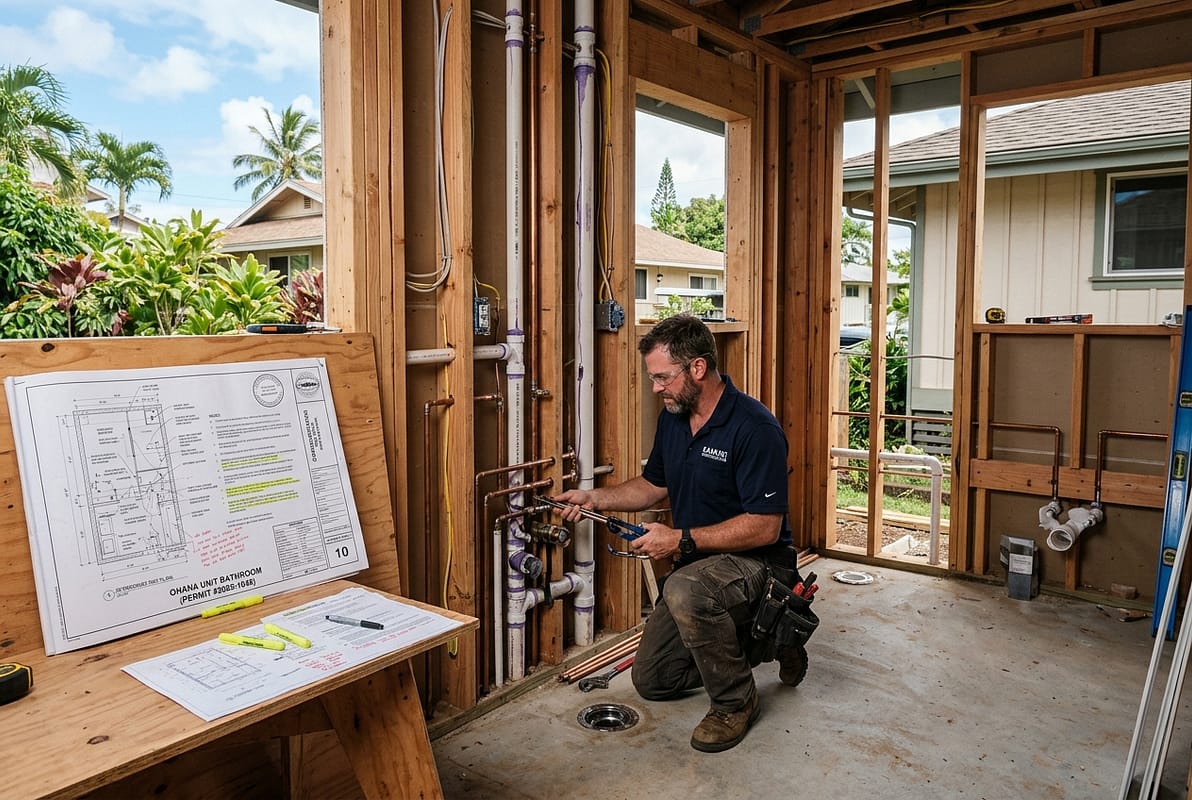
- Plumbing (Rough-in & Finish): $9,000 – $11,000. This is the single biggest line item. It includes running all new copper supply lines, ABS drain lines, venting through the roof, and the final installation of the toilet, sink, and shower fixtures. The ongoing Oahu plumber shortage is a major factor here.
- Electrical: $2,500 – $3,000. This covers a new subpanel (if needed), running circuits for lighting, the exhaust fan (a code requirement), and GFCI outlets near the vanity.
- Framing, Insulation & Drywall: $4,000 – $5,000. This is the structure itself. We use pressure-treated lumber for bottom plates and moisture-resistant drywall (green board) throughout the bathroom to combat our Hawaii humidity.
- Waterproofing & Tile: $4,500 – $6,000. Proper waterproofing is non-negotiable. We use systems like Schluter-KERDI behind all shower walls before setting the tile. This price includes a quality porcelain tile for the floor and shower surround.
- Fixtures & Finishes: $4,000 – $5,000. This includes a solid mid-range vanity, quartz countertop, toilet, sink, faucet, shower valve, exhaust fan, lighting, and accessories like a towel bar and mirror.
- Contingency (10%): We always advise clients to hold at least 10% in reserve. This covers unforeseen issues, like discovering termite damage in the main house when we tie in, which can affect the final Oahu ADU bathroom cost.
Why Your 2024 Estimate Is Outdated: Material & Shipping Hikes
If you received a quote a couple of years ago, it’s simply not valid in 2026. The primary reason is the relentless increase in material costs, driven by island logistics. The University of Hawaii Economic Research Organization (UHERO) projected a 6.5% rise in residential material costs for 2026 alone[1]. That comes on top of several years of previous increases.
Here’s the reality: virtually every component of your ADU bathroom—from the PVC pipes and copper fittings to the vanity and the tile—arrives on a Matson or Pasha container. Fuel surcharges and general freight costs add what we call a ‘paradise tax’ to everything. For instance, a pallet of tile that costs $2,000 in Los Angeles can easily cost $3,000 by the time it lands in our warehouse in Honolulu. This logistical reality is a fundamental driver of the high cost to build a bathroom in Hawaii. These aren’t contractor markups; they are hard costs passed down from suppliers that directly influence the final Oahu ADU bathroom cost.
Why Is It So Hard to Find a Plumber for an Oahu ADU Project?
The biggest bottleneck in any ADU project on Oahu right now is plumbing. The simple truth is that there’s an extreme shortage of licensed, qualified plumbers to meet the overwhelming demand from new construction, renovations, and the ADU boom. For homeowners, this means two things: longer wait times and higher labor costs, both of which significantly impact your budget and schedule. This Oahu plumber shortage is the single most challenging aspect of managing an ADU build in 2026.

The 4-6 Month Backlog for Licensed Plumbers Explained
Currently, the average backlog for a good residential plumbing crew on Oahu is between four and six months. That means from the moment we are ready to start the groundwork, we might have to wait half a year before a plumber can even show up to lay the initial pipes in the foundation. The Hawaii Contractors Association’s 2026 labor analysis confirms this trend, citing the massive wave of ADU construction as a primary cause.[2]
For example, on a recent project in Pearl City, our plans were approved by the DPP, and we were ready to pour the slab. However, our go-to plumbing subcontractor was booked solid for five months. We had to schedule the work and essentially put the project on hold. This waiting period can be frustrating for homeowners, but trying to rush and hire a less reputable or unlicensed plumber is a recipe for disaster. Faulty plumbing can lead to catastrophic leaks and failed inspections, which will inflate your Oahu ADU bathroom cost far more than the initial wait time. At Warrior Construction, we’ve built relationships over decades, so we can often navigate these schedules better than most, but the backlog is a reality for everyone.
How Rising Journeyman Rates Impact Your Final Budget
With high demand and low supply, labor rates have climbed steeply. The same HCA report noted that journeyman plumber rates are up another 9% year-over-year.[2] This directly translates to a higher price tag for your project. Let’s look at the math:
- In 2024: The labor portion for an ADU bathroom plumbing setup might have been around $7,000.
- In 2026: With the rate increases, that same labor portion is now closer to $8,500 – $9,000.
That $1,500-$2,000 increase is purely due to the labor market. It doesn’t include the rising cost of materials like copper and PVC. When you combine material hikes with the labor rate spike, you can see why the plumbing line item has become such a significant part of the total Oahu ADU bathroom cost. Planning for this is essential for a realistic budget.
How Do You Design a Bathroom for a Small Oahu ADU Lot?
Designing a bathroom for an ADU on a typical 5,000 or 6,000-square-foot lot in places like Ewa or Mililani is a game of inches. Your goal is to create a space that feels functional and open while adhering to strict code requirements. The key is smart planning from day one. A thoughtful ADU bathroom design Oahu homeowners can appreciate maximizes every square foot without feeling cramped, which is crucial for both usability and future property value.
Meeting the City’s 30-Square-Foot Minimum Requirement
The first rule of ADU bathroom design in Honolulu is set by the government. The Honolulu Department of Planning and Permitting (DPP) mandates that a full bathroom in an ADU must be at least 30 square feet.[3] This is one of the most critical ADU permit requirements Honolulu enforces. This rule ensures there is adequate clearance around the toilet, sink, and shower. You can’t just squeeze fixtures into a closet-sized space.
A 5-foot by 6-foot layout is the most common way we meet this requirement. However, a 5’x7′ or 6’x6′ configuration can provide a bit more breathing room if your overall ADU footprint allows. Our design team uses software to model the clearances precisely, ensuring we pass DPP review the first time. Trying to cheat this requirement will only lead to rejected plans and long delays, which ultimately increases the project’s final Oahu ADU bathroom cost.
Layout Ideas for Ewa & Kapolei Lots: Corner Showers & Pocket Doors
Once you’ve met the minimum size, the next step is making the space feel larger than it is. This is where a good small bathroom layout Hawaii style comes into play. Here are some of the most effective strategies our team uses:
- Pocket Doors: A traditional swing door eats up about 9 square feet of floor space. A pocket door slides into the wall, instantly giving that space back to the room. This is our number one recommendation for small ADU bathrooms.
- Wall-Hung Toilets & Vanities: Lifting the toilet and vanity off the floor creates an uninterrupted floor plane, which tricks the eye into seeing a larger space. It also makes cleaning much easier.
- Corner Showers: Instead of a standard rectangular shower base, a neo-angle or corner shower with a glass enclosure can open up the room’s center. We often opt for a 36″x36″ corner unit.
- Curb-less Showers: If the budget allows, a curb-less shower where the bathroom floor tile runs directly into the shower area creates a seamless, open look. This is also a great feature for aging-in-place design, a common need in multi-generational ADUs.
- Large Mirrors & Light Colors: A classic design trick for a reason. A large, well-lit mirror can visually double the size of the space. Paired with light-colored paint and tile, it makes a small bathroom feel airy and bright.
By incorporating these elements, we can design a bathroom that is not only code-compliant but also a comfortable and valuable part of the ADU. Considering these design elements early is a key part of managing the overall Oahu ADU bathroom cost.
What Are the Biggest Permitting Hurdles for an ADU Bathroom?
The biggest permitting challenges for an ADU bathroom almost always revolve around what happens outside the structure: connecting the new plumbing to the existing city infrastructure. While the interior layout has its rules, the DPP is most stringent about how you handle wastewater and supply lines. Successfully navigating the ADU permit requirements Honolulu has in place for plumbing tie-ins is where an experienced contractor proves their worth. Delays here can stall a project for months.
Navigating DPP for Plumbing Tie-Ins
Before we can dig a single trench, we need a permit from the DPP that specifically details how the ADU’s plumbing will connect to the main house’s system and, subsequently, the city sewer. This requires detailed drawings from an architect or engineer showing the exact location of the pipes, the type of materials being used, and the slope of the drain lines to ensure proper flow.
The DPP review process for this can take several months. They scrutinize every detail to ensure the new unit won’t overwhelm the existing sewer lateral or create backflow issues. We’ve seen plans get rejected for something as simple as an incorrect pipe diameter notation. This is why we handle the entire submittal process for our clients. Having a deep understanding of the building code and the DPP’s specific preferences helps us get approvals faster, keeping the project on track and preventing unforeseen costs from piling up and inflating the Oahu ADU bathroom cost.
Trenching and Connecting to Existing Sewer Lines
Once the permit is in hand, the real work begins. We have to excavate a trench from the ADU to the main house’s sewer cleanout. In the volcanic soil common across Oahu, this can be challenging and may require heavy equipment. The cost of this trenching is a significant component of the overall cost to build a bathroom in Hawaii.
The biggest risk is what we find when we unearth the existing sewer line. In many older Oahu homes, especially those built before 1980, we often find old cast iron or clay pipes that are cracked, corroded, or infiltrated by roots. If the existing line is compromised, it must be replaced before we can connect the new ADU. This is a classic example of an unforeseen condition that can add thousands of dollars to the project. It’s a frustrating discovery for any homeowner, but it’s far better to address it properly during construction than to deal with a major sewer backup a year after the ADU is completed. An experienced general contractor will help you plan for this possibility from the start. We often recommend a sewer camera inspection as part of the due diligence before finalizing the Oahu ADU bathroom cost.
What This Means for Hawaii Homeowners
Understanding the current market realities is the first step toward a successful ADU project. The 2026 numbers and timelines are not meant to discourage you, but to equip you with the accurate information needed for realistic planning. The demand for multi-generational housing in places like Ewa and Kapolei means that an ADU is still one of the best investments you can make in your property, even with the higher costs.
Here are the key takeaways and our professional advice:
- Budget Realistically: Acknowledge that a safe, legal, and durable ADU bathroom will cost $33,000-$35,000. Anyone quoting significantly less is likely cutting corners on waterproofing, licensing, or insurance, which puts you at massive risk. The true Oahu ADU bathroom cost is an investment in quality.
- Hire Your Team Early: Given the 4-6 month backlog for plumbers and other key trades, you should select your general contractor and get on their schedule as soon as you decide to move forward. Waiting until you have financing sorted out could mean you don’t break ground for nearly a year.
- Prioritize Function Over Finishes: If your budget is tight, spend the money on the things that prevent future problems: expert plumbing installation, top-tier waterproofing, and proper ventilation. You can always upgrade a vanity or light fixture later, but you can’t easily fix a leaking shower pan buried in a concrete slab.
- Plan for the Unexpected: We can’t stress this enough. A 10-15% contingency fund is not optional; it’s essential. Whether it’s discovering old pipes or dealing with unexpected delays at the DPP, having that buffer will be the difference between a stressful project and a smooth one.
Building an ADU is a complex process, but with the right team and a solid plan based on current, local data, it is absolutely achievable. Don’t let the numbers intimidate you—let them empower you to make smart, informed decisions.
Frequently Asked Questions
Can I build an ADU bathroom on Oahu for under $30,000 in 2026?
Realistically, it is extremely difficult to build a code-compliant full ADU bathroom for under $30,000. With plumbing costs alone approaching $11,000 and material costs continuing to rise, a sub-$30k budget would require significant compromises in quality, likely involving unlicensed labor or inadequate waterproofing, which we would never recommend.
How long does the permit for an ADU bathroom take in Honolulu?
The permitting process at the Honolulu DPP can vary, but for an ADU project that includes new plumbing tie-ins, you should plan for a 4 to 7-month review period from initial submission to having the approved permit in hand. Working with an experienced architect and contractor who knows the DPP system can help avoid common mistakes and expedite the process.
Do I need a separate permit just for the ADU bathroom?
No, the bathroom is part of the overall ADU building permit. The plans you submit to the DPP will include the full architectural and structural details for the entire ADU, with specific drawings and calculations for the bathroom’s plumbing, electrical, and layout to demonstrate compliance with all ADU permit requirements Honolulu has set.
What’s the biggest mistake homeowners make when budgeting their Oahu ADU bathroom cost?
The most common mistake is underestimating the cost of labor, especially for plumbing. Homeowners often focus on the price of fixtures they see at big-box stores, but in Hawaii, the skilled labor to install everything correctly and legally can easily be 50-60% of the total budget. The Oahu plumber shortage makes this an even more significant factor.
Is a wet room a good idea for a small ADU bathroom layout in Hawaii?
A wet room can be an excellent small bathroom layout Hawaii solution. By waterproofing the entire room and using a central floor drain, you eliminate the need for a separate shower enclosure, making the space feel much larger. However, it requires meticulous and expensive waterproofing work, so the cost is typically 20-30% higher than a standard bathroom of the same size.
How does the Oahu plumber shortage affect my ADU timeline?
The plumber shortage is the main driver of project timelines right now. You must account for a 4-6 month wait for a good plumbing crew. This means your contractor should be scheduling the plumber the moment your permits are approved, long before framing even begins, to keep the project moving efficiently.
Does Warrior Construction handle the ADU permitting process?
Yes, absolutely. As a design-build firm, we manage the entire process for our clients. This includes coordinating with the architect, submitting all necessary documents to the Honolulu DPP, and handling all revisions and communications. Our goal is to make the complex permitting process as smooth and hands-off for you as possible. Check out our detailed guide to navigating the Honolulu permitting process for more information.
Building an ADU is a significant undertaking, and getting the bathroom right is critical to its success. The numbers and challenges in 2026 are real, but they are manageable with professional planning and a team that understands the local landscape. If you’re ready to explore what’s possible for your property, our team at Warrior Construction is here to provide a clear, detailed plan based on two decades of experience building on Oahu.
Ready to start planning your Oahu ADU? Contact our team today for a detailed consultation and let’s build something that lasts for your ohana.


